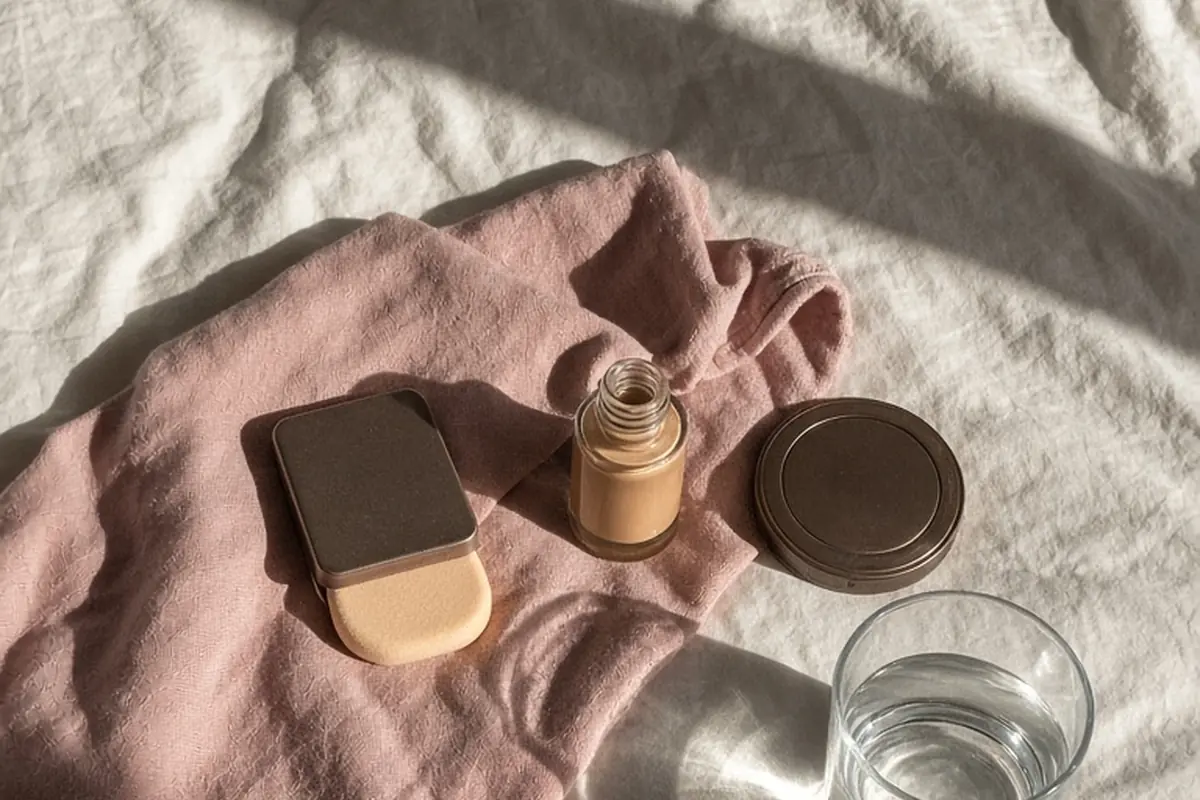
Yes, you can physically tan with makeup on, but doing so often leads to uneven skin tone, patchy pigmentation, and clogged pores. Cosmetic products create an irregular physical shield over your skin, blocking UV rays inconsistently across your face. As sweat and natural oils mix with pigments under the sun, your skin is also far more prone to breakouts.
Many people head outside or visit a tanning studio after work or a social event without washing their face first, wondering if foundation, powder, or concealer will interfere with their color. Understanding how cosmetic layers react to heat and ultraviolet light can help you avoid blotchy skin, unexpected burns, and post-sun irritation.
How Makeup Interacts with Ultraviolet Light
When ultraviolet radiation strikes bare skin, it stimulates melanocytes to produce melanin, which darkens the skin evenly across exposed areas. Applying a layer of cosmetic foundation, setting powder, or concealer alters this process significantly. Makeup formulas contain a wide variety of pigments, binders, talcs, and mineral powders such as iron oxides and titanium dioxide. These particles reflect, scatter, and partially absorb incoming light in an inconsistent pattern, depending on where the product is applied most heavily.
Because makeup is rarely applied in a mathematically uniform thickness across the face, ultraviolet light penetrates the skin at varying depths and intensities. Areas with heavier coverage, such as blemishes concealed with thick paste or under-eye zones layered with brightening creams, receive significantly less ultraviolet exposure than the sheerer perimeters of the cheeks or forehead. The end result is an unpredictable tan that mirrors your makeup application rather than the natural contours of your face.
The Consequences of Uneven Pigmentation and Patchiness
The most immediate aesthetic drawback of tanning while wearing makeup is uneven color distribution. As your body warms up under the sun or beneath tanning lamps, perspiration and sebum rise to the surface of the skin. This natural moisture causes foundation and powder to shift, separate, and gather in fine lines, smile folds, and around the nostrils. When the makeup breaks apart, ultraviolet rays penetrate the exposed patches while remaining partially blocked in areas where the makeup has pooled.
Once you wash your face at the end of the day, you may discover a mottled or splotchy complexion that is difficult to correct. In severe cases, high UV exposure through patchy makeup can trigger or worsen hyperpigmentation conditions such as melasma. Dark spots may form around the perimeter of the face or on the upper lip, while areas covered by heavier cosmetic pigments remain noticeably pale, requiring weeks or months of diligent skincare to blend back into an even tone.
Clogged Pores, Heat Rash, and Post-Sun Breakouts
Combining heavy makeup with direct sun exposure creates a challenging environment for skin health. Sunlight naturally increases skin temperature, which prompts your sweat glands to release moisture in an effort to cool your body. When a barrier of silicone, mineral oil, synthetic waxes, and heavy pigments sits on top of open pores, that sweat and sebum become trapped beneath the surface. This creates a warm, occluded environment where acne-causing bacteria can rapidly multiply.
This trapped combination of heat, sweat, and cosmetic ingredients frequently leads to acne cosmetica or heat rash, also known as miliaria. Instead of emerging from the sun with a smooth glow, you might notice clusters of small, red bumps across your forehead, chin, and jawline within twenty-four to forty-eight hours. The skin barrier becomes compromised by the mixture of ultraviolet stress and pore congestion, turning a quick tanning session into an extended breakout cycle that requires soothing, anti-inflammatory care to resolve.
The Myth of Foundation SPF as Dedicated Sun Protection
A common misconception is that wearing a liquid foundation or BB cream with built-in SPF provides adequate sun protection while tanning. While cosmetic products labeled with sun protection factors do contain ultraviolet filters, standard makeup application falls far short of providing the advertised level of defense. Sunscreen testing standards require a generous application rate of two milligrams per square centimeter of skin, which translates to roughly a quarter teaspoon for the face alone.
Almost nobody applies that much foundation because doing so would result in a heavy, unnatural, and cakey appearance. In reality, most people use a fraction of the necessary amount, which drastically lowers the actual level of protection to a negligible fraction of the label rating. Furthermore, cosmetics are not formulated to withstand vigorous sweating or UV degradation in the same manner as dedicated, broad-spectrum sunscreens, leaving your skin exposed to burning and cellular damage.
Key reasons cosmetic SPF fails to replace standard sun protection include:
- Typical application amounts are far too sheer to achieve the sun protection factor printed on the cosmetic packaging.
- Makeup is rarely reapplied every two hours, leaving the skin defenseless as the active filters degrade under sunlight.
- Cosmetic emulsions emphasize finish, tint, and texture over photostability and water resistance under direct heat.
Tanning Beds Versus Natural Sunlight with Cosmetics
Using indoor tanning beds while wearing makeup presents even greater risks than being outdoors. Tanning beds emit concentrated doses of ultraviolet A rays at close range, which penetrate deep into the dermis. Many cosmetic formulations contain synthetic fragrances, botanical extracts, chemical preservatives, and essential oils that can become phototoxic or photoallergic when exposed to intense, artificial UV radiation.
When these ingredients undergo photochemical reactions on the skin, they can cause contact dermatitis, burning sensations, swelling, and long-term discoloration known as cosmetic melanosis. Additionally, the dry, intense heat inside a tanning capsule rapidly bakes the makeup into the skin, dehydrating the epidermal barrier and making thorough makeup removal abrasive and uncomfortable afterward.
How to Prepare Your Skin for Outdoor Sun Exposure
If you plan to spend time outdoors and want your skin to look fresh without risking uneven pigmentation or severe breakouts, transitioning to a clean, sun-safe routine is essential. The most effective approach is to wash away all conventional makeup using a gentle cleanser before heading into the sun. Starting with a clean slate allows your skin to breathe, sweat naturally, and absorb protective topical products evenly across your entire face.
For those who prefer some aesthetic coverage or color correction while outside, modern tinted sunscreens offer an ideal balance. These formulas are specifically engineered with stabilized UV filters and light iron oxide pigments that provide sheer, buildable coverage while protecting the skin from both UV rays and visible light. Unlike heavy foundations, dedicated tinted sunscreens are designed to be applied generously and reapplied throughout the day without separating or clogging pores.
A sensible outdoor skin preparation routine involves these practical steps:
- Remove all foundation, concealer, and setting powders with a mild cleanser or micellar water before sun exposure.
- Apply a generous layer of broad-spectrum sunscreen with SPF 30 or higher fifteen minutes before stepping outside.
- Use a non-comedogenic tinted mineral sunscreen if you want to even out redness or blemishes without wearing heavy makeup.
- Reapply your dedicated sunscreen every two hours, or immediately after swimming, sweating, or toweling off.
Safer Alternatives for Achieving a Sun-Kissed Complexion
If your primary goal is to achieve a golden, bronzed appearance without subjecting your facial skin to the risks of UV exposure, self-tanning products and cosmetic bronzers provide reliable, controlled results. Modern sunless tanning drops and facial tanning waters use dihydroxyacetone (DHA), a sugar-based compound that temporarily darkens the dead cells of the stratum corneum without triggering melanin production or requiring any sun exposure.
By applying a few sunless tanning drops mixed into your nightly moisturizer, you can build a customized, streak-free glow that lasts several days. Once your sunless tan is established, you can use lightweight liquid bronzers and cream blushes during the day to enhance your features safely. This method allows you to enjoy a radiant, sun-kissed look year-round while preserving the integrity of your skin barrier and avoiding the uneven lines, premature aging, and breakouts associated with tanning through makeup.
Frequently asked questions
Will bronzer or contour products leave dark stripes on my face after tanning?
Concentrated bronzers and contour creams block more ultraviolet light than the rest of your face, which can leave lighter stripes where the makeup was thickest. As your natural skin darkens around the product, you end up with an inverse contour pattern once you wash the makeup off. To avoid uneven bands of color, always remove contour products prior to sun exposure.
Can I wear lip gloss or lipstick while tanning in the sun?
High-shine lip glosses can act like a magnifying lens, concentrating ultraviolet rays onto the delicate skin of your lips and increasing the risk of blistering or peeling. Lipsticks without SPF also leave the lips vulnerable to dryness and premature aging. It is best to use a dedicated lip balm with broad-spectrum SPF 30 instead.
How should I clean my skin if I accidentally tanned with makeup on?
Start with a gentle oil cleanser or micellar water to break down melted foundation and sweat without aggressive scrubbing, followed by a mild hydrating cleanser. Afterward, apply a soothing, fragrance-free moisturizer containing ingredients like ceramides, hyaluronic acid, or aloe vera to calm heat irritation and replenish lost hydration.
Your next step
Before your next sunny outing or tanning session, remove all decorative makeup and apply a generous layer of broad-spectrum sunscreen or non-comedogenic tinted SPF to protect your skin barrier and ensure a smooth, even tone.