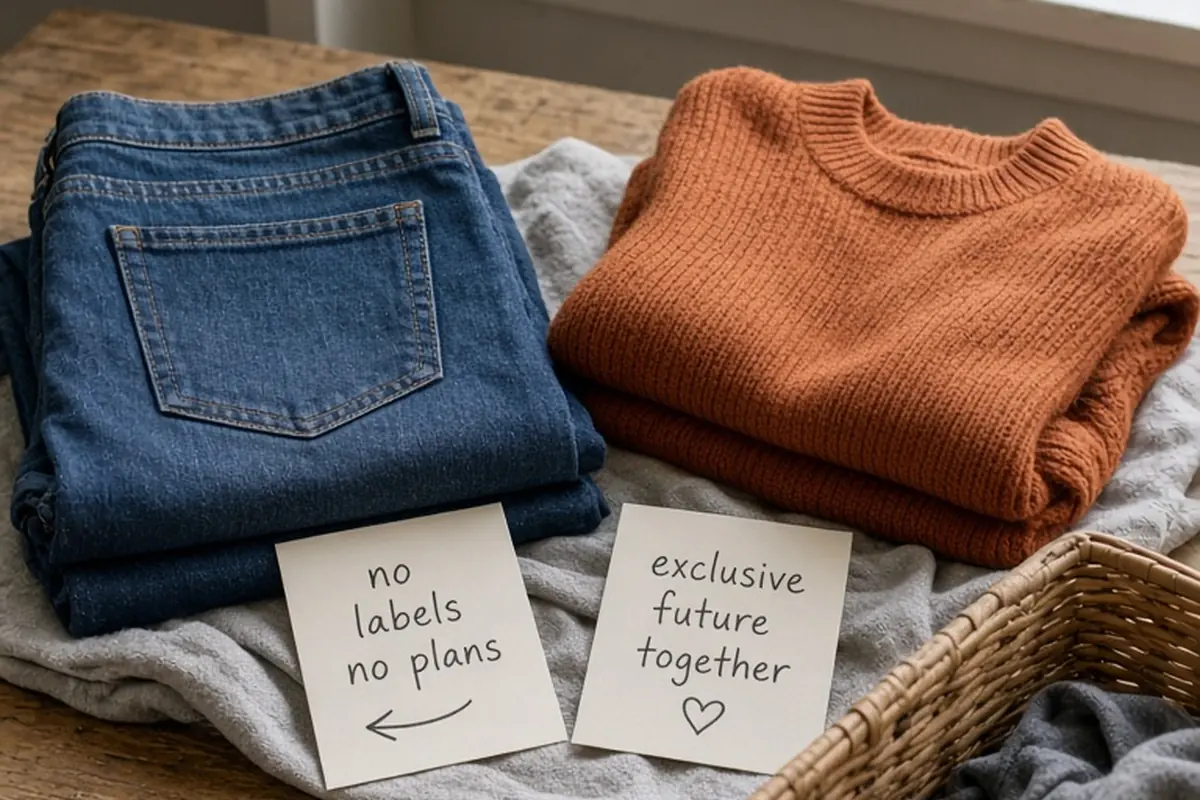
Casual dating means spending time with people without a commitment to a shared future; serious dating means intentionally building toward exclusivity and a long-term partnership. Neither is better or more mature. The right choice depends on your current capacity, goals, and honesty with yourself and your partners. Most dating pain comes from mismatched expectations, not from either style itself.
Maybe someone just asked what you're looking for and your brain stalled. Or you've been seeing someone for weeks and still can't tell what this is. This guide breaks down how each path works in real life, how to figure out which one fits you right now, and how to say it out loud without making it weird.
What Casual Dating Actually Means
Casual dating is dating without an agreed trajectory toward commitment. That definition surprises people, because casual can still include real dates, weekend trips, affection, and even exclusivity by mutual choice. The defining feature isn't what you do together; it's that neither person has promised to build a future with the other. It's a structure for expectations, not a measure of how much you care.
What casual dating is not: a license to be vague, unreliable, or careless with someone's feelings. Casual still requires honesty, follow-through on whatever terms you agreed to, and basic kindness when it ends. The trade-off is real, too. You get freedom and low pressure, but you give up depth and accept the risk that feelings grow unevenly. Choosing casual means choosing to manage that risk honestly rather than pretending it doesn't exist.
What Serious Dating Actually Means
Serious dating is dating with intent. You're evaluating whether this person could be a long-term partner, and you're willing to be genuinely known in the process. In practice it moves toward exclusivity, integration into each other's lives, and eventually the unglamorous conversations about values, money, family, and geography that determine whether two people can actually build something.
The trade-offs run the other direction: more vulnerability, more time, and a real cost when it ends. Two things worth clearing up. Serious dating isn't a promise of marriage; it's a posture of honesty and effort. And serious doesn't mean fast. You can date with serious intent and still take months to commit, because the difference is direction, not speed.
The Differences That Matter in Real Life
On paper the difference is commitment. In practice it shows up in smaller places: how much of your week you offer, whether you make plans past next Saturday, how you handle each other's bad days, and whether your friends know this person exists. The clearest way to see it is to compare how each style handles the same everyday questions.
Neither column is easier, just different. Casual demands discipline, because you have to keep expectations clean without the structure commitment provides. Serious demands courage, because you have to risk being fully seen and still be willing to repair things when they go wrong. Pick based on what you can genuinely offer another person, not on which one sounds better at a dinner party.
- Time and priority: casual fits around your life; serious reshapes your schedule.
- Future talk: casual avoids it by agreement; serious requires it eventually.
- Emotional exposure: casual keeps a ceiling on how much you need; serious asks you to need and be needed.
- Endings: casual ends with an honest conversation; serious ends with a breakup that costs more.
How to Figure Out Which One Fits Your Life Right Now
The honest question isn't what you want in theory but what you can actually give. Capacity is the real variable: time, emotional bandwidth, and stability. After a breakup, during a brutal stretch at work, or while you're still figuring out your own life, casual may be the truthful answer, as long as you say so. A few questions cut through the noise faster than abstract soul-searching.
Your answers can change, and that's fine. What isn't fine is letting a partner keep assuming a version of you that isn't true. Revisit the question every few months, especially if feelings deepen or your circumstances shift, and treat a changed answer as information you owe the people you're seeing.
- Do I want a partner, or do I want company, distraction, or validation?
- If someone I liked wanted exclusivity next month, would I feel excited or trapped?
- Am I willing to have awkward conversations and repair conflicts, or do I want low obligations?
- Can I handle the other person dating around, and am I being honest about doing the same?
How to Say What You Want Without Making It Weird
Timing matters: earlier than feels comfortable, later than the first ten minutes. Somewhere between the first and third date is usually right, early enough that nobody invests on false pretenses and late enough that you've actually met. You don't need a speech. One clear sentence works: "I'm dating to find a real relationship," or "I like spending time with you and I'm not looking for something serious right now."
Two rules keep it clean. State it about yourself rather than opening with "so what are you looking for?" as a trap. And don't soften it into vagueness. "I'm open to seeing where things go" sounds safe but tells the other person nothing. Instead of "I'm not really into labels," try "I want to keep seeing you, and I don't want a committed relationship right now." Clear is kinder than comfortable.
When You Want Different Things
It happens constantly: you want casual, they want serious, or the reverse. The tempting moves are all bad ones. Hoping they'll come around, downplaying what you want to keep them, or agreeing to their terms while quietly planning to change their mind later. That's how you end up in a six-month situationship that closes with resentment on both sides.
The better move is unglamorous: name the mismatch and let them decide with full information. "I really like you, and I can tell we want different things. I don't want to waste your time or mine." If they walk away, that's the system working; you lost someone who wanted something you couldn't give, which was never going to hold anyway. If they stay on your terms, check in again later, because people sometimes agree to terms while hoping they'll expire.
Can Casual Dating Turn Into Something Serious?
Sometimes, yes. Plenty of committed couples started casually. But it tends to work when both people genuinely wanted casual at the start and feelings grew on their own, not when one person accepted casual as a waiting room. If you're staying casual as a strategy to eventually win commitment, you aren't dating casually; you're auditioning for a role the other person doesn't know exists.
If your feelings change, the move is a direct conversation, not escalation by behavior. Acting like a partner to force the label just builds pressure nobody agreed to. Try: "When we started, I meant it about keeping this casual. That's changed for me, and I wanted to tell you instead of quietly hoping." They might say no. That answer hurts, but it's information you need, and it costs far less at month two than at month ten.
Illustrative Scenarios
The situationship that drifted
Marcus, 31, had been seeing someone for four months: dinners, weekends, meeting her friends. He assumed the momentum meant they were heading toward a relationship and never asked. When he finally brought up exclusivity, she said she'd thought they were both clear it was casual; she'd said so on date two, and he'd nodded without really hearing it. He felt blindsided. She felt he'd rewritten the terms. Instead of accusing her, he asked himself why he'd avoided the conversation for months, and the answer was that asking risked a no. They parted kindly.
Key point: Silence isn't agreement, and the question you're afraid to ask is usually the one you most need to.
The honest second date
Dana, 28, eight months out of a long relationship, matched with someone she liked. On their second date he asked what she was looking for. Her first instinct was the safe answer, "whatever happens, happens," because honesty felt like it might scare him off. Instead she said, "Honestly? I'm not ready for something serious, and I don't want to pretend otherwise." He appreciated it. He was looking for a relationship, they finished dinner on good terms, and neither had to do the slow fade.
Key point: The risky honest answer usually costs nothing real; it just saves both people a month of confusion.
Frequently asked questions
Is casual dating just hooking up?
No. Casual dating can include real dates, affection, and an ongoing connection; what makes it casual is the absence of a shared commitment to a future, not the activities involved. Two people can date casually for months and still treat each other with genuine care.
How soon should I define the relationship?
There's no fixed timeline, but a useful rule is to talk when the stakes rise: before exclusivity gets assumed, before either of you is deeply invested, or when you notice your own expectations shifting. If you're already asking the question, it's usually time.
Is it okay to date casually right after a breakup?
It can be, as long as you're honest with the people you date and honest with yourself about why. If casual is genuinely what you want, fine. If it's anesthesia for feelings you'd rather not have, you'll likely leave a trail of confused partners.
What if I genuinely don't know what I want?
Say exactly that, early. "I'm still figuring out what I want" is a legitimate answer because it tells the other person not to build plans on you. What isn't fair is staying vague for months while letting them assume you're heading somewhere.
Your next step
Before your next date, write one honest sentence answering "what am I actually looking for right now?" and say it out loud once. Clarity you can say is clarity you can offer.