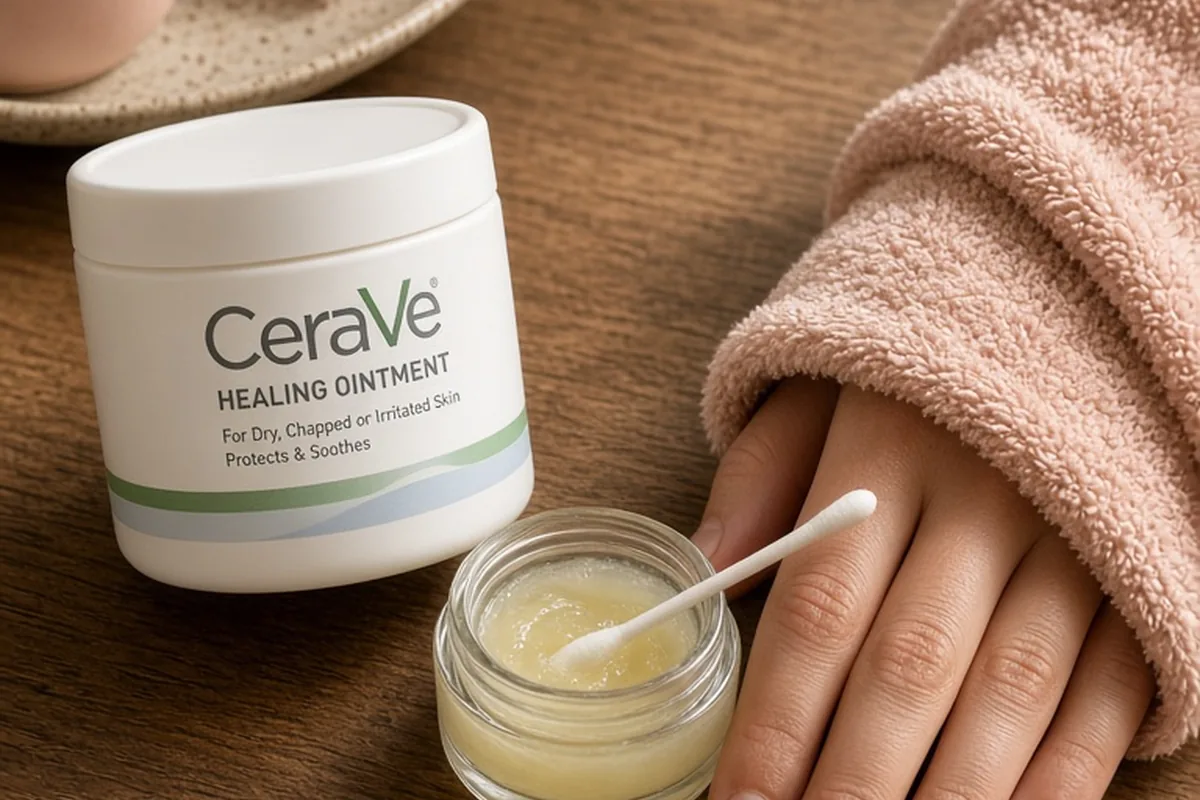
CeraVe Healing Ointment serves as an occlusive balm designed to lock in essential hydration, soften rough texture, and shield compromised skin. Common uses include overnight facial slugging, soothing windburned cheeks, buffering sensitive areas during retinoid application, softening cracked heels or cuticles, and preventing athletic friction. Formulated with petrolatum, ceramides, and hyaluronic acid without fragrance or lanolin, it provides durable barrier support for sensitive skin.
While standard petroleum jelly simply forms an inert surface shield, hybrid barrier balms combine classic occlusive power with skin-identical lipids. Understanding how and when to incorporate an intensive ointment into your everyday regimen ensures you restore rough or irritated skin without causing unintended congestion.
Repairing Parched Patches and Compromised Surface Barriers
A compromised moisture barrier often announces itself through persistent tightness, stinging upon applying everyday moisturizers, and rough, flaky textures that makeup clings to unevenly. Environmental stressors such as freezing winds, low indoor humidity, and overzealous cleansing strip away the intercellular lipids that normally hold your skin cells together. When these natural fats deplete, transepidermal water loss accelerates rapidly, leaving deeper skin layers vulnerable to irritants. An ointment centered around petrolatum serves as a temporary surrogate barrier, physically halting water evaporation and giving the underlying tissue a sheltered environment to recuperate.
To get the most out of the ointment on dry zones, technique matters just as much as the formula itself. Petrolatum is purely occlusive, which means it traps what is already present rather than generating new water content on its own. For the best outcome on flaky cheeks or dry temples, cleanse with a mild non-foaming wash, mist the skin with water or pat on a hydrating toner, apply your regular daily moisturizer, and then smooth a small dab of ointment exclusively over the flaking areas. Applying the ointment directly to completely parched, untreated skin simply locks in dryness, so pairing it with humectant layers underneath is essential.
Keep in mind that healing a compromised barrier requires patience and a simplified overall routine. While the ointment provides immediate mechanical comfort and reduces roughness within a couple of days, continuing to use harsh scrubs, fragrant washes, or high-percentage chemical peels at the same time will continuously counteract your progress.
Nighttime Facial Slugging for Parched or Stressed Complexions
Slugging refers to the practice of coating your entire face in a thin layer of an occlusive ointment before bed, creating an intensive overnight seal. For individuals struggling with profound seasonal dryness, dullness, or medication-induced flaking, this method helps wake up with visibly plumper and softer skin. The CeraVe formulation is often favored over traditional single-ingredient petroleum jelly for slugging because it blends forty-nine percent petrolatum with mineral oil, paraffin, and ceramides, resulting in a smoother, slightly less sticky glide that spreads evenly across facial contours.
Executing an effective slugging routine requires a measured hand and clean application. After completing your nighttime routine of cleansing and hydrating with a humectant-rich cream, warm a pea-sized amount of ointment between your fingertips. Instead of rubbing vigorously, gently press your palms across your forehead, cheeks, and chin to leave a micro-thin, glossy film rather than a thick, suffocating paste. Protect your pillowcase with a soft, clean towel, and wash your face thoroughly with a gentle cleanser the following morning to clear away residual balm, sweat, and natural oils before starting your daytime routine.
The primary trade-off of facial slugging centers on skin type compatibility. If you have combination skin, oily skin, or an active flare-up of cystic or inflammatory acne, trapping natural sebum and shedding skin cells under a heavy occlusive seal can prompt closed comedones and clogged pores. In these situations, limit slugging to isolated dry patches along the jawline or cheek perimeter rather than applying it across the oil-rich T-zone.
Buffering Delicate Areas During Retinoid and Exfoliant Routines
Potent topical actives, such as prescription retinoids, over-the-counter retinaldehydes, and concentrated exfoliating acids, encourage rapid cellular turnover but frequently trigger localized peeling and redness. Certain anatomical zones feature thinner skin and fewer sebaceous glands, making them especially prone to excessive irritation when actives migrate across the face during the night. The corners of the mouth, the crease beside the nostrils, and the skin directly around the orbital bone routinely bear the brunt of this active-induced flaking.
An ointment works as an effective physical buffer when applied before your treatment step. Prior to smoothing on a pea-sized amount of retinol or exfoliating serum, lightly tap a pinpoint amount of the ointment around the nasal crevices, outer lip margins, and delicate outer eye contour. This creates a protective shield that stops active creams from pooling or migrating into these sensitive micro-folds, substantially reducing the burning sensation and cracked skin that often derail retinoid consistency.
A critical caution applies here: do not apply heavy occlusive ointments directly on top of potent prescription retinoids across large areas of the face unless specifically directed by a dermatologist. Sealing strong active ingredients underneath a non-porous layer dramatically amplifies their penetration and intensity, which can inadvertently trigger severe irritation, redness, and peeling rather than soothing the skin.
Soothing Chapped Lips and Weather-Stressed Facial Features
The skin on your lips possesses a uniquely delicate anatomy compared to the rest of your body, lacking both sweat glands and sebaceous lubrication. As a consequence, constant exposure to dry indoor heating, cold wind, and unconscious lip-licking quickly strips away natural moisture, leaving lips split, tight, and sore. Many standard wax-based lip balms rely on rigid structuring agents that sit stiffly on the surface without penetrating dry crevices, often requiring constant reapplication throughout the day without offering lasting relief.
Because this ointment includes mineral oil and ceramides alongside petrolatum, it spreads with minimal friction and adheres smoothly to cracked mucosal borders. For severely chapped lips, try dampening your mouth lightly with water, smoothing on a tiny speck of basic hydrating facial lotion, and layering a generous coat of ointment over the top before sleeping. This two-step process delivers both water-binding humectants and an impenetrable seal, allowing split lip margins to soften overnight. The same method works wonders for windburned cheeks or red, chafed skin beneath the nose during a cold.
The noticeable drawback is practical and cosmetic: the ointment leaves a distinctly high-gloss, slick finish that some individuals find too greasy for professional daytime settings. Additionally, hair can easily stick to treated lips on windy days, making it an application best suited for evening recovery or deliberate indoor hydration sessions.
Preventing Everyday Friction and Athletic Skin Chafing
Friction-induced chafing occurs when repetitive skin-on-skin or fabric-on-skin rubbing strips away the superficial layers of the epidermis, generating painful, stinging red welts. Runners, cyclists, hikers, and anyone walking extended distances in warm, humid weather frequently experience this along the inner thighs, underarms, beneath sports bra bands, and along the collarline. Sweat accelerates the problem by depositing abrasive salt crystals onto the skin surface, turning ordinary motion into constant abrasion.
Applying a thin coating of healing ointment before physical exertion provides immediate mechanical glide. The water-resistant nature of petrolatum ensures that sweat does not wash away the protective film as quickly as it would break down a light body lotion. Simply dispense a nickel-sized amount onto fingertips and smooth it over high-friction contact points prior to dressing. The ointment minimizes shear stress between opposing tissues, allowing the skin surfaces to slide past one another smoothly rather than catching and tearing.
While highly effective at preventing raw chafing, the ointment can leave oily residues on athletic fabrics. Tight synthetic garments, technical running shorts, and delicate workout tops may pick up faint grease marks that require pre-treating with dish soap or liquid laundry detergent before standard washing. Avoid using it on sheer or delicate silk garments where petroleum-based oils can cause stubborn stains.
Softening Ragged Cuticles, Working Knuckles, and Cracked Heels
The hands and feet endure heavy mechanical wear, frequent washing, and contact with harsh cleaning agents, all of which quickly wash away natural protective oils. Over time, cuticles become jagged and tear, knuckles develop painful fissures, and heel rims accumulate thick, callused layers that crack under body weight. Standard water-based hand lotions offer fleeting relief because everyday tasks and handwashing wash them away within minutes, leaving deeper cracks unaddressed.
To perform an intensive overnight treatment on hands or feet, begin by soaking the area in lukewarm water for five minutes or applying the balm directly after a shower when the thick skin is thoroughly hydrated. Massage a generous layer of ointment into the nail folds, knuckle creases, and callused heels, working it into every visible crack. For maximum benefit, slip on breathable cotton gloves or clean cotton socks immediately after application to keep the balm in contact with your skin rather than wiping off onto your bedding.
The trade-off with overnight extremity care is temporary loss of dexterity and mobility. Once your hands are covered in ointment and cotton gloves, handling phones, books, or electronics becomes clumsy, and walking across hard floors in freshly treated socks can be slick. Setting aside fifteen minutes right before turning off the lights makes this routine practical and mess-free.
Recognizing When to Avoid Heavy Occlusive Balms
Despite its versatility, an occlusive ointment is not a universal solution for every skin dilemma, and knowing when to reach for a different formulation is essential for skin health. Ointments should never be applied over puncture wounds, serious animal bites, third-degree burns, or actively weeping infections. Sealing deep or contaminated injuries under an airtight petroleum layer can trap bacteria and debris, creating an environment that complicates proper wound healing and demands medical evaluation.
Furthermore, heavy petrolatum balms are generally counterproductive for conditions fueled by heat or fungal imbalances. Those dealing with Malassezia folliculitis (often called fungal acne), active heat rashes, or rosacea flushing should avoid slathering thick occlusives across affected areas. The dense barrier traps cutaneous warmth and sweat inside hair follicles, which can intensify redness and trigger sudden clusters of tiny, itchy papules. If your primary skin challenge is excess oil, persistent blackheads, or cystic congestion, opt for lightweight, oil-free gel creams containing non-comedogenic humectants instead.
Learning to distinguish dehydration from oil deficiency helps guide your decisions. If your skin feels dry, taut, and flaky from environmental exposure, an occlusive balm provides rapid comfort. If your skin is persistently slick, prone to deep blemishes, and feels congested beneath the surface, heavy ointments should be reserved strictly for the lips, cuticles, and rough body zones rather than the central face.
Frequently asked questions
Can CeraVe Healing Ointment be used on fresh tattoos?
Many people use a very thin layer of occlusive ointment during the first two to three days of tattoo healing to protect the raw skin and retain moisture. However, applying it too heavily can suffocate the weeping wound and trap excess fluid, so it is best applied sparingly after washing with an unscented soap. Always consult your tattoo artist or healthcare provider for their preferred aftercare protocol.
Does CeraVe Healing Ointment clog facial pores?
The petrolatum molecules in the ointment are physically too large to penetrate and clog pores on their own, meaning the product is non-comedogenic. However, because it forms an airtight seal, it can trap dead skin cells, sweat, and natural sebum already resting on your face. Those with active, acne-prone skin should avoid full-face application and stick to dry target zones.
How does this ointment differ from standard petroleum jelly like Vaseline?
Pure petroleum jelly consists entirely of one hundred percent petrolatum, serving solely as a dense mechanical barrier. In contrast, CeraVe Healing Ointment contains roughly forty-nine percent petrolatum combined with mineral oil, paraffin, hyaluronic acid, and skin-identical ceramides. This combination provides a lighter, less sticky texture while actively delivering barrier-restoring lipids alongside occlusive protection.
Can I use CeraVe Healing Ointment to soothe eczema patches?
The ointment is frequently utilized to soothe dry, irritated eczema flare-ups because it contains no fragrance, lanolin, or common botanical sensitizers that sting raw skin. Applying it over damp skin immediately following a lukewarm bath helps prevent the intense moisture loss that often triggers eczema itching. If the skin is cracked, infected, or oozing, consult a healthcare provider for targeted medical treatments.
Your next step
Inspect your current skincare and body routines to identify one specific area of persistent dryness, whether that is cracked cuticles, winter-chapped lips, or peeling cheeks. Cleanse the area gently, apply a water-based moisturizer or damp compress, and press a small pea-sized dab of ointment over the surface tonight to lock in lasting hydration.