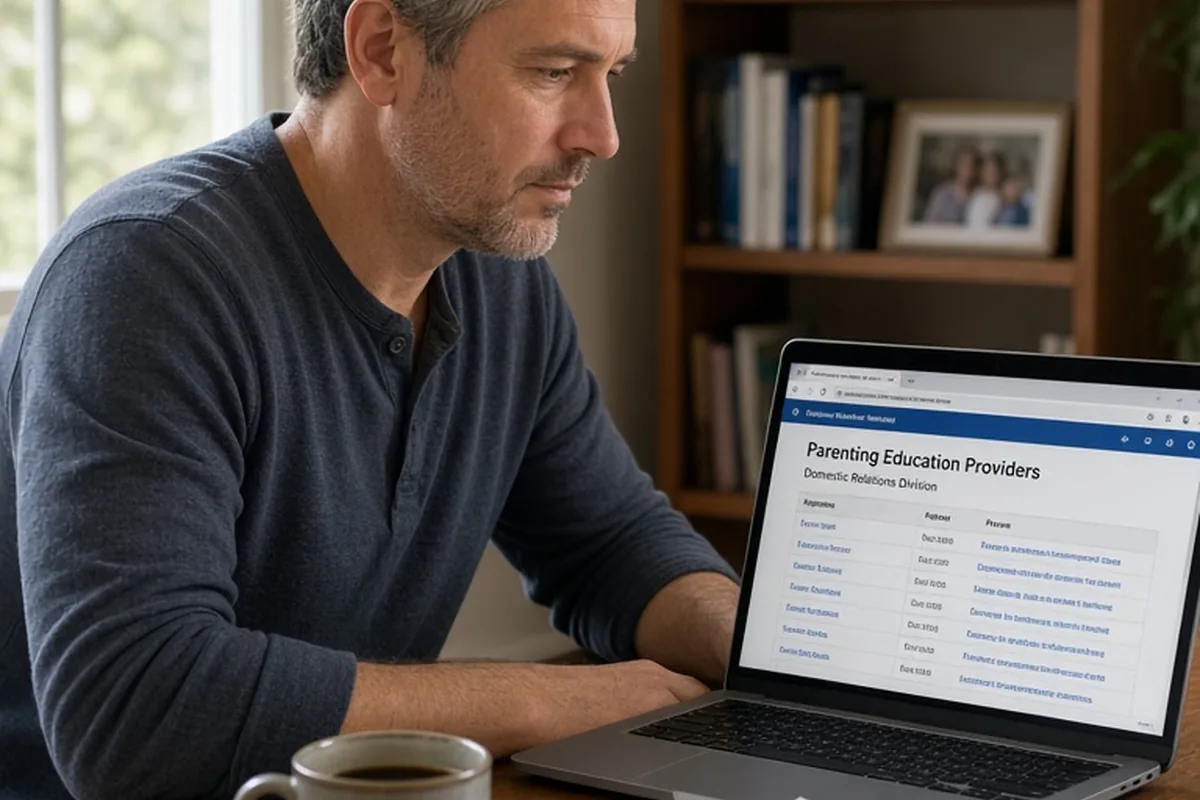
The best co-parenting class depends on whether you need court-approved certification or voluntary skill-building. For legal mandates, prioritize programs officially recognized by your county court, verifying accepted formats, minimum hours, and certificate requirements before enrolling. For voluntary learning, choose between self-paced digital courses, interactive group seminars, or specialized high-conflict workshops based on your communication dynamics, schedule flexibility, and whether you and your co-parent plan to attend separately or together.
Navigating separation or divorce while raising children brings practical and emotional hurdles, from coordinating everyday schedules to resolving disagreements without involving the children. While state laws or family court judges frequently require parents to complete a parenting education course, many parents also seek out these programs independently to establish clearer boundaries and reduce household friction.
Deciding Between Court-Mandated and Voluntary Co-Parenting Programs
When a family court orders parenting education, often designated as a Parent Education and Family Stabilization course, the court maintains strict criteria regarding syllabus content, duration, and approved vendors. Enrolling in an unapproved course when a judge ordered a specific certified program can lead to rejected certificates, wasted financial resources, and missed legal deadlines. Your initial priority in a contested or formalized divorce process is to review the exact wording of your court order or consult the local domestic relations division checklist to identify mandatory provider rosters.
Voluntary enrollment offers far greater flexibility in curriculum design and pacing. Parents seeking guidance outside the legal system can bypass rigid state-mandated syllabuses to focus on issues specific to their family stage, such as introducing new partners, supporting toddlers through household transitions, or managing shared extracurricular costs. Because you are not bound by county filing rules, you can choose specialized seminars or ongoing workshops that address your specific co-parenting obstacles rather than a broad, statutory curriculum.
If you anticipate that formal custody proceedings may occur in the near future, selecting a program that already holds county or state accreditation is a pragmatic middle ground. Completing an officially recognized course before being ordered to do so demonstrates proactive attention to your children's well-being while generating a completion certificate that satisfies upcoming procedural requirements without repeating the coursework.
Evaluating Online Self-Paced Courses Against Live Group Formats
Online self-paced modules are convenient for parents balancing unpredictable work shifts, sole caregiving responsibilities, or tight budgets. These programs divide lessons into pre-recorded lectures, practical reading materials, and modular comprehension quizzes that you can finish on your own schedule. The trade-off is a lack of real-time personal interaction, meaning you cannot ask an instructor follow-up questions about unique co-parenting hurdles or receive individualized feedback on your communication style.
Live interactive courses, whether conducted in person at a family resource center or through scheduled video sessions, provide collaborative engagement. Instructors guide participants through active role-playing exercises, simulated message drafting, and moderated discussions. Hearing other parents describe similar co-parenting dynamics often reduces feelings of isolation and provides practical strategies that pre-recorded videos cannot deliver.
A critical consideration when selecting between formats is judicial acceptance. Certain jurisdictions explicitly prohibit asynchronous, completely self-paced classes for mandatory filings, requiring instead verifiable live attendance or identity-verified monitoring to ensure participation. Always verify with your local court clerk or legal counsel whether your specific jurisdiction accepts remote, asynchronous certificates before purchasing a self-paced digital package.
Selecting Curriculums for Low-Conflict Versus High-Conflict Dynamics
Co-parenting programs are not universal in their therapeutic or practical focus. When parents share mutual goodwill and can converse politely, a cooperative co-parenting curriculum is ideal. These programs focus on fluid scheduling, joint attendance at sporting events and school conferences, open telephone check-ins, and maintaining mirrored household rules. The goal in low-conflict classes is active, direct collaboration across two households.
In contrast, when interactions involve hostility, accusations, or repeated boundary violations, attempting cooperative strategies often escalates tension. High-conflict dynamics require a curriculum centered on parallel parenting. Parallel parenting programs teach each parent to manage their household completely independently, minimize direct spoken contact, use neutral digital calendars, and interact strictly through concise, written logistical updates.
Examine the syllabus carefully to avoid programs that promote unrealistic expectations. If a course focuses heavily on reforming the other parent's attitude, persuading an uncooperative former partner, or achieving total agreement, it will likely increase frustration. A useful curriculum focuses strictly on elements within your personal control: emotional composure, de-escalated messaging, consistent personal boundaries, and protecting children from adult stress.
Determining Whether to Attend Together or in Separate Sessions
Separated parents sometimes consider attending an interactive parenting seminar together to show unity, but shared attendance often complicates the learning environment. If unprocessed relationship grief or unresolved financial disputes linger, sitting together in an interactive setting can trigger subtle defensiveness or covert disagreements. Instead of absorbing child-centered strategies, parents may find themselves preoccupied with managing the other adult's immediate reactions.
Separate attendance is standard practice across the majority of family courts and professional counseling programs. Registering for different session times or distinct cohorts gives each parent the freedom to ask candid questions, acknowledge personal communication flaws, and process course materials without fear of judgment or retaliation. This autonomy allows you to focus entirely on your personal growth as a parent rather than managing relationship tensions in front of peers.
In situations involving a history of domestic abuse, coercion, harassment, or formal orders of protection, separate attendance is vital for physical and emotional safety. Established course providers have intake protocols designed to screen for protective orders and safety concerns. Reputable organizations ensure that protected parties are never placed in the same physical classroom or virtual breakout space, maintaining total confidentiality and preventing procedural complications.
Verifying Program Accreditation, Judicial Acceptance, and Total Costs
Family court divisions routinely maintain a directory of approved parent education providers. You can usually access this roster on the court clerk's public portal or by contacting the family court coordinator. Be cautious of private online programs that advertise nationwide approval. Because custody standards and judicial preferences vary by state, county, and individual judge, broad marketing claims rarely guarantee local acceptance.
Look into the professional credentials of the organization and its instructors. High-quality programs are developed or led by licensed clinical social workers, licensed marriage and family therapists, credentialed family mediators, or established non-profit child development centers. Instructors with professional family welfare training ground their coursework in verified child development principles rather than subjective opinions.
Program costs vary depending on whether the provider is a community agency, a court-run department, or a private commercial service. While non-profit community clinics and municipal agencies frequently offer sliding-scale fees or fee waivers for low-income parents, private online programs charge flat rates. Check whether the enrollment price covers your official completion certificate, verification processing, and direct court reporting, or if additional administrative fees apply.
Applying Practical Communication Tools from Co-Parenting Programs
The most practical skill taught in co-parenting coursework is shifting daily exchanges from emotional debates into structured, professional correspondence. Quality programs train parents to structure messages using frameworks like the BIFF method: Brief, Informative, Friendly, and Firm. When receiving an inflammatory message regarding scheduling or personal choices, a trained parent learns to ignore insults and reply with only the necessary logistical facts.
Programs also offer actionable methods for handling custody transitions, which are frequent sources of parental tension. Instructors provide strategies such as utilizing neutral public locations, establishing firm pickup and drop-off windows, and keeping transition conversations strictly focused on immediate handoff details. Developing structured exchange protocols prevents regular friction points and gives children a calm, predictable transition between homes.
Crucially, these courses teach parents how to shield children from adult matters. You will learn practical phrasing to prevent putting children in the middle, such as using them as messengers, questioning them about the other parent's home, or discussing legal filings in their presence. By learning how to listen and redirect your child's worries, you help preserve their sense of security across both households.
Illustrative Scenarios
Verifying Court Approval for Digital Programs
Marcus was ordered by a county judge to complete a four-hour parenting education course within sixty days. Eager to finish quickly, he found a low-cost, two-hour online seminar that claimed broad nationwide utility. Before purchasing, Marcus reviewed his local court division's website and discovered that his specific jurisdiction required a four-hour curriculum approved by the state family court administrator. Had he finished the two-hour class, the court clerk would have rejected his certificate. Marcus selected a certified online webinar from the county's approved directory, completed the required modules, and successfully filed his recognized certificate with the court.
Key point: Checking your local court clerk's approved provider directory before paying prevents rejected filings and wasted expenses.
Transitioning to Parallel Parenting Strategies
Elena was experiencing constant stress from combative text messages and arguments over daily schedules with her former partner. She initially enrolled in a cooperative co-parenting workshop that encouraged frequent phone check-ins and joint problem-solving, but every call quickly turned into an argument about past relationship issues. Recognizing that cooperative strategies were increasing conflict, Elena switched to a specialized high-conflict seminar focused on parallel parenting. She learned how to establish clear boundaries, transition to a shared digital calendar, and limit communication to brief, neutral email messages about essential logistics.
Key point: Choosing a program that matches your actual conflict level protects your emotional energy and creates healthier boundaries.
Frequently asked questions
Can a co-parenting class help if my former partner refuses to participate?
Yes. A significant portion of co-parenting coursework focuses on managing your personal communication boundaries, emotional reactions, and home environment. Even if the other parent remains uncooperative, applying neutral communication techniques and consistent boundaries protects your children and lowers everyday tension in your home.
How long are co-parenting completion certificates valid for court matters?
Certificates generally remain valid for the duration of your current legal proceeding, provided you complete the course within the court's designated timeframe, which is commonly thirty to sixty days from the initial order. If you return to court several years later for a modification, the presiding judge may evaluate whether an updated or advanced course is necessary based on your children's developmental stages.
What options exist if I cannot afford the cost of a required parenting course?
Most county court systems provide fee waiver or reduction programs for parents demonstrating financial hardship. You can submit an affidavit of indigence or fee waiver request through the court clerk, or seek out certified non-profit community clinics and public health departments that offer sliding-scale pricing based on household income.
Are online co-parenting classes accepted by all family courts?
Acceptance varies widely across jurisdictions. While many family courts permit certified online courses, some counties require live virtual attendance or in-person participation to confirm identity and engagement. Always confirm your jurisdiction's local court rules before purchasing an online program.
Your next step
Contact your local county court clerk or visit your domestic relations division's website to obtain the current list of approved parenting education providers before selecting a program.