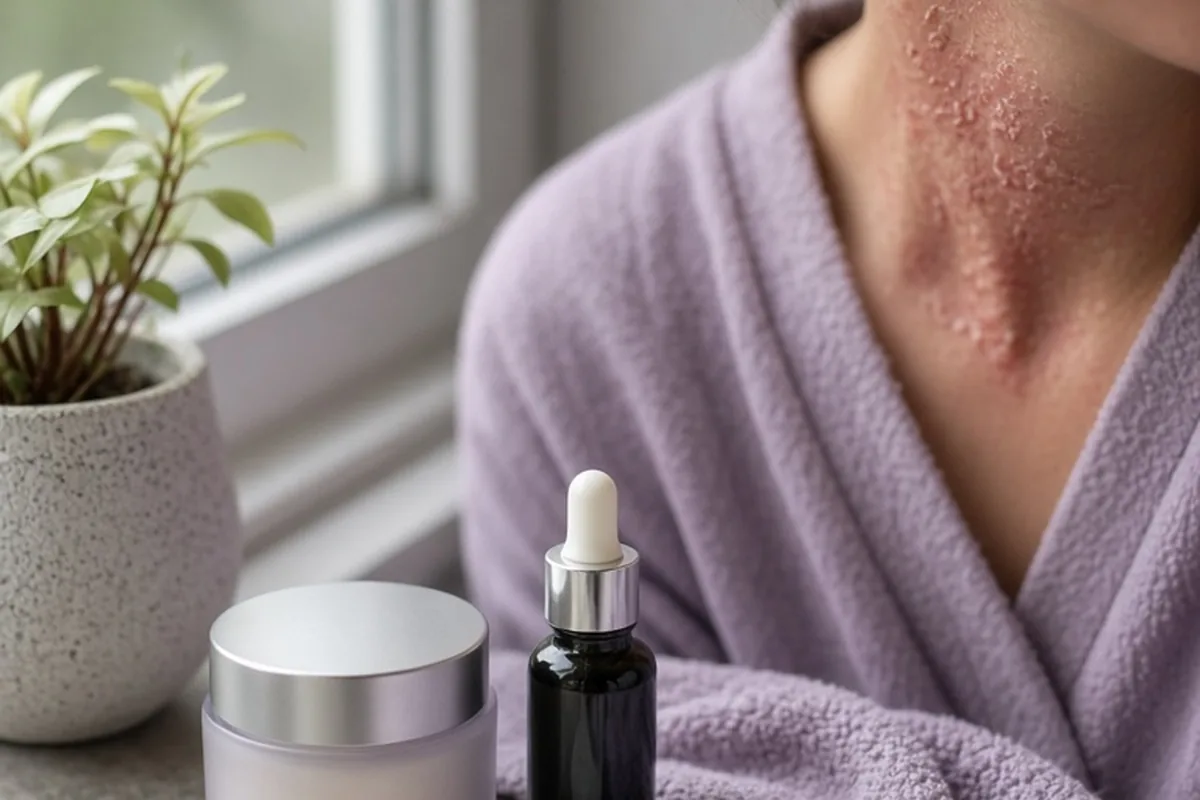
Contact dermatitis from skincare occurs when a topical product triggers localized skin inflammation, producing redness, itching, burning, flaking, or small bumps. It generally falls into two distinct categories: irritant contact dermatitis, caused by direct damage to the outer skin barrier from harsh or concentrated ingredients, and allergic contact dermatitis, which is an immune-mediated allergic reaction to a specific sensitizer. Calming it requires halting suspect products and using a minimal barrier-supportive routine.
Experiencing a sudden flare of tenderness, redness, or peeling after applying a daily cream or new serum can be disorienting. Understanding how cosmetic dermatitis develops allows you to resolve current inflammation comfortably while protecting your skin barrier from future irritation.
Distinguishing Irritant from Allergic Contact Dermatitis
Skin reactions caused by topical products typically stem from one of two distinct mechanisms: physical irritation or an immunological allergy. Irritant contact dermatitis is by far the most widespread form. It occurs when a substance physically strips lipids, alters the skin surface pH, or directly damages the stratum corneum. This reaction is dose-dependent, meaning higher concentrations, frequent applications, or compromised starting skin conditions make the reaction more severe. Symptoms of irritation frequently emerge rapidly, manifesting as stinging, tightness, dry peeling, and a burning sensation within minutes to hours of application.
Allergic contact dermatitis, by contrast, involves a delayed type of immune response known as type IV hypersensitivity. In this scenario, your immune system identifies a specific cosmetic ingredient as a foreign threat. Unlike simple irritation, an allergic response is not necessarily dependent on high ingredient concentrations; even a microscopic trace can activate a flare once sensitization has developed. Symptoms usually take between twenty-four and seventy-two hours to surface after exposure, which often makes identifying the offending bottle tricky. Allergic reactions typically present with intense itching, swelling, localized hives, or tiny fluid-filled vesicles that can spread beyond the exact area of application.
Recognizing whether you are dealing with irritation or an allergy guides your recovery plan. If a strong chemical exfoliant produces immediate redness and stinging on the cheeks, you are likely managing irritant barrier damage that will settle once the active is removed. If a botanical cream applied on Monday leads to itchy, swollen eyelids on Wednesday, you are more likely encountering a true allergic response to a specific preservative, botanical extract, or fragrance component.
Common Skincare Culprits and Hidden Sensitizers
Skincare formulations are complex mixtures of active ingredients, emulsifiers, texturizers, and stabilizing agents. While any ingredient can theoretically provoke irritation in highly reactive skin, a predictable cluster of components accounts for the vast majority of cosmetic-induced contact dermatitis. Fragrance materials, both synthetic blends and natural essential oils, remain the leading cause of allergic contact dermatitis in topical preparations. Natural botanical oils such as lavender, eucalyptus, ylang-ylang, and tea tree oil contain volatile aromatic terpenes like limonene and linalool, which readily oxidize upon exposure to air and turn into potent sensitizers.
Potent treatment actives represent the primary trigger for irritant contact dermatitis. High-percentage alpha hydroxy acids like glycolic and lactic acid, unbuffered L-ascorbic acid, salicylic acid, and prescription or over-the-counter retinoids accelerate cellular turnover while temporarily depleting surface lipids. When these actives are introduced too quickly, applied to damp skin, or combined without adequate recovery periods, the moisture barrier falters. In addition, preservatives designed to keep water-based products safe from bacterial growth, such as methylisothiazolinone or formaldehyde-releasing agents, can prompt allergic flares in sensitized individuals.
- Fragrance compounds, essential oils, and aromatic masking agents
- Preservatives such as methylisothiazolinone, isothiazolinones, and specific parabens
- High-strength chemical exfoliants, including glycolic, salicylic, and lactic acids
- Retinoids like retinol, retinaldehyde, and prescription tretinoin
- Strong foaming surfactants such as sodium lauryl sulfate
- Certain chemical sunscreen filters in vulnerable or barrier-compromised skin
Immediate Steps to Calm an Active Flare-Up
When skin becomes acutely inflamed, reactive, or tender, your immediate priority is eliminating all potential chemical stressors. Put a complete pause on every active treatment, exfoliating acid, retinoid, brightening serum, and fragranced product. Continuing to apply complex multi-step routines while the skin is actively inflamed prevents the barrier from repairing itself and increases the likelihood of developing new sensitivities to previously tolerated ingredients.
Shift your daily regimen into a gentle elimination routine consisting solely of three functional elements: a non-foaming, fragrance-free wash, a simple barrier-supportive moisturizer, and physical sun protection when outdoors. Cleanse only with lukewarm water or a gentle lotion cleanser, avoiding washcloths, cleansing brushes, or vigorous rubbing. To relieve intense burning or warmth, apply a clean, cool-water compress over the face for five to ten minutes before sealing the skin with a bland, petrolatum- or ceramide-based ointment.
How to Safely Patch Test Skincare at Home
Once your skin has returned to its baseline state, avoiding repeat episodes requires systematic product evaluation rather than guesswork. An at-home repeat open application patch test helps you gauge whether a leave-on product is safe for full-face use. To conduct an at-home patch test, apply a pea-sized amount of the product to a discreet, sensitive patch of skin, such as the inner upper forearm or the area just behind the ear, twice daily for five to seven consecutive days.
Monitor the test site closely for delayed signs of reactivity, including localized redness, itching, bumpiness, or dryness. If no reaction occurs after a full week, the product is generally tolerated by your skin barrier. However, recognize the limits of home testing: at-home open application tests are excellent for screening leave-on moisturizers and serums, but they cannot replace clinical epicutaneous patch testing performed by an allergist or dermatologist if you suffer from severe, recurring, or unidentifiable facial dermatitis.
Rebuilding and Supporting a Compromised Skin Barrier
Recovering from contact dermatitis requires intentional support for the stratum corneum, the skin's outermost defense layer. When dermatitis strikes, the organized brick-and-mortar structure of corneocyte skin cells and lipid matrix breaks down, leading to rapid transepidermal water loss. To support structural recovery, look for moisturizers formulated with physiological lipids, namely ceramides, cholesterol, and free fatty acids, which help mimic and replenish the natural lipid ratio of healthy skin.
In addition to barrier lipids, soothing humectants and skin-protectant agents such as colloidal oatmeal, panthenol (provitamin B5), allantoin, and pure pharmaceutical-grade petrolatum provide immediate physical protection while reducing moisture loss. Avoid the common mistake of cycling through multiple new calming serums simultaneously. Introducing several botanical cica or calming formulas during active recovery introduces multiple new preservative systems and plant extracts, raising the risk of compounding the reaction.
Formulating a Long-Term Preventive Skincare Strategy
Preventing future bouts of skincare-induced dermatitis relies on mindful routine design and ingredient literacy. Start by maintaining an ongoing personal ingredient log. When a product triggers a reaction, save the full International Nomenclature of Cosmetic Ingredients (INCI) list in a digital note. Over time, cross-referencing lists from reactive products against formulas you tolerate without issue will help you identify shared allergens or specific preservative families that disagree with your skin.
Adopt a disciplined pace when introducing new skincare formulas into your regular regimen. Introduce only one single-ingredient or single-formula change at a time, allowing at least three weeks of consistent use before adding anything else. If you use potent actives like retinoids or exfoliating acids, utilize buffering techniques by applying your moisturizer first or mixing the active with a bland cream to moderate the absorption rate. Respecting your skin's natural tolerance limits ensures long-term cosmetic benefits without pushing the barrier into chronic inflammation.
Illustrative Scenarios
Pinpointing a Delayed Botanical Reaction
A skincare user introduced a new luxury facial oil advertised as calming and natural into their established routine. Four days later, they developed dry, itchy, red patches around the orbital bone and sides of the mouth. Assuming the reaction was simple winter dryness, they applied more of the oil, which intensified the swelling and redness. After switching to an elimination routine with a simple petroleum ointment, the redness resolved over eight days. Later, a careful review of the product's ingredient list revealed concentrated essential oils of lavender and citrus peel.
Key point: Natural or botanical claims do not equal hypoallergenic properties; pausing all products and verifying specific essential oil allergens is essential for clearing delayed allergic dermatitis.
Frequently asked questions
How long does it take for contact dermatitis from skincare to clear up?
Mild irritant reactions often begin improving within three to five days once the triggering product is discontinued and replaced with gentle barrier support. Allergic contact dermatitis, however, may take two to three weeks to fully clear as the localized immune response subsides.
Can you suddenly become allergic to a skincare product you have used for years?
Yes, allergic contact dermatitis can develop after months or even years of repeated exposure to a specific preservative, fragrance, or botanical ingredient. The immune system can become sensitized over time, eventually mounting an allergic response to a familiar formula.
What is the difference between skin purging and contact dermatitis?
Skin purging is an expected acceleration of pore turnover caused specifically by cellular-renewing actives like retinoids or chemical exfoliants, presenting as temporary breakouts in areas where you typically get clogged pores. Contact dermatitis involves barrier damage or an allergic response, presenting with widespread redness, itching, stinging, swelling, or rough scaly patches.
Should I apply hydrocortisone cream to facial contact dermatitis?
While over-the-counter hydrocortisone can offer short-term relief for intense allergic itching, it should only be used sparingly for a few days under medical guidance. Prolonged or unsupervised application of topical steroids on the face can lead to skin thinning, barrier impairment, or steroid-induced dermatitis.
Your next step
Stop all active treatments immediately, simplify your regimen to a bland fragrance-free cleanser and barrier balm, and keep an ingredient log to isolate the trigger before reintroducing products.