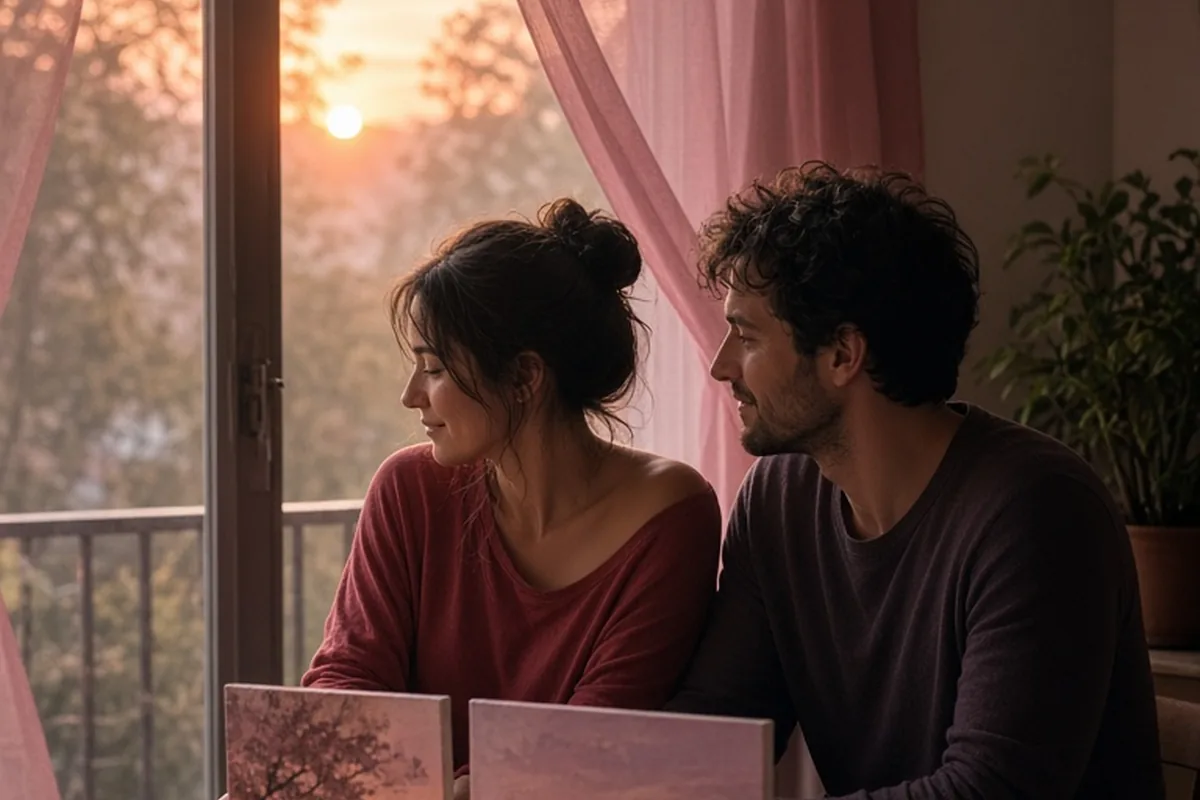
Couple painting ideas offer an engaging way to unwind, communicate, and collaborate without the pressure of traditional date nights. Popular formats include connected split canvases, lighthearted portrait swaps, timed canvas rotations, and collaborative abstract blending. Choosing beginner-friendly acrylic paints, a clear theme, and simple ground rules ensures both partners can enjoy the creative process regardless of their individual artistic backgrounds or skill levels.
Making art together shifts the dynamic from passive entertainment to active collaboration, giving you and your partner a dedicated space to converse, experiment, and build a lasting visual keepsake.
Split-Canvas Paintings That Complete Each Other
A split-canvas project, also known as a diptych, involves placing two separate canvases side by side while painting a single unified scene across both surfaces. This format is ideal for couples because each person controls their own canvas while working toward a shared visual goal. Popular designs include a sprawling mountain range under a continuous sunset, two halves of a blossoming tree, or a celestial moon and sun composition where complementary elements bridge the gap between the frames.
To make this project run smoothly, push the two canvases flush against each other on a flat table or twin easels before sketching the core horizon line with a light pencil. Choose a shared color palette of three to four primary hues so the two halves visually harmonize even if your individual brushwork techniques differ. A common challenge with split canvases is mismatched alignment when the pieces are hung later; to minimize this, step back together every fifteen minutes to check that connecting lines, such as branches or coastlines, align smoothly across the seam.
Playful Portrait Swaps and Timed Canvas Rotations
If you want an evening filled with humor and lighthearted vulnerability, portrait swaps and rotating canvases offer an entertaining alternative to traditional landscape painting. In a portrait swap, each partner paints the other person without showing the canvas until both are completely finished. The goal is never photorealism; instead, focus on capturing recognizable quirks, favorite outfits, or exaggerated expressions that celebrate your partner's personality.
Another engaging variation is the timed canvas switch, where you both start on separate blank canvases with a broad theme, such as a futuristic city or an enchanted garden. Set a timer for seven to ten minutes, and when it rings, swap seats to continue painting on the other person's canvas. This method naturally strips away perfectionism because you must surrender total control and adapt to the marks, colors, and directions your partner introduced during their turn.
Low-Pressure Abstract and Textured Canvas Projects
Abstract painting removes the anxiety of drawing recognizable objects, making it an excellent choice for beginners or partners who feel self-conscious about their artistic skills. One straightforward approach is geometric tape resist, where you use low-tack painter's tape to map out crisp intersecting lines, triangles, or stripes across a shared canvas. Once the tape is firmly pressed down, you can both fill the open spaces with complementary shades before peeling the tape away to reveal clean, striking edges.
You can also experiment with texture mediums, such as modeling paste or acrylic pouring mediums, to create tactile modern art. Using palette knives, you can spread thick paste across the canvas in rhythmic waves, arches, or minimalist textures, then layer muted neutral washes over the surface once it dries. The primary consideration with heavy texture and pouring techniques is drying time; these pieces often require twenty-four to forty-eight hours to cure fully before you can move or display them.
Commemorative Paintings of Shared Memories and Places
Painting a meaningful location or milestone allows you to transform a shared memory into a personalized piece of home decor. Consider recreating the silhouette of a skyline from a favorite vacation, the coastline of a beach you visited together, or a stylized map of the neighborhood where you first met. These projects provide natural conversation starters as you reminisce about the specific moments, sights, and feelings tied to that place.
To keep the process manageable, print out one or two reference photos beforehand rather than relying entirely on memory or small phone screens. Simplify the scene into basic background, middleground, and foreground blocks before applying paint. Keep in mind that attempting an exact architectural or photographic reproduction can sometimes lead to frustration; agree in advance to prioritize the atmosphere, colors, and feeling of the location over strict technical accuracy.
Practical Supplies and Setting Up an At-Home Studio
A successful creative date night depends heavily on an organized, stress-free physical environment. Preparing your workspace in advance prevents accidental spills from interrupting your momentum and ensures you have all necessary tools within arm's reach. Heavyweight acrylic paints are generally the best medium for date nights because they dilute easily with water, dry quickly, emit minimal odor, and work well on pre-stretched cotton canvases or canvas panels.
To set up your station effectively, lay down a durable canvas drop cloth or inexpensive plastic tablecloth across your work surface. Prepare two separate rinse jars for water, a generous roll of paper towels, and individual palettes or disposable paper plates for mixing colors. Arrange your seating so you can either sit side by side to converse easily or opposite one another if you prefer to keep your work hidden until a final reveal.
Navigating Skill Differences and Creative Pressure
It is common for one partner to possess more artistic experience or confidence than the other, which can occasionally create unintentional tension if expectations are left unsaid. If one person feels out of their depth, they may disengage or worry about ruining the project. The key to balancing different skill levels is establishing early on that the primary objective of the evening is connection and play rather than technical mastery.
The more experienced partner can support the process by offering practical tips on color mixing or brush handling only when asked, rather than taking over the other person's canvas. Meanwhile, the less experienced partner can lean into expressive brushwork, bold color choices, or stylized marks. Emphasizing curiosity over judgment ensures that both individuals feel comfortable taking creative risks without fear of criticism.
Curing, Sealing, and Displaying Your Shared Masterpiece
Once your painting session wraps up, taking a few extra steps to protect and display your work preserves both the art and the memory of the evening. Acrylic paint becomes dry to the touch within a couple of hours, but it requires at least a full day to cure thoroughly. Keep the finished canvases in a well-ventilated area away from direct heat, dust, and curious pets while the moisture evaporates completely.
After the paint cures, applying an acrylic varnish in a satin, gloss, or matte finish provides a protective barrier against dust, moisture, and ultraviolet fading. Once sealed, you can frame the canvases in floating wood frames or mount them directly on a gallery wall. Hanging your collaborative artwork in a shared living space serves as a daily reminder of your teamwork, creative effort, and the fun you had building something together.
Frequently asked questions
What type of paint is best for a couple painting date night?
Acrylic paint is the most practical choice for beginners and casual date nights because it dries quickly, cleans up easily with water, and produces vibrant colors on canvas. Oil paints take days or weeks to dry and require chemical solvents, while watercolors require specialized paper that is less suited for collaborative canvas projects.
How long does an at-home couple painting session usually take?
Most couples spend between ninety minutes and two hours on their painting session, which allows ample time for setup, casual conversation, and layering colors. Setting aside a relaxed two-hour window ensures you do not feel rushed while working through your design.
What should we do if one of us makes a mistake on the canvas?
Because acrylic paint dries rapidly and is completely opaque, you can easily let the unwanted mark dry for ten minutes and then paint right over it with your background color. Treating unexpected marks as happy accidents or creative detours keeps the atmosphere light and enjoyable.
Your next step
Pick one painting format and gather a few basic canvases and acrylic paints today to schedule a fun, creative date night this coming weekend.