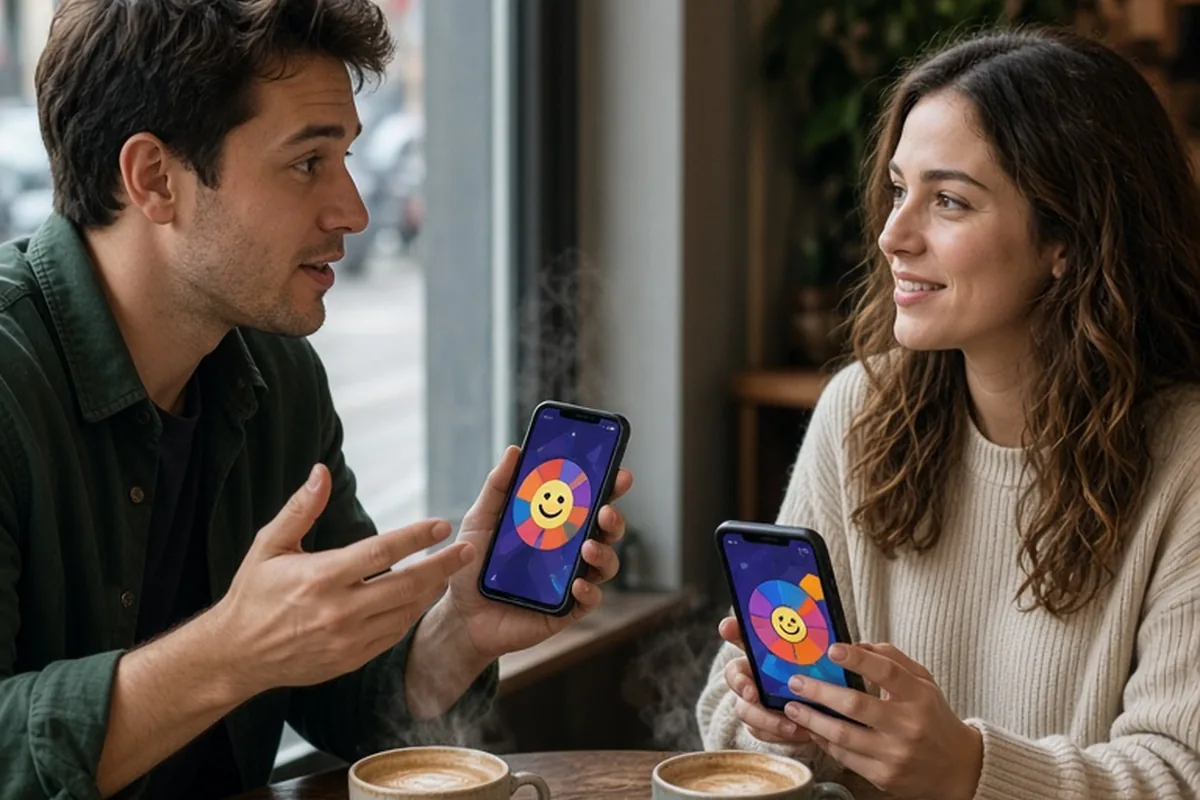
The Smile Dating Test is a viral twelve-question personality quiz that assigns participants a color-coded smiling character to illustrate their dating habits, social battery, and communication preferences. Cracking its code means recognizing it as an informal self-reflection prompt loosely adapted from traditional sixteen-personality frameworks rather than a clinical diagnostic. You can put it to practical use by clarifying your own relationship boundaries, sharing it as an easygoing conversation starter, and avoiding rigid assumptions about match compatibility.
Short online quizzes often capture widespread attention because they translate tangled emotional instincts into clean, shareable visuals. The Smile Dating Test gained momentum across social platforms by summarizing nuanced relationship behaviors into colorful emoji badges. Beneath the playful presentation lies an opportunity to explore how you manage energy, express affection, and navigate dating expectations.
How the Smile Dating Test Connects Quiz Questions to Personality Archetypes
The Smile Dating Test, originally created on the South Korean interactive quiz platform Ktestone, uses twelve situational questions to generate a personality snapshot. The prompts focus on immediate social instincts: how you react when plans are canceled last minute, whether you prefer chatting one-on-one or in large groups, how quickly you reply to text messages, and whether you lean toward direct emotional disclosures or cautious reflection. Rather than scoring knowledge, each question measures a behavioral preference along four foundational spectrums that roughly parallel the Myers-Briggs Type Indicator, contrasting introversion with extraversion, sensory grounding with intuition, emotional processing with analytical thinking, and structured planning with spontaneous flexibility.
When you finish the questionnaire, the algorithm correlates your pattern of answers with one of sixteen distinct color-coded smiles, such as Yellow, Mint, Olive, Khaki, Sky Blue, Burgundy, or Grey. Each color represents a specific archetype, accompanied by a bulleted summary of romantic tendencies, pet peeves, and habits. Understanding this underlying structure strips away any mystique. The test does not evaluate psychological health, moral character, or long-term romantic fitness; it merely reflects your own self-reported tendencies back to you wrapped in a memorable aesthetic.
Interpreting Warm, Cool, and Neutral Smile Profiles Without Stereotyping
The color outcomes generally fall into recognizable behavioral clusters that help explain personal communication rhythms. Warmer shades, such as Yellow, Orange, and Pink smiles, typically describe partners who process their thoughts externally, thrive on frequent contact, express affection enthusiastically, and enjoy shared social adventures. In contrast, cooler and deeper tones, such as Navy, Grey, Olive, and Khaki smiles, point toward partners who recharge through solitude, process conflict internally before speaking, favor predictable schedules, and feel drained by constant small talk. Neutral or pastel tones often highlight adaptable mediators who balance social enthusiasm with a quiet personal routine.
The primary risk in reading these summaries is mistaking a personality tendency for an immutable rule of conduct. A bullet point noting that a Grey Smile partner takes time to warm up describes a typical comfort level, not an excuse for stonewalling or emotional neglect. Similarly, a description noting that a Yellow Smile partner loves spontaneous calls does not mean they cannot respect a partner who needs structured notice. You get the most value from these profiles by viewing them as neutral starting points for personal self-awareness rather than permanent labels that dictate how you or anyone else must behave.
Using Your Results to Clarify Personal Boundaries and Communication Habits
Putting your quiz results to constructive use begins with an honest audit of your recent dating experiences. Review the trait descriptions on your result card and identify which points trigger immediate recognition. If your card states that unexpected schedule changes leave you irritated, reflect on whether vague dating plans have caused you unnecessary anxiety in the past. If the summary notes that you withdraw when overwhelmed by constant texting, consider whether you have struggled to communicate your need for focused downtime during previous talking stages. The test serves as an accessible vocabulary list for desires and boundaries you might have previously felt awkward describing.
Once you pinpoint your recurring tendencies, translate them into polite, practical language that you can use in everyday dating. Instead of citing your color archetype as a rigid requirement, formulate grounded boundary statements based on real needs. For example, if you know you need solo time to decompress after work, you can tell someone, "I really enjoy talking with you, but I usually set my phone aside for an hour after I get home from the office to recharge." This approach shifts the quiz from a novelty meme into a springboard for clear, respectful relationship communication.
Introducing the Quiz into Early Dating Conversations Respectfully
Sharing an informal quiz can be an effective, lighthearted icebreaker during early dating, provided it remains voluntary and unpressured. If you are messaging on a dating app or chatting during a casual dinner, you can introduce the topic with an easy invitation: "I took that short Smile Dating quiz everyone has been posting, and the description of my social battery was surprisingly accurate. Have you seen it?" This framing invites the other person to share their perspective or take the quiz for amusement, without turning the interaction into an uncomfortable interview or psychological evaluation.
Pay close attention to how you respond to their result. If they share their profile, use it as a curious path toward genuine questions rather than amateur analysis. If their card highlights a preference for quiet nights in, you might ask what a genuinely restful weekend looks like for them. Crucially, if your date expresses disinterest in internet quizzes or considers personality categorization silly, let the topic drop naturally with good humor. Forcing a partner to participate or treating their reluctance as a red flag creates unnecessary friction over what should remain a low-stakes social game.
Navigating the Inherent Flaws of Best Match and Worst Match Badges
At the bottom of each Smile Dating Test result card, the system lists specific colors designated as your "Best Chemistry" and "Worst Chemistry" matches. These pairings are derived from theoretical compatibility frameworks within personality typology, which hypothesize that certain combinations of extraversion, introversion, and structure complement each other naturally. However, treating these pairings as definitive indicators of relationship success or failure is deeply flawed. The algorithm cannot assess shared ethical values, financial goals, mutual respect, emotional maturity, or conflict resolution skills, which constitute the true foundation of long-term compatibility.
Relying on match badges can lead to two opposite but equally damaging dating traps: premature dismissal and unwarranted complacency. Prematurely ending a promising connection because someone scored as your listed "worst match" color discards real-world compatibility in favor of a superficial formula. Conversely, ignoring inconsistent actions, poor communication, or conflicting life goals simply because someone matched your ideal color archetype creates an illusion of security. Real chemistry develops through observable consistency, mutual vulnerability, and daily consideration, not through algorithmic symmetry.
Separating Internet Quiz Archetypes from Real-Life Relationship Behavior
Self-reported quizzes inevitably carry situational bias because people answer based on current mood, temporary stress levels, or aspirational self-perceptions. A person feeling exhausted after an intense workweek will likely answer questions with a strong preference for isolation, generating a cool-toned, solitary archetype that might not reflect their typical social warmth. Furthermore, individuals often select options that align with how they wish to behave rather than how they actually react under stress, such as claiming they always communicate directly while in reality tending to avoid difficult conversations.
For this reason, concrete, repeated behavior must always take precedence over any personality card. If someone's result card describes them as attentive and deeply communicative, but in practice they cancel dates without explanation and disappear for days, their actions provide the only reliable data. Use the Smile Dating Test as an entertaining framework for conversation and self-reflection, but evaluate your romantic partnerships through the consistency of someone's presence, the clarity of their words, and the respect they demonstrate toward your boundaries.
Illustrative Scenarios
Navigating Conflicting Color Badges in Early Dating
Julian and Sarah had been seeing each other for three weeks when they took the Smile Dating Test over coffee. Julian scored Burgundy Smile, an archetype centered on structure, detailed planning, and advance notice. Sarah scored Yellow Smile, a profile characterized by spontaneous socializing and flexible routines. Seeing that Burgundy and Yellow were flagged with poor chemistry, Julian felt an immediate surge of hesitation, wondering if their organizational styles were doomed to clash. Instead of pulling back, he voiced his curiosity directly: "My result says I stress out when schedules change at the last minute, which feels pretty true for my weekdays. How does planning usually feel to you?" Sarah explained that while she loved making spur-of-the-moment plans with friends, she deeply appreciated clear structure for dates and work commitments. The conversation allowed them to understand each other's planning preferences before any real scheduling friction occurred.
Key point: Algorithmic mismatch warnings should be treated as prompts to discuss real-world lifestyle habits rather than excuses to abandon a promising connection.
Using Profile Insights to Express Social Limits
Marcus frequently experienced emotional burnout during dating because he pushed himself to maintain constant text conversations and attend back-to-back social gatherings. After completing the Smile Dating Test, he received the Mint Smile result, which highlighted a strong tendency to withdraw when social obligations exceeded personal recharge time. Reading the summary helped him realize that his fatigue was not a sign of emotional indifference toward his dating partner, but a predictable consequence of neglecting his introverted baseline. Rather than abruptly disappearing or sending vague one-word replies, he shared his insight with the person he was dating: "I took this color quiz today and laughed because it called out my low social battery. It made me realize that after busy travel days, I really need a quiet evening to myself so I can show up refreshed when we hang out." His date welcomed the direct explanation.
Key point: Self-awareness gained from personality descriptions is most useful when converted into clear, considerate communication about personal recovery time.
Frequently asked questions
Is the Smile Dating Test scientifically validated by psychologists?
No, the Smile Dating Test is an informal online entertainment quiz without clinical or psychometric validation. It uses twelve broad multiple-choice questions loosely based on classic personality typing principles, but it is not a scientific diagnostic tool. It should be treated as a fun reflective exercise rather than psychological proof of relationship suitability.
Can your Smile Dating Test color result change over time?
Yes, your result can shift depending on your current environment, relationship status, or emotional energy. Because the test relies on only twelve situational questions, taking it during an intense work period may yield an introverted, low-energy profile, whereas taking it while feeling relaxed and social can produce an outgoing color result.
What should I do if my partner receives a color designated as my worst match?
Do not treat the quiz's compatibility pairings as a reason to doubt your relationship. Focus instead on how you and your partner actually treat each other, resolve disagreements, and communicate daily. If your shared values and real-world interactions are healthy and supportive, an arbitrary pairing on an internet quiz has no bearing on your potential.
How can I tell if someone's quiz profile reflects their true character?
Compare the descriptions on their card against their observable habits across several weeks of dating. Notice whether their reliability, communication speed, and conflict handling match the traits they claim to have. Concrete actions and mutual respect always provide more accurate insight into someone's character than self-reported answers on a brief quiz.
Your next step
Take the quiz, note two specific bullet points that accurately describe your current communication needs, and use them to articulate one clear personal preference the next time dating plans are discussed.