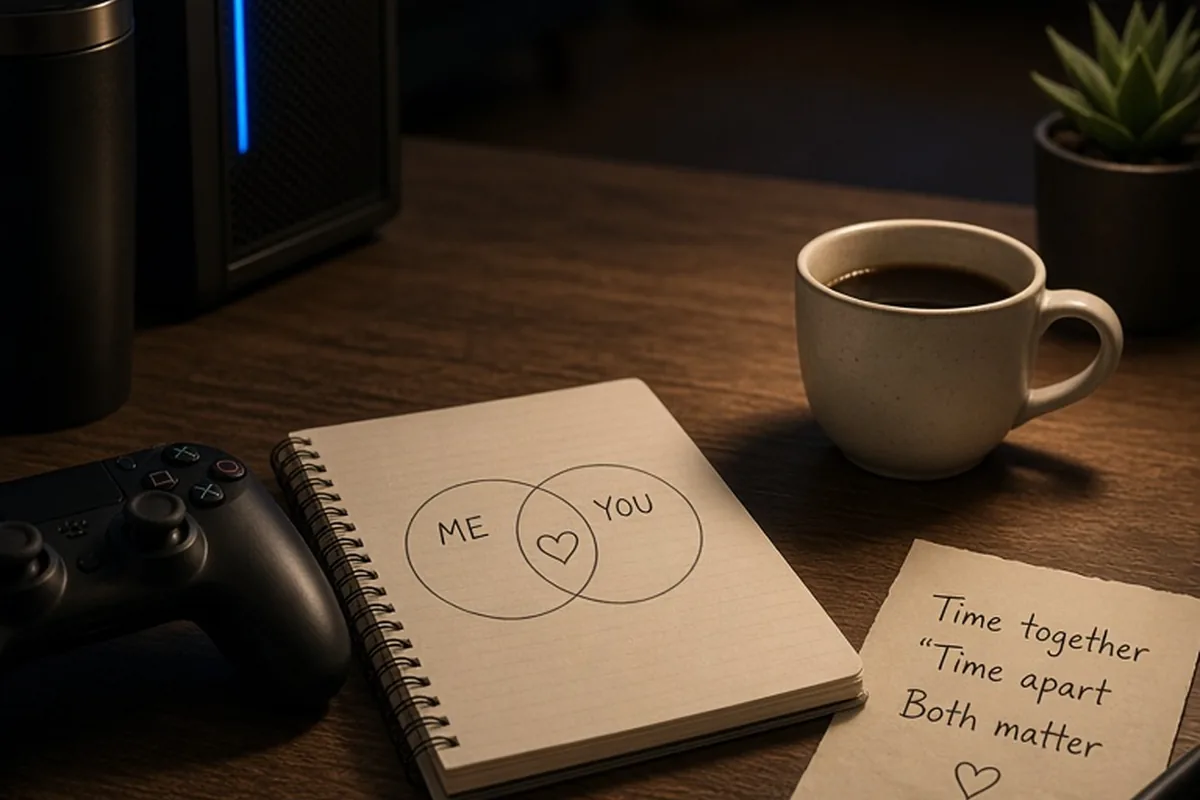
Dating a gamer works best when both partners treat gaming as an ordinary hobby rather than a character flaw or an all-consuming priority. Success comes down to setting clear expectations around shared time, respecting focused downtime, and communicating schedules directly. When you separate normal leisure from avoidance or neglect, you can enjoy independent interests while preserving genuine intimacy and emotional presence.
Video games are one of the most common pastimes in modern adult life, yet gaming habits can trigger friction when partners bring different expectations about attention, scheduling, and household presence. Navigating a relationship with someone who games does not require you to pick up a controller yourself, but it does require mutual respect for how both of you recharge and spend your leisure hours.
Understanding How Gaming Functions as Adult Leisure
To build a balanced dynamic, it helps to understand why your partner plays games in the first place. For many adults, gaming serves as a primary method for decompressing after high-stress workdays, engaging with complex narratives, or maintaining long-distance friendships through voice chat. Unlike passive entertainment such as watching television, gaming requires active cognitive focus, problem-solving, and continuous input, which can make it feel uniquely absorbing and restorative to the person playing.
The type of game your partner plays also shapes how they interact with their time. Single-player adventure games can usually be paused instantly whenever something comes up in the household. In contrast, online multiplayer games often involve live matches with other real people that last twenty to forty-five minutes without a pause button. Recognizing this mechanical difference does not mean your partner gets a free pass to ignore shared plans, but it does help you understand why asking for an immediate pause in the middle of a live competitive match creates friction.
Communicating Schedules and Uninterrupted Time
Vague time estimates are the most common source of arguments in relationships involving video games. Phrases like I will be done in a minute or I am almost finished usually mean very little when a player is in the middle of a match or trying to reach a save point. When these estimates repeatedly fail, the non-gaming partner naturally feels ignored or undervalued, while the gaming partner feels micromanaged or rushed through their downtime.
A practical solution is replacing open-ended phrases with specific time boundaries before a session starts. Instead of waiting until you need something immediately, agree on a concrete cutoff time in advance, such as logging off at seven o'clock for dinner. If you need their attention while they are playing, ask what stage of the game they are in or how many minutes remain in their current match. Giving a fifteen-minute heads-up before leaving the house or starting an activity prevents them from launching a brand-new match right when you are ready to connect.
Protecting Quality Time from Screen Distractions
Spending time in the same room while one person games and the other scrolls on a phone is often called parallel play. Parallel play can be a comfortable, low-pressure way to share space on quiet weeknights, but it is not a substitute for intentional, focused quality time. A relationship will quickly feel empty if parallel play becomes the only way you spend your evenings together.
Protect dedicated relationship time by establishing clear screen-free windows throughout the week. Plan dates outside the house, cook meals together without devices on the counter, or spend thirty minutes catching up before bed with monitors turned off. If your partner struggles to disconnect during agreed-upon couple time, address the distraction as a basic matter of presence and courtesy rather than attacking the game itself. The goal is making sure both people feel prioritized when you are actively spending time together.
Deciding Whether to Play Together or Cultivate Solo Interests
You do not need to adopt your partner's hobby to sustain a strong relationship, but expressing occasional curiosity can build rapport. If you are open to trying games together, look for cooperative, low-stress titles that prioritize teamwork over lightning-fast reflexes. Cooperative puzzle games, building simulators, or lighthearted party games allow you to share a lighthearted experience without the steep learning curve of competitive shooters or complex strategy games.
At the same time, maintaining your own independent hobbies is just as valuable. Having personal creative outlets, fitness routines, or social circles ensures you are not waiting around for your partner to finish their gaming session to start enjoying your day. Relationships thrive when both individuals have fulfilling solo interests that provide autonomy and give you interesting experiences to discuss when you reconnect.
Recognizing Healthy Engagement Versus Avoidance
A healthy gaming hobby fits smoothly alongside adult responsibilities, stable employment, household contributions, and consistent emotional availability. An engaged partner can step away from their computer or console to handle emergencies, honors scheduled plans, and stays present during difficult conversations without retreating behind a screen.
Trouble arises when gaming shifts from an enjoyable hobby into an avoidant coping mechanism. Warning signs include reacting with intense irritability when interrupted, neglecting basic chores or personal hygiene, calling out of work to play, or using gaming to evade relationship discussions. When these patterns occur, the problem is not the video game itself, but a broader breakdown in accountability and emotional regulation that requires direct, honest conversation and firm boundaries.
Setting Practical House Rules for Shared Living
When you live together, gaming setups can easily intrude on shared living areas through noise, bright displays, and late-night voice chat. A gaming station placed in the bedroom or main living room can disrupt sleep routines and make it difficult for the other partner to relax quietly. Establishing clear physical and sensory boundaries keeps the home peaceful for both of you.
Whenever space permits, place gaming consoles and computer desks in a designated office, den, or spare room rather than the primary bedroom. Invest in a quality headset so game audio does not take over the living space, and set quiet hours for speaking on voice channels late at night. Aligning on consistent bedtime routines protects your rest and ensures that screen glare does not interfere with intimacy or recovery.
Illustrative Scenarios
Navigating Dinner Plans Around Online Matches
Liam arrived home on a Friday evening planning to cook dinner with his partner Maya, but found her deeply immersed in a live multiplayer tournament match with headphones on. Liam's initial reaction was to feel unappreciated and slam kitchen cabinets to signal his frustration, which caused Maya to react defensively when the match ended. After cooling off, Liam explained that his frustration came from uncertainty about when they were eating. They agreed on a new routine: Maya checks in thirty minutes before dinner to confirm match lengths, and Liam gives a brief verbal heads-up before starting food prep so she does not enter a new lobby.
Key point: Replacing passive-aggressive signals with proactive timing check-ins prevents schedule clashes before they create resentment.
Managing Sleep Schedules in a Shared Apartment
Elena and Sam moved into their first one-bedroom apartment, where Sam kept his gaming PC in the corner of their bedroom. Sam often played until two in the morning, with keyboard clicking and monitor light waking Elena up on work nights. Elena initially assumed Sam simply did not care about her rest and began sleeping on the couch out of anger. When they talked calmly during the weekend, Sam realized the physical setup was the main issue. They moved the desk into the hallway alcove, set a midnight volume cutoff, and established a consistent wind-down routine together in the bedroom.
Key point: Physical boundaries around screens and noise protect sleep quality and prevent simple environmental friction from damaging emotional closeness.
Frequently asked questions
How can I tell my partner I feel neglected without insulting their hobby?
Focus entirely on your desire for connection rather than criticizing the game itself. Use straightforward statements such as I miss having focused time together during the week and I want us to plan two device-free evenings. This frames the conversation around building intimacy rather than taking away their leisure.
Is it a problem if I have no interest in playing video games with my partner?
Not at all. Healthy relationships do not require identical hobbies, provided you both respect how each other chooses to spend free time. You can show support by simply asking about their interests while dedicating your own leisure time to independent passions.
What should I do if my partner regularly cancels our plans to play games?
Treat repeatedly broken commitments as a serious boundary issue rather than a minor gaming quirk. Let your partner know during a neutral moment that reliability is essential for trust, and explain clearly how flaking on agreed-upon plans affects your view of the relationship.
How much gaming is reasonable in an adult relationship?
There is no universal hourly limit, because acceptable hobby time depends on how well life responsibilities are managed. As long as work, household chores, physical health, and quality couple time are consistently fulfilled, the exact number of hours spent gaming is largely a matter of personal balance.
Your next step
Pick a calm moment this week outside of gaming hours to agree on two specific, recurring times for undivided couple connection.