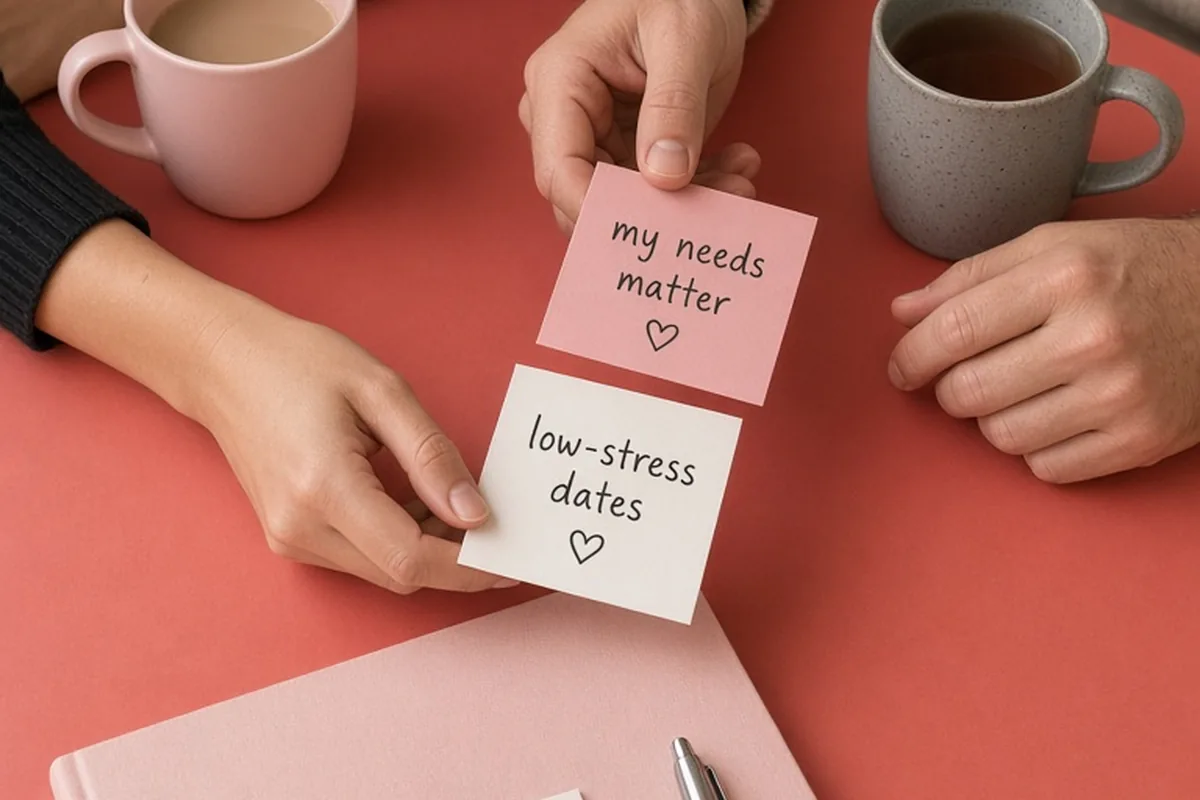
Dating with a chronic illness requires intentional pacing, clear personal boundaries, and straightforward communication. Rather than treating your health as a secret to confess or a barrier to romantic connection, disclose your needs gradually as mutual emotional investment develops. Focus on choosing low-stress date environments that respect your energy limits, evaluating potential partners by how they respect your boundaries, and prioritizing reciprocal care and emotional safety over people-pleasing.
Navigating modern romance while managing symptoms, unpredictable energy levels, or medical routines introduces unique challenges to meeting new people. Finding a genuine partner does not require pretending you are completely symptom-free or over-explaining your medical history before someone has earned your trust.
Deciding When and How to Share Your Health Condition
One of the most persistent dilemmas in dating with a chronic health condition is determining the right moment to talk about your diagnosis. Disclosing too early, such as in the opening lines of a dating profile or within the first ten minutes of small talk, can sometimes invite unearned intimacy, unsolicited advice, or unwarranted assumptions before a match even knows your personality. Conversely, hiding a significant part of your daily reality for months can create internal anxiety and prevent you from assessing whether the person is capable of offering genuine support.
A practical approach is to treat health disclosure as a tiered process based on emotional investment. In initial chats, you might casually reference lifestyle preferences—such as favoring quiet spaces, not drinking alcohol, or needing early evenings—without providing a comprehensive medical summary. Once you determine there is mutual interest and potential for ongoing dating, usually between the second and fourth dates, you can explain your condition in simple, practical terms. Focus on how it shapes your day-to-day rhythm rather than walking them through medical jargon, which keeps the conversation grounded in how you actually live.
Consider an example where someone experiences chronic joint pain or migraines. Instead of delivering an anxious monologue, a direct statement works well: 'I manage an autoimmune condition that causes occasional fatigue and joint stiffness. Most days are fine, but every so often I need lower-key plans or downtime to recharge.' This clear, matter-of-fact framing presents your health as a manageable part of your life rather than a problem you are apologizing for.
The primary trade-off of this measured disclosure is that you risk investing time in someone who may ultimately lack the maturity or desire to date someone with health limitations. However, sharing after a foundation of basic rapport is established allows people to see your full identity first, while still protecting your emotional energy from strangers.
Designing Dates Around Energy Levels and Comfort
Traditional dating culture often revolves around noisy bars, long walking tours, late-night dinners, or spontaneous outings that can be physically exhausting. When living with fluctuating stamina, chronic pain, digestive disorders, or sensory sensitivities, standard date ideas can quickly turn a fun evening into a physically taxing ordeal. Proactively shaping date logistics ensures you can focus on getting to know the other person instead of quietly managing pain or fatigue.
Take the lead in proposing specific venues and activities that match your physical needs. If long periods of standing or walking trigger symptoms, suggest a seated coffee shop, a relaxed board game cafe, or a scenic spot with accessible parking and comfortable seating. Suggesting a concrete time frame, such as meeting for an hour-long lunch or a designated coffee window, naturally establishes a low-pressure exit point. Having a defined end time prevents you from feeling trapped if your energy suddenly drops.
For instance, if you have digestive sensitivities, volunteering to pick a restaurant where you already know the menu options eliminates anxiety around food triggers. You can say, 'I love this quiet neighborhood cafe because the seating is great and they have fantastic tea options. Let us meet there around two.' This sounds confident and decisive while subtly protecting your physical comfort.
A potential limitation to keep in mind is that taking control of planning requires extra mental effort upfront. Additionally, some prospective dates may prefer high-intensity or purely spontaneous activities. If someone repeatedly resists your low-key suggestions or pressures you into physically draining situations, that resistance serves as an early indicator of incompatibility.
Evaluating How Potential Partners Respond to Your Needs
Dating is as much about assessing the other person's character as it is about making a good impression. When you share details about your condition or request a minor accommodation, pay close attention to how the other person reacts. Their initial response often reveals their baseline empathy, communication style, and emotional maturity.
Supportive partners typically respond with calm curiosity, basic validation, and respectful questions that center on your preferences. They might ask, 'What does a flare-up usually look like for you?' or 'Let me know if you ever need to switch venues.' In contrast, unhelpful reactions often fall into distinct patterns: offering dismissive platitudes, attempting to diagnose or cure your condition with unsolicited remedies, treating your limitations as a personal inconvenience, or displaying exaggerated pity that makes you feel fragile.
Recognizing these differences early protects you from entering unbalanced relationships where you feel pressured to overcompensate for your illness. If a match responds to your disclosure by saying, 'Have you tried changing your diet? My cousin did that and was completely cured,' you can calmly observe whether they accept a polite redirection or continue pushing their opinions. A healthy partner respects your expertise regarding your own body.
Remember that not every awkward reaction is malice; some people simply experience temporary anxiety or lack familiarity with chronic health issues. The key distinction is whether they listen and adjust after you clarify your preferences, or whether they continue to center their own discomfort.
Handling Flare-Ups, Last-Minute Cancellations, and Rescheduling
Unpredictability is an inherent reality of many chronic conditions. Even with meticulous planning, a sudden flare-up, debilitating migraine, or severe fatigue can make attending a scheduled date impossible. Navigating last-minute cancellations without guilt or panic is essential for maintaining both your physical well-being and your self-respect.
The most effective way to handle a sudden cancellation is through prompt, transparent communication paired immediately with a proactive reschedule proposal. When plans fall apart, people outside the chronic illness community often wonder if a cancellation is a polite rejection or an excuse. Offering a specific alternative date or a clear timeline clarifies your genuine interest and maintains positive momentum.
For example, sending a concise message such as: 'I woke up dealing with a severe flare-up of my health condition and need to rest today. I am really sorry to miss our dinner tonight, but I would love to make it up to you next Thursday if you are free' addresses both the physical reality and the romantic intention. It delivers honesty without over-apologizing or sharing uncomfortably graphic details.
The trade-off here is accepting that occasional cancellations may frustrate dates who place an extremely high priority on rigid predictability. While this can feel disappointing, a person who reacts with irritation or passive aggression to an honest medical conflict is unlikely to offer the patience required for a long-term partnership.
Navigating Physical Intimacy and Changing Boundaries
Physical intimacy when managing a chronic illness involves clear, ongoing communication about comfort, physical limits, and pacing. Pain, fatigue, medications that affect libido, or physical sensitivities can change from week to week. Approaching intimacy with self-assurance and clarity ensures that physical closeness remains pleasurable, safe, and entirely consensual for both partners.
Normalize discussing physical comfort before moments become physically intimate. You do not need to deliver a clinical lecture; simple, straightforward check-ins keep communication easy and natural. Clarifying what feels comfortable, what positions or activities avoid triggering pain, and that you may need occasional breaks removes the pressure to push through discomfort for the sake of pleasing a partner.
Consider a scenario where physical fatigue or localized pain limits physical contact. Saying, 'I am really enjoying being close to you, but my back is acting up tonight, so let us keep things relaxed and cuddle on the couch,' establishes a clear boundary while affirming mutual attraction. It keeps the connection warm without compromising your body.
A common challenge is overcoming the internal pressure to perform or match an imagined standard of physical availability. If a partner makes you feel guilty for communicating physical boundaries, or treats your physical comfort as an obstacle, that behavior indicates a lack of fundamental respect for your bodily autonomy.
Managing Dating Fatigue and Protecting Your Emotional Health
Modern dating can be demanding for anyone, but managing modern courtship alongside medical appointments, symptom management, and daily responsibilities increases the risk of emotional and physical burnout. When dating begins to feel like an exhausting second job, your overall well-being and confidence can suffer.
Setting strict parameters around your dating habits helps preserve essential energy. This can include limiting dating app usage to fifteen minutes a day, pacing dates to no more than once a week, and taking intentional multi-week breaks whenever your health requires extra attention. Recognizing that dating is an optional addition to your life rather than a race allows you to participate on terms that support your baseline health.
If you notice that app conversations are draining your focus or exacerbating stress, step back without guilt. Your self-worth is not tied to dating volume or quick replies. Prioritizing rest, personal hobbies, and established support networks ensures that when you do go on a date, you bring authentic presence and positive energy.
The limit of this deliberate pacing is that meeting a compatible partner may take more calendar time. However, moving slowly acts as a natural filter, filtering out individuals seeking instant gratification and highlighting those who appreciate steady, grounded connection.
Illustrative Scenarios
Navigating a Sudden Flare-Up Before a Second Date
Marcus, a graphic designer managing Crohn's disease, had scheduled a second date at a casual bistro. On the morning of the date, he experienced an unexpected flare-up with severe abdominal pain. Initially, Marcus felt intense shame, worrying that cancelling would make his date think he was flaky or making up an excuse. He considered taking heavy medication and forcing himself to go despite intense discomfort. Instead, Marcus decided to communicate honestly. He sent a clear text explaining that he was dealing with a sudden health flare-up, apologized for the timing, and immediately suggested meeting the following Wednesday at a quiet cafe. His date appreciated the directness, accepted the reschedule graciously, and the subsequent date went smoothly.
Key point: Transparent communication paired with a concrete reschedule plan demonstrates reliability while protecting your physical health.
Establishing Clear Pacing on Dating Apps
Elena, an administrative assistant living with fibromyalgia, often felt pressured to agree to intense weekend plans suggested by matches on dating apps. After several exhausting dates that left her bedridden for days, she felt discouraged and detached. Elena changed her strategy by taking ownership of the planning stage. When a match suggested an afternoon hiking trip, she responded by suggesting a relaxed coffee at a neighborhood bakery with comfortable indoor seating. This simple adjustment allowed her to evaluate her match's company without triggering physical exhaustion or hiding her preference for lower-energy environments.
Key point: Proactively suggesting dates that accommodate your energy levels lets you assess romantic chemistry without compromising your well-being.
Frequently asked questions
When is the best time to tell someone about my chronic illness?
There is no obligation to disclose your health history on a profile or first date. A practical window is usually between the second and fourth dates, once mutual interest is clear and you want to explain how your routine or energy levels work in daily life.
How should I respond if a date gives me unsolicited medical advice?
Acknowledge their intention politely while setting a clear boundary. You can say, 'Thank you, but I have a medical team managing my care, and I prefer not to focus on treatments while we are out on a date.'
What if a partner seems uncomfortable with my physical limitations?
Pay attention to whether their discomfort comes from a temporary lack of information or a deeper lack of empathy. If they continue to show resentment, dismissal, or reluctance to accommodate your basic needs after clear communication, they are likely not a compatible long-term match.
How do I avoid feeling like a burden to the person I am dating?
Remind yourself that everyone brings specific needs, preferences, and limitations to a relationship. Focus on the emotional presence, humor, values, and care you offer as a partner rather than viewing your health condition as a personal flaw.
Your next step
For your next outing, pick a venue where you already feel physically comfortable and outline a clear timeframe in advance, giving yourself the freedom to focus entirely on genuine connection.