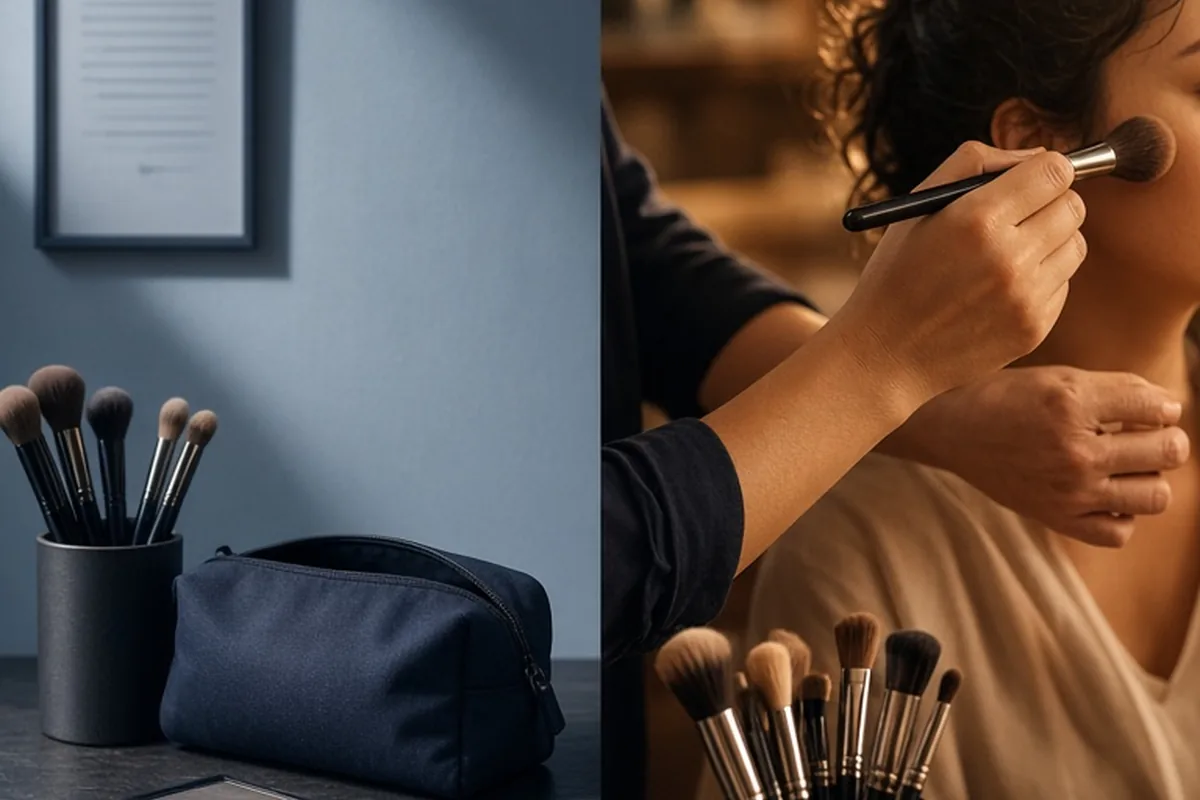
Whether you need a license to work as a makeup artist depends on your state laws, work setting, and specific services. Freelance artists who apply topical makeup for weddings, photography, or entertainment often do not need a cosmetology or esthetics license in many states. However, working inside a licensed salon or offering invasive skin services like waxing, facials, or permanent makeup generally requires state licensure.
Navigating beauty industry regulations can be confusing because licensing standards vary dramatically depending on where you live and the exact nature of your business.
Understanding State Regulations and the On-Location Exemption
In the United States, professional beauty licensing is managed at the state level rather than federally. State boards of barbering and cosmetology set individual standards for who must hold a credential to charge money for beauty services. In several states, applying surface cosmetics for special events, bridal parties, or private photoshoots is classified as unregulated freelance artistry. These jurisdictions draw a clear legal line between decorative, temporary cosmetic application and treatments that alter or treat the skin.
The physical location where you perform your work plays a decisive role in regulatory enforcement. If you provide on-location services at a client home, wedding venue, or photography studio, you may fall outside traditional salon oversight. Conversely, some states strictly require anyone applying makeup for compensation anywhere to hold a full cosmetology or esthetics license. For example, practicing without checking local definitions can lead to unexpected administrative fines or cease-and-desist warnings from state regulators.
Before investing in professional gear or marketing your freelance services, you should consult your specific state board administrative code. Regulatory boards periodically update their exemptions, and assuming that your home state shares the same rules as neighboring regions is one of the most common legal missteps made by emerging beauty professionals.
Defining Scope of Practice: Color Cosmetics Versus Skin Treatments
A critical distinction in beauty law is the boundary between topical color cosmetics and skin manipulation. Surface makeup involves using brushes, sponges, and clean tools to apply foundations, powders, eyeshadows, and lip products to the epidermis. In jurisdictions that permit unlicensed makeup application, this privilege covers only decorative techniques that sit temporarily on the skin surface and wash off with standard cleansing.
The moment you introduce active skin treatments, your legal vulnerability increases significantly without a formal license. Performing manual extractions, chemical peels, dermaplaning, brow waxing, lash lifting, or applying semi-permanent microblading almost universally requires an active esthetician, cosmetologist, or body art license. Even applying traditional strip lashes versus semi-permanent individual lash extensions with medical-grade adhesive can mean the difference between legal freelance artistry and unlicensed practice.
To protect your professional standing, maintain a transparent service menu that excludes medical or intensive skincare claims. If a bridal client asks you to wax her brows or perform a deep exfoliating treatment during a trial session, you must decline unless you hold the proper credential in that state. Directing clients to licensed skincare specialists for prep work ensures you stay completely within your lawful scope.
Comparing Esthetician Licenses, Cosmetology Licenses, and Certificates
When evaluating formal credentials, it is essential to distinguish between state-issued professional licenses and private school certificates. A cosmetology license typically requires 1,000 to 1,600 hours of accredited vocational training covering hair, skin, and nails, followed by state-administered theory and practical examinations. An esthetics license focuses specifically on skincare analysis, facials, waxing, and sanitation, usually demanding between 300 and 750 training hours.
In contrast, a certificate from an independent makeup academy, masterclass, or cosmetics brand confirms educational attendance and technical practice, but it carries no formal legal authority. While private certifications are valuable for building technique, understanding undertones, and refining sanitation routines, state regulatory boards do not recognize them as substitutes for an official government license where one is legally mandated.
Deciding whether to attend a licensed school depends on your broader career goals. If your long-term plan includes renting a booth in a commercial salon, performing full-service bridal skin prep, or offering waxing alongside makeup, earning an esthetician license is a wise investment. If your sole focus is on-location creative artistry, television production, or editorial campaigns in an exempt jurisdiction, practical portfolio building and targeted masterclasses may serve your immediate needs better.
Working in Film, Television, Theater, and Union Productions
The entertainment sector operates under unique operational frameworks that blend local labor laws with industry union requirements. Working on commercial film sets, episodic television, and major theatrical productions frequently involves union jurisdiction, such as IATSE Local 706 in Los Angeles or Local 798 on the East Coast. These organizations establish rigorous qualification standards that prioritize documented set hours, department peer reviews, and comprehensive portfolio evaluations over traditional state salon licenses.
While non-union student films and independent commercial shoots rarely require a formal beauty license, professional set etiquette and specialized technical skills are mandatory. Artists in this space must master character aging, prosthetic application, bald cap installation, tattoo coverage, and working under high-definition camera lighting. Sanitation protocols on set are exceptionally strict, as cross-contamination can stall multi-million-dollar production schedules.
If you aspire to work in film and television, focusing solely on beauty techniques will leave gaps in your skillset. Spending time as an assistant to established department heads, learning continuous script breakdown for continuity, and mastering special effects materials will advance your career faster than general salon-focused vocational programs.
Retail Counters, Specialty Boutiques, and Brand Artistry Roles
Retail cosmetics stores, department store beauty counters, and specialty cosmetic boutiques present another common avenue for emerging artists. In many regions, retail sales employees are permitted to demonstrate products and perform complimentary or fee-based makeup applications under retail commercial exemptions, provided the primary business activity is the retail sale of consumer goods.
However, store policies and regional labor practices vary. Certain specialty retailers require their beauty advisors to hold state licenses if they operate in-store beauty studios or private service rooms where full application fees are charged. Even when a license is not legally required by the state, corporate employers often favor applicants who possess credentialed esthetics training because it demonstrates baseline knowledge of hygiene, skin types, and sanitation standards.
Working in a retail environment serves as an excellent training ground for unlicensed artists to gain real-world experience. You gain daily access to diverse skin tones, face shapes, and age demographics while learning product chemistry and sales communication without the high overhead costs of running an independent mobile setup.
Essential Business Permits, Sanitation Protocols, and Liability Insurance
Operating legally as a makeup artist requires business compliance regardless of whether your state demands a cosmetology license. Independent artists must establish a legal business entity, such as an LLC or sole proprietorship, register for local tax identification, and secure city or county business operating permits. Operating under the table exposes you to local tax penalties and leaves you unprotected in client disputes.
Hygiene and sanitation standards must match or exceed state board regulations to prevent client infections and protect your reputation. Professional makeup artists should use stainless steel palettes, spatulas for decanting creams, disposable mascara wands, single-use lip applicators, and high-percentage alcohol sanitizing sprays for powder products. Re-dipping tools directly into creams or using dirty brushes on clients violates basic safety standards and creates serious liability risks.
General and professional liability insurance is essential for every practicing artist, licensed or unlicensed. A standard policy protects your business against claims arising from allergic reactions, product-related eye infections, slip-and-fall incidents on location, or accidental property damage at upscale wedding venues. Most established event venues and commercial studios will refuse entry without a verifiable certificate of insurance.
Step-by-Step Guide to Verifying Your Local Legal Requirements
Because beauty laws differ across state borders and evolve over time, verifying your exact local requirements is the only way to ensure complete compliance. Never rely solely on advice from internet forums, social media groups, or beauty school recruitment staff, as commercial interests and regional misunderstandings often lead to conflicting guidance.
To confirm your legal standing, follow a clear administrative verification process:
Navigating administrative channels directly ensures that your business model is fully compliant from day one. Taking this proactive step eliminates the anxiety of unexpected regulatory inspections, giving you the confidence to market your services, build corporate relationships, and expand your clientele legally.
- Search your state government portal for the official Board of Cosmetology, Barbering, or Professional Licensing.
- Locate the administrative scope of practice definitions and search specifically for terms like freelance makeup exemption or retail cosmetic demonstration.
- Contact a compliance officer via email with a clear written description of your intended services, detailing on-location application versus salon booth rental.
- Check city and county clerk offices for general commercial licenses, fictitious business name registrations, and home occupation permits.
- Consult an insurance broker specializing in beauty and entertainment liability to confirm coverage parameters for your specific licensing tier.
Frequently asked questions
Can I work in a hair salon doing makeup if I do not have an esthetician or cosmetology license?
In most states, providing beauty services inside a licensed commercial salon requires a formal cosmetology or esthetics license. Salons are subject to regular state board health and safety inspections, and hiring unlicensed contractors inside the premises often violates salon establishment rules.
Does a private makeup school diploma allow me to perform permanent makeup or microblading?
No, a private makeup academy diploma does not grant legal permission to perform semi-permanent or permanent cosmetic tattooing. Permanent makeup involves puncturing the dermis and is regulated separately under body art or tattoo licensing, requiring specialized bloodborne pathogen certifications and local health department permits.
Can I apply individual strip lashes for clients without a license?
Temporary strip lashes or cluster lashes applied with water-soluble, temporary latex or latex-free adhesive are generally considered surface cosmetics in states with freelance exemptions. However, applying semi-permanent eyelash extensions with cyanoacrylate medical adhesives typically requires a licensed esthetician or cosmetologist credential.
What happens if I practice makeup artistry in a state that requires a license without holding one?
Practicing without a required license can result in regulatory warnings, formal cease-and-desist orders, and civil fines issued by the state licensing board. In addition, professional liability insurance providers may deny coverage for claims if the policyholder was operating outside the state legal framework.
Your next step
Visit your official state licensing board website today to download their scope of practice guidelines and verify whether on-location cosmetic application requires a license in your jurisdiction.