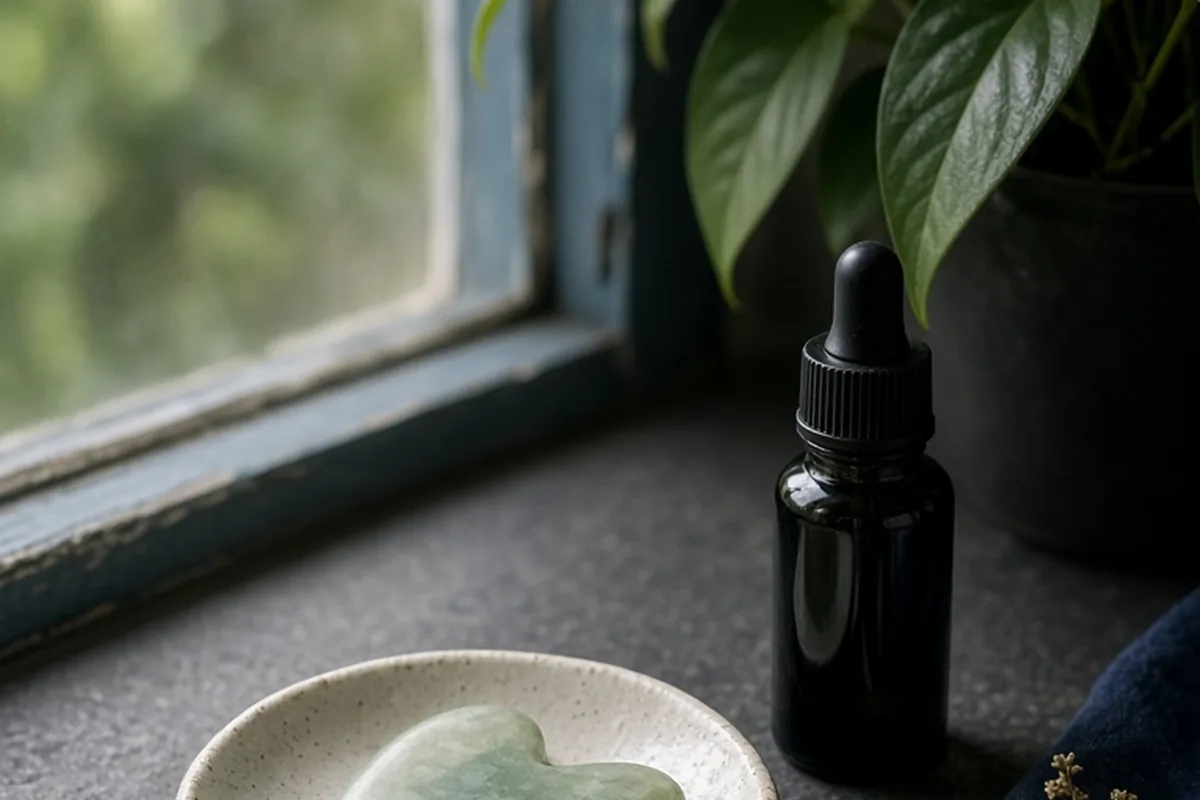
Gua sha works well for temporary facial de-puffing, relieving jaw and neck muscle tension, and improving surface blood flow. Because it manually moves fluid along lymphatic pathways, it creates a subtle, short-term contoured look. However, gua sha cannot melt fat, alter bone structure, erase deep wrinkles, or permanently reshape your face. Results require consistent, gentle technique and last anywhere from a few hours to a day.
Originating in traditional East Asian medicine as a vigorous whole-body scraping practice to release heat and stagnation, modern facial gua sha has been adapted into a gentle, fluid-draining ritual. Understanding the physiological mechanisms behind the tool helps you set realistic expectations, choose appropriate facial oils, and avoid common technique errors that cause irritation or broken capillaries.
How Gua Sha Affects Skin and Facial Tissues
The primary mechanism behind facial gua sha is mechanical lymphatic drainage. Unlike the cardiovascular system, which relies on the heart to pump blood throughout the body, the lymphatic system does not have a central pump. Instead, lymph fluid relies on muscle contraction, deep breathing, and manual stimulation to move toward lymph nodes for filtration. When you sleep flat or consume sodium, interstitial fluid can accumulate around the eyes, cheeks, and jawline. Gliding a smooth stone flat against the skin with light, directional pressure helps guide this pooled fluid toward the cervical lymph nodes in the neck, where it naturally drains, creating an immediate reduction in puffiness.
Beyond fluid balance, gua sha provides myofascial release for chronically tight facial muscles. Many people hold unconscious tension in their masseter muscles from clenching their teeth during the day or grinding at night. Gentle, targeted strokes across the jaw and temporalis muscles help release myofascial adhesions, ease jaw tightness, and soften the appearance of stress-induced facial tension. Additionally, the gentle friction against the skin temporarily increases microcirculation, bringing fresh blood and oxygen to the surface to give the complexion a short-term radiant flush.
Separating Gua Sha Facts from Common Myths
Social media often attributes dramatic, structural transformations to gua sha, leading to unrealistic expectations. Gua sha cannot dissolve subcutaneous fat, melt a double chin, or permanently change the underlying bone structure of your jaw or cheekbones. The sharper contour visible immediately after a session is the result of cleared fluid and relaxed muscles rather than structural remodeling. Once fluid naturally redistributes over twelve to twenty-four hours, the facial contours return to their baseline state.
Similarly, gua sha cannot erase deep dynamic expression lines or structural wrinkles caused by collagen loss and aging. While relaxing tense forehead or brow muscles can soften the appearance of expression lines temporarily, it does not regenerate lost elastin or rebuild the dermal matrix. Treating gua sha as a supportive wellness and maintenance practice rather than a replacement for dermatological treatments or surgical procedures prevents frustration and encourages a gentler, more sustainable approach to facial care.
Proper Technique, Angle, and Direction
Technique determines both the safety and effectiveness of gua sha. The most common mistake is holding the tool at a ninety-degree angle and digging the edge into the skin. To drain fluid without bruising delicate facial tissue, hold the tool almost flat against the skin at roughly a fifteen-degree angle. Pressure should remain exceptionally light to medium; dragging or scraping aggressively stretches the skin and risks breaking superficial capillaries. Always support the skin with your non-working hand near the start of each stroke to prevent dragging or pulling the skin laxly.
Directionality must follow natural lymphatic pathways to clear fluid effectively. Always begin by opening the neck pathways, sweeping downward from the base of the skull and under the jaw toward the collarbones. Once the neck is clear, move to the face, working from the center outward and slightly upward: from the center of the chin along the jawline to the earlobe, from the sides of the nose across the cheekbones to the hairline, and from the brow bones upward to the scalp. Conclude every sequence by sweeping down the sides of the neck once more to direct the moved fluid into the terminus nodes near the clavicle.
Selecting the Right Tools and Slip Mediums
Gua sha tools are crafted from various materials, including jade, rose quartz, bian stone, and medical-grade stainless steel. While traditional beliefs associate different stones with energetic properties, their physical performance depends entirely on shape, smoothness, and weight. Stainless steel is non-porous, highly durable, easy to sanitize with soap and water, and naturally cooling, making it an excellent choice for acne-prone skin. Stone tools provide pleasant weight and organic contours, but you must inspect them carefully for micro-chips or rough edges that could scratch delicate facial tissue.
Never perform gua sha on dry skin or over plain water, as friction will tug and irritate the moisture barrier. A dedicated facial oil or an oil-based serum provides the necessary glide, known as slip. Match the slip medium to your skin type to prevent clogged pores: lightweight squalane, jojoba, or rosehip seed oils suit balanced to dry skin, while non-comedogenic squalane or a rich hydrating gel mask suits congested or breakout-prone complexions. If you use an oil to provide glide, you can leave it on as a nourishing moisturizer or gently remove it with a lukewarm, damp cloth if your skin tends to clog easily.
- Stainless steel: Durable, non-porous, naturally cold, and easiest to sanitize thoroughly.
- Jade and rose quartz: Traditional weight and natural smooth contours, requiring careful handling to prevent chipping.
- Facial oils: Squalane, jojoba, and rosehip oil provide long-lasting glide without evaporating mid-routine.
- Hydrating slip gels: Water-based aloe or hyaluronic gels offer friction-free glide for those who cannot tolerate facial oils.
When to Avoid Gua Sha and Safety Considerations
While gentle facial massage is safe for most people, there are specific skin conditions where gua sha should be modified or avoided entirely. Never drag a stone across active inflammatory acne, cystic breakouts, open wounds, or active cold sores. Mechanical friction across pustules or cysts spreads surface bacteria, increases inflammation, and risks permanent post-inflammatory hyperpigmentation or scarring. If you have a localized breakout on your chin or cheek, simply work around the affected area or focus solely on gentle neck drainage.
Those with active rosacea flares, broken capillaries, eczema, or extreme skin barrier sensitivity should exercise caution. Heat and friction can trigger flushing and dilate fragile blood vessels. If you experience persistent redness, tingling, or petechiae (small red dots under the skin caused by broken capillaries), your pressure is too heavy or your skin barrier is too compromised for mechanical massage. In addition, individuals who have recently received cosmetic injectables like botulinum toxin or dermal fillers should wait at least two to three weeks before practicing gua sha to prevent displacing product.
Building a Consistent Routine and Managing Expectations
Consistency produces far more noticeable results than aggressive occasional use. Practicing gua sha for three to five minutes, three to four times a week, is sufficient to maintain steady lymphatic flow and manage facial tension. Morning sessions are ideal for draining overnight fluid retention and de-puffing the under-eye area, whereas evening sessions work well for releasing clenched jaw muscles, easing neck stiffness, and winding down before bed.
To make the practice sustainable, integrate it smoothly into your existing skincare steps rather than turning it into an exhausting chore. Apply your slip medium directly after your essence or serum step, perform five to six smooth passes per zone, and follow with your regular moisturizer or sunscreen. By viewing gua sha as a gentle hygiene and self-care habit rather than an instant transformation tool, you can enjoy relaxed facial muscles, smoother skin texture, and a naturally refreshed appearance over time.
Frequently asked questions
How long do the results of facial gua sha last?
The de-puffing and sculpting effects of gua sha typically last between eight and twenty-four hours as your body naturally cycles fluids. Muscle tension relief in the jaw and neck can last throughout the day, especially when combined with good posture and stress management.
Can gua sha cause breakouts or acne?
Gua sha itself does not cause acne, but using comedogenic oils, failing to wash your stone after every use, or dragging the tool across active blemishes can trigger breakouts. Always sanitize your tool with warm water and soap, and choose a lightweight, non-comedogenic oil suited to your skin type.
Should gua sha hurt or leave red marks on the face?
Facial gua sha should never hurt, bruise, or leave red petechiae marks. Unlike traditional body scraping which intentionally produces petechiae to release deep stagnation, facial massage requires very gentle pressure that glides effortlessly across the skin without causing pain or broken capillaries.
Your next step
To test whether gua sha works for you, apply three drops of non-comedogenic facial oil and practice light, angled strokes down your neck and outward across one side of your face to observe the immediate contrast in puffiness and tension.