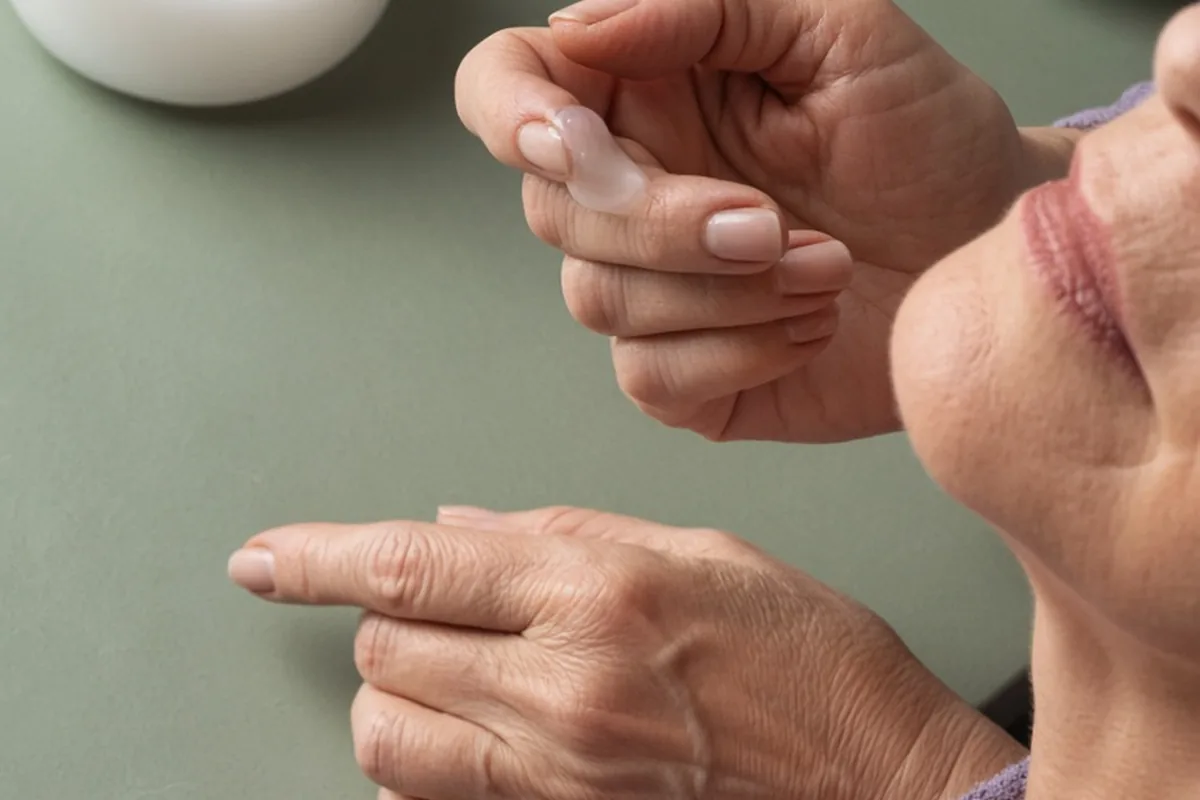
Vaseline does not prevent or reverse deep wrinkles because petroleum jelly cannot rebuild collagen or elastin fibers beneath the skin surface. However, it functions as an occlusive moisture barrier that seals in hydration. By preventing transepidermal water loss, Vaseline temporarily plumps fine dehydration lines, softens skin texture, and shields the delicate moisture barrier, making mature skin look noticeably smoother.
Many people turn to petroleum jelly as an accessible skincare staple, wondering whether a thin layer applied before bed can smooth aging skin. Understanding the difference between skin hydration and cellular anti-aging helps set realistic expectations for your evening routine.
How Petroleum Jelly Affects the Look of Fine Lines
Petroleum jelly is one of the most effective occlusive agents available in topical skincare. Unlike humectants, which pull water from the environment or deeper skin layers into the epidermis, occlusives form a physical seal over the surface of the skin. This barrier dramatically reduces transepidermal water loss, allowing the skin to retain its natural moisture levels throughout the night. When skin cells in the stratum corneum are saturated with trapped water, they swell slightly, creating a temporary smoothing effect on superficial creases.
This plumping action can make faint lines look less visible almost immediately, but the biological structure underneath remains unchanged. Petroleum jelly molecules are too large to penetrate past the outer protective layer of the skin, meaning they cannot reach the dermis where collagen and elastin reside. As a result, the softening effect lasts only as long as the skin remains fully hydrated. Once the barrier wears off or moisture dissipates, deep-set wrinkles will appear exactly as they were before.
The Difference Between Dehydration Lines and Structural Wrinkles
To understand what Vaseline can accomplish, it helps to distinguish between superficial dehydration lines and structural wrinkles. Dehydration lines develop when the outermost skin barrier lacks adequate water, often due to harsh weather, dry indoor heating, or over-cleansing. These lines typically look like faint crinkles or crepey patches across the cheeks and forehead, and they respond rapidly to intense moisture retention. Applying an occlusive like Vaseline over a hydrating base directly relieves this surface dryness.
In contrast, structural wrinkles stem from intrinsic biological aging, repeated facial expressions, and photoaging caused by ultraviolet light exposure. Over decades, natural collagen synthesis declines and elastin fibers break down, causing the dermal framework to lose its resilience and sag. Because petroleum jelly does not stimulate cellular turnover, repair sun damage, or prompt fibroblasts to generate new structural proteins, it cannot eliminate dynamic expression lines or deep static folds.
How to Safely Incorporate Vaseline into a Nighttime Routine
Using petroleum jelly on the face is often referred to as slugging, a method best performed at the very end of an evening skincare routine. Because Vaseline has no hydrating properties of its own, applying it to dry or bare skin will simply seal in dryness. To get the best results, you should first cleanse gently and apply a water-based hydrator, such as a glycerin essence or a hyaluronic acid serum, followed by a nourishing facial moisturizer.
Once your underlying skincare products have settled into your skin, warm a tiny, pea-sized amount of petroleum jelly between your fingertips and gently press it over your face. A microscopic film is all that is necessary to prevent water loss without leaving a heavy, suffocating coating on your pillowcase. Focus the product on areas prone to dryness, such as the outer cheeks, neck, or around the mouth, while using a lighter touch on naturally oily areas like the nose and chin.
Pairing Vaseline with Active Skincare Ingredients
While petroleum jelly works exceptionally well over simple hydrating ingredients, caution is necessary when combining it with potent anti-aging actives. Applying an occlusive directly over strong ingredients like retinol, prescription retinoids, glycolic acid, or salicylic acid creates an airtight seal that can significantly enhance their penetration into the skin. While deeper penetration might sound beneficial, it frequently leads to unintended side effects, including severe redness, peeling, burning, and barrier impairment.
If your routine includes active anti-aging treatments, consider separating them from your slugging nights. A practical approach is skin cycling, where you dedicate one evening to your active retinoid or exfoliant and follow it the next evening with a barrier-recovery routine focused on hydration and petroleum jelly. Alternatively, you can apply your retinoid as usual and use Vaseline only as a targeted spot barrier on delicate, irritation-prone areas like the corners of the nose and mouth before applying your active.
Potential Drawbacks, Clogged Pores, and the Eye Area
Although pure petroleum jelly is classified as non-comedogenic because its molecular structure prevents it from entering pores, it can still contribute to breakouts indirectly. When applied over skin that has not been thoroughly cleansed, Vaseline traps sebum, sweat, dead skin cells, and lingering surface bacteria beneath its barrier. For individuals with acne-prone or naturally oily skin, this occlusive environment can trigger congested pores and inflammatory blemishes.
Applying heavy ointments around the delicate eye contour also carries specific considerations. While the skin around the eyes is thin and prone to early fine lines, heavy occlusives can lead to milia in susceptible individuals. Milia are small, firm, harmless white cysts that form when keratin becomes trapped under the skin surface. If you are prone to milia, stick to lightweight eye creams formulated specifically for the peri-orbital area rather than thick petroleum jelly.
Evidence-Based Ingredients for Long-Term Wrinkle Care
If your primary skincare goal is reducing existing structural wrinkles and stimulating collagen renewal, targeted active ingredients remain the gold standard. Topical retinoids, including over-the-counter retinol and prescription tretinoin, work at the cellular level by accelerating skin cell turnover and signaling dermal fibroblasts to produce new collagen over time. Incorporating gentle peptide serums and topical antioxidants like vitamin C can also help protect against environmental free-radical damage while supporting skin firmness.
Equally important is daily photoprotection. Ultraviolet radiation accounts for a substantial portion of visible premature skin aging, breaking down structural proteins and causing deep creases. Applying a broad-spectrum sunscreen with an SPF of thirty or higher every morning prevents the degradation that leads to new wrinkles, offering a level of long-term protection that topical occlusives cannot replicate.
Tailoring an Evening Regimen for Dry or Mature Skin
Creating a sustainable routine for mature skin involves balancing active correction with barrier nourishment. Start with a non-stripping, hydrating cleanser that preserves natural surface lipids. While the skin is still slightly damp, apply humectants to bind moisture, followed by a ceramide-rich cream that helps repair the lipid matrix between skin cells. On evenings when your skin feels tight, weathered, or compromised, finish with a sheer veil of petroleum jelly to lock in the restorative layers.
Pay attention to environmental cues and seasonal transitions when deciding how often to use occlusives. During cold winter months or in dry climates, incorporating petroleum jelly two to three nights per week can prevent the severe dehydration that accentuates fine lines. During humid summer months, you may find that a standard ceramide moisturizer provides sufficient barrier support without the need for an additional occlusive layer.
Illustrative Scenarios
Differentiating Surface Dryness from Structural Aging
Marcus, a 48-year-old teacher, noticed fine crinkling around his cheeks and upper forehead every winter and assumed he was experiencing rapid intrinsic aging. He added a simple glycerin-based hydrating serum and layered a pea-sized amount of petroleum jelly over his night cream on non-retinol evenings. Within four days, the superficial tightness and surface crinkles softened considerably. However, the deeper expression lines across his forehead remained unchanged, illustrating the difference between hydration plumping and dermal repair.
Key point: Petroleum jelly effectively smooths temporary dehydration creases by preventing moisture loss, but structural expression wrinkles require targeted collagen-supporting ingredients and daily sun protection.
Frequently asked questions
Can applying Vaseline around the eyes cause milia?
Yes, heavy occlusives like petroleum jelly can trap keratin under the thin skin surrounding the eyes, leading to tiny white bumps called milia. If you are prone to milia, opt for lightweight eye serums or creams rather than thick ointments.
Should I put Vaseline on before or after my facial moisturizer?
Vaseline should always be applied as the final step of your nighttime routine after your moisturizer. Because it acts as an occlusive seal, applying it first would prevent water-based serums and hydrating creams from absorbing into your skin.
Does Vaseline prevent new wrinkles from forming?
Vaseline protects the moisture barrier from environmental stress and dehydration, which keeps skin looking supple, but it cannot prevent structural wrinkles caused by sun exposure, natural aging, or facial movement. Daily broad-spectrum sunscreen remains the primary defense against new wrinkle formation.
Your next step
Examine your skin to determine whether your fine lines stem from surface dehydration or structural collagen loss, and experiment with applying a thin layer of petroleum jelly over your moisturizer two nights a week to support barrier recovery.