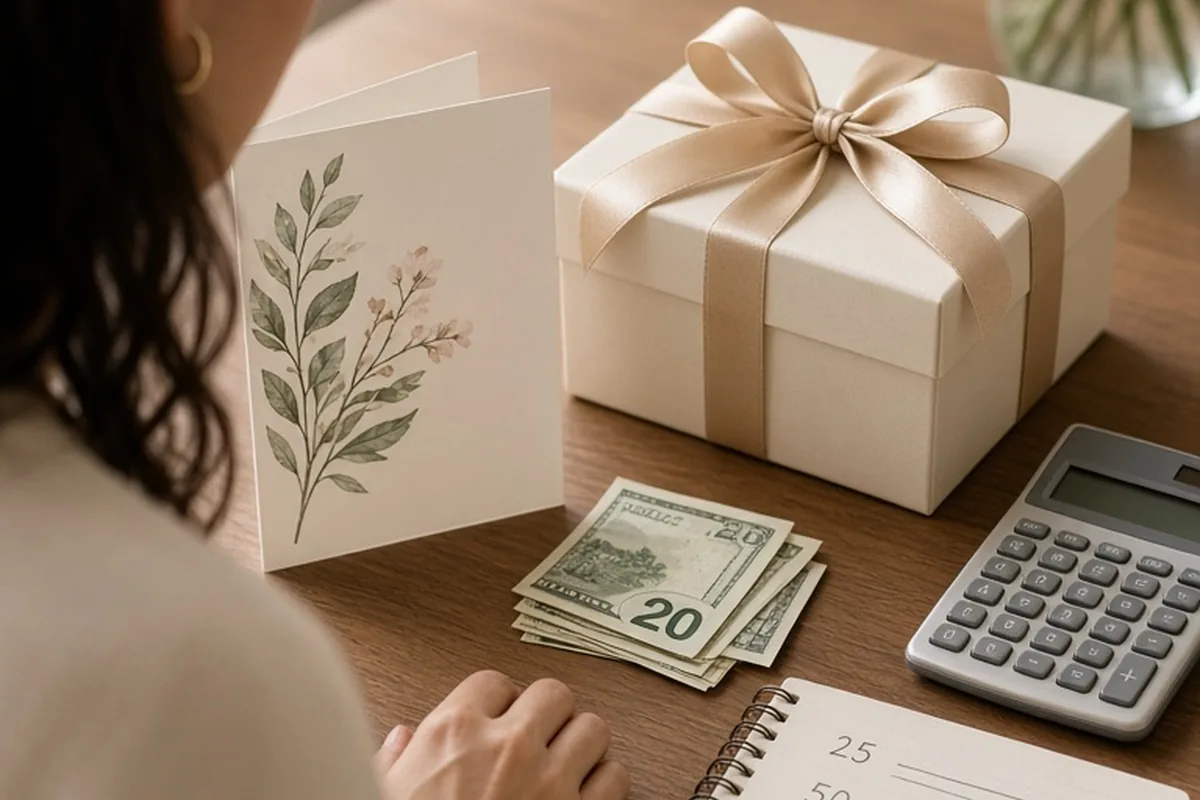
Engagement gift etiquette typically suggests spending between $25 and $150, depending on your closeness to the couple. Acquaintances and coworkers usually spend $25 to $50, close friends and relatives spend $50 to $100, and immediate family members or bridal party members may spend $100 to $150 or more. However, engagement gifts are entirely optional, and a heartfelt card is always acceptable.
Celebrating an engagement marks the beginning of an exciting series of milestones, but navigating the associated social customs can easily feel overwhelming. Knowing how much money to dedicate to an engagement gift requires balancing personal financial comfort with your relationship to the couple, especially when wedding showers, travel, and main wedding presents are still on the horizon.
Standard Spending Tiers Based on Your Relationship
The degree of closeness you share with the couple serves as the primary benchmark for deciding an appropriate gift budget. For coworkers, casual acquaintances, or distant relatives, a modest token ranging from $25 to $50 represents a polite, supportive acknowledgment without creating social awkwardness. At this level, a bottle of sparkling wine, a pair of elegant champagne flutes, or a specialty food item communicates congratulations gracefully without placing unnecessary pressure on either party.
When celebrating close friends or extended family members, budgets typically expand to the $50 to $100 range. This tier allows for more personalized options, such as an engraved ring dish, a curated entertaining basket, or an early contribution from their official gift registry. For immediate family members, such as parents or siblings, or lifelong friends, budgets often reach between $100 and $150 or more, frequently taking the form of sentimental heirlooms, premium dining experiences, or luxury home upgrades that recognize the major life transition.
A critical trade-off to keep in mind is that spending excessively early in the engagement timeline can inadvertently constrain your ability to participate in later celebrations. Setting an early ceiling based on relationship proximity protects your personal finances while keeping your generosity proportional across the entire wedding journey.
Budgeting Across the Entire Wedding Cycle
An engagement gift is merely the first occasion in what is often a multi-event celebration spanning several months or even years. Seasoned wedding guests often apply the standard percentage rule to manage their overall expenditure effectively across the celebration lifecycle. In standard etiquette frameworks, approximately twenty percent of your total planned celebration budget goes toward the engagement, twenty percent toward a bridal shower, and the remaining sixty percent is reserved for the primary wedding present.
For example, if you allocate a total of $250 for a close friend's wedding events, spending around $50 on an engagement gift keeps your financial commitments manageable when subsequent invitations arrive. Guests who overlook this holistic picture frequently find themselves facing financial fatigue by the time the actual wedding day arrives, leading to rushed or compromised decisions later.
This formula provides a realistic roadmap that balances goodwill with personal accountability. It ensures you do not overextend yourself on the initial announcement, especially when you anticipate additional travel, lodging, or wardrobe expenses for the main ceremony.
Engagement Party Attendance Versus Distant Announcements
Your decision to spend on an engagement gift often depends heavily on whether you attend a formal celebration. When hosts organize an engagement party involving dinner, drinks, or entertainment, social custom suggests bringing a tangible present or at least a high-quality card with a modest gift card to acknowledge the hospitality provided. In these settings, spending closer to the median of your relationship tier reflects appreciation for the hosted experience.
Conversely, if you receive a digital announcement, a mailed card, or word of mouth regarding an engagement without an accompanying event invitation, sending a physical gift is entirely optional. In such circumstances, a warm handwritten note, an affectionate phone call, or a celebratory message conveys genuine joy without any financial transaction.
A common point of confusion occurs when someone is invited to a party but cannot attend. Sending a small token in the $25 to $40 range or mailing a thoughtful card directly to the couple's home acknowledges the kind invitation without requiring full event-level expenditure.
Thoughtful Gift Selections Across Common Price Ranges
Finding an engagement gift that feels memorable does not require an extravagant budget; appropriateness stems from intentionality and usefulness. Many couples deeply appreciate practical items that help them navigate planning, preserve memories, or enjoy quiet evenings together amid the busy schedule of wedding preparations.
Below are reliable gift categories structured around common budget parameters that strike the right balance between sentimentality and function:
- Under $30: Scented celebration candles, ring cleaning pens paired with a ceramic dish, customized acrylic ornament with the engagement date, or a dedicated wedding planning notebook.
- $30 to $75: Premium champagne with gourmet chocolates, personalized cutting boards, curated picnic sets, or contributions toward registry essentials.
- $75 to $150: Spa day passes for pre-wedding relaxation, luxury bed linens, fine wine subscriptions, or professional framing for an engagement photo.
- $150 and above: High-end kitchen appliances from their wish list, luxury travel luggage for their upcoming honeymoon, or heirloom-quality home decor.
Navigating Group Gifting for Higher-End Items
Pooling financial resources with mutual friends, colleagues, or family members is an effective strategy for providing a substantial engagement gift while keeping individual contributions low. Group gifting allows several people who might each have a modest $20 to $30 budget to collectively purchase a premium $150 or $200 item from the couple's wishlist, such as a high-end stand mixer, luxury cookware, or a celebratory tasting menu.
To execute a group gift smoothly, designate one coordinator to collect funds upfront, select the item directly from the couple's official registry if available, and manage the presentation. It is essential to include everyone's name equally on the accompanying card regardless of minor variances in individual contributions to maintain a spirit of collective generosity.
The primary limitation of group gifting is coordination friction, including tracking digital payments and agreeing on the exact item. Establishing clear deadlines and maintaining transparency about costs prevents misunderstandings among contributors.
When It Is Acceptable to Skip a Physical Gift
Etiquette guidelines universally emphasize that engagement gifts are never mandatory. If you are experiencing financial constraints, balancing significant travel commitments, or serving in a bridal party with steep attire and lodging obligations, prioritizing your presence over a physical present is completely acceptable.
Couples understand that life milestones can be financially demanding for guests as well. In lieu of a purchased item, offering heartfelt sentiments through a beautifully written letter or offering practical assistance—such as helping research vendors, petsitting during their venue tours, or hosting an intimate casual dinner at home—often carries far more genuine value than an inexpensive novelty trinket.
The only social requirement when an engagement is announced is offering your sincere congratulations. A warm, timely card expressing excitement for their future honors the occasion without placing any strain on your personal budget.
Handling Registries, Cash Requests, and Etiquette Nuances
While registries were traditionally reserved exclusively for bridal showers and weddings, modern couples increasingly create early wish lists to accommodate enthusiastic family members and friends. If the couple has published a registry, selecting an item directly from that list guarantees you purchase something they genuinely need and avoid duplicate household items.
Direct cash gifts, while immensely popular for the wedding day itself, are less customary for initial engagement announcements unless explicitly requested by the couple through a honeymoon or home-down-payment fund. If you prefer to give a monetary gift at the engagement stage, pairing a modest cash contribution or restaurant gift certificate with a personal card strikes an appropriate balance.
Always confirm whether the hosts have specified a 'no gifts' preference on their engagement party invitation. If an invitation notes that your presence is the only present desired, it is best to respect their wishes by bringing only a greeting card, avoiding putting other guests in an uncomfortable position.
Frequently asked questions
Are engagement gifts expected from every invited guest?
No, engagement gifts are strictly optional and are not required by traditional etiquette. While guests attending an organized celebration often bring a modest gift or card, a heartfelt greeting card alone is always considered polite and sufficient.
Should bridesmaids and groomsmen buy an engagement gift?
Bridal party members are not obligated to spend heavily on an engagement gift, as they will already incur substantial expenses for attire, bachelor or bachelorette parties, and travel. A small, sentimental item or a simple celebratory card is completely appropriate.
Is it rude to bring cash as an engagement gift?
Bringing cash is not considered rude, but it is less customary for an engagement than for the actual wedding reception. If you choose to give money, presenting a modest amount alongside a personalized card or gifting an experiential gift card works best.
How much should I spend if I cannot attend the engagement party?
If you decline an invitation to an engagement party, you are under no obligation to send a gift. However, if you are very close to the couple, sending a thoughtful card or a modest token valued between $25 and $40 is a gracious way to acknowledge the celebration.
Your next step
Determine your total budget for the entire wedding season first, then allocate a modest 15 to 20 percent of that total toward a thoughtful engagement card or gift that fits your relationship closeness.