A modern blended family forms when two adults build a committed partnership while at least one partner brings children from a prior relationship. Thriving in a blended family requires clarifying stepparent expectations, establishing predictable household standards, respecting children's adjustment timelines, maintaining cooperative communication with outside co-parents, and intentionally nurturing the couple relationship rather than demanding instant harmony or equal affection from day one.
Merging two distinct family cultures into one shared living environment brings practical and emotional adjustments for adults and children alike. Success does not mean replicating a traditional nuclear family structure, but rather cultivating safety, clear communication, and mutual respect across all households involved.
Clarifying the Stepparent Role Before Enforcing House Rules
One of the most frequent sources of tension in a newly formed blended home is uncertainty surrounding discipline and authority. When a stepparent attempts to enforce behavioral corrections or emotional consequences immediately after moving in, children often react with resentment, feeling their autonomy or loyalty to their non-residential parent is threatened. In the initial stages, the biological or custodial parent should remain the primary disciplinarian, while the stepparent focuses on establishing warmth, reliability, and emotional connection.
A helpful way to frame the stepparent role early on is akin to a trusted adult, mentor, or camp counselor rather than an immediate authority figure. The stepparent supports the household standards agreed upon by the couple, but defers direct disciplinary interventions to the biological parent whenever possible. For example, if a child refuses to finish chores, a stepparent might state, 'In this house, your mom asked for backpacks in the closet before dinner,' rather than issuing personal ultimatums. This approach preserves the stepparent-child rapport while still reinforcing shared household expectations.
Managing Differences in Upbringing, Household Routines, and Discipline
Every household carries unwritten assumptions about bedtime routines, screen-time limits, chore responsibilities, and table manners. When two families merge, these unspoken habits often collide, creating confusion over fairness. Children frequently compare their treatment to that of their step-siblings, monitoring whether rules are applied consistently. Rather than letting daily friction dictate policy, partners benefit from sitting down privately to negotiate a baseline set of shared household guidelines before addressing the kids.
When differences in age, developmental needs, or co-parenting agreements require varying rules, parents should communicate the reasoning clearly and calmly. Fairness does not always mean identical treatment; it means addressing each child's individual stage while keeping safety and respect uniform. Holding a relaxed family meeting to explain standard house expectations gives children a predictable framework, lowers anxiety, and removes the perception of arbitrary favoritism.
Navigating Co-Parenting Communication with Former Partners
Blended family life rarely exists inside an isolated bubble; it constantly interacts with outside co-parents, extended families, and alternate schedules. Maintaining a functional, business-like co-parenting dynamic with an ex-partner is essential for shielding children from loyalty conflicts and chronic stress. Communication should focus strictly on the logistical, medical, and developmental needs of the children, utilizing clear, neutral written channels when spoken exchanges tend to escalate.
If an outside co-parent is inconsistent or uncooperative, focus on creating stability within your own home rather than attempting to control their parenting style. Children can adapt to different rules in different environments as long as your household remains predictable, emotionally secure, and free from negative commentary about their other parent. Avoiding disparaging remarks about a former spouse protects the child's emotional wellbeing and prevents defensive withdrawal.
Supporting Children Through Loyalty Binds and Changing Family Dynamics
Children in blended families often experience an internal conflict known as a loyalty bind, where feeling affection for or enjoying time with a stepparent feels like a betrayal of their other biological parent. This internal struggle can manifest as sudden moodiness, emotional distance, or outright resistance right after enjoyable family outings. Recognizing these behaviors as protective coping mechanisms rather than personal rejection allows stepparents to respond with patience instead of frustration.
Parents can actively alleviate loyalty binds by giving explicit permission for children to care about both their biological parents and their new stepfamily members. A biological parent might reassure a child by saying, 'It makes me happy to see you having fun with your stepdad, and your dad will always be your dad.' Giving children control over the names they use for stepparents and validating their grief over past family changes helps them integrate into the new family rhythm at their own pace.
Protecting the Couple Relationship Amid Blended Family Pressures
The romantic partnership is the foundation of a blended family, yet it is often the area most vulnerable to neglect under the weight of parenting logistics, custody calendars, and financial obligations. Without deliberate maintenance, couples can slip into reactive problem-solving mode, where every conversation revolves around children's schedules or co-parenting friction. When the couple bond weakens, the entire household feels the resulting instability.
Carving out dedicated, non-negotiable time for the couple to connect without discussing stepfamily logistics is vital. Even brief daily check-ins or weekly dates help partners maintain emotional alignment and present a united front. When partners treat each other with mutual empathy, validate each other's distinct pressures, and support each other privately, they create the emotional security necessary to handle complex family challenges together.
Addressing Financial Integration, Child Support, and Shared Expenses
Money management in a blended family involves extra layers of complexity due to pre-existing obligations such as child support, alimony, college savings plans, and shared medical expenses from previous marriages. Disagreements over whose income covers stepchildren's extracurriculars, clothing, or personal spending can generate deep resentment if left unaddressed. Open, practical discussions about financial expectations should occur well before cohabitating or combining accounts.
Many blended families find success using a hybrid financial structure: a shared account for joint household expenses such as rent, mortgage, groceries, and utilities, alongside separate individual accounts for personal spending and child-specific obligations. Regardless of the exact arrangement chosen, transparency regarding debts, legal obligations, and long-term estate planning ensures both partners feel protected and respected.
Building Genuine Traditions Without Forcing Instant Harmony
Pressuring family members to feel instant love or act like an established unit often backfires, creating tension and emotional withdrawal. Healthy blended families recognize that genuine attachment develops gradually through shared, low-pressure experiences over months and years. Blending traditions during holidays, vacations, and weekends works best when old family customs are preserved alongside newly created rituals.
Involve all children in designing new family traditions, whether it is an informal Friday taco night, a specific board game session, or choosing a holiday dessert. By blending meaningful customs from both past backgrounds with fresh experiences that belong exclusively to the new household, family members develop shared memories without feeling that their original history is being erased.
Illustrative Scenarios
Navigating Resistance to Stepparent Authority
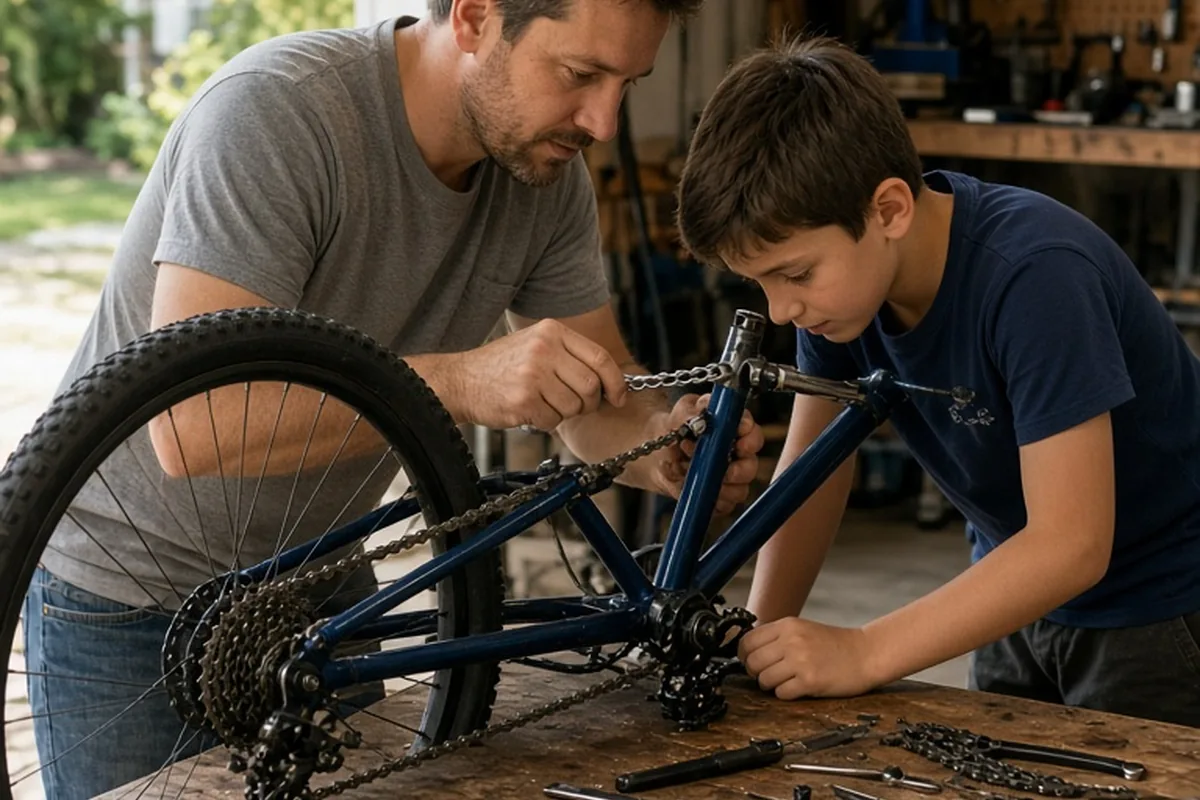
When Marcus moved in with his partner Elena and her ten-year-old son, Julian, Marcus immediately took charge of enforcing chore schedules and homework completion. Julian responded with hostility, frequently shouting that Marcus was not his father and refusing to comply. Elena felt caught in the middle, while Marcus felt disrespected in his own home. After discussing the pattern privately, Marcus stepped back from direct disciplinary enforcement, letting Elena handle school and chore accountability. Marcus focused instead on low-pressure activities Julian enjoyed, such as working on bicycle repairs on weekends. Over several months, Julian's defensive behavior decreased, and a comfortable, cooperative rapport developed naturally.
Key point: Allowing the biological parent to hold primary disciplinary authority in early stages preserves stepparent-child connection and minimizes loyalty conflict.
Balancing Holiday Schedules Across Households
Sarah and David formed a blended family with three children across two different custody arrangements. During their first shared winter holiday, Sarah tried to orchestrate an elaborate, day-long celebration matching her childhood traditions, but the children were exhausted from shuttling between multiple homes and became irritable. David and Sarah realized that forcing a packed itinerary increased everyone's stress. For the following year, they consulted the children in advance, kept the main schedule flexible, and created a simple new ritual: an unhurried pancake breakfast and movie afternoon on a designated open weekend. The relaxed pace allowed the children to decompress and enjoy the celebration.
Key point: Flexible expectations and collaborative, low-pressure rituals create more authentic family connection than rigid, idealized holiday plans.
Frequently asked questions
How long does it typically take for a blended family to feel settled?
Adjustment periods vary widely depending on children's ages, previous family transitions, and co-parenting dynamics. Many family professionals note that developing mutual comfort, predictable routines, and genuine trust often takes several years of steady, patient interaction. Expecting gradual progress rather than immediate harmony helps prevent unrealistic pressure.
What should a stepparent do if a child says 'You're not my real parent'?
Acknowledge the statement calmly without anger, as it is a factual reflection of the child's feelings rather than an attack. A helpful response is, 'You're right, I am not your mom or dad, but I care about your safety and we agreed on this house rule together.' Following up with the biological parent ensures boundaries remain clear and supported.
How can partners handle differing parenting styles in a blended family?
Partners should discuss foundational values, safety boundaries, and core routines in private rather than debating discipline in front of the children. Reaching a workable compromise on essential household expectations allows each parent to maintain their personal style while presenting a unified front on shared rules.
Is it normal for step-siblings to experience friction or jealousy?
Yes, mild friction, territorial behavior, and comparisons regarding parental attention are very common as children adjust to shared space and resources. Providing each child with one-on-one time with their biological parent and maintaining clear, respectful personal boundaries helps ease sibling rivalry over time.
Your next step
Schedule a private 30-minute conversation with your partner this week to review one specific household routine and agree on your respective parenting roles before introducing any changes to the children.