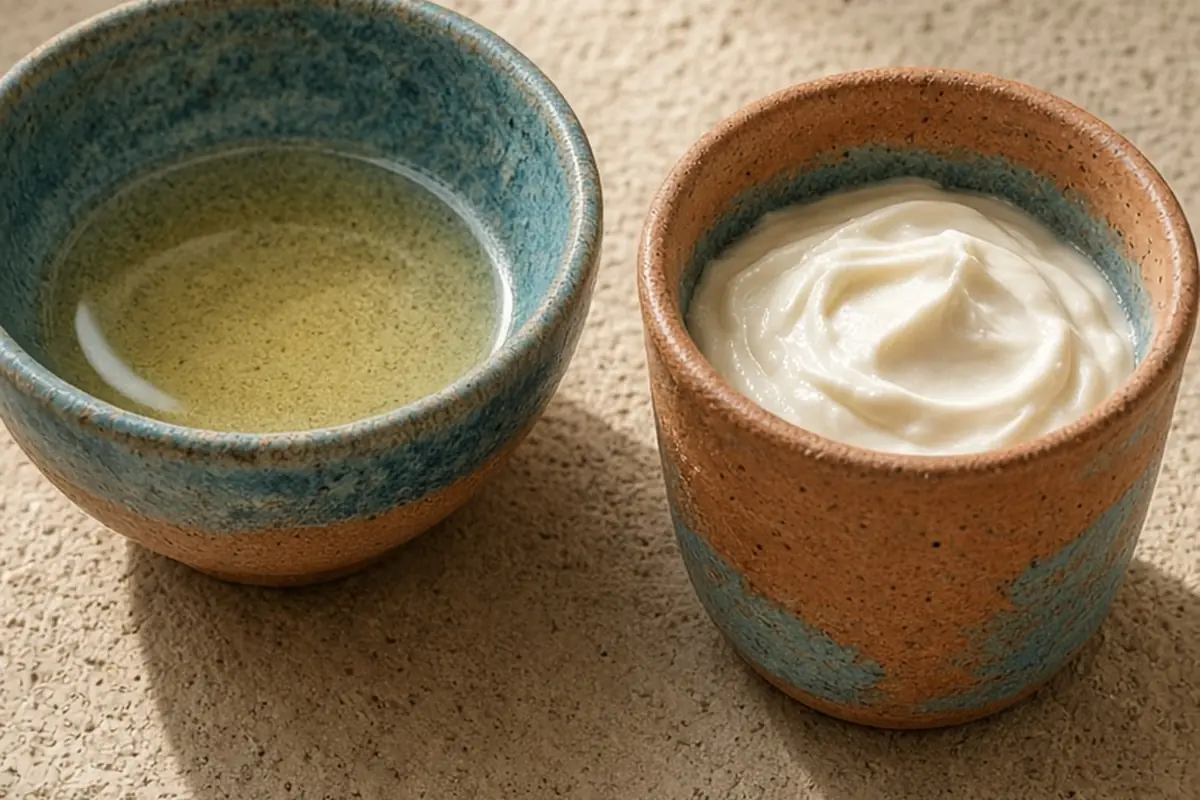
In most skincare routines, you should apply face oil after your moisturizer or mix one to two drops directly into your cream. Water-based moisturizers deliver essential humectants deep into the skin, whereas oils act primarily as emollients and occlusives that seal that hydration into the barrier. Placing heavy oil before a water-rich cream creates a lipid barrier that impedes water absorption, leaving the deeper layers of skin parched beneath a greasy surface.
Navigating the correct order of skincare products often feels confusing because traditional guidance advises applying products from the thinnest consistency to the thickest, yet many facial oils feel lighter than rich barrier creams.
The Molecular Difference Between Hydrating Creams and Facial Oils
To understand why layering sequence matters, you must understand the distinction between hydration and moisture. Hydration refers to the water content inside skin cells, which keeps tissue plump, elastic, and functional. Water-based moisturizers, gels, and serums contain humectants such as glycerin, hyaluronic acid, aloe vera, and panthenol. These humectants attract ambient moisture and draw water from deeper tissue layers up to the outer epidermis. However, water evaporates rapidly into dry air through transepidermal water loss unless a protective lipid barrier holds it in place.
Facial oils do not hydrate the skin because they contain no water. Instead, they consist of fatty acids, triglycerides, and lipid-soluble antioxidants that provide emollient and occlusive functions. Emollients smooth the rough, micro-cracks between shedding skin cells, while occlusives form a hydrophobic shield on the surface of the stratum corneum. If you apply a pure botanical or synthetic oil directly to dry skin before your humectant lotion, the hydrophobic barrier prevents the water and water-soluble actives in your moisturizer from penetrating. Placing the oil over your moisturizer locks the humectant hydration into the skin where it can do its job.
Comparing Key Facial Oil Ingredients: Squalane, Jojoba, Rosehip, and Marula
Different botanical and plant-derived oils behave distinctly on the skin depending on their molecular size and fatty acid balance. Choosing the right facial oil requires looking closely at the dominant lipids in the formulation, as lighter oils absorb rapidly while richer oils provide heavy occlusion.
Plant-derived squalane and jojoba oil represent two of the most biocompatible options for all skin types. Squalane is a saturated, hydrogenated form of squalene, a natural component of human sebum. Because it is exceptionally stable and lightweight, squalane sinks into the skin quickly without feeling heavy or greasy. Jojoba oil is technically a liquid wax ester rather than a true triglyceride oil, closely mimicking natural skin lipids. It helps balance sebum production, softens rough texture, and works exceptionally well for both combination skin and compromised skin barriers without forming a suffocating seal.
Rosehip seed oil and marula oil sit on opposite sides of the fatty acid spectrum. Rosehip seed oil is rich in linoleic acid and polyunsaturated fatty acids, making it a dry oil that absorbs rapidly and leaves a velvety finish. Its natural concentration of pro-vitamin A and carotenoids makes it useful for dullness and post-inflammatory pigmentation. In contrast, marula oil contains high concentrations of oleic acid, a monounsaturated fatty acid with a denser molecular structure. Oleic-rich oils penetrate deeply to nourish severely dry or mature skin, creating a rich cushion that shields against harsh winter winds and moisture depletion.
Recommended Oil Lineup and Match Guide for Every Skin Profile
Matching an oil profile to your specific skin needs prevents congestion while ensuring your moisture barrier receives adequate support. Using the wrong lipid profile can lead to clogged pores for acne-prone skin or insufficient protection for chronically flaky, dry skin.
For dry, depleted, or mature skin, look for nutrient-dense, oleic-rich oils such as cold-pressed marula, argan, avocado, or camellia seed oil. These rich oils provide intense barrier replenishment and cushion dry patches that traditional lotions cannot fully resolve on their own. Applying two drops of argan or marula oil after a peptide-rich ceramide cream prevents moisture loss during dry winter months or in air-conditioned environments.
For oily, combination, or blemish-prone complexions, select high-linoleic, lightweight dry oils such as cold-pressed rosehip seed, squalane, evening primrose, or hemp seed oil. People with breakout-prone skin frequently produce sebum that is low in linoleic acid, which makes natural oils thicker and prone to clogging pores. Introducing a lightweight, linoleic-dominant oil after a gel-cream moisturizer helps normalize sebum consistency without adding excessive weight or suffocating vulnerable pores.
For sensitive, reactive, or redness-prone skin, pure oat kernel oil, borage seed oil, and squalane offer soothing, anti-inflammatory fatty acid profiles. Oat oil contains natural avenanthramides and ceramides that calm irritation and help restore a compromised moisture barrier. When treating delicate or easily irritated skin, choose single-origin, fragrance-free oils without added essential oils, citrus extracts, or synthetic perfumes.
Further reading: American Academy of Dermatology: Acne
The Rare Formulation Exceptions Where Oil Comes Before Moisturizer
While placing oil over moisturizer remains the golden standard for most routines, specific product formulations warrant an alternative layering order. The composition of both your oil and your cream dictates how they interact physically and chemically on the skin surface.
Dry oils with ultra-low molecular weights, such as hemi-squalane or lightweight single-ester dry blends, absorb almost instantly into clean skin. If your subsequent step is an extremely thick, dense barrier balm containing heavy petrolatum, mineral wax, or high concentrations of shea butter, the dense balm is far more occlusive than the dry oil. In this scenario, applying the dry oil first allows its active lipid antioxidants to penetrate before the heavy balm forms an impenetrable final seal over everything.
Another exception occurs when using water-free facial balms instead of standard emulsions. Standard lotions contain both water and oil emulsified together, whereas balms contain pure waxes and butters. When using an anhydrous routine, you should apply your hydrating facial mist or essence, massage in a few drops of treatment oil while the skin is damp, and then smooth the rich barrier balm over the surface to seal the layers.
How Sunscreen and Makeup Change Your Daytime Layering Strategy
Daytime skincare requires an adjusted approach because the final layer of your morning routine must always be broad-spectrum sunscreen. Chemical and mineral sunscreen filters rely on creating a uniform, unbroken film across the skin to shield against ultraviolet radiation. Applying pure facial oil on top of sunscreen degrades the protective film, dissolves UV filters, and creates patchy, ineffective sun protection.
If you want to incorporate facial oil into your morning routine, apply only a single drop either pressed over your moisturizer or mixed directly into your daily hydrating lotion. Allow several minutes for the moisture layers to absorb completely into the skin until the surface feels soft rather than slick. Once the skin is dry to the touch, apply your broad-spectrum sunscreen as the dedicated shield layer.
When applying foundation or tinted moisturizer over skincare, heavy surface oil can cause pigments to separate, slide, or pill into fine lines. If you experience makeup separation, reserve pure facial oils for your evening routine and stick to a lightweight, water-based moisturizer underneath your daytime sunscreen and cosmetic base.
Step-by-Step Morning and Evening Application Routines
Structuring a coherent routine ensures that each product performs at peak efficacy without interfering with the absorption of other active ingredients. Your morning goal centers on protection and weightless hydration, whereas your evening goal focuses on barrier recovery and cellular repair.
For a daytime routine, begin with a gentle water-based cleanser or a simple lukewarm water rinse. While the skin remains slightly damp, apply any water-based antioxidant serums, such as vitamin C or niacinamide. Follow immediately with your daily hydrating moisturizer to deliver humectant water into the skin. If your skin is especially parched, pat a single drop of squalane or jojoba oil over dry zones, wait three to five minutes for total absorption, and finish with a liberal layer of broad-spectrum sunscreen.
For an evening routine, begin by double cleansing to remove sunscreen, makeup, and airborne pollutants. Apply treatment serums, such as retinoids, exfoliating acids, or peptide complexes, according to their specific instructions. Next, smooth a generous layer of nourishing, ceramide-rich moisturizer over your entire face and neck. Finally, warm two to three drops of your chosen facial oil between clean palms and gently press the oil over your moisturizer. This final lipid canopy prevents overnight moisture loss caused by dry indoor air.
How to Patch Test and Incorporate New Oils Safely
Even natural botanical oils carry the potential to trigger contact dermatitis, allergic irritation, or pore blockages if introduced improperly. Pure plant extracts contain complex natural compounds that may not agree with reactive skin types.
Before applying a new facial oil to your face, perform a patch test on a discreet area of skin, such as the side of your neck or behind your ear. Apply a few drops twice daily for several days and observe the area for redness, itching, swelling, or tiny bumps. If the test area remains calm, introduce the oil into your facial routine only two evenings per week before progressing to nightly use.
Pay careful attention to expiration dates and storage conditions. Natural cold-pressed oils rich in polyunsaturated fatty acids, such as rosehip and flaxseed oil, oxidize quickly when exposed to light, heat, and oxygen. Store your oils in dark amber or cobalt glass bottles inside a cool, dark cabinet or drawer. If an oil develops a sour, crayon-like odor or darkens significantly in color, discard the product to prevent free-radical damage to your skin barrier.
Further reading: American Academy of Dermatology: Acne
Frequently asked questions
Can I mix my face oil directly into my moisturizer?
Yes, blending one to two drops of facial oil with your moisturizer in the palm of your hand before application is an effective way to streamline your routine. This emulsifies the oil slightly, ensuring an even distribution of both humectants and emollients across your face without leaving a greasy residue.
Can using face oil cause acne breakouts?
Facial oils can cause breakouts if you select comedogenic varieties rich in heavy oleic fatty acids or if you apply pure oil over uncleansed skin. Choosing non-comedogenic, linoleic-rich options such as squalane or rosehip seed oil minimizes the risk of clogged pores.
Do I still need a moisturizer if I use a face oil?
Yes, facial oils cannot replace moisturizers because oils lack water and water-binding humectants like glycerin and hyaluronic acid. Using only oil on dry skin seals in dryness without adding necessary water content to the skin cells.
Should face oil be applied to damp or dry skin?
If you are applying face oil as your final step over moisturizer, apply it while your moisturizer is freshly absorbed and the skin still feels supple. If you are applying pure oil alone, always mist your face first so the oil can trap water against the skin.
Your next step
Check your current moisturizer formula for water-based humectants, then finish tonight's routine by pressing one to two drops of a compatible facial oil over your cream to seal in overnight hydration.