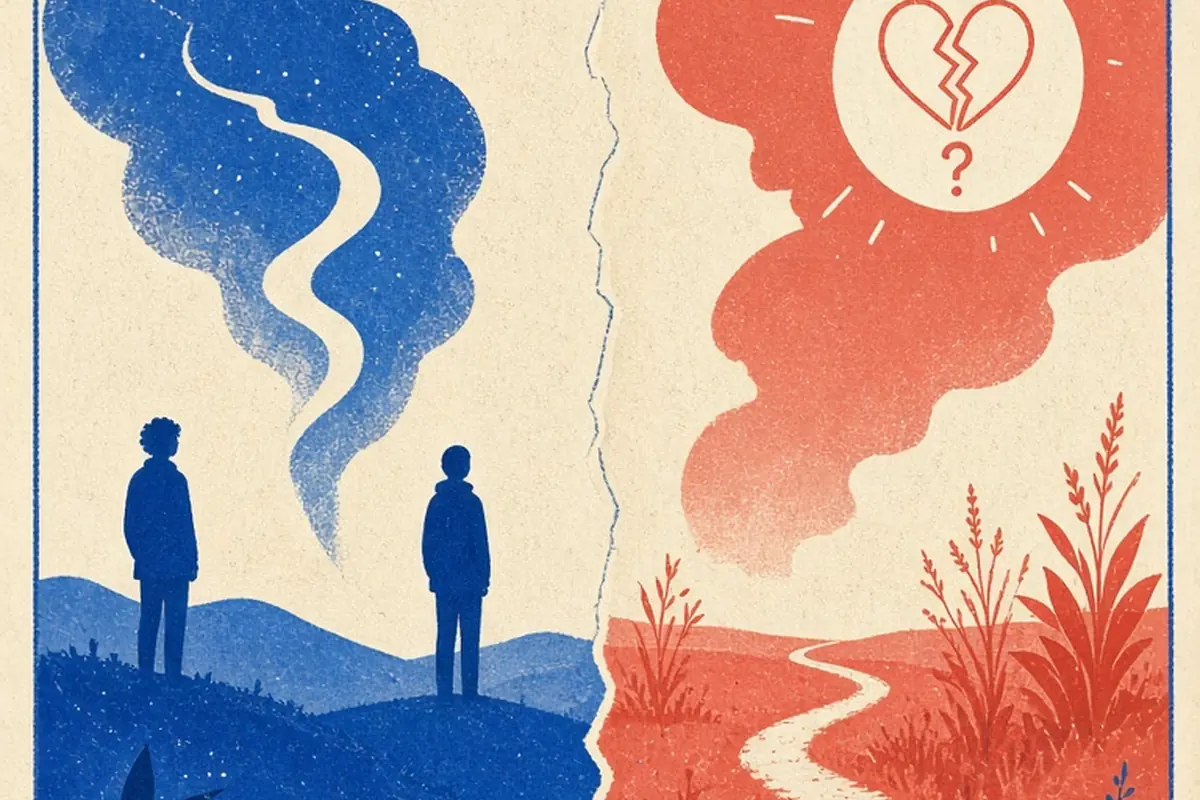
Falling out of love usually means the emotional bond, attraction, and sense of partnership have faded over time, often from neglect, unresolved resentment, or simply growing apart. It does not automatically mean the relationship is over. Some couples rebuild closeness deliberately; others accept the feeling as honest information and part ways respectfully.
If you have typed some version of 'I am not in love anymore' into a search bar, you are probably not looking for poetry. You want to know what the feeling means and what you are supposed to do with it. This guide walks through both.
What Falling Out of Love Actually Feels Like
It rarely arrives as one dramatic moment. More often it is a slow quiet: you stop reaching for your phone to tell them something funny, their hand on your shoulder feels neutral instead of warm, and you realize you have not missed them in weeks. The defining feature is not anger. It is indifference. Fighting requires caring, and falling out of love often looks like not caring enough to fight.
Common signs include feeling relieved when plans get canceled, imagining a life without them and feeling calm rather than sad, and going through the motions of affection because it is expected. None of these alone proves anything, since everyone has flat weeks. But a pattern stretching over months is worth taking seriously instead of explaining away.
Why People Fall Out of Love
The most common cause is not betrayal. It is neglect. Relationships run on attention, and when work, kids, stress, or screens absorb all of it, the bond starves quietly. Resentment is another slow killer. Conflicts that never get resolved do not disappear; they calcify, until affection can no longer get through.
People also simply change. The partner who fit your life at 25 may not fit at 35, and that is nobody's fault. Sometimes there is no villain at all: priorities diverge, curiosity fades, and the honest answer to 'what went wrong' is 'nothing dramatic, we grew apart.' Accepting that possibility matters, because hunting for someone to blame can keep you stuck longer than the fading itself.
Rough Patch or Real Ending? How to Tell
Not every dip in feeling means love is gone. Stress, grief, burnout, and depression can flatten all emotion, including romantic feeling. If everything in your life feels gray, the problem may not be the relationship at all. The useful test is specificity: do you feel nothing for them, or nothing for everything?
A few honest questions help separate a rough patch from a real ending.
If your answers point toward wanting the feeling back, you are likely in a rough patch with repair potential. If the honest answers are relief, dread, and blankness, consistently over months, the feeling may genuinely be gone. Pretending otherwise costs both of you time you cannot get back.
- When they are away, do you miss them or feel relieved?
- Does the idea of fixing this feel like work worth doing, or a sentence to serve?
- Can you still picture a future together that you would actually want?
- Do you still care what they think of you?
What to Do Before You Decide Anything
Do not announce 'I am not in love with you anymore' in the middle of a fight or during a crisis. That turns a real question into a weapon. Instead, give yourself a defined window, say four to eight weeks, to observe your feelings honestly and test whether effort changes anything. Write down what you actually feel week to week. Memory edits itself; notes do not.
Also check your own state first. Poor sleep, heavy drinking, untreated depression, and chronic stress all blunt emotional response. If your whole life feels muted, address that through rest, a doctor, or a therapist before concluding the relationship is the cause. This is not about talking yourself into staying. It is about making one of the biggest decisions of your romantic life with clean data.
How to Try Rebuilding the Connection
If part of you wants the feeling back, say so plainly and early. 'I feel us drifting and I do not want to lose this' opens a conversation; 'I am not in love with you' opens an autopsy. Then act like you are dating again. Plan novel experiences together, since new settings tend to create new feelings more reliably than the same couch. Express specific appreciation daily, and rebuild physical affection at a pace that is comfortable and welcome for both of you.
A couples therapist can help if you keep having the same fight or cannot talk without defensiveness. Think of it as hiring a referee, not admitting failure. The honest limit: rebuilding only works if both people want it, and even then there are no guarantees. You are choosing to try, not buying a result. Set a mental checkpoint, a few months of genuine effort, and reassess honestly rather than trying forever.
How to End Things With Care
If you have tested the feeling and it is truly gone, staying out of guilt is not kindness. It is a slower cruelty. Have the conversation in person, in private, at a time neither of you has to rush off. Be honest without being brutal: 'My feelings have changed and I do not see them coming back' is true and humane. A detailed list of their flaws is neither.
Expect them to want reasons, and give honest ones without turning it into a trial. Do not offer immediate friendship to soften the blow, since it usually extends the pain. Handle logistics like living arrangements, shared belongings, and telling friends with the same decency you would want. You cannot make a breakup painless, but you can make it clean, and clean hurts less over time.
When Your Partner Is the One Pulling Away
The other side of this situation is just as common: you sense them fading. Shorter replies, less affection, a roommate where a partner used to be. The worst moves are the instinctive ones: snooping through their phone, picking fights to get a reaction, or performing extra devotion to win them back. Surveillance and pressure cannot create love. They can only delay the truth.
Ask directly instead: 'I have felt distance between us lately. Is something changing for you?' Then actually listen. If they are unsure, you can suggest working on it together. If they have already left emotionally, your job shifts from convincing to accepting. That is painful, but it protects your self-respect and frees you both. You cannot argue someone into loving you, and trying usually costs you months.
After the Conversation: Moving Forward
Whether you left or were left, expect grief. Even a choice you made can hurt. The relationship occupied space in your routines, your plans, and your sense of who you are, and that space does not refill overnight. Give yourself a real low-contact or no-contact period rather than checking their social media, because every peek restarts the clock.
Then rebuild deliberately: the friendships you let slide, the hobbies that went quiet, the version of yourself that existed before 'we.' Many people eventually see an ended relationship not as wasted years but as information about what they need, what they give, and what they will do differently. That reframing takes time, and it is fine if you are not there yet.
Illustrative Scenarios
The Canceled Trip That Felt Like Relief
Mark, 34, had been with his girlfriend for six years when she called to cancel their long-planned weekend trip because work had blown up. His first reaction was relief, and it scared him. His first interpretation was that he was a bad partner who owed her either a proposal or a breakup by Monday. Instead, he spent a month tracking how he actually felt, then told her honestly that he felt them drifting. They tried three months of deliberate effort before agreeing, sadly but calmly, to split. The relief had not been a verdict, but it was data he could not unsee.
Key point: A gut feeling is worth investigating, not obeying. Give it honest scrutiny before you act on it.
Her Replies Got Shorter
David, 29, noticed his girlfriend of two years had stopped initiating texts and was answering his with hours-long delays. His first read was that she was cheating, and his second was that he should go cold so she would chase him. Both were guesses dressed as strategy. Instead he asked her directly whether something had changed for her. She admitted she had been questioning the relationship for months but did not know how to say it. The conversation hurt, but it replaced weeks of anxious guessing with a real decision they could make together.
Key point: Distance is a question to ask out loud, not a game to win. You cannot fix or accept what you refuse to name.
Frequently asked questions
Can you fall back in love after falling out of it?
Sometimes, especially when the cause was neglect or drift rather than deep incompatibility, and when both people genuinely want it back. But effort is a choice, not a guarantee, so commit to trying rather than to a specific result.
Is falling out of love a good enough reason to end a relationship?
Yes. Staying out of guilt, habit, or fear of hurting someone usually hurts them more over time. You do not need a dramatic betrayal to justify leaving; honest loss of feeling is reason enough.
How do I know it is the relationship and not depression or burnout?
Look at the scope of the flatness. If nothing in your life brings pleasure, including hobbies, friends, and small wins, the issue may be your own wellbeing. Talking to a doctor or therapist is a reasonable first step before making permanent decisions.
Should I tell my partner I am falling out of love?
If you want to repair things, frame it as a shared problem, like 'I feel us drifting and I want to fix it,' rather than a verdict. If you have already decided to leave, be honest and kind rather than fading out slowly or manufacturing a fight.
Your next step
Tonight, write down three moments in the past month when you felt genuinely glad your partner exists. If you cannot find them, or the exercise feels like homework, schedule the honest conversation you have been avoiding this week.