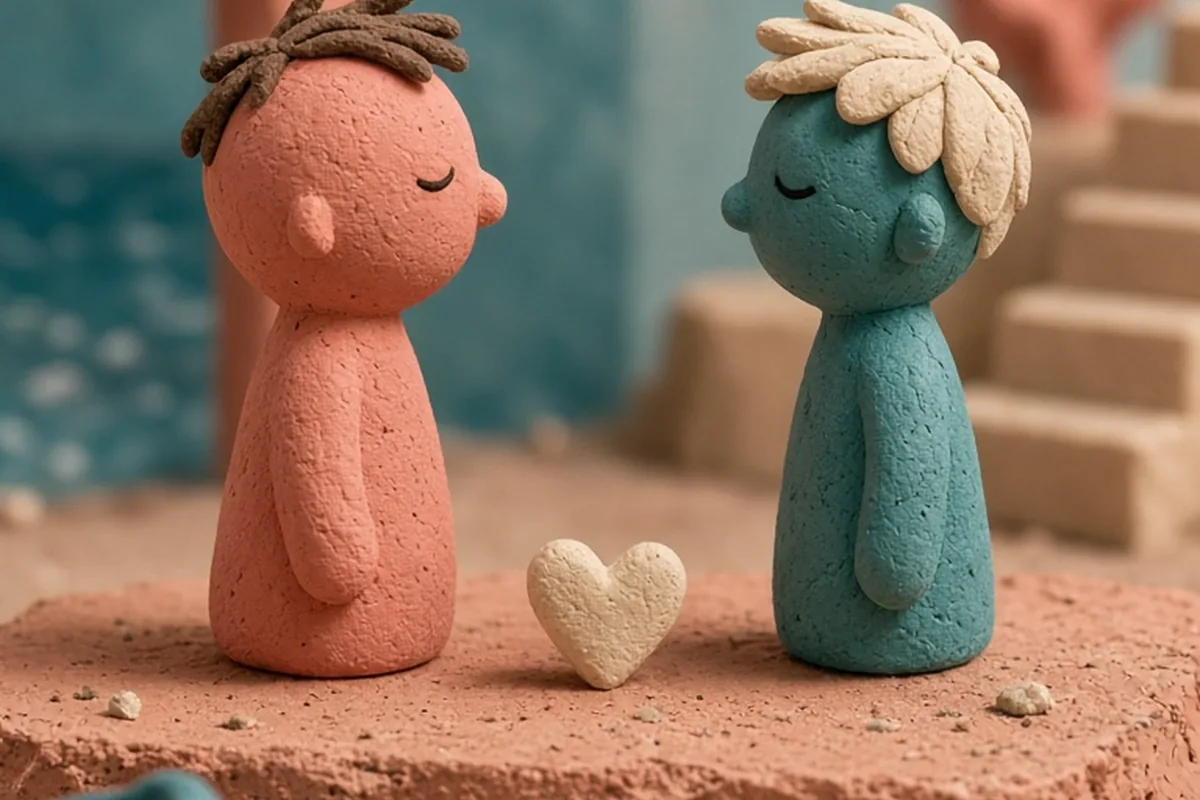
A good first kiss comes down to three things: reading genuine interest, choosing a calm moment with some privacy, and moving slowly enough that the other person can lean in or step back. Ask or verbally check in if you are unsure. Confidence matters less than attentiveness — someone who notices and responds to your cues is far more appealing than someone who simply charges ahead.
There is almost no romantic moment that carries more anticipation than a first kiss. It can feel like the whole date is quietly building toward it, which is exactly why overthinking it tends to make things worse. The tips below are less about technique and more about awareness — your own and theirs.
Why Timing Matters More Than the Perfect Line
Most first-kiss anxiety centers on what to say right before it happens, but the words are rarely the deciding factor. Timing — meaning the emotional temperature of the moment — does far more work. A kiss that arrives during a natural pause, when conversation has slowed and you are both already close, tends to feel earned. One that arrives mid-sentence or right after a tense topic lands awkwardly no matter how smooth the delivery.
Think of timing as a window rather than a target. The window opens when the energy between you has settled into something comfortable and warm, when laughter has faded into a quieter kind of attention. You do not need to manufacture that moment; you need to notice when it is already there. If it does not appear on a particular date, that is useful information too — not every evening is the right one, and waiting is not a failure.
Reading Interest Without Projecting It
Interest shows up in patterns, not single signals. Someone who is genuinely engaged will tend to maintain comfortable eye contact, orient their body toward you, and keep the conversation going even when there are natural exit points. They might find small reasons to close the physical distance — adjusting something on the table, leaning in to hear you better, or lingering at the end of the night rather than rushing off.
The important limit here is that none of these signals is a guarantee, and reading too much into any one of them can lead you to misread the situation. Someone who is warm and touchy by nature might behave that way with everyone. Someone who is more reserved might be very interested but show it quietly. The most reliable approach is to treat these cues as an invitation to move a little closer or a little slower, and then notice how the other person responds to that shift. Their response tells you more than the original signal did.
How to Create the Right Setting Without Forcing It
A first kiss does not require a cinematic backdrop, but setting does influence how relaxed both people feel. Somewhere with a little privacy — the end of a walk, a quieter corner of a venue, the moment before you part ways — tends to work better than a crowded, noisy space where one or both of you feels observed. Noise and distraction pull attention outward; a calmer environment lets it settle between you.
You do not need to engineer the perfect scene. What you can do is be present enough to recognize when the setting is already working in your favor. If the conversation has naturally wound down and you are standing close together with nowhere pressing to be, that is often enough. Trying to orchestrate the moment too deliberately — steering someone to a specific spot, waiting for a specific song — can make you so focused on the plan that you stop paying attention to the actual person in front of you.
Moving Slowly and Leaving Room to Respond
Speed is one of the most common first-kiss mistakes. Moving in quickly might feel bold, but it removes the other person's ability to participate in the decision. Moving slowly — making brief eye contact, pausing a few inches away — gives them a moment to close the remaining distance themselves, turn slightly, or gently pull back. All three of those responses are informative and all three are valid. The pause is not hesitation; it is an invitation.
This approach also takes the pressure off you. When you move deliberately rather than impulsively, you are less likely to misjudge the moment because you have built in a small checkpoint. If the other person leans in, you have your answer. If they do not, you can smoothly redirect — say something, smile, step back — without either of you having to process a full rejection. The slower pace protects both people's dignity and keeps the evening from becoming something either of you has to recover from.
Asking Directly and Why It Does Not Kill the Mood
There is a persistent idea that asking before kissing someone is awkward or clinical, but in practice it usually lands the opposite way. A calm, direct question — something like 'Can I kiss you?' or 'I'd really like to kiss you right now' — signals confidence and consideration at the same time. It gives the other person an easy yes, and it gives them a dignified way to say not yet or not tonight without a scene. Most people find that kind of directness attractive rather than off-putting.
The key is tone. A question asked with warmth and without urgency feels like an offer, not a test. If the answer is yes, the moment is still there — you did not dissolve it by speaking. If the answer is no or not yet, you have learned something important without anyone having to feel cornered. Treating a no as useful information rather than a verdict on your worth makes the whole interaction easier to navigate and keeps the door open for the connection to develop on its own terms.
What to Do When You Are Not Sure the Interest Is Mutual
Uncertainty is normal, especially early in dating when you are still learning how someone communicates. If you genuinely cannot tell whether the interest is there, the most useful move is usually to slow down rather than push forward. Extend the evening slightly, find a reason to be a little closer, and pay attention to whether the other person matches that energy or creates a little distance. Their behavior in response to yours is more reliable than any single moment you have been analyzing.
It is also worth being honest with yourself about the difference between uncertainty and a soft no. If someone has been friendly but consistently kept physical distance, changed the subject when things got personal, or ended previous evenings quickly, those are patterns worth respecting. Hoping that a first kiss will shift the dynamic is rarely a good strategy — it tends to create awkwardness rather than resolve it. Waiting for a clearer signal, or simply asking how they are feeling about things, is a more respectful and ultimately more effective path.
After the Kiss: How You Handle the Next Few Minutes
What happens immediately after a first kiss shapes how both people feel about it. A brief smile, a moment of eye contact, or a low-key comment — 'I've been wanting to do that' — keeps the warmth going without turning it into a performance. Overthinking the aftermath, or immediately launching into nervous chatter, can undercut a moment that was actually going well. Let it breathe for a second before you fill the space.
If the kiss felt a little off — maybe the timing was slightly awkward or one of you pulled back sooner than expected — resist the urge to analyze it out loud or apologize extensively. A light touch works better: a small smile, a return to easy conversation, and no dramatic processing of what just happened. First kisses are rarely flawless, and most people are far more forgiving of a slightly clumsy moment than of someone who makes it a bigger deal than it needs to be.
Building Confidence Without Faking It
Confidence in this context does not mean performing certainty you do not feel. It means being willing to act on genuine interest without requiring a guarantee of the outcome. That distinction matters because performed confidence — the kind that ignores the other person's signals in favor of a script — tends to read as self-absorption rather than attractiveness. Real confidence is quieter: it shows up as eye contact you hold comfortably, a pace that does not rush, and the ability to handle a no without collapsing.
If you find yourself anxious about first kisses in general, it helps to separate the fear of rejection from the actual risk involved. A first kiss that does not happen, or one that the other person gently declines, is not a catastrophic event — it is just information about where things stand. Framing it that way, rather than as a high-stakes test of your worth, tends to reduce the anxiety enough that you can actually be present for the moment instead of running calculations through it.
Illustrative Scenarios
The Long Goodbye That Almost Did Not Happen
Marcus had been on three dates with someone he genuinely liked, but each evening ended with a hug and a vague sense that he had missed a window. On the fourth date, walking back to her car, he noticed the conversation had slowed into a comfortable quiet and she was not reaching for her keys. His first instinct was to hug her again and leave. Instead, he stopped, made eye contact, and said quietly, 'I'd really like to kiss you.' She laughed softly and said yes. The moment he had been overthinking for weeks turned out to be straightforward once he simply named what he wanted. The lesson was not that he needed a line — it was that he had been waiting for permission he could have asked for directly.
Key point: Naming your interest calmly and clearly is often all the 'move' a moment needs. Waiting for perfect conditions can mean waiting indefinitely.
Reading the Room on a Crowded Rooftop
Priya and her date had been talking for two hours at a rooftop bar when she noticed him leaning in slightly closer each time the music got louder. She initially read it as practical — he was just trying to hear her. But she also noticed he kept finding reasons to stay close even when the noise dipped. When they moved to a quieter corner to look at the skyline, the conversation slowed naturally. He paused, looked at her, and waited. She closed the remaining distance herself. Afterward, she reflected that what she had appreciated most was that he had not rushed or grabbed the moment — he had left room for her to be part of the decision.
Key point: Moving slowly and leaving a small gap gives the other person agency. When both people participate in the moment, it tends to feel better for everyone.
Frequently asked questions
Is it okay to ask before kissing someone for the first time?
Yes, and it is often more effective than people expect. Asking directly — with a calm, warm tone rather than an anxious one — signals confidence and respect at the same time. Most people respond well to being given a clear choice rather than being surprised.
What if I go for the kiss and they pull back?
Stay calm and do not make it a bigger moment than it needs to be. A simple 'No worries' and a return to easy conversation is usually enough. How you handle a no gracefully says more about your character than the attempt itself did.
Does the first kiss have to happen on the first date?
Not at all. Some connections build more slowly, and a first kiss on a third or fourth date can feel just as meaningful — sometimes more so. Rushing it to meet an imagined timeline tends to produce awkward moments rather than good ones.
How do I know if someone wants to be kissed without asking?
Look for patterns: sustained eye contact, staying physically close, lingering rather than leaving, and matching your energy when you slow down. No single signal is definitive, so pay attention to the overall picture rather than one moment. When in doubt, asking is always a reasonable option.
Your next step
Before your next date, decide in advance that you will pay more attention to the other person's responses than to your own internal script. Notice when the energy settles, move a little closer, and either wait to see if they close the gap or ask directly. Either way, you will have more useful information than any amount of pre-planning could give you.