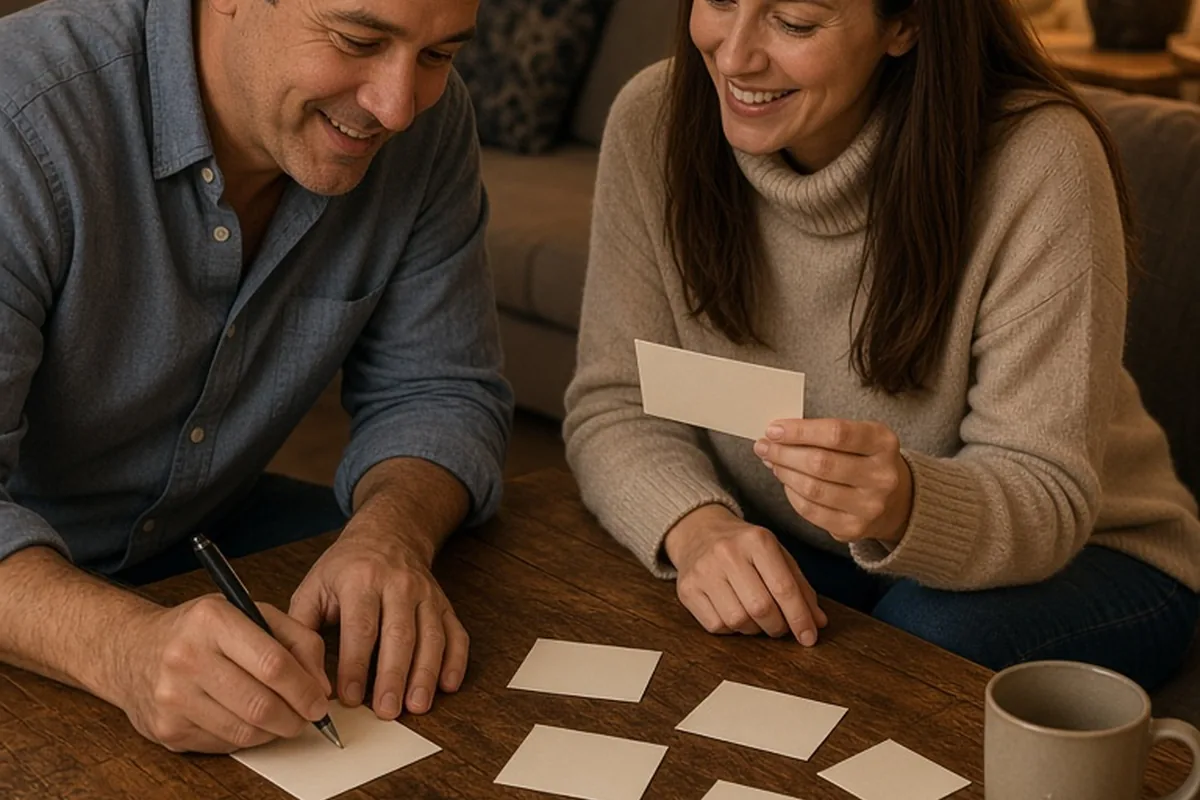
Free romantic games for couples are cost-free, playful activities designed to deepen emotional connection, spark affection, and break daily routines. These activities range from conversational question swaps and storytelling challenges to physical scavenger hunts, creative roleplay, and sensory guessing games using everyday household items. They work best when both partners agree on ground rules, keep the mood low-pressure, and prioritize curiosity and mutual enjoyment over winning or forced vulnerability.
Long workweeks, domestic chores, and endless screen time often turn evenings into passive routines where partners share space without truly interacting. Bringing structured, playful games into your time together breaks autopilot habits, creating intentional space for laughter, discovery, and physical closeness without adding financial stress.
Low-Pressure Conversation Games for Reconnecting After a Busy Week
Conversation games offer an easy entry point when you want to connect without organizing complicated rules or moving furniture. A classic starting point is a customized version of Two Truths and a Memory. In this variation, each partner shares two authentic past memories and one plausible but fabricated story from their childhood or single years. Listening closely allows long-term partners to discover forgotten details about each other's early lives, while newer couples learn about formative experiences in an entertaining, lighthearted way.
Another effective option is the Perspective Swap interview. Set a timer for three minutes and answer lighthearted interview questions while roleplaying as your partner. Questions might include: What is my absolute ideal Sunday morning? If I could instantly eliminate one chore forever, which would it be? What was I secretly thinking on our third date? This exercise invites gentle humor and shows how well you understand each other's habits, quirks, and private preferences without putting anyone on the defensive.
To keep these conversation games engaging, avoid turning them into relationship status evaluations or passive-aggressive reminders about household tasks. If a memory prompts an emotional topic or an awkward pause, acknowledge it gently and ask whether your partner wants to explore that topic later over tea or stick to lighter prompts for game night. The goal is open curiosity rather than interrogating one another.
Playful Physical Challenges and Sensory Games Using Items at Home
Sensory games shift your attention away from verbal analysis and bring focus back to physical touch and mindfulness. The Blindfold Taste and Scent Challenge requires only a soft cloth and a few everyday kitchen ingredients, such as dark chocolate, fresh berries, mint leaves, honey, or citrus slices. One partner wears the blindfold while the other offers small tastes or aromas, inviting the blindfolded partner to identify the ingredient purely by scent, texture, and taste. You can alternate turns, keeping the pace slow and attentive.
For couples who enjoy physical movement, the Living Room Slow Dance Roulette combines music discovery with gentle physical contact. Build a shared playlist where each partner secretly adds three favorite slow songs and three upbeat curveballs from past eras. Turn off overhead lights, light a candle or dim a lamp, and press shuffle. Dance together through every track, adapting your tempo and dance style to whatever plays, whether it is a romantic ballad or an energetic 1980s pop song.
Physical proximity games naturally reduce tension after a stressful day, but they require continuous mutual comfort. Always establish a clear opt-out word or simple gesture if a blindfold feels disorienting or if someone feels too physically drained for active movement. Respecting comfort boundaries instantly preserves trust and keeps the atmosphere relaxed.
Creative Storytelling and Collaborative Fantasy Games
Collaborative storytelling games tap into imagination and shared humor, offering an escape from everyday problem-solving. The Alternate Timeline game invites couples to build an imaginary version of their lives together based on an unusual premise. For example, choose a prompt such as: If we met in the 1920s as traveling jazz musicians, how would our first week look? or If we ran a bed-and-breakfast in the mountains, what would our daily morning routine be? Take turns adding one sentence or paragraph at a time, building out eccentric details and playful scenarios.
Another imaginative exercise is the Dream Itinerary Draft. Pick a blank piece of paper and draft a completely fictional, no-budget-limit 48-hour vacation. One partner writes the Friday night plan, the second partner counters with the Saturday morning adventure, and so forth. While the premise is pure fantasy, the exercise reveals each person's evolving travel desires, relaxation styles, and ideas of romantic indulgence, which can later inspire realistic local dates.
Story games succeed when both partners embrace collaborative agreement, adopting an attitude where you build upon your partner's contribution rather than blocking or criticizing their narrative choices. Letting the story become slightly absurd or dramatic often produces genuine belly laughs that break down lingering emotional walls.
Playful Competition: Turning Simple House Rules into Romantic Stakes
Adding gentle, flirty competition can introduce lively energy to an ordinary evening at home. You can take any basic card deck or tabletop game you already own and replace standard scoring with playful romantic favors. For example, in a classic card game like Gin Rummy or Crazy Eights, the loser of each round owes the winner a five-minute foot rub, a sincere thirty-second compliment delivered in a dramatic accent, or breakfast in bed the following morning.
The Partner Trivia Showdown tests how accurately you remember the small details of your shared history. Each person writes down five specific questions about their own preferences or relationship milestones on index cards. Examples include: What was the exact name of the street where we had our first major argument? or Which dessert do I order when I have had a difficult day? Trade cards, award points for correct answers, and let the winner choose the movie or dessert for the rest of the night.
Keep competitive games light by ensuring the stakes remain enjoyable for both people regardless of who wins. Never use chores that carry underlying resentment as penalties, such as cleaning the bathroom or taking out the trash. Romantic wagers should always feel like an affectionate gift rather than unpaid domestic labor.
Setting Emotional Ground Rules so Romantic Games Stay Fun and Safe
Even the most well-intentioned game can fall flat or create discomfort if one person feels pressured to participate or self-conscious about their answers. Before starting any romantic activity, agree that either partner can pass on a question, change the rules, or pause the game without needing to provide a defensive justification. This freedom prevents playful teasing from turning into genuine frustration.
Keep sensitive relationship grievances entirely separate from game time. If a question accidentally touches on a sore subject, such as finances, household division of labor, or family tensions, resist the urge to turn the game into an impromptu mediation session. Simply say, That feels a bit heavy for tonight; let us save that discussion for tomorrow morning and pick another card. This clear boundary protects the leisure space you are building together.
Pay attention to nonverbal signals throughout the activity. If your partner's posture becomes rigid, if their tone turns flat, or if their laughter seems forced, take a gentle pause. Asking, How are you feeling about this game right now? signals that their emotional comfort matters far more than finishing a round.
Adapting Free Romantic Games for Long-Distance or Low-Energy Evenings
Romantic connection does not require high energy or shared physical space. For low-energy evenings when you are both exhausted on the couch, try the Silent Gratitude Alphabet. Lie side-by-side and take turns whispering one small thing you appreciate about each other starting with the letter A and working through the alphabet. It requires almost zero physical effort, encourages closeness, and shifts the mind away from work stressors before sleep.
Long-distance couples can easily translate these activities to video calls. The Virtual Museum or Architecture Tour lets partners share screens to explore a free online digital exhibit or walk through distant city streets on street-view mapping tools together, narrating where they would walk, eat, and shop. Alternatively, send each other a digital photo scavenger hunt during the day, asking for snaps of something that reminded me of you, something green, or something that made me smile.
Asynchronous texting games also maintain romantic anticipation across differing schedules. You can play a day-long game of Two Truths and a Wish via text message, sending snippets throughout the working day to give each other small moments of anticipation between meetings.
Illustrative Scenarios
Transitioning from Screen Fatigue to Playful Connection
Marcus and Elena found themselves spending nearly every evening staring at separate phones on the sofa, feeling distant despite sharing the same room. Marcus initially felt hesitant to suggest an organized activity, worrying it would feel forced or juvenile after a grueling ten-hour workday. Instead of proposing a lengthy board game, he suggested a ten-minute round of Partner Trivia over dessert, using five quick questions about their college years. Elena laughed at how poorly Marcus remembered the make of her first car, which led to a forty-five-minute conversation reminiscing about their early dating life.
Key point: Starting with a very short, low-stakes conversational game can break evening screen habits without demanding substantial energy or elaborate planning.
Navigating Exhaustion in a Long-Distance Routine
Priya and Jordan were managing a long-distance relationship across different time zones. Their nightly video calls were slowly becoming repetitive recaps of daily chores and work frustrations. Priya felt disconnected and initially worried that their mutual attraction was fading. Jordan suggested playing an asynchronous Story Relay via voice notes, where each person contributed two sentences every morning building an imaginary mystery in an old seaside town. The quirky plot gave them something completely new to laugh about when they reconnected live on weekends.
Key point: Creative, asynchronous storytelling games keep playful anticipation alive without placing heavy emotional demands on fatigued evening calls.
Frequently asked questions
What should I do if my partner feels self-conscious or reluctant to play?
Keep the invitation extremely brief, low-pressure, and voluntary. Suggest a five-minute conversational exercise rather than a full evening event, and emphasize that either of you can stop at any moment. If your partner simply does not enjoy structured games, respect that preference and look for casual, organic ways to connect instead.
Can romantic games help resolve active relationship conflicts?
Romantic games are designed to foster intimacy, playfulness, and shared laughter, not to resolve active underlying conflicts. Attempting to use a game to address deep disagreements about money, commitments, or communication often backfires by creating tension. Serious discussions are best handled with direct, calm, and distraction-free conversation.
How often should couples set aside time for games at home?
There is no mandatory schedule or universal rule for couple games. Many couples find that introducing a playful activity once a week or every couple of weeks keeps the experience fresh without turning it into an obligation. Pay attention to your joint energy levels and pick moments when both of you have the mental space to relax.
What if an activity accidentally brings up an awkward memory or hurt feelings?
Acknowledge the moment without panic or defensiveness. Offer a simple check-in such as asking whether your partner wants to talk about that topic gently right now or put the game aside for the evening. Never force someone to continue playing if the mood turns uncomfortable.
Your next step
Choose one simple game from this guide, prepare two or three starter prompts on a slip of paper, and invite your partner to try a five-minute round after dinner tonight without any expectation of a perfect outcome.