To get free Valentine cards to print for those you love most, download template files formatted for standard paper, select an appropriate design for your relationship, and print using high-opacity cardstock. Choose designs ranging from fold-over greeting formats to flat postcards, adjust your printer to actual size to avoid distorted margins, and pair the finished card with a specific, handwritten note that reflects your genuine bond rather than relying on generic rhyming sentiments.
A printed greeting card created at home often conveys far deeper personal care than an impersonal store purchase, provided you take a few simple steps to ensure the physical result looks crisp and intentional.
Free Valentine's Cards to Print for Different Relationships
Not every Valentine requires romantic declarations of lifelong devotion. The people you love most often encompass romantic partners, longtime spouses, close friends, siblings, aging parents, and children. When selecting a printable file, look for artwork and layouts that align naturally with the exact emotional tone of the relationship. A minimalist botanical sketch or a lighthearted illustration works wonderfully for close friends and colleagues, expressing warmth without awkward ambiguity. For close family members, nostalgia or heartfelt appreciation for daily support feels grounded and reassuring. For an established partner, you might lean toward thoughtful, understated elegance that leaves ample room for your own private memories.
Choosing by category prevents the awkward friction of trying to force a generic romantic poem onto a platonic friendship or a family connection. Flat note cards decorated with warm, playful motifs suit classmates, neighbors, and casual friends because they deliver a cheerful seasonal greeting without demanding heavy emotional reciprocity. Folded greeting cards provide privacy for romantic intimacies or vulnerable gratitude, shielding your handwritten thoughts inside the interior panel. Before downloading any template, visualize the recipient opening the card and reading your words. If the pre-printed cover sentiment feels exaggerated or foreign to how you speak in person, keep browsing until you locate an understated design that lets your personal message do the talking.
Preparing Your Digital File and Page Setup for a Clean Print
A common disappointment with printable stationery occurs when a vibrant screen image turns into a blurry, off-center printout. High-quality print output starts with the source file. Always download the highest available resolution version, ideally distributed as a portable document format file rather than a compressed preview thumbnail copied directly from a webpage image gallery. Image files intended for printing should appear sharp and clean when zoomed in on your monitor, with distinct vector linework or crisp typographic edges.
Before feeding paper into your desktop machine, open your printer dialogue menu and verify the page scaling settings. Desktop applications often default to scaling options like fit to printable area, which shrinks the design slightly and leaves uneven border margins around your card layout. Instead, select the actual size or page scaling set to zero reduction. Confirm that your paper orientation matches the template layout, whether portrait or landscape. If you are producing double-sided folded cards, perform a quick single-sheet draft test on regular scrap paper to confirm which direction your feeder feeds paper before running higher-grade sheets.
Selecting Paper Stock and Envelopes Without Commercial Equipment
The tactile weight of a card provides an immediate impression of care and durability. Standard office copy paper is thin and prone to absorbing liquid ink unevenly, which causes visible rippling and transparency issues where text bleeds through to the reverse side. For a polished presentation, look for medium-to-heavy cardstock compatible with home inkjet or laser machinery. Smooth cover stock in warm white or gentle cream tones yields a softer, more sophisticated appearance than stark fluorescent white, enhancing both full-color graphics and monochrome text.
Surface finish also influences your final product. Glossy photo sheets can smudge easily under fountain pens or rollerball ink and give greetings an artificial, promotional texture. Matte or subtle vellum finishes, by contrast, accept standard pen ink quickly without smearing and provide an inviting, organic feel. If you plan to mail the greeting rather than deliver it by hand, check that the trimmed dimensions correspond to standard envelope sizes, such as standard invitation or greeting envelopes. Sourcing matching envelopes or folding a custom envelope from contrasting craft paper completes the presentation cleanly.
Writing Sincere Messages That Fit the Space and the Relationship
The printed visual serves merely as a frame; your handwritten message gives the piece lasting emotional value. Many people experience temporary writer's block when staring at a blank interior card panel, worrying that their phrasing will sound clunky or insufficient. Rather than reaching for clichéd poetry, ground your writing in concrete observation. Mention a specific shared memory from the past year, an inside joke that consistently brings laughter, or a routine act of kindness you deeply appreciate. Specificity communicates genuine attention far better than sweeping dramatic statements.
Tailor the emotional scale to the recipient's comfort level and your mutual communication history. When writing to a spouse or longtime partner, you might thank them for steady patience during a challenging season or describe a quiet moment when you felt especially grateful for their partnership. For a close friend, celebrating their resilience, humor, or unwavering loyalty creates a meaningful milestone. For young children, write about a favorite adventure you shared together and express simple, unconditional pride. Keep the handwriting spacious and legible, allowing empty margin space around the note to maintain visual balance.
Assembling, Folding, and Trimming Printable Cards for a Polished Look
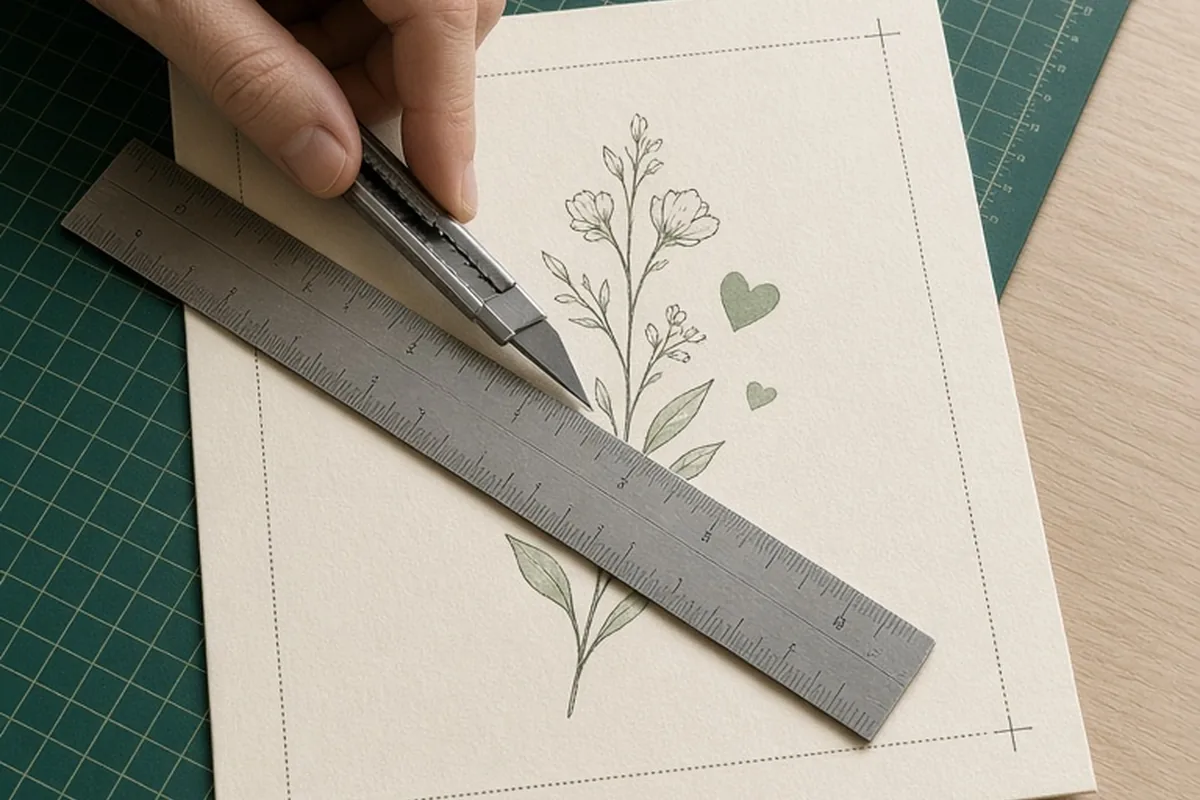
Physical assembly makes the difference between an amateur cutout and a pristine greeting card. Ordinary household scissors often create wavering, uneven cutlines and pinched paper corners. If available, use a metal safety ruler paired with a fresh utility craft blade over a protective cutting mat. Align the straight edge along the crop marks provided by the design template. When making your cuts, stop just shy of slicing through the outer margins so your registration guidelines remain intact for subsequent cuts.
Scoring the fold line before bending heavy paper is an essential step that prevents jagged paper cracking along the spine. Lay your metal ruler along the planned center fold line, then gently trace along the edge using a dull tool such as a bone folder, an empty ballpoint pen, or the smooth back of an ordinary butter knife. You want to compress the paper fibers slightly without cutting through the sheet. Once scored, fold the card slowly inward toward the crease line, pressing firmly with a smooth object to create a sharp, flat edge that rests evenly on a flat surface.
Adding Low-Cost Tactile Touches and Creative Keepsake Details
Because printable stationery carries no retail price tag, you have room to introduce subtle handmade accents that transform paper into an enduring keepsake. A simple loop of natural twine, a small pressed botanical leaf, or a neat wax seal on the envelope flap introduces an organic, physical richness that store-bought items rarely offer. If you enjoy calligraphy, tracing over printed headings with metallic gel pens or outlining decorative borders with archival drawing markers adds understated shine.
For recipients who value functional or interactive keepsakes, consider modifying flat card templates into bookmark inserts, recipe cards, or photo mounts. Affixing a small printed photo of a shared memory to the inner flap with archival photo corners turns the greeting into a tangible memento suitable for framing or desk display. When crafting for family members or long-distance companions, slipping an audio playlist link or a handwritten list of favorite shared books inside the fold gives the recipient an interactive experience extending beyond February.
Troubleshooting Common Home Printing Mistakes Before You Press Print
Technical hiccups can waste expensive cardstock and ink if you proceed straight to your final paper supply without checking hardware parameters. Ink smudging along the leading edge of heavy cardstock typically occurs when the paper thickness exceeds the standard feed tray setting. Many desktop printers include a manual feed slot or a dedicated media setting for heavy cardstock or envelopes. Enabling this setting adjusts the internal roller clearance and printhead distance, preventing friction marks and track wheel smears.
Color discrepancies between your computer screen and the physical output are another frequent annoyance. Computer monitors emit bright backlighting in red, green, and blue light spectrums, whereas printers apply physical inks onto absorbent surfaces. To avoid dark, muddy prints, slightly increase the image brightness before printing and run a test nozzle check to confirm no ink channels are partially clogged. If colors appear washed out, select high-quality matte paper options in your printer preferences to deposit a richer, more saturated layer of pigment.
Illustrative Scenarios
Choosing Between Grand Gestures and Grounded Gratitude
Marcus wanted to celebrate his second Valentine's Day with his partner, Elena. Feeling pressured by commercial displays, he initially searched for elaborate downloadable cards featuring dramatic romantic promises. However, Elena had repeatedly expressed that over-the-top declarations made her uncomfortable, favoring practical, quiet acts of care. Recognizing this preference, Marcus chose an understated line-art printable card featuring a simple kitchen coffee pot motif. Inside, he wrote about their quiet Saturday morning breakfasts and thanked her for supporting his recent career transition. Elena kept the card displayed on her desk for months.
Key point: Selecting a design and tone that honors the recipient's actual personality creates deeper connection than trying to match commercial expectations.
Navigating Multiple Family Cards on a Tight Timeline
Sophia needed cards for her two young nieces, her widowed father, and her closest childhood friend. In past years, she felt overwhelmed trying to buy separate commercial cards for everyone while managing a strict budget. Instead of scrambling through picked-over store aisles, she selected a set of coordinating printable note cards with clean botanical borders. She tailored each note individually: sharing a funny memory with her friend, drawing small animal doodles for her nieces, and acknowledging her father's steady wisdom. The entire project was completed in one afternoon without financial strain.
Key point: A unified printable template set lets you focus your energy where it matters most: crafting personal, relationship-specific handwritten messages.
Frequently asked questions
Can regular copy paper work if I do not have cardstock at home?
Standard copy paper can work in a pinch, especially for flat cards tucked inside a sturdy envelope or glued onto a colored construction paper backing. However, single-sheet copy paper tends to curl when handling liquid ink and lacks the structure to stand upright on a shelf. Layering two sheets together with dry glue stick provides instant body if cardstock is unavailable.
How do I ensure double-sided printable cards align correctly?
Double-sided alignment depends heavily on your printer's manual or automatic duplex mechanism. Always run a single test sheet on draft mode and pencil an arrow on the top edge before feeding it back through. This simple test confirms the exact orientation your specific feeder requires without wasting heavier paper.
What is the best way to cut straight lines without a paper trimmer?
A fresh utility blade, a firm cutting surface, and a rigid metal ruler yield straighter cuts than scissors. Hold the ruler down firmly with your non-dominant hand and score lightly in two smooth passes rather than pressing forcefully all at once. This technique prevents the blade from wandering or tearing the paper grain.
Are digital printable cards appropriate for professional or casual acquaintances?
Yes, printable cards are well suited for teachers, neighbors, and colleagues when the design remains cheerful and neutral. Opt for flat postcard formats with friendly greetings like warm wishes or appreciation rather than romantic imagery. Keeping the note brief and focused on gratitude maintains comfortable social boundaries.
Your next step
Download your chosen template file today, run a single test sheet on regular paper to confirm margins, and gather a reliable pen and ruler before starting your final prints.