The best friendship poses show genuine connection through natural physical contact, shared motion, and unforced interaction rather than rigid alignment. To capture your authentic bond, prioritize candid prompts like walking side-by-side while talking, sharing an inside joke, leaning back-to-back on steps, or framing a casual laugh. These dynamic setups replace stiff smiles with real warmth, relaxed body language, and balanced visual symmetry that highlight mutual trust and personality.
Most friendship photos fall flat not because the bond is missing, but because posing for a camera naturally triggers stiffness. When people stand side-by-side, square their shoulders to a lens, and hold a static grin, the resulting image often resembles a formal lineup rather than a true reflection of closeness. Capturing genuine camaraderie requires moving away from frozen stances and leaning into interactive poses that encourage laughter, gentle movement, and comfortable physical proximity.
Natural Standing Poses for Pairs and Small Groups
Standing photos often feel the most awkward because people do not know where to direct their weight or what to do with their arms. A reliable way to create warmth without feeling staged is the dynamic walk-and-talk. Position yourselves a few yards away from the camera, link arms or walk closely with shoulders lightly brushing, and stroll forward at a relaxed pace. Looking toward one another and chatting about an ordinary topic breaks camera tension instantly, producing genuine smiles, natural foot placement, and an organic sense of movement.
Another classic standing option is the asymmetrical shoulder lean. Instead of standing side-by-side like cardboard cutouts, have one person face slightly toward the camera at a three-quarter angle while the other turns inward, resting a hand or forearm gently on their friend's shoulder. This breaks horizontal symmetry, creates visual depth, and conveys support. For three people, create a gentle triangle where the center person stands slightly back and the two outer friends angle inward, resting hands on the center person's shoulders or linking arms to keep the group visually connected.
The over-the-shoulder look back also works exceptionally well in urban or scenic environments. Walk away from the camera together while holding hands or looping arms around each other's waists, then turn back toward the lens over your shoulders on a shared count. This pose highlights the setting while emphasizing a lighthearted, spontaneous connection that feels candid rather than choreographed.
Seated and Ground-Level Framing for a Cozy Atmosphere
Seated poses instantly lower physical tension because sitting down encourages the body to relax its core posture. Outdoor staircases, park benches, picnic blankets, and low stone walls provide ideal natural staging. On a set of stairs, arrange friends across adjacent steps rather than on the exact same riser. Staggering vertical levels gives each person distinct space in the frame while keeping them close enough to lean in, rest an elbow on a knee, or drape an arm over a friend's lower shoulder.
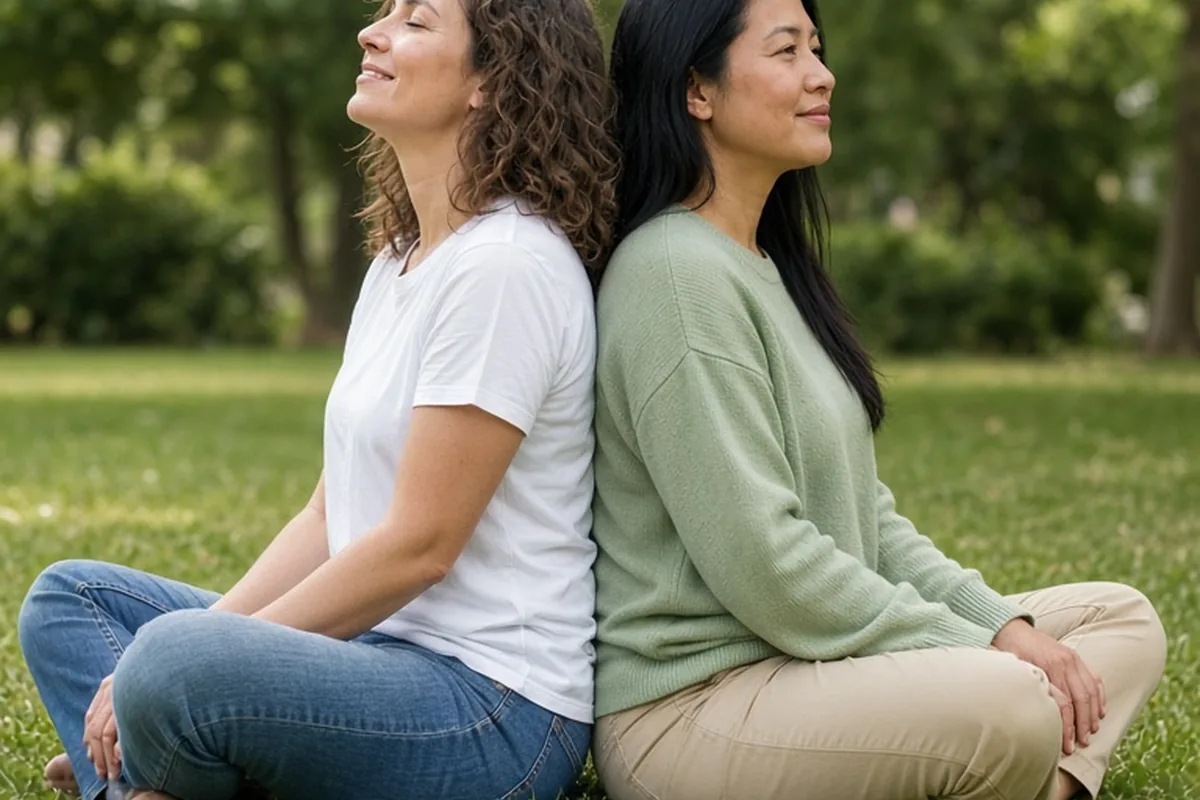
On flat ground, such as a grassy park lawn or a beach, the back-to-back seated pose creates a strong impression of mutual trust and easy intimacy. Sit cross-legged or with knees bent, leaning your upper backs gently against each other. From this position, tilt your heads slightly toward one another or look up toward the sky. The physical contact provides physical support, helping everyone relax their shoulders away from their ears, which immediately softens facial expressions.
For a cafe or tabletop setting, sit across or diagonally from one another leaning forward over coffee cups or shared plates. Prop one chin in your hand while making eye contact, sharing a laugh, or pointing at something off-camera. Framing the shot at table height with the foreground slightly blurred brings the viewer into the conversation, highlighting everyday closeness over formal portraiture.
Action-Based Prompts That Spark Spontaneous Laughter
Genuine laughter cannot be faked on command, but it can easily be sparked through playful, physical prompts. One effective technique is the whispered secret prompt. Have one friend lean in close to whisper a completely absurd sentence, a funny memory, or a favorite food order directly into the other person's ear. The anticipation and immediate reaction almost always produce an authentic crinkle around the eyes and uninhibited laughter that looks vibrant on camera.
Light physical energy also breaks self-consciousness. If both people are comfortable with it, a classic piggyback ride or a gentle hip bump adds instant energy to a photoshoot. The person giving the piggyback can lean slightly forward while the rider wraps their arms securely, allowing both faces to end up on similar visual planes near the center of the frame. For a less physically demanding alternative, try a synchronized turn: stand with your backs to the camera, count to three, and spin around toward the lens with an exaggerated expression.
Another engaging prompt is the toast or shared interaction. If you are holding drinks, food, or props, bring them together in the center of the frame while looking at the object rather than the camera, followed immediately by looking up at each other. Capturing the micro-expressions during the transition between the action and eye contact consistently yields expressive, candid frames.
Posing Strategies for Diverse Group Sizes and Trios
Composing photos for trios and mid-sized friend groups requires extra intention to ensure no single person appears isolated or pushed to the edge. With three friends, avoid a straight horizontal line where the middle person feels squished and the outer two feel disconnected. Instead, use height variations: have one person sit on a chair or curb while the other two stand closely behind and to the side, framing the seated friend with casual hand placements on the chair back.
For groups of four to six, visual triangles and staggered depth are essential. Divide the group into two subtle rows—a front row seated or leaning forward, and a back row standing or leaning against a wall behind them. Encourage friends to angle their torsos slightly inward toward the center of the frame rather than facing dead ahead. This inward orientation creates a visual circle of intimacy that draws the viewer's eye across the entire group.
When photographing larger groups, designate natural clusters rather than one massive row. Two or three friends can link arms on the left while another pair laughs together on the right, tied together by a central person bridging the gap. Using burst mode while the group transitions between poses ensures you capture the relaxed interactions happening in between the formal counts.
Camera Angles, Lighting, and Environmental Composition
How a pose translates onto the screen depends heavily on camera height and ambient lighting. Shooting from a slightly lower angle—holding the camera at waist or chest height—makes full-body standing and walking poses feel grounded, dynamic, and expansive. Conversely, an eye-level angle works best for seated and tabletop moments, creating an intimate, conversational perspective that mirrors how friends actually see each other.
Soft, directional light is critical for group photos because harsh overhead sunlight casts unflattering shadows under eyes and noses, causing people to squint. Aim for open shade under trees or architectural overhangs, or schedule your photos during golden hour when the sun sits low in the sky. When shooting during golden hour, position the light source behind or to the side of the group to create a warm halo around hair and shoulders, while using a light-colored wall or reflector to bounce soft light onto faces.
Incorporate your surrounding environment to anchor the poses naturally. Lean against textured brick walls, sit along the edges of fountain rims, or frame your shot through doorways or leafy foliage. Using foreground elements—like leaves or coffee cups blurred in the bottom corner—adds depth, making the viewer feel like a quiet observer sharing an authentic moment.
Overcoming Awkward Hands, Stiff Smiles, and Wardrobe Clash
Uncertainty about where to place hands is the most common reason people look uncomfortable in portraits. Avoid letting arms hang limp against the sides. Give hands a purpose: slide one thumb into a front pocket, hold a beverage, lightly touch a friend's arm, or adjust a hat, jacket lapel, or sunglasses. When touching a friend, use a relaxed, soft hand rather than a tight grip, keeping fingers naturally curved.
Stiff smiles usually happen when a pose is held for more than three seconds. Combat this fatigue by using reset breaths. Have everyone close their eyes, relax their jaw, exhale fully, and open their eyes with a fresh smile right as the shutter clicks. Moving between frames—shaking out the hands or shifting weight from one foot to the other—keeps energy high and prevents muscles from freezing into unnatural grimaces.
Wardrobe choices also heavily influence how cohesive friendship poses look. Avoid wearing identical outfits unless it is an intentional visual joke, as matching uniforms can make the photo look dated. Instead, choose a complementary color palette with three to four harmonizing tones, such as earth tones, soft pastels, or neutral denim and cream. Mixing subtle textures like knits, denim, and cotton creates visual interest while ensuring no single person completely clashes with or overpowers the rest of the group.
Illustrative Scenarios
Transitioning from Stiff Headshots to a Lively Stroll
Jordan and Sam wanted memorable photos to celebrate ten years of friendship before moving to different cities. Their initial attempts in front of a landmark felt rigid and uncomfortable, with both standing shoulder-to-shoulder holding forced smiles. Recognizing the stiffness, they changed their approach. They found a quiet side street, linked arms, and walked back and forth while reminiscing about an early college road trip. The resulting photos captured relaxed stride lengths, animated expressions, and spontaneous head tilts that reflected their decade-long bond far better than the static landmark shots.
Key point: Introducing simple movement and conversation immediately dissolves camera self-consciousness, producing genuine expressions.
Restructuring a Trio Portrait with Staggered Levels
Three friends—Alicia, Chloe, and Priya—were struggling to take a group photo at a botanical garden. Standing in a straight line made the outer two look detached, while crowding closely together created an awkward cluster. They decided to use a nearby wooden bench to introduce different heights: Chloe sat comfortably on the bench leaning forward, Priya sat on the backrest behind her, and Alicia leaned against the side frame. This triangle arrangement brought their faces closer together naturally and eliminated the feeling of anyone being left out.
Key point: Using environmental furniture to stagger heights creates balanced composition and warmth in three-person photos.
Frequently asked questions
How should friends with a large height difference pose together?
Staggering levels is the easiest way to balance significant height differences. Have the taller person sit on a ledge or bench while the shorter person stands next to them, or try leaning poses where both friends sit on steps across different risers. In standing walking shots, keeping a comfortable arm-in-arm connection while angling slightly inward minimizes awkward vertical contrast.
What is the best way to handle hands in full-body friendship photos?
Give hands an easy, natural task rather than letting them hang rigidly at your sides. Hook one thumb into a pocket, lightly loop an arm around your friend's waist, hold a prop like a bag or coffee cup, or gently rest a hand on their shoulder. Keep fingers slightly bent and relaxed to avoid looking tense.
How do we make candid laughing photos look authentic instead of forced?
Use interactive verbal cues instead of simply telling everyone to smile. Ask one friend to whisper an absurd secret, share a funny shared memory, or do a sudden goofy dance step just before the shutter fires. Firing continuous burst mode captures the natural smile that blooms right after the initial reaction.
How should a group coordinate outfits without matching identically?
Select a unified color palette of three to four complementary shades—such as warm neutrals, muted greens, or navy and cream—rather than wearing the exact same color. Allow each person to choose clothing styles and textures that suit their individual comfort, which preserves personal identity while maintaining visual harmony across the photo.
Your next step
Choose two movement-based poses—like a casual walk-and-talk and a relaxed seated step arrangement—and set your phone or camera to burst mode for your next outing.