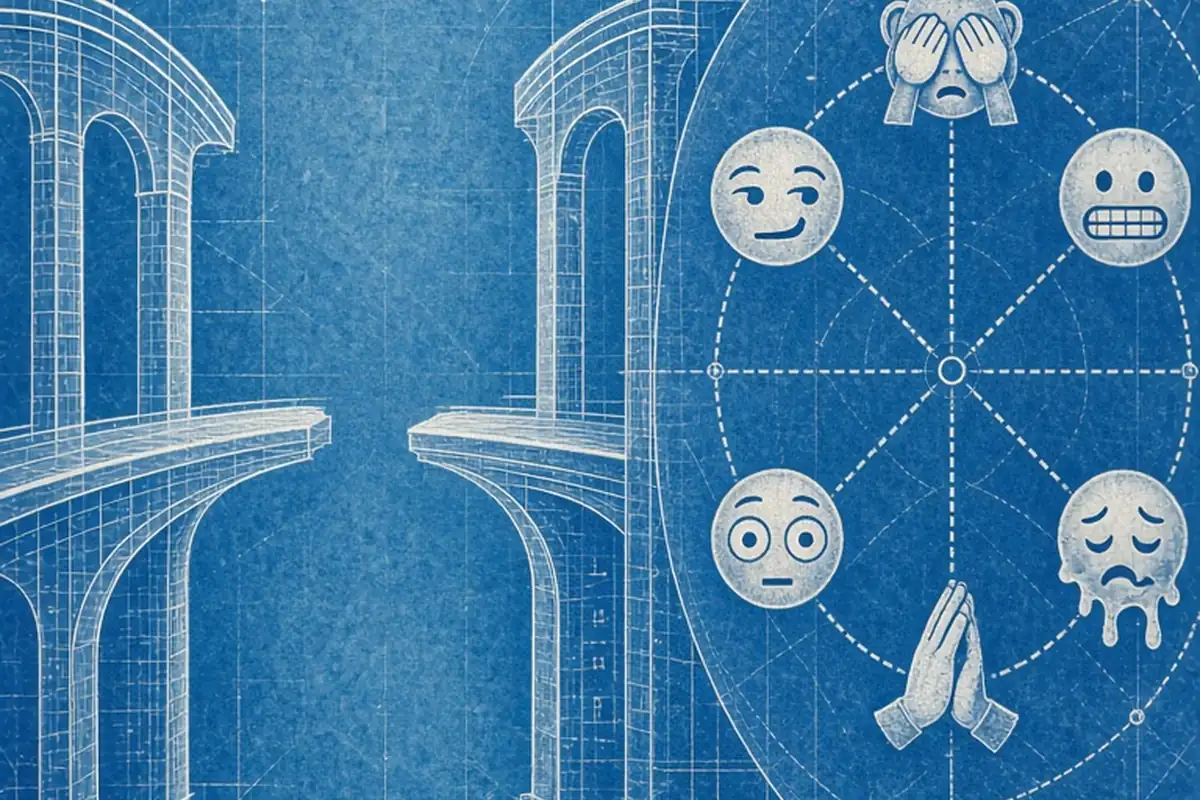
The funniest emojis for couples tend to be the ones that create a shared joke or signal playful teasing without needing explanation. Top picks include the 😏 smirk for light flirting, 🙈 see-no-evil for mock embarrassment, 😬 grimace for shared awkwardness, 🫠 melting face for dramatic reactions, and 🤌 Italian hand for exaggerated emphasis. What makes an emoji land is less about the symbol itself and more about the timing, the relationship context, and whether it matches your actual dynamic.
Texting a partner or someone you are interested in can feel surprisingly high-stakes for something as small as a cartoon face. The right emoji at the right moment can defuse tension, extend a joke, or quietly say something you are not quite ready to say out loud. The wrong one can make a perfectly good message land flat or confusing. This guide breaks down which funny emojis actually work for couples, how to use them with intention, and a few situations where less is more.
Why Emojis Matter More Than You Might Think
Text strips out tone, facial expression, and timing, which are the three things that make humor work in person. An emoji fills some of that gap. When you write 'oh sure, that sounds great' with no emoji, it reads as either sincere or passive-aggressive depending on the reader's mood. Add a 😂 and it becomes obviously playful. Add a 🙄 and it becomes gently sarcastic. The symbol does not change the words, but it changes the entire emotional register of the message.
For couples specifically, emojis do something extra useful: they build a private shorthand. Over time, certain symbols take on meanings specific to your relationship. One couple might use 🦆 as a callback to a ridiculous first-date story. Another might use 🫠 every time one of them has a rough day at work. This kind of inside-joke emoji use is low-effort but genuinely bonding. It signals that you remember shared moments and that you are paying attention.
The Core Lineup of Funny Emojis That Work for Couples
Some emojis have earned their place in couple communication because they are flexible enough to carry multiple tones without being ambiguous. The 😏 smirk is a reliable flirt signal that reads as confident rather than try-hard. The 🙈 see-no-evil monkey is useful for mock embarrassment, like when you admit you have been thinking about someone all day and want to soften the vulnerability with humor. The 😬 grimace is perfect for shared awkwardness, the kind that comes up when you both know a situation is mildly chaotic but survivable.
Newer additions to the emoji keyboard have expanded the toolkit considerably. The 🫠 melting face has become a go-to for dramatic, exaggerated reactions, especially when something is overwhelmingly good or bad. The 🤌 gesture works well for Italianate emphasis when you want to say 'this is exactly right' or 'I cannot believe this.' The 🫡 salute has a dry, ironic quality that works well between people who enjoy deadpan humor. And the classic 😂 or 💀 skull remain useful for genuine laughter, though they have become so common that they can feel like filler if overused.
- 😏 Smirk: light flirting, confident teasing
- 🙈 See-no-evil: mock embarrassment, softening a vulnerable admission
- 😬 Grimace: shared awkwardness, mutual acknowledgment of a messy situation
- 🫠 Melting face: dramatic or overwhelmed reactions
- 🤌 Italian hand: exaggerated emphasis or approval
- 🫡 Salute: dry humor, ironic compliance
- 💀 Skull: genuine laughter, often stronger than 😂 in casual contexts
Using Emojis to Flirt Without Overdoing It
Flirting over text works best when it feels effortless, and emojis help with that by letting you say something slightly bold without committing fully to it in words. The 😏 smirk after a compliment, for example, signals that you mean it but you are not going to make it weird. The 👀 eyes emoji has become a reliable way to express interest in something someone said without spelling it out. These work because they leave a little room for the other person to respond in kind or redirect without either of you feeling exposed.
The trap to avoid is stacking too many emojis in a single message, which can read as either anxious or performative. One well-placed emoji usually lands better than three. Similarly, using explicitly romantic emojis like 😍 or ❤️ very early in a dynamic can feel like pressure rather than warmth. Funny emojis tend to be safer early on because humor creates connection without demanding a specific emotional response. Save the more direct symbols for when the relationship has enough context to hold them.
Building Inside Jokes Through Emoji Shorthand
One of the most underrated things a couple can do over text is develop a small private vocabulary, and emojis are an easy way to start. It usually happens organically: you use a random emoji in response to something funny, the other person picks it up, and suddenly it means something specific to the two of you. A 🐸 might become the symbol for 'this is chaotic and I love it.' A 🌮 might reference a specific date. The emoji itself is not the point; the shared memory attached to it is.
You can also be intentional about this. If something funny happens in person, reference it later with a single emoji and see if they catch it. If they do, you have just created a shorthand. This kind of playful callback is low-stakes but communicates something meaningful: that you are present in the relationship and that you find the small moments worth remembering. It is a form of attention that does not require a long message.
When Funny Emojis Can Backfire
Humor is context-dependent, and emojis are no exception. Using a 😂 or 🙈 in response to something your partner said seriously can read as dismissive, even if you meant it affectionately. If someone shares something that matters to them and you respond with a joke emoji before acknowledging the substance, the emoji becomes a deflection rather than a connection. This is especially worth watching in longer-term relationships, where a pattern of using humor to avoid emotional engagement can quietly erode trust.
There is also a generational and cultural dimension to emoji interpretation that is easy to underestimate. The 🙂 slight smile, for example, reads as warm to some people and passive-aggressive to others depending on their texting background. The 💀 skull means 'I am dying of laughter' in many contexts but can read as dark or off-putting to someone unfamiliar with that usage. When you are early in a relationship or texting someone from a different communication style, it is worth paying attention to which emojis they use themselves, since that gives you a clearer read on their vocabulary.
Matching Emoji Energy to the Moment
The best emoji use is responsive rather than formulaic. If your partner sends a long, enthusiastic message about something they are excited about, matching that energy with a single 👍 is a mismatch that can feel cold. Conversely, if they send a quick, casual text, responding with a wall of emojis can feel overwhelming. Reading the tone of the incoming message and mirroring it loosely is a simple way to make your responses feel attuned rather than automatic.
This also applies to the rhythm of a conversation. Early in an exchange, playful emojis help set a light tone. As a conversation gets more substantive, dialing back on the humor signals that you are taking the content seriously. And when a conversation is wrapping up, a warm emoji like 🙂 or a simple ❤️ can serve as a soft close that leaves the other person feeling good. None of this needs to be calculated; once you are aware of it, it tends to happen naturally.
Emojis in Long-Term Relationships Versus Early Dating
In early dating, emojis do a lot of interpretive work because there is not yet enough shared history to fill in the gaps. A 😏 from someone you have been on two dates with carries more ambiguity than the same emoji from a partner of two years. This means early on, it is worth being slightly more deliberate about which emojis you use and how often, not because you need to perform a version of yourself, but because clarity is genuinely useful when two people are still figuring out each other's communication style.
In established relationships, emojis can become more shorthand and less deliberate, which is mostly fine. The risk is that they can also become lazy substitutes for actual communication. Sending a 😂 instead of saying what you actually found funny, or using ❤️ as a way to close a conversation without engaging with what was said, can become habits that make texting feel efficient but hollow. The couples who seem to maintain the most genuine warmth over text tend to mix emoji shorthand with occasional messages that are specific and personal, the kind that could only come from someone who actually knows you.
Illustrative Scenarios
The Misread Grimace
Marcus had been texting Leila for about three weeks after meeting at a friend's birthday. The conversation was easy and funny, and he felt like they had a good rhythm. One afternoon she texted about a stressful situation at work, and he responded with a 😬 grimace, meaning to signal 'oof, that sounds rough, I get it.' She went quiet for a few hours. When she replied, her tone had shifted slightly. Later she mentioned she had not been sure if he was making fun of the situation. Marcus had assumed the emoji read as sympathetic; she had read it as dismissive. He started paying more attention to which emojis she used herself, and when something felt heavy, he started leading with words before adding a symbol.
Key point: Emojis that feel expressive to you may land differently for someone who does not yet know your communication style. When the content is emotionally weighted, lead with words and let the emoji support rather than replace them.
The Inside Joke That Stuck
On their third date, Priya and Daniel got caught in an unexpected rainstorm and ended up eating soggy takeout in his car, laughing about how badly the evening had gone sideways. A few days later, Daniel texted her a single 🌧️ cloud emoji with no context. She immediately knew what it meant and sent back a 🥡 takeout box. From that point on, those two emojis became their shorthand for 'this is a mess but I am glad I am here with you.' It required no explanation and carried more warmth than a paragraph could have. The emojis themselves were unremarkable; what made them work was the specific memory they were anchored to.
Key point: The funniest and most meaningful emojis in a relationship are often the ones that reference something real between you. You cannot manufacture this, but you can notice when it happens and lean into it.
Frequently asked questions
Is there a wrong number of emojis to use in a text?
There is no universal rule, but one or two well-chosen emojis tend to land better than a string of them, which can read as performative or hard to interpret. The best guide is to match the tone and energy of the conversation rather than following a fixed count.
What if my partner rarely uses emojis but I use them a lot?
Different people have genuinely different texting styles, and neither is wrong. If you enjoy using emojis and they prefer plain text, that difference is worth acknowledging directly rather than reading into it. It usually reflects habit or preference, not emotional distance.
Can emojis actually help when a conversation gets tense?
Sometimes, but carefully. A light emoji can signal that you are not trying to escalate, but using humor to deflect from something that needs to be addressed directly can make things worse. When something genuinely needs a real conversation, it is usually better to have it in words, or in person.
Are there emojis that tend to be misread most often?
The 🙂 slight smile is frequently cited as one that reads differently across age groups and texting cultures, ranging from warm to passive-aggressive depending on context. The 😂 laughing face has also become so common that it can feel like filler rather than genuine laughter. Paying attention to how your specific partner uses and responds to emojis is more useful than any general list.
Your next step
This week, try using one emoji as a callback to something specific that happened between you and your partner, a place you went, a joke that landed, or a moment that was unexpectedly good. Send it with no explanation and see if they catch it. If they do, you have just added something small and real to your shared language.