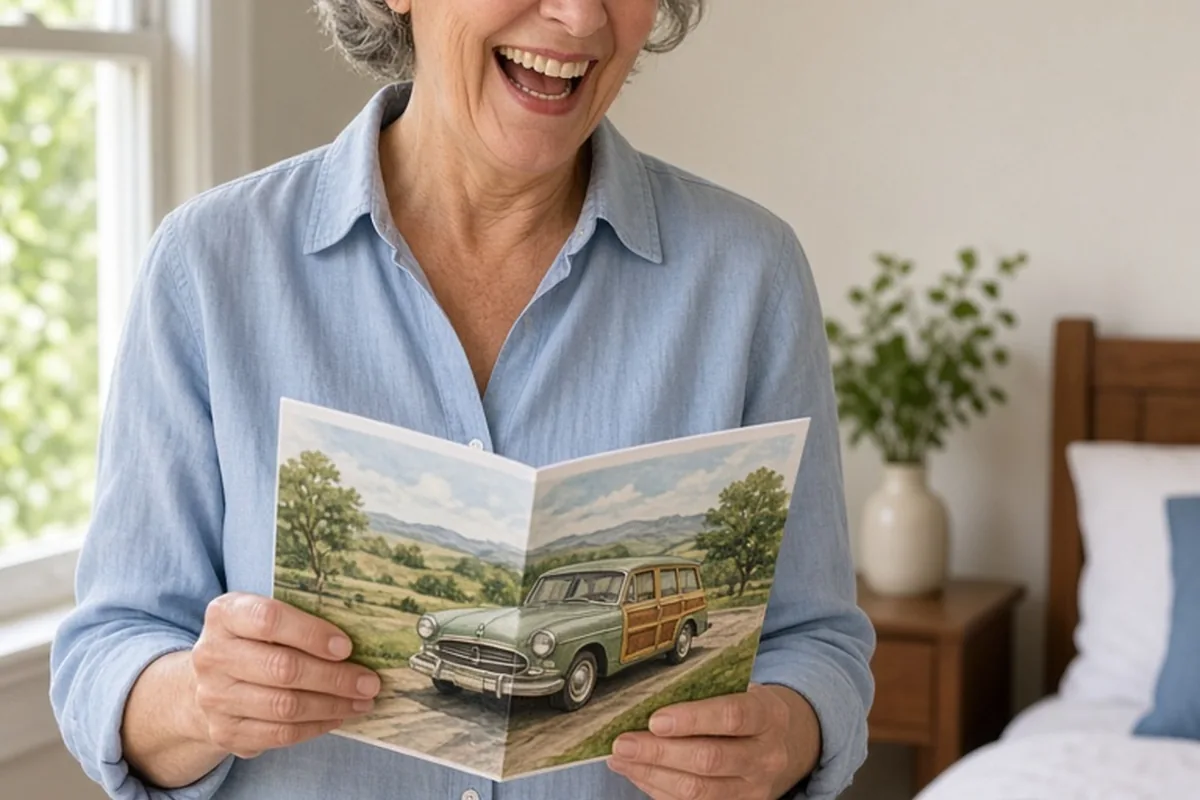
Funny Mother's Day cards bring love through laughter when they highlight shared memories, playful truths, and genuine appreciation rather than tired cliches. The best humorous message matches your mother's personal style, whether that means gentle self-deprecation, teasing about everyday family chaos, or witty one-liners about adulthood. Pair a lighthearted jab or relatable joke on the outside with two or three sincere sentences inside that acknowledge her steady support, showing that your humor comes from real gratitude.
A greeting card that prompts an authentic belly laugh often means far more to a mother than a formal, pre-printed poem she has read a dozen times before. Reaching that sweet spot where humor feels loving rather than dismissive requires a thoughtful understanding of your mother's personality, your shared history, and the subtle boundary between affectionate teasing and hurtful sarcasm.
Matching Card Humor to Your Mother's Communication Style
Humor is deeply individual, and what delights one mother might leave another feeling misunderstood or unappreciated. Before selecting a funny card, think about the comedy your mother naturally enjoys in daily life. Does she lean toward dry, understated wit, deadpan observations, lively situational comedy, or gentle slapstick? A mother who loves quick observational commentary about modern annoyances will appreciate a card that jokes about grocery store lines, endless laundry, or modern technology. In contrast, a mother who enjoys gentle, affectionate warmth might feel alienated by cynical jokes about aging or parenting fatigue.
Take note of how she engages with you during ordinary phone calls or family get-togethers. If your relationship is built on decades of mutual teasing and rapid-fire banter, an ironic card that pokes fun at sibling rivalries or your own stubbornness will feel completely natural. However, if your day-to-day dynamic is polite, gentle, or somewhat formal, jumping straight into sharp sarcasm on an annual holiday can come across as jarring or passive-aggressive. Calibrating the card to match her actual humor language ensures the joke lands as an expression of closeness rather than a missed connection.
Four Approaches for Funny Mother's Day Card Messages
One reliable comedic avenue is the Honest Adulthood angle, where you playfully admit that she was right about everything you resisted as a child. This format works exceptionally well because it pairs self-effacing humor with an undeniable compliment to her wisdom. You might write something like, 'Happy Mother's Day to the woman who correctly predicted that I would eventually appreciate bedtime, sensible shoes, and cleaning baseboards,' or 'Congratulations on being right about 98 percent of the things I argued with you about as a teenager.' It acknowledges her patience while giving her the satisfying validation every parent secretly treasures.
A second effective direction centers on everyday household chaos and surviving childhood logistics. This angle looks back on burned dinners, hectic school runs, and forgotten permission slips with nostalgic affection rather than complaint. An example of this style is: 'Thank you for keeping me alive, fed, and mostly out of trouble, despite my best efforts to make each of those goals nearly impossible.' It honors the staggering amount of unseen work she performed, reframing the exhausting daily grind of child-rearing as an adventurous shared comedy that you both managed to survive.
The third popular theme is the playful Favorite Child debate, which uses affectionate competition among siblings to bring a smile. This works best when phrased with exaggerated confidence that everyone in the family recognizes as theatrical: 'Happy Mother's Day from your most responsible, humble, and clearly favored child,' followed inside by, 'Don't worry, your secret is safe with me.' While lighthearted, this approach should be used thoughtfully; if there is genuine tension or unresolved favoritism among siblings, it can unintentionally reopen sore feelings instead of sparking laughter.
Finally, the Motherhood Camaraderie style works wonders when writing from one adult parent to another, such as an adult daughter writing to her own mother. Messages like, 'Now that I have my own kids, I officially apologize for literally everything I did between 1998 and 2012,' create an instant bond of shared reality. This style bridges generational divides by showing that you finally understand what her life felt like from the other side of the kitchen counter.
Balancing the Punchline With Sincere Appreciation
A purely comedic card runs the risk of feeling like a generic stand-up routine if it lacks emotional grounding. The most memorable funny cards rely on a two-part structure: a punchy, humorous opening that grabs her attention, followed by a sincere, handwritten paragraph that grounds the message in genuine love. Comedy opens the door by breaking through holiday formality, but sincere words are what make the card something she keeps in a keepsake box for years to come.
Creating this balance requires an intentional pivot sentence. After delivering the joke, use a smooth transitional line such as, 'All jokes aside, I could never have navigated this past year without your guidance,' or 'Kidding aside, you have been my steadiest anchor, and I am grateful for you every single day.' This deliberate shift signals that while you love making her laugh, you take your gratitude for her sacrifices and presence seriously. It prevents the card from feeling dismissive of the genuine weight of Mother's Day.
Humor Pitfalls to Skip in Mother's Day Greetings
Not all humor translates well onto a holiday card, and certain overused tropes can backfire completely. One frequent offender is the tired joke implying that motherhood is a relentless nightmare that can only be endured with heavy drinking. While light jokes about enjoying a glass of wine can be harmless in the right context, cards that center entirely on maternal despair or alcohol reliance often feel hollow, dated, and dismissive of the genuine joy and complex labor involved in raising children.
Another sensitive area involves physical appearance, weight, and aging. Unless your mother specifically initiates and enjoys jokes about grey hair, wrinkles, or getting older, it is wise to avoid cards that make her age the centerpiece of the punchline. Even well-intentioned teasing about getting older can inadvertently tap into societal pressures and leave her feeling self-conscious on a day meant to celebrate her. Keep the comedic focus on shared experiences, eccentric family habits, and your own quirks rather than her physical attributes.
Additionally, steer clear of jokes that dredge up real, unresolved family grievances or past financial strains. A card is not the venue to make passive-aggressive comments about a strict upbringing, past divorces, or tense family decisions disguised as comedy. If a memory still carries an emotional sting or requires a complicated explanation, leave it out of the card. True humor in relationships brings people closer together; it never uses a greeting card envelope as a shield for veiled criticism.
Tailoring Funny Cards for In-Laws, Stepmothers, and Grandmothers
When writing a humorous card for a mother-in-law, stepmother, or grandmother, the humor must reflect the actual history and boundaries of that specific relationship. With a mother-in-law, gentle humor that frames you both as loving allies is often the most successful. Poking gentle fun at her son or daughter—your spouse—creates an affectionate bond of shared management: 'Thank you for raising the love of my life, and thank you even more for teaching him how to do his own laundry before he met me.' This positions you as teammates rather than reviving tired mother-in-law stereotypes.
For stepmothers, humor should be deployed with emotional intelligence, especially if the blended family dynamic had a rocky start. Avoid jokes that minimize the unique challenges of step-parenting or make light of family friction. Instead, celebrate her choice to show up: 'Happy Mother's Day to someone who chose to step into our chaos and somehow decided to stay.' This acknowledges her deliberate care with warmth and self-awareness, validating her role without forcing an artificial comparison to biological parents.
Grandmothers often appreciate humor that honors their elevated status as family matriarchs who get to enjoy the fun parts of parenting without the disciplinary grind. Jokes highlighting the grandmother's prerogative to spoil the kids—such as, 'Thank you for teaching my parents everything they know, and then letting me get away with everything they forbid'—celebrate the special privilege of grandparenthood. Tailoring the joke to her specific vantage point shows that you see and cherish her unique place in the family tree.
Writing Your Own Inside Jokes Instead of Buying Prefabricated Puns
While pre-printed cards in stores offer convenient templates, the funniest cards are almost always those that tap into real, specific family lore. Prefabricated puns about coffee or flowers can feel generic, but referencing a disastrous camping trip from ten years ago, a recurring debate over how to make gravy, or a specific phrase she repeats whenever she misplaces her car keys creates an immediate, genuine spark of connection.
To write an effective inside-joke card, begin by identifying an everyday quirk or shared experience that carries zero emotional baggage. Frame the memory concisely, set up the scene in one or two sentences, and follow it with an affectionate nod to her character. For instance, referencing how she always insists on arriving at the airport four hours early can become an affectionate tribute to her fierce dedication to keeping everyone safe and prepared. By elevating ordinary family memories into comedy, you show her that you have been paying close attention to your life together.
Illustrative Scenarios
Balancing Sibling Ribbing With Genuine Recognition
Marcus wanted to send his mother a funny card but struggled with the tone after she had spent a draining six months assisting his grandfather through physical therapy. His initial impulse was to buy a standard gag card boasting that he was obviously her favorite child, but he worried it would feel shallow and disconnected from her current emotional exhaustion. Instead, Marcus selected a card with a gentle cartoon depicting family road trips, referencing their old station wagon that broke down every summer. Inside, he joked that his navigation skills still came entirely from her stubborn refusal to stop for directions, before adding three heartfelt sentences acknowledging how tirelessly she had supported his grandfather this spring. His mother called him in tears of both laughter and relief, deeply touched that he brought levity without ignoring her real life.
Key point: Humor lands most effectively during challenging life chapters when it brings warmth and nostalgia rather than ignoring the person's current emotional reality.
Finding the Right Comedic Tone for a Mother-in-Law
Danielle had been married for three years and wanted to send her mother-in-law, Clara, something more personal than the generic floral cards she had sent in the past. Danielle knew Clara had a sharp, witty sense of humor, but she hesitated to use jokes about difficult in-laws or maternal meddling, which felt disrespectful. Instead, Danielle found a card that celebrated surviving family holiday cooking disasters, and she wrote a message teasing Clara's son about his terrible habit of burning garlic bread whenever he tried to help in the kitchen. Danielle followed the joke with sincere thanks to Clara for raising such a thoughtful partner and for always welcoming her so warmly into the family. Clara loved the card so much she displayed it on her refrigerator for months.
Key point: Bonding over affectionate, shared observations about a partner builds closeness with an in-law without crossing personal boundaries or relying on tired tropes.
Frequently asked questions
Can a funny Mother's Day card replace a traditional sentimental greeting?
Yes, provided the humor is paired with a sincere handwritten message inside. Humor disarms tension and creates genuine joy, but most mothers still appreciate a sentence or two acknowledging their importance in your life. Combining a funny cover with heartfelt interior notes delivers the benefits of both styles.
What should you do if your mother generally prefers serious or sentimental gestures?
If your mother values solemnity or deep sentimentality, do not force an edgy or sarcastic card on her. You can still bring warmth through gentle, sweet humor—such as a nostalgic memory of a happy childhood accident—while keeping the primary tone of your message deeply appreciative and sincere.
Is it appropriate to make jokes about past teenage rebellion in a Mother's Day card?
It is appropriate if those rebellious years are long past and no longer cause emotional pain or active conflict. Framing teenage defiance through self-deprecating humor—where you take full responsibility for being difficult and thank her for her immense patience—often turns old friction into a sweet, shared victory.
How can siblings write a funny joint card without it feeling chaotic?
Choose a card with a central visual joke that all siblings agree on, such as surviving family dinners or ranking the children. Have each sibling write a short, one- or two-sentence message in their own handwriting inside, ensuring that at least one sibling adds a concluding note of collective gratitude on behalf of the entire group.
Your next step
Choose one specific, harmless family memory from the past year that you and your mother both found amusing, and build your handwritten note around that moment to create a personal, laughter-filled message.