The best gifts for a beer lover match his specific taste, brewing interests, or serving preferences. Strong options include style-specific glassware like Teku or tulip glasses, pressurized insulated growlers for draft freshness, craft beer subscription boxes featuring regional microbreweries, and specialized accessories such as counter-pressure bottle fillers or temperature-controlled tap dispensers. Choosing depends on whether he prefers casual sipping, cellaring rare releases, or brewing at home.
Selecting a memorable beer gift requires looking beyond generic novelty bottle openers and focusing on how he actually enjoys his favorite pours. Whether he is an enthusiastic homebrewer, an adventurous sour-ale collector, or someone who appreciates a crisp pilsner on the patio, tailored gear elevates the flavor, aroma, and overall drinking ritual.
Style-Specific Glassware and Sensory Tasting Sets
Pouring a craft beer into standard shaker pint glasses often mutes the delicate aromatics and dulls carbonation. Specialized glassware is engineered to accentuate specific beer profiles by directing aromas toward the nose, maintaining ideal head retention, and controlling how liquid hits the palate. Providing a dedicated set of glasses immediately upgrades his tasting experience at home without requiring bulky equipment or complex maintenance.
When choosing glassware, match the glass geometry to the styles he drinks most frequently. A Teku glass features an angled bowl and flared lip that concentrates hop aromatics in hazy IPAs and wild sours, while a traditional stemmed tulip supports heavy Belgian ales by trapping volatile compounds. For malt-forward stouts, a rounded snifter allows hand warmth to bring out complex notes of chocolate and roasted grain. The primary trade-off to keep in mind is fragility and storage; thin-walled crystal glasses require careful hand washing and dedicated cabinet space compared to everyday barware.
- Teku glasses: Versatile choice optimized for IPAs, sours, and modern craft releases.
- Stemmed tulip glasses: Ideal for Belgian dubbels, tripels, and complex farmhouses.
- Heavy dimpled steins: Great for German lagers, festbiers, and easy drinking.
- Stange glasses: Tall, narrow cylinders designed to preserve the delicate carbonation of Kolsch.
Pressurized Insulated Growlers and Draft Preservation
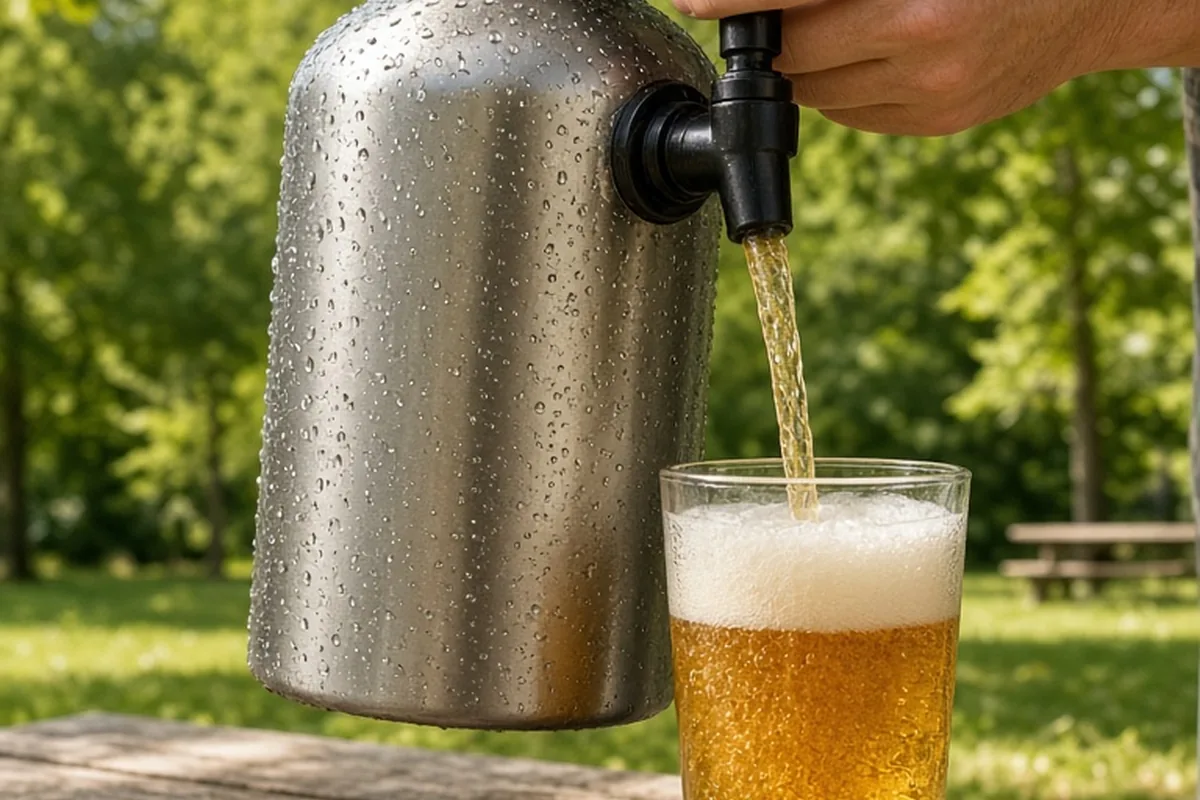
Visiting local microbreweries is a staple hobby for many beer fans, but standard glass growlers lose carbonation within twenty-four to forty-eight hours of opening. Once oxygen enters a traditional screw-top jug, the beer oxidizes quickly, turning bright hop flavors cardboard-flat. A pressurized, double-wall vacuum-insulated growler solves this problem by using food-grade carbon dioxide cartridges to maintain consistent pressure and prevent air intrusion.
These vessels keep beer cold for days and fresh for weeks, allowing him to pull a single fresh pint without compromising the remainder of the fill. For an outdoor enthusiast, an insulated growler with an integrated tap handle makes transporting fresh draft beer to campsites, tailgate gatherings, or picnics seamless and spill-free. The main considerations are initial cost and ongoing maintenance, as pressurized systems require occasional replacement of small CO2 chargers and careful rinsing of internal draft lines after each fill.
Curated Craft Subscriptions and Rare Bottle Clubs
Access to regional microbreweries is often restricted by state distribution laws, making hard-to-find independent releases an exciting gift for an adventurous drinker. A craft beer subscription box delivers fresh, curated selections directly to his door, introducing him to emerging breweries and seasonal batches he could not otherwise purchase locally. These services range from hyper-focused IPA clubs to mixed cases representing diverse domestic and international brewing traditions.
To select the right service, decide between a customizable box where he sets his flavor preferences and a curator-led surprise model that pushes his palate into new territories. For instance, a subscription focusing on wild fermentation and barrel-aged stouts is perfect for a collector who likes cellaring bottles for special occasions. Ensure that the delivery service complies with shipping regulations in his home state and consider weather timing, as shipping unpasteurized craft beer during peak summer heat can occasionally degrade delicate hop aromas if transit is delayed.
Precision Homebrewing Upgrades and Temperature Control
If he already brews his own beer, beginner equipment kits are rarely useful, but precision gear that increases consistency and batch quality makes an exceptional gift. Homebrewing is an art defined by tight process control, especially regarding fermentation temperature, sanitization, and oxygen prevention during transfers. Upgrading a brewer from basic plastic buckets to stainless steel fermenters or digital temperature regulators directly improves his finished product.
Practical tools like a digital dual-stage temperature controller allow him to convert an auxiliary refrigerator or chest freezer into a precise fermentation chamber, eliminating off-flavors caused by ambient room fluctuations. Alternatively, an optical refractometer allows him to measure sugar density throughout the brew day using just a few drops of wort rather than wasting larger hydrometer samples. Because brewing configurations vary widely based on available space and batch sizes, verify his current kettle diameter or preferred batch volume before purchasing hardware components.
- Digital temperature controllers: Prevent yeast stress by regulating heating and cooling cycles.
- Stainless steel conical fermenters: Provide sanitary sampling ports and simplified trub separation.
- Counter-pressure bottle fillers: Allow bottling carbonated homebrew directly from kegs without oxidation.
- Wort chillers: Rapidly cool boiling wort to pitching temperatures to prevent contamination.
Experiential Gifting and Brewery Masterclasses
Physical gear can sometimes add clutter to a home, making experiential gifts an appealing alternative for the beer enthusiast who already owns standard bar accessories. Experiences like behind-the-scenes production tours, guided food-and-beer pairing dinners, or hop farm harvest visits provide memorable insights into brewing history and technique. These events allow him to engage directly with brewmasters and ask technical questions about grain bills, yeast strains, and cellar management.
Look for structured tastings hosted by certified cicerones or regional guilds that explore the nuances of sensory analysis, off-flavor detection, and culinary harmony. For example, a ticket to a private barrel-room tasting where he samples sour ales alongside artisanal cheeses offers a sophisticated, interactive evening. When organizing an experiential gift, ensure that scheduling remains flexible with open-dated vouchers or easily exchangeable bookings to accommodate his personal calendar.
Bar Organization and Specialized Storage Hardware
Proper storage is essential for maintaining the quality of craft beer, particularly for styles sensitive to light, warmth, and motion. Storing specialty bottles in a standard kitchen refrigerator often leaves them too cold for immediate tasting, while crowded shelving risks knocking over tall cans. A dedicated, temperature-adjustable beverage refrigerator offers an organized home for his collection while holding cans at the optimal serving range of forty-five to fifty-five degrees Fahrenheit.
For smaller spaces or lower budgets, consider functional bar accessories that solve daily inconveniences. Heavy-duty magnetic bottle openers mounted to walls catch falling caps cleanly, while custom flight boards crafted from reclaimed wood allow him to host side-by-side tastings with friends. The limitation with larger bar equipment is footprint and energy use, so measure available floor or counter dimensions before selecting freestanding refrigeration units or multi-tap kegerators.
Beer Literacy, Cookbooks, and Tasting Logs
Expanding intellectual appreciation for brewing traditions makes each pour more engaging. Books authored by veteran brewmasters and culinary experts cover everything from the agricultural science of barley and hops to historical brewing techniques and kitchen recipes that incorporate craft beer. High-quality reading material deepens his understanding of why certain flavor combinations work and provides inspiration for his own cooking or brewing experiments.
Pairing a detailed reference guide with a structured tasting notebook gives him a systematic way to record tasting notes, brewery names, and stylistic details. A tasting journal featuring a standard sensory flavor wheel helps train his palate to identify subtle esters, phenols, and malt characteristics during bottle shares. While highly analytical drinkers will appreciate structured logs, more casual drinkers may prefer visually rich coffee table books showcasing the history of regional brewing cultures.
- Tasting journals: Feature sensory wheels and prompts for tracking aromas, malt balance, and ABV.
- Culinary beer cookbooks: Focus on reduction sauces, marinades, and yeast-driven baking.
- Brewing history books: Explore the evolution of historic styles like IPA, porter, and lambic.
- Style guideline references: Provide technical parameters for serious evaluators and BJCP aspirants.
Frequently asked questions
How can I choose a beer gift if I do not know his favorite style?
Focus on versatile tasting tools rather than specific beers. A pair of universal Teku glasses, an insulated stainless steel growler, or an open-ended brewery tour voucher provide immense value regardless of whether he prefers dark stouts, hoppy IPAs, or crisp lagers.
Are frozen beer glasses or cooling chiller sticks recommended for craft beer?
Generally, chilling sticks and frosted mugs are discouraged for quality craft beer because freezing temperatures numb the tongue and mute delicate aromas. Proper glassware served at recommended cellar temperatures of forty-five to fifty-five degrees Fahrenheit offers a far superior tasting experience.
What is the primary difference between standard and pressurized growlers?
Standard glass growlers rely entirely on an airtight screw cap and begin losing carbonation as soon as they are opened. Pressurized growlers use small CO2 cartridges to maintain draft pressure inside the vessel, keeping the beer fresh, carbonated, and protected from oxygen for multiple weeks.
Your next step
To choose the best gift, check his current refrigerator or bar area to see whether he leans toward casual draft exploration, homebrewing, or cellaring, then pick one high-quality tool or experience that elevates that specific routine.