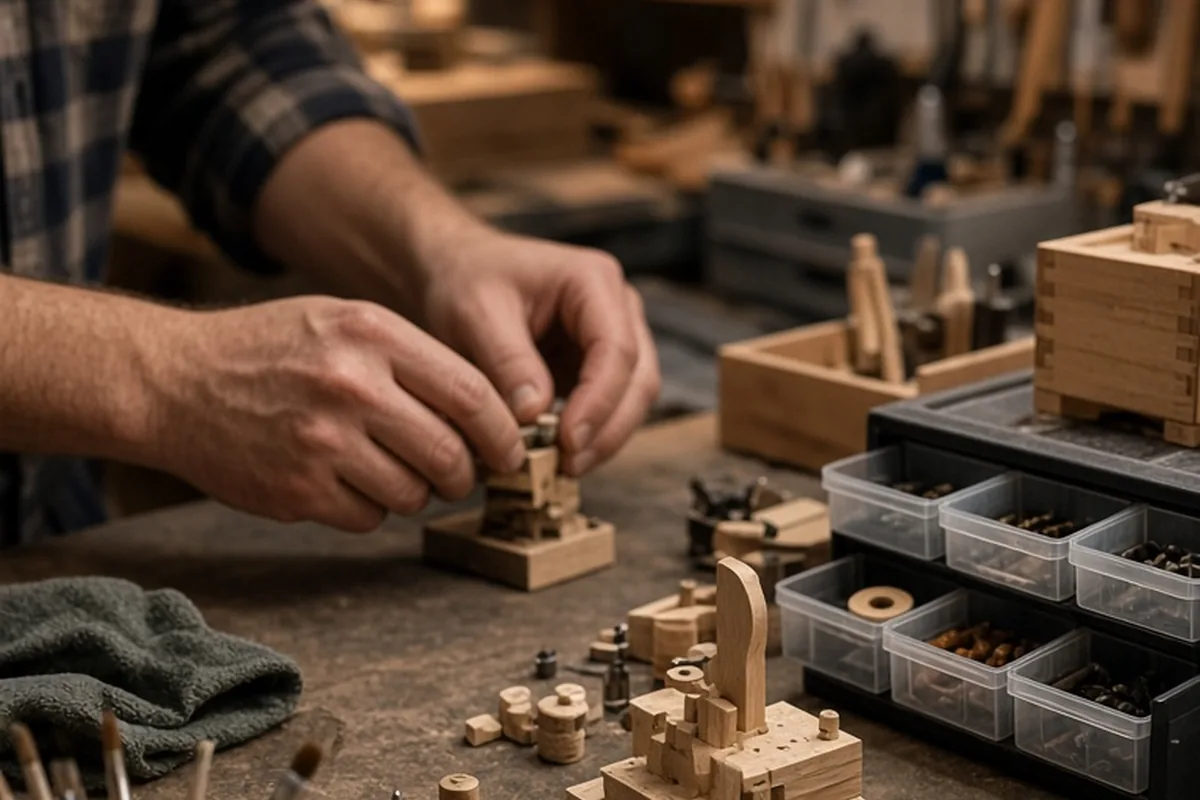
The best gifts for a husband who crafts support his specific medium, upgrade his daily physical comfort, or provide high-grade raw materials he would hesitate to buy for himself. Instead of guessing specific technical machinery, focus on universal workshop assets such as high-CRI task lighting, ergonomic seating, precision measuring instruments, durable storage modulars, or gift cards paired with a dedicated shopping outing to specialty supply houses.
Buying a meaningful gift for a creative partner can feel daunting when his hobby requires specialized tools, unique component sizes, or particular workshop setups that you do not personally use.
Identifying His Specific Crafting Discipline and Workflow
Crafting spans a vast spectrum of creative disciplines, ranging from miniature painting, leatherworking, and bookbinding to model building, stained glass, and textile arts. A common misstep is purchasing a generic multi-craft starter kit that fails to match his actual interest or current skill tier. Before buying, take quiet inventory of what he currently produces, the tools sitting on his workbench, and the specific bottlenecks he mentions when discussing his current builds.
Notice whether his projects lean toward structural assembly, fine cosmetic detailing, or functional fabrication. If he frequently works on intricate scale models or board game miniatures, his workflow prioritizes magnification, micro-brushes, and clean cutting surfaces. If he focuses on leathercraft, heavy-duty stitching groovers, rotary punches, and edge bevelers take precedence. Choosing a gift that directly integrates into his existing setup shows genuine attention to his creative passion without cluttering his workspace.
- Scale modeling and miniatures: Micro-applicators, self-healing cutting mats, and precision sprue nippers.
- Leather and heavy canvas work: Diamond-point stitching chisels, edge slickers, and solid brass hardware kits.
- Papercraft and bookbinding: Bone folders, brass-bound metal rulers, and archival-grade bookcloth or adhesives.
- Ceramics or sculpting: Professional-grade loop tools, rotating clay turntables, and water-resistant aprons.
Ergonomic Improvements and Workspace Lighting
Many dedicated makers spend hours hunched over detailed tasks, which places significant strain on the neck, shoulders, and eyes. Practical gifts that improve long-term physical comfort and visibility are almost always welcomed, regardless of the specific craft. High-Color Rendering Index (CRI) task lamps, adjustable articulated desk arms, and anti-fatigue floor mats address physical fatigue directly, making his crafting sessions far more enjoyable and sustainable.
When selecting lighting, look for lamps that offer a CRI rating of 90 or higher with variable color temperatures. Accurate lighting prevents eye fatigue and ensures that paint pigments, dye tones, and fine thread colors appear authentic rather than skewed by artificial yellow or cool blue undertones. If he crafts while standing at a workbench, a thick gel-core mat relieves spinal pressure. The trade-off with ergonomic gear is physical footprint: ensure any lamp mount or floor accessory matches the clearance available around his existing desk or workstation.
Upgrading Everyday Precision Hand Tools
Most crafters begin their hobbies with entry-level toolkits and gradually discover the limitations of cheap blades, loose joints, and imprecise calipers. Upgrading an essential hand tool that he uses on every project provides an immediate tactile improvement. High-carbon steel carving gouges, single-edge ultra-thin sprue cutters, stainless steel digital calipers, or balanced brass craft knives turn repetitive cutting and measuring into smooth, satisfying motions.
The key to gifting hand tools is choosing higher engineering quality over novelty gadgets. For example, instead of an all-in-one multi-tool with twenty mediocre attachments, gift a single dedicated Japanese flush-cut pull saw or a perfectly weighted Swiss-made tweezer set. Premium hand tools often feature superior heat treatment, sharper factory grinds, and tighter tolerances. However, confirm whether he prefers specific brand ecosystems or metric versus imperial measurement standards before purchasing calibrated measuring gauges.
Workshop Storage and Modular Organization Systems
A cluttered workspace slows down creative momentum, leads to misplaced components, and increases frustration during intricate assemblies. Specialized workshop storage helps him keep small components, solvents, brushes, and specialized hardware within arm's reach while maintaining clean working surfaces. Modular drawer units, wall-mounted steel pegboard panels, or portable tool rolls allow him to configure his space according to his personal habits.
Consider how portable his setup needs to be. If he has a dedicated garage workbench or craft room, rigid wall-mounted racking, interlocking parts bins, or magnetic tool bars maximize vertical wall space without consuming table real estate. If he works at the kitchen table or shares an office, a heavy-duty waxed canvas carryall or a tiered rolling utility cart with locking casters allows him to set up and pack away his supplies in minutes. Ensure that bin dividers are adjustable, as fixed compartments often fail to hold irregularly shaped hobby supplies.
Sourcing Premium Raw Materials and Rare Supplies
Crafters frequently cut costs on the raw materials they consume, opting for budget-friendly plywood, standard vegetable-tanned leather scraps, basic acrylics, or mass-market papers for practice. Gifting premium, specialty-grade raw materials elevates his final pieces into heirloom-quality creations that he might otherwise never justify buying for routine practice.
Look for curated bundles of exotic hardwood turning blanks, full-grain Italian leather hides, handmade archival watercolor papers, or rare pigment powders tailored to his craft. When buying raw supplies, prioritize authentic material provenance and standard workable dimensions over pre-cut odd shapes. A notable limitation with buying raw materials is compatibility; certain resins, dyes, or woods require specialized ventilation or tools to process safely, so verify that your partner has the required equipment to handle the material grade.
Skill-Building Classes, Masterclasses, and Studio Passes
Sometimes the most impactful gift is not physical gear, but the opportunity to advance a technical technique under expert guidance. Many crafters hit self-taught plateaus where specialized instruction in advanced joinery, metalsmithing, leather dyeing, or mold casting can unlock new creative avenues. Local community colleges, makerspaces, and independent craft guilds frequently offer weekend intensive workshops taught by master artisans.
An experience-based gift provides dedicated time and access to industrial machinery that would be impractical to own at home, such as large laser cutters, forge anvils, or commercial spray booths. When gifting a class, offer flexibility by covering open enrollment vouchers or scheduling it around his preferred availability. Pair the course pass with a tangible notebook or dedicated shop apron so he has a physical item to unwrap on the day of celebration.
Collaborative Sourcing and Specialty Gift Cards
When a craft requires hyper-specific machinery, specialized software, or distinct gauge sizes, guessing carries a high probability of buying the wrong item. Many crafters maintain private wish lists at independent specialty suppliers or have distinct brand loyalties based on machine tolerances and material chemistry. In these scenarios, a collaborative gifting strategy balances surprise with practical utility.
Rather than handing over an impersonal envelope, present a specialty gift card accompanied by a committed afternoon outing. For instance, package a gift card to a local specialty lumber yard, fine art depot, or leather supplier alongside a thoughtful small utility item like a brass pencil or workshop coffee tumbler. Plan a weekend trip where you visit the specialty supply shop together, letting him hand-select exact grain patterns, tool grips, and custom fittings without financial hesitation.
Illustrative Scenarios
Navigating Specific Machinery Upgrades
Marcus loved building intricate wooden ship models, and his spouse wanted to surprise him with an electric scroll saw for his birthday. Initially, his spouse considered picking a popular budget model from a big-box home improvement store. Recognizing that scale modeling requires very fine vibration control and specific blade clamps that generic saws often lack, his spouse paused. Instead of guessing, his spouse created a personalized workshop certificate promising a visit to a regional woodworking specialty center to choose the exact model together, packaged inside a custom wooden tool tray. Marcus was thrilled because he was able to select a precision machine with foot-pedal control tailored to micro-cuts.
Key point: When a tool requires tight technical specifications, presenting a curated shopping trip preserves the sentiment while ensuring the tool meets exact functional needs.
Focusing on Daily Physical Comfort
Elena noticed that her husband spent hours bent over his leathercraft bench, often complaining of shoulder stiffness and uneven lighting during late-evening stitching. She initially considered buying him an expensive set of imported pricking irons, but she was unsure of his preferred pitch spacing. Instead, she gifted an adjustable high-CRI articulating arm lamp paired with a heavy, non-slip workbench mat and an ergonomic wooden stitching pony. The new lighting immediately made his edge beveling clearer, while the stitching clamp freed both of his hands, eliminating his upper-back strain during long builds.
Key point: Ergonomic and lighting upgrades provide reliable, high-value improvements to a crafter's daily workflow without risking technical mismatch.
Frequently asked questions
How do I find out what crafting tools my husband needs without spoiling the surprise?
Take photos of his workbench, tool brands, and current consumable supplies when he is away from his workspace. You can also ask him about his current project milestones or show interest in a difficult step, which naturally prompts crafters to explain which tool or material would make that step easier.
Is a generic multi-tool kit a good gift for an experienced crafter?
Generic kits are rarely useful for experienced makers because they usually contain entry-level tools that duplicate items he already owns in higher quality. Investing the same budget into a single premium hand tool or specialized raw materials provides far greater utility.
What safety equipment makes a thoughtful gift for a crafting workshop?
High-grade personal protective equipment makes an excellent gift, particularly items that upgrade comfort over basic gear. Consider low-profile silicone half-mask respirators with replaceable vapor cartridges, anti-fog safety glasses with custom optical clarity, or noise-canceling workshop hearing protection.
What if his craft uses digital fabrication tools like 3D printers or laser cutters?
Digital crafters appreciate high-tolerance filaments, resin wash-and-cure stations, specialty optics cleaning kits, digital calipers, or premium modeling software subscriptions. Avoid buying unbranded bulk filaments or resin without checking his machine's specific material and spool size compatibility.
Your next step
Take a photo of your husband's current workspace layout this week to pinpoint whether his biggest bottleneck is lighting, organization, or tool precision, then choose one high-grade upgrade that supports his favorite active project.