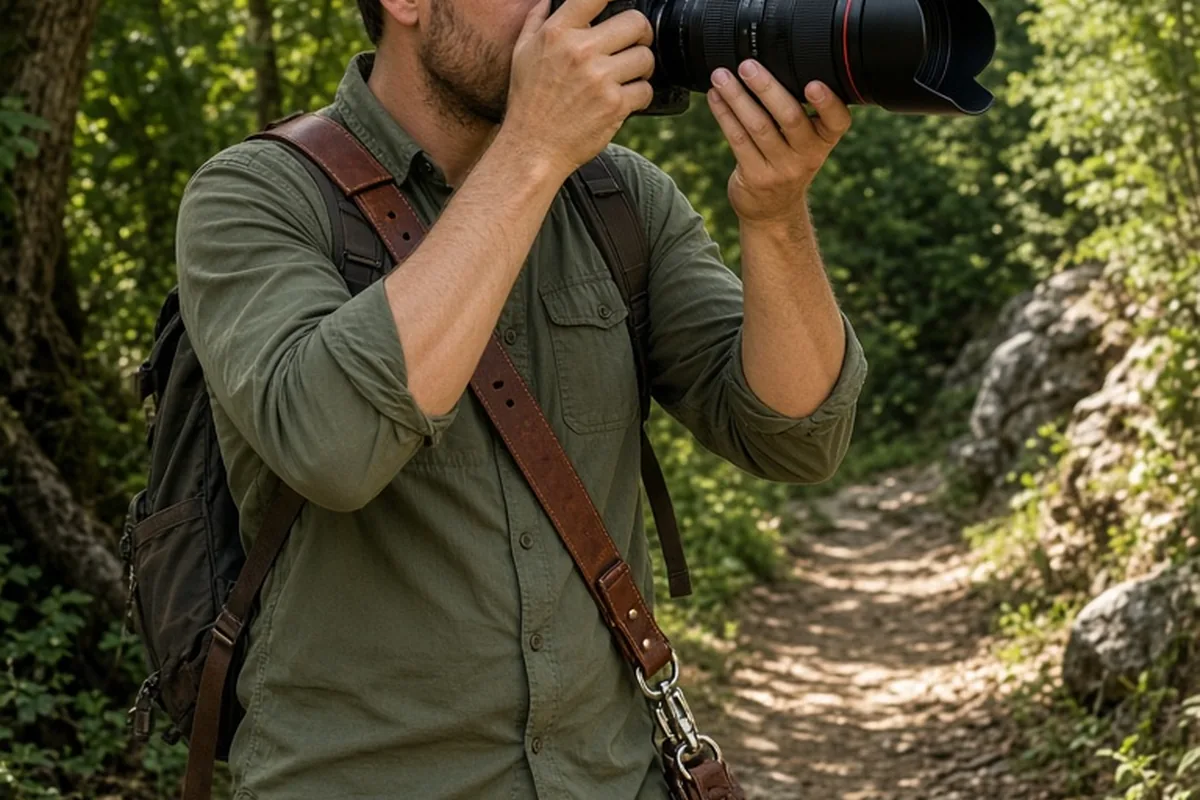
The best gifts for a male photographer balance practical utility with creative freedom, prioritizing universal accessories rather than system-locked cameras or lenses. High-impact choices include ergonomic sling straps with quick-release anchors, portable RGB LED light panels, rugged external solid-state drives for field backups, modular protective equipment wraps, and museum-quality monographs for ongoing creative inspiration.
Photographers often develop deep, exacting preferences for their primary tools, which can make shopping for them intimidating. Understanding his specific shooting style—whether he hikes into the backcountry for landscape vistas, navigates crowded streets for candid portraiture, or shoots commercial events in fast-paced venues—allows you to select accessories that seamlessly elevate his craft without triggering compatibility issues.
Ergonomic Straps and Daily Carry Systems for Shooting Comfort
Carrying a heavy camera body paired with a professional telephoto lens places sustained strain on the neck and upper back. Standard factory neck straps included in camera boxes are notoriously thin, unpadded, and prone to chafing during extended walks or active shoots. Gifting an ergonomic carrying system transforms how a photographer experiences long days on his feet by redistributing the equipment weight across his torso, shoulders, or hips.
Sling-style cross-body straps equipped with rapid-glide mechanisms allow him to keep his hands free while resting the camera securely at his hip, bringing the viewfinder to his eye in one fluid motion when a fleeting moment appears. Dual-camera leather harnesses serve as a stylish, durable solution for wedding and event shooters who juggle two separate bodies simultaneously. Quick-release anchor systems add tremendous value because they let him detach the strap in seconds when mounting the camera onto a tripod, preventing dangling fabric from catching the wind or knocking over delicate setups.
When selecting a strap, consider his typical environment and physical build. Heavy padded neoprene slings excel for landscape hikers who prioritize moisture resistance and cushioning, whereas vegetable-tanned leather straps offer timeless aesthetic appeal for lifestyle and street photographers. The primary trade-off involves bulk: heavy-duty harnesses take up meaningful space in a carry-on bag, so low-profile quick-disconnect cords are often preferable for those who travel light.
Modular Camera Bags, Protective Wraps, and Travel Organizers
A photographer rarely owns just one bag, because a bulky backpack suited for wilderness trekking feels cumbersome during an afternoon city walk or an indoor family celebration. Instead of attempting to guess his exact size preference for a full camera backpack, modular storage solutions provide flexible utility across whatever bags he already uses.
Padded camera inserts and equipment cubes convert any standard everyday backpack, duffel, or messenger bag into a customized camera carrier with adjustable velcro dividers. Self-securing protective wraps made from micro-fiber hook-and-loop fabric allow him to bundle individual lenses, delicate flash units, or spare bodies tightly before slipping them into standard luggage. Specialized tech pouches keep charging cables, extra batteries, lens caps, and step-up rings organized in individual zippered pockets rather than jumbled at the bottom of a compartment.
Weatherproof rain covers and dry bags also make outstanding, practical additions to his gear locker. A custom-fitted rain sleeve with transparent viewing windows lets him keep shooting during unexpected downpours, coastal sea spray, or heavy snowfall without risking internal moisture damage to sensitive electronics. While hard-shell waterproof cases offer unmatched crush protection for airline travel, compact modular wraps provide far more everyday utility for routine excursions.
Essential Maintenance Kits and Field Cleaning Gear
Dust, fingerprints, and environmental debris are constant frustrations for photographers. Stray particles on a front lens element create undesirable flare, while dust resting on an exposed digital image sensor produces dark blemishes across every single frame of a landscape series. High-grade maintenance tools are gifts that he will use on almost every outing, preserving the optical clarity and operational lifespan of his valuable equipment.
A heavy-duty silicone air blower with a one-way valve is the safest primary tool for clearing abrasive sand and dust without physically touching sensitive glass coatings or delicate shutter mechanisms. Pairing an air blower with specialized optical cleaning pens, carbon-tipped dusting brushes, and individually wrapped pre-moistened lens wipes gives him a complete field cleaning routine. High-density microfiber cloths that pack into their own protective pouches prevent airborne grit from scratching lenses during field wipe-downs.
Keep in mind the distinction between surface cleaning and internal sensor maintenance. Surface optics and camera chassis can be safely cleaned with universal blowers and optical wipes. However, specialized wet sensor swab kits must match the precise physical dimensions of his camera sensor—such as full-frame, APS-C, or micro four-thirds formats—meaning you should verify his exact sensor size before purchasing internal cleaning chemicals.
Compact Continuous LED Lighting and Creative Color Modifiers
Mastering light is the core discipline of photography, yet bulky studio strobes and heavy light stands confine photographers to indoor spaces. Pocket-sized continuous LED panels powered by rechargeable lithium-ion batteries have revolutionized portable lighting, giving photographers the freedom to sculpt light anywhere from dark alleyways to remote backcountry campsites.
Modern bi-color and full-RGB pocket panels allow precise adjustments of color temperature from warm candlelight tones to cool daylight, as well as creative color washes across the entire spectrum. These compact lights feature standard quarter-inch mounting threads and cold-shoe adapters, enabling him to mount them directly onto his camera cage, a mini tabletop tripod, or a handheld boom. They are equally effective for illuminating macro subjects, filling in harsh facial shadows during golden hour portraits, or providing background accent lighting for video clips.
Collapsible multi-surface light reflectors—featuring silver, gold, white, and translucent diffusion layers—are another lightweight, budget-friendly option that fold down to a fraction of their open size. While small LED panels cannot overpower direct midday sunlight the way powerful studio flash units can, their instant visual feedback and compact footprint make them an indispensable creative tool for casual and professional shoots alike.
Rugged External Storage and Fast Field Backup Solutions
Digital photography creates immense data demands, with modern high-resolution sensors producing raw image files that can exceed fifty megabytes each. A photographer's worst nightmare is losing an entire day's shoot to a corrupted card or a dropped drive. Reliable, high-speed storage hardware provides critical security and streamlines the time-consuming process of importing, sorting, and editing photographs.
Solid-state drives built with ruggedized silicone bumpers and IP-rated water and dust resistance represent the gold standard for travel backup. Because SSDs have no moving internal parts, they withstand drops, vibration, and temperature fluctuations far better than traditional spinning hard drives. Equipped with modern USB-C interfaces, these drives transfer hundreds of gigabytes in minutes, allowing him to duplicate memory cards at a coffee shop or in a hotel room immediately after a shoot.
Another practical storage accessory is an aluminum or polycarbonate memory card wallet featuring a water-resistant rubber gasket. These cases protect tiny SD or CFexpress cards from physical crushing, static electricity, and moisture while organizing used and blank cards systematically. Always check whether he uses standard SD cards, micro-SD cards, or larger CFexpress media before buying a card-specific case, or opt for an external SSD, which works universally across all computer systems.
Precision Desk Tools, Calibration Hardware, and Monograph Books
A photographer's creative process extends far beyond the field; the editing and curation stages at the desk are where raw captures transform into finished art. Hardware and artistic resources that support the post-processing and printing phases make sophisticated gifts that demonstrate genuine respect for his creative development.
Display color calibrators are essential hardware devices that hang over a computer monitor to measure and correct color balance, brightness, and contrast. Without a calibrated screen, the colors a photographer adjusts in editing software may look completely unnatural on other devices or print out with muddy, inaccurate tones. Adding a dedicated color calibrator ensures his editing decisions translate faithfully from digital screen to tangible paper prints.
For non-technical inspiration, museum-grade monograph books featuring the collected works of legendary photographers offer timeless artistic value. Studying physical masterworks by artists such as Ansel Adams, Sebastião Salgado, or Saul Leiter exposes him to classic composition, tonal control, and storytelling techniques that digital social feeds cannot replicate. Fine art books serve as permanent fixtures in his creative space, sparking ideas for future personal projects.
Universal Support Systems and Creative In-Camera Filters
Stabilizing a camera securely unlocks creative avenues such as silky long-exposure waterfalls, crisp astrophotography, and smooth panning shots. While full-size studio tripods require specific load-capacity matching, flexible compact tripods and versatile tabletop clamps fit easily into any gear kit without demanding specialized technical knowledge from the buyer.
Compact tabletop tripods with articulating ball heads and robust weight ratings allow him to anchor his camera firmly to park benches, rocky outcroppings, or low ground angles where full-sized tripods cannot fit. Similarly, clamp mounts equipped with universal quarter-inch mounting studs let him attach cameras or lights to railings, poles, and table edges for unique perspectives.
If you want to gift creative optical filters without worrying about lens thread sizes, look for handheld atmospheric prisms or variable filter clip systems designed for creative refraction and flare effects. If purchasing traditional threaded filters like circular polarizers or neutral density filters, examine the front rim of his most frequently used lens to identify the millimeter diameter symbol (such as 67mm, 77mm, or 82mm) to guarantee an accurate fit.
Frequently asked questions
Should I surprise a photographer with a new camera body or lens?
Surprise purchases of main camera bodies or lenses are risky because camera mounts, sensor formats, and personal ergonomic preferences vary widely across brands. Unless he has shared a specific wishlist item with the exact focal length and mount specifications, universal accessories like lighting, storage, or straps are far safer choices.
What are the most practical photography gifts under fifty dollars?
High-value budget options include professional silicone air blowers, multi-pack microfiber lens cloths, weather-sealed memory card hard cases, and collapsible five-in-one light reflectors. These tools are universal, highly functional, and universally welcomed regardless of the camera brand he uses.
How do I find out what lens filter size he needs without asking directly?
You can check the front element or the underside of his favorite camera lens for a circle symbol with a slash through it followed by a number in millimeters, such as 77mm or 82mm. Alternatively, step-up adapter ring sets allow a single large filter to adapt cleanly across multiple smaller lens diameters.
Your next step
Pinpoint one specific friction point in his current photography routine—such as physical neck fatigue, chaotic cable management, or slow digital backups—and choose a durable, universal accessory designed to resolve that practical issue without requiring system-specific camera modifications.