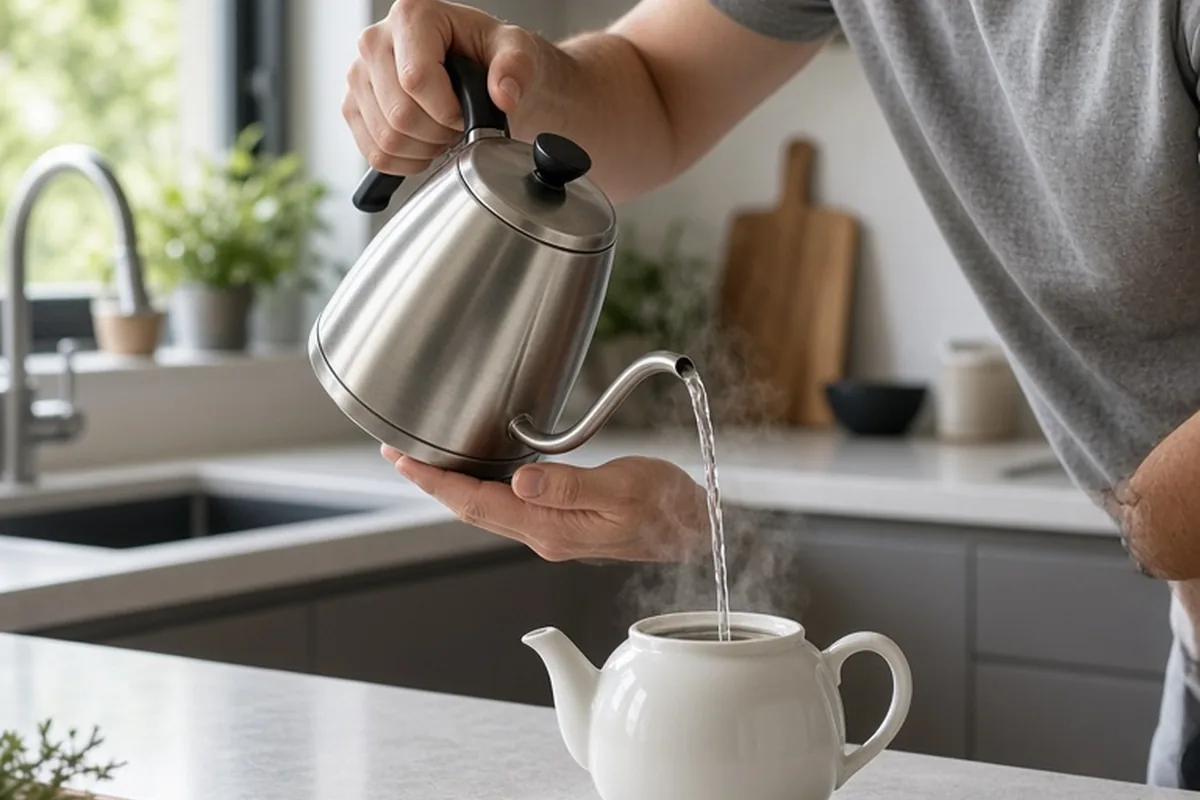
The best gifts for a male tea enthusiast combine functional performance with sensory discovery. Top choices include variable-temperature electric gooseneck kettles, double-walled borosilicate travel mugs with fine-mesh baskets, authentic Japanese kyusu or cast-iron tetsubin teapots, and curated single-origin loose-leaf flights featuring high-mountain oolong, smoked lapsang souchong, or ceremonial matcha. Focus on durable materials like stainless steel, stoneware, and untreated clay that match his brewing style.
Shopping for a tea drinker often feels daunting because tea culture spans centuries of specialized rituals, distinct cultivars, and intricate brewing hardware. Whether he is an experienced connoisseur who scales his water temperature to the degree or an everyday drinker looking to move past pre-bagged supermarket blends, choosing the right gift comes down to recognizing his preferred tea varieties, daily routines, and counter space.
Precision Temperature Kettles for Dedicated Brewers
Water temperature dictates the chemical extraction of tea leaves, fundamentally separating a sweet, balanced infusion from an unpleasantly bitter one. Delicate green teas such as Japanese gyokuro or Chinese dragon well can turn aggressively astringent when scalded with rolling boiling water, requiring gentle thermal ranges between one hundred sixty and one hundred seventy-five degrees Fahrenheit. In contrast, tightly rolled oolongs, dark teas, herbal tisanes, and robust black teas demand water heated to a full two hundred twelve degrees to break through their cell walls and release their complex aromatic oils. Giving an electric kettle with precise, digital temperature control allows him to dial in the exact extraction parameters recommended for whatever variety he chooses to brew that morning, removing the guesswork of waiting for boiled water to cool down on the counter.
When selecting a kettle, pay close attention to the spout geometry, balance, and heating capacity. A slender gooseneck kettle offers pinpoint flow control and minimal splashing, which proves indispensable if he practices concentrated brewing methods like Chinese gongfu cha or also enjoys manual pour-over coffee. However, gooseneck spouts naturally restrict water flow, meaning it takes noticeably longer to fill a large morning travel mug or an oversized teapot. If his daily routine leans toward brewing whole pots of English breakfast or steeping batches of iced tea in bulk, an electric variable-temperature kettle with a traditional wide spout and a rapid-boil base provides greater day-to-day speed while retaining vital single-degree accuracy.
Artisanal Teapots and Heavy-Duty Brewing Vessels
A dedicated brewing vessel transforms tea preparation from a functional morning chore into an intentional ritual. Traditional cast-iron Japanese tetsubin pots represent an exceptional option for men who appreciate durable craftsmanship, structural heft, and superior heat retention. These vessels distribute thermal energy evenly and hold their temperature for extended periods, making them ideal for hearty black teas, smoked lapsangs, and roasted herbal infusions. When purchasing a modern tetsubin intended for steeping rather than boiling water on a stove, look for an enameled interior lining, which prevents the iron from reacting chemically with the tea's natural tannins and protects against internal rusting during daily maintenance.
For those who prefer single-serving, high-leaf-to-water ratios, a side-handled ceramic or clay kyusu is tailor-made for green tea, offering effortless balance and ergonomic wrist control that prevents hand fatigue during repeated infusions. Alternatively, an authentic unglazed clay teapot, such as Yixing clay or Tokoname stoneware, absorbs the volatile oils of the leaves over months of regular use, subtly softening future brews and enhancing mouthfeel. The primary trade-off with porous unglazed teaware is that it must strictly be dedicated to one family of tea, such as strip-style oolong or ripe puerh, because the material permanently retains aromatics and will transfer competing flavor notes across different harvests.
Single-Origin Loose-Leaf Flights and Rare Cultivars
Upgrading his tea pantry with high-tier loose leaves offers an immediate sensory payoff that pre-bagged supermarket options cannot replicate. Avoid commercial novelty gift sets packed with artificially flavored, sweetened blends, which frequently rely on dried fruit chunks, artificial oils, and low-grade dust to mask inferior base material. Instead, look for estate-specific selections and single-cultivar tasting flights sourced directly from origin growers. A curated flight combining a charcoal-roasted Wuyi rock oolong, an earthy cooked Yunnan puerh cake, a high-altitude Taiwanese Jin Xuan milk oolong, and a malty first-flush Darjeeling gives him an expansive exploration of terroir, processing craftsmanship, and oxidation levels without committing to a single massive container.
When buying loose leaf as a gift, transparency on the packaging is the most reliable marker of authentic quality. Reputable specialty tea purveyors explicitly list the harvest season, geographic region, elevation, and specific cultivar on the label, helping the drinker understand the provenance of his cup. Keep in mind that loose leaf possesses an active shelf life that varies dramatically by type; delicate spring greens and white teas begin losing their vibrant top notes within nine to twelve months, whereas oxidized oolongs, roasted hojicha, and compressed puerh disks actually improve or maintain their character across several years of dry, controlled resting.
High-Performance Portable Infuser Tumblers for Commuters
Commuting tea drinkers often struggle to replicate a proper home infusion while on the move, frequently settling for bitterness or lukewarm liquid by mid-morning. A high-grade travel tumbler solves this problem by combining double-walled vacuum insulation with a purpose-built filtration chamber that keeps tea piping hot for hours. Premium models utilize kitchen-grade stainless steel or shatter-resistant borosilicate glass with silicone grip sleeves for safety. The interior infuser basket should feature ultra-fine laser-etched perforations rather than coarse wire mesh screens, ensuring that fine leaf particles and rooibos needles never leak into the drinking chamber to cause a gritty mouthfeel.
A frequent drawback of travel steeping is over-extraction; leaving delicate tea leaves submerged inside a thermal insulated mug during an hour-long commute extracts excess tannins, turning what should have been a fragrant green or white tea harsh and astringent. To counter this, search for travel tumblers engineered with leaf separation valves or dual-chamber flip-and-steep mechanisms. These designs allow the user to invert the tumbler to steep the leaves for the prescribed three minutes, then tilt or twist the vessel to lock the spent leaves safely away from the brewed liquor, preserving fresh taste throughout the workday.
Traditional Matcha Preparation Sets and Whisking Kits
If he enjoys focused morning rituals, clean caffeine delivery, and Japanese tea culture, a ceremonial matcha kit provides an engaging hands-on preparation process. A standard set includes a chawan, which is a broad, handcrafted stoneware whisking bowl with a textured interior, a chasen made from a single piece of bamboo intricately carved into dozens of curved tines, a slender bamboo measuring scoop called a chashaku, and a porcelain whisk shaper. Using a traditional bamboo whisk aerates the suspended tencha leaf powder, generating a velvety micro-foam crema with delicate bubbles that cannot be duplicated by hand stirring or standard electric milk frothers.
Pair the whisking hardware with a fresh, nitrogen-flushed tin of ceremonial-grade matcha from renowned Japanese growing regions such as Uji in Kyoto or Nishio in Aichi. Ceremonial grades use first-harvest, shade-grown leaves with the stems and veins meticulously stripped before stone grinding, yielding an electric jade color and sweet, umami-rich flavor without astringency. The primary trade-off with matcha gear is maintenance discipline: bamboo tines will quickly curl, split, or develop mold if washed with harsh detergents or left damp in a drawer, meaning he must rinse the tool in clear warm water and rest it promptly on a porcelain shaper to maintain its curve.
Airtight Storage Solutions and Precision Brewing Scales
Even the finest loose-leaf teas degrade rapidly when exposed to air, ambient humidity, heat, and ultraviolet light. Many tea lovers accumulate paper pouches or generic decorative tins that leak air, allowing delicate essential oils to oxidize and absorb ambient kitchen smells like spices or coffee beans. Gifting dedicated airtight storage canisters—such as double-lidded Japanese washi tinplate caddies or modern vacuum-sealing canisters equipped with integrated air-extraction pumps—shields his collection from ambient moisture and keeps dry leaves fresh for many months.
In addition to protective canisters, small precision tools make daily preparation more repeatable and satisfying. A compact digital gram scale sensitive to a tenth of a gram eliminates guesswork by ensuring exact leaf-to-water ratios, which is crucial when transitioning between fluffy, voluminous white teas and dense, tightly rolled oolongs. Complementing the scale with a pair of bamboo tea tongs, a wooden leaf presentation vessel, or a set of double-walled tasting cups equips him with the tactile instruments needed to elevate his tea corner into a clean, functional brewing station.
Frequently asked questions
What is the difference between a gooseneck kettle and a standard kettle for tea?
A gooseneck kettle features a narrow, curved spout that provides precise, slow water flow, which is ideal for small gaiwans and controlled steeping. Standard electric kettles pour much faster, making them more practical for large teapots and daily mugs. If he exclusively brews British-style black teas in large volumes, a standard spout is often more efficient.
How do I choose loose-leaf tea if I do not know his specific taste preferences?
A balanced sample flight containing three or four distinct tea styles—such as an unflavored roasted oolong, a classic black tea, and a high-grade green tea—is the safest approach. Look for vendor samplers with detailed tasting notes and origin data rather than artificially flavored blends. This allows him to sample diverse flavor profiles without committing to a large single tin.
Are unglazed clay teapots safe to use with all types of tea?
Unglazed clay vessels, such as Yixing or Tokoname pots, are porous and gradually absorb the natural oils of the tea brewed inside them. Over time, this seasoning enhances the flavor of that specific variety, but using multiple distinct teas will cause conflicting aromatic crossover. For a versatile gift suitable for all varieties, choose glazed ceramic, porcelain, or glass.
Do loose-leaf teas really taste noticeably better than tea bags?
Commercial tea bags generally contain finely pulverized tea dust and fannings, which release tannins quickly and produce a bitter, one-dimensional cup. Whole loose leaves retain their natural aromatic oils and expand fully in water, yielding smoother sweetness and nuanced regional flavors. Loose leaves also tolerate multiple re-steeps, offering significantly better value per serving.
Your next step
Take a quick inventory of his current tea setup to see whether his daily barrier is water temperature control, proper leaf storage, or brewing equipment on the go, then choose one well-crafted tool or curated sampler that directly simplifies that step.