The best gifts for a photographer who already owns cameras and lenses focus on workflow efficiency, artistic inspiration, tactile presentation, and field comfort rather than standard hardware. Consider fine art print lab credits, master monographs, customizable editing consoles, archival portfolio boxes, or rugged outdoor accessories. These items honor their creative craft without risking brand incompatibility or duplicating gear they have already carefully selected.
Shopping for an experienced visual artist often feels intimidating because seasoned photographers invest heavily in specific camera bodies, proprietary mounts, and tailored lens ecosystems. Bypassing primary camera hardware allows you to focus on meaningful upgrades that enrich their creative process, preserve their finished work, or solve subtle pain points during long shooting days.
Artistic Monographs and Rare Photobook Editions
Even the most well-equipped photographer constantly seeks fresh visual perspectives and creative replenishment. While technical gear eventually becomes obsolete, a finely bound monograph from an influential photographer serves as a permanent masterclass in composition, sequencing, and visual storytelling. Seasoned image-makers study books to analyze how legendary artists handle challenging light, structure long-term documentary projects, and curate visual rhythm across printed spreads.
When selecting a book, look beyond generic coffee-table collections and seek out titles from dedicated fine art photography publishers such as Steidl, Aperture, Mack Books, or Phaidon. If your recipient shoots street photography, consider monographs by Saul Leiter, Garry Winogrand, or Vivian Maier. For landscape and environmental photographers, volumes by Sebastião Salgado, Ansel Adams, or Edward Burtynsky provide rich inspiration. The primary trade-off is shelf footprint and subjective aesthetic taste, so discreetly check their existing library or focus on recent retrospective releases from major museum exhibitions.
Bespoke Print Lab Credits and Archival Folios
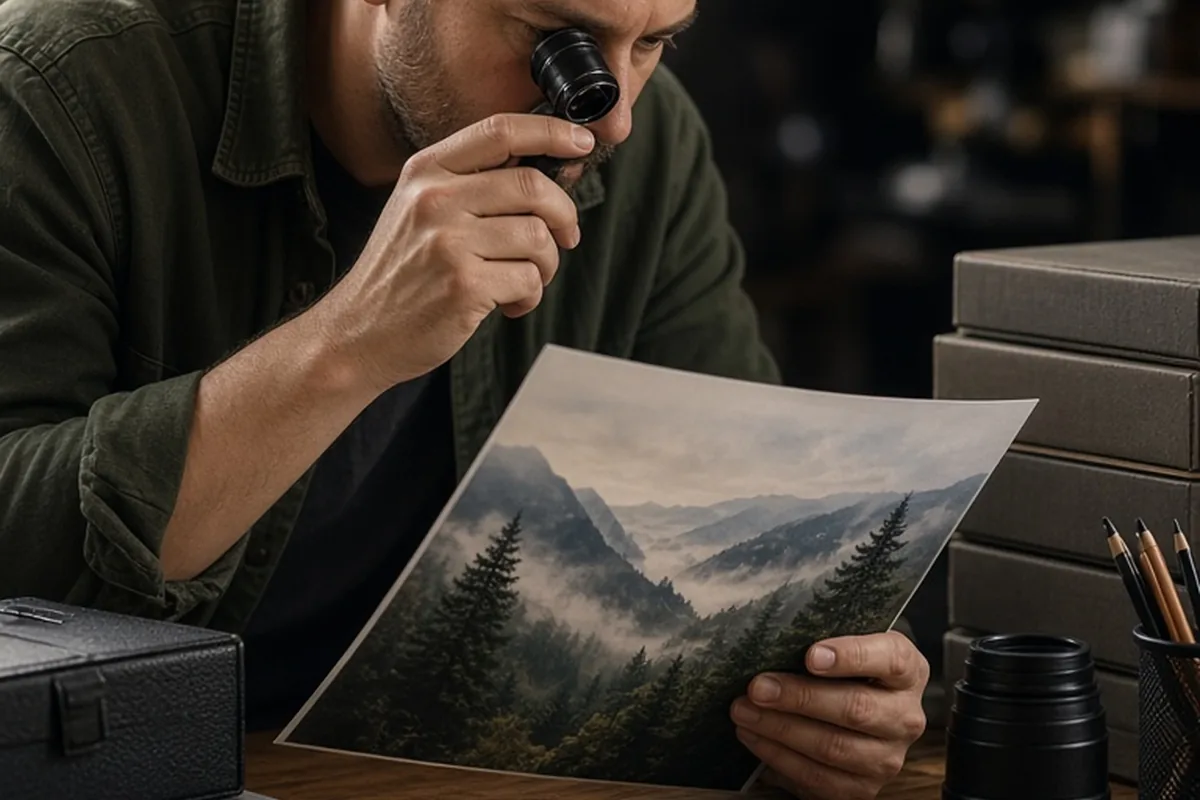
In the digital era, thousands of exceptional photographs remain trapped on hard drives and memory cards, never reaching physical form. Gifting credit to a professional fine art printing lab gives a photographer the ultimate reward: seeing their digital captures translated into tangible gallery-grade prints. Premium print studios offer specialized cotton rag papers, bamboo substrates, and traditional baryta coatings from historic paper mills like Hahnemühle, Canson Infinity, and Moab.
To complement physical prints, consider pairing a print voucher with a museum-grade archival presentation box or portfolio folio from manufacturers like Pina Zangaro or Prat. These acid-free, clamshell cases protect fine art prints from environmental degradation, allowing the photographer to present their work professionally to clients, gallery curators, or family. The limitation is that choosing paper weight and texture is highly personal; opting for a flexible monetary gift certificate to a dedicated pro lab ensures they can select the precise archival paper that matches their tonal range.
Ergonomic Post-Processing Hardware and Color Tools
Photographers spend far more hours sitting at an editing desk than pressing the shutter in the field. Repetitive mouse clicks and keyboard shortcuts in software like Adobe Lightroom, Capture One, and Photoshop often lead to wrist strain and creative fatigue. Hardware editing consoles, such as the TourBox Elite or Loupedeck Live, introduce tactile dials, smooth knobs, and programmable buttons that allow photographers to adjust exposure, contrast, color temperature, and brush size intuitively without taking their eyes off the image.
Another high-value studio upgrade is an asymmetrical monitor task light, such as a BenQ ScreenBar, which illuminates the desktop work surface without casting glare on calibrated monitors. You might also consider a hardware color target, such as a Calibrite ColorChecker Passport, which helps photographers build custom camera profiles and achieve true color fidelity in complex lighting environments. Keep in mind that specialized controllers require a modest learning curve as the photographer maps their preferred hotkeys, but the long-term payoff in editing speed and physical comfort is substantial.
Specialized Field Comfort and Environmental Protection
Capturing striking natural light frequently demands standing in freezing winds, waiting out rainstorms, or hiking across rugged terrain before dawn. Dedicated field gear designed specifically for the physical demands of outdoor photography makes challenging shoots significantly more comfortable. Specialized photography gloves, such as those made by Vallerret or The Heat Company, feature flip-back magnetic finger caps that provide thermal protection while preserving delicate tactile control over tiny camera dials and touchscreens.
Other practical field accessories include heavy-duty weatherproof rain covers designed for mounted telephoto lenses, such as Think Tank Hydrophobia covers, which offer far superior protection compared to makeshift plastic sleeves. An ultralight folding foam seat or kneeling pad provides insulation from damp ground when composing low-angle shots, while heavy-duty lens-cleaning kits equipped with optical-grade microfiber cloths, non-static blower bulbs, and sensor-safe fluid ensure their gear stays operational on location.
Alternative Photographic Processes and Tactile Analogue Kits
When an artist already owns every modern digital tool, returning to historic, hands-on photographic methods can reignite spontaneous creativity. Alternative photographic processes strip away autofocus, digital menus, and pixel-peeping, replacing them with tactile chemistry, sun exposure, and handcrafted experimentation. A sun-printing cyanotype kit, for instance, allows photographers to make Prussian blue prints on handmade watercolor paper using natural sunlight and digital negative transparencies.
Similarly, curated bundles of specialty or experimental film stocks, such as Cinestill 800T, Ilford XP2 Super, or Lomography color-shift emulsions, offer an engaging weekend project for photographers who maintain an old 35mm or medium format film camera. If they prefer instant gratification, a portable wide-format instant printer allows them to send digital smartphone or mirrorless captures directly onto real instant film sheets. While alternative processes produce unpredictable artistic results rather than razor-sharp commercial files, that exact unpredictability makes them genuinely refreshing for technical veterans.
Tactical Gear Management and Battery Logistics
Even seasoned photographers with premium camera bags struggle with the chaotic logistics of cables, memory cards, chargers, and small support accessories. High-utility organizational gear solves daily operational friction. Precision-molded battery cases with visual indicators, such as Storacell caddies, allow photographers to instantly distinguish between charged and depleted batteries during fast-paced shoots. Industrial thermal label makers, like a Brother P-Touch, enable clean, legible labeling of lens caps, hard drive arrays, and power adapters.
For travel and field backups, ruggedized solid-state drive protective cases and water-resistant memory card wallets lined with shock-absorbing foam offer peace of mind when working on location. Multi-port high-wattage GaN charging stations reduce clutter by powering a laptop, camera batteries, and mobile accessories simultaneously from a single wall outlet. These items may lack the glamour of a new camera body, but their daily utility makes them universally appreciated by working creatives.
Studio Rental Hours and Location Access Passes
Often, the most valuable gift for a visual artist is dedicated time and legal access to unique shooting environments. Commercial studio space allows portrait, fashion, and product photographers to experiment with professional strobe setups, seamless backdrops, and controlled atmospheric lighting without the overhead of maintaining a permanent commercial lease. Purchasing a voucher for blocks of hours at a local peer-to-peer studio space platform gives them creative freedom to execute ambitious portfolio shoots.
For outdoor and architectural photographers, access passes solve regulatory and financial hurdles. An annual Interagency National Parks Pass grants entry to hundreds of federal recreation sites across the country, making spontaneous landscape excursions friction-free. Alternatively, consider day permits or memberships for regional botanical conservatories, historic architecture foundations, or specialty location-scouting software subscriptions like Sunseeker or PhotoPills, which provide precise astronomical tracking for planning golden-hour and astrophotography alignments.
Illustrative Scenarios
Choosing Between Gear and Experience for a Veteran Landscape Artist
A family wanted to purchase a milestone gift for an experienced landscape photographer who already owned three professional camera bodies and a full set of high-end zoom and prime lenses. Instead of attempting to guess which specialty optical filter was missing from his kit, they gifted him an annual national parks pass, a set of technical flip-finger cold-weather shooting gloves, and a curated monograph of historic alpine photography. The combination supported his physical comfort in the field, removed access barriers for his upcoming mountain trips, and provided fresh compositional ideas without duplicating any of his existing equipment.
Key point: Focusing on field comfort, location access, and artistic inspiration eliminates the technical guesswork of buying specialized camera hardware.
Frequently asked questions
Why is buying a camera lens as a surprise gift generally discouraged?
Camera lenses require exact compatibility with specific lens mounts, sensor sizes, and autofocus protocols, which vary widely between brands and camera generations. Furthermore, experienced photographers usually have very specific focal length, aperture, and optical character preferences that are difficult to guess from the outside.
What is a safe price range for high-utility photography gifts?
Thoughtful gifts span every budget, ranging from twenty to forty dollars for battery organizers, lens-cleaning tools, or fine art monographs, up to one hundred to three hundred dollars for custom editing consoles, archival portfolio cases, or professional print lab vouchers. Focus on build quality and daily utility rather than raw cost.
How can I figure out what photography tools someone already owns without spoiling the surprise?
Check their social media accounts or portfolio website for behind-the-scenes images showing their workspace, editing desk, or camera bag setup. You can also ask casual questions about their editing workflow or upcoming photo trips to determine whether they need travel gear, print credits, or studio time.
Your next step
Review their recent work to determine whether they are currently focused on outdoor field trips, studio experimentation, or post-production editing, then choose one high-utility accessory or experiential pass that directly supports that specific phase of their craft.