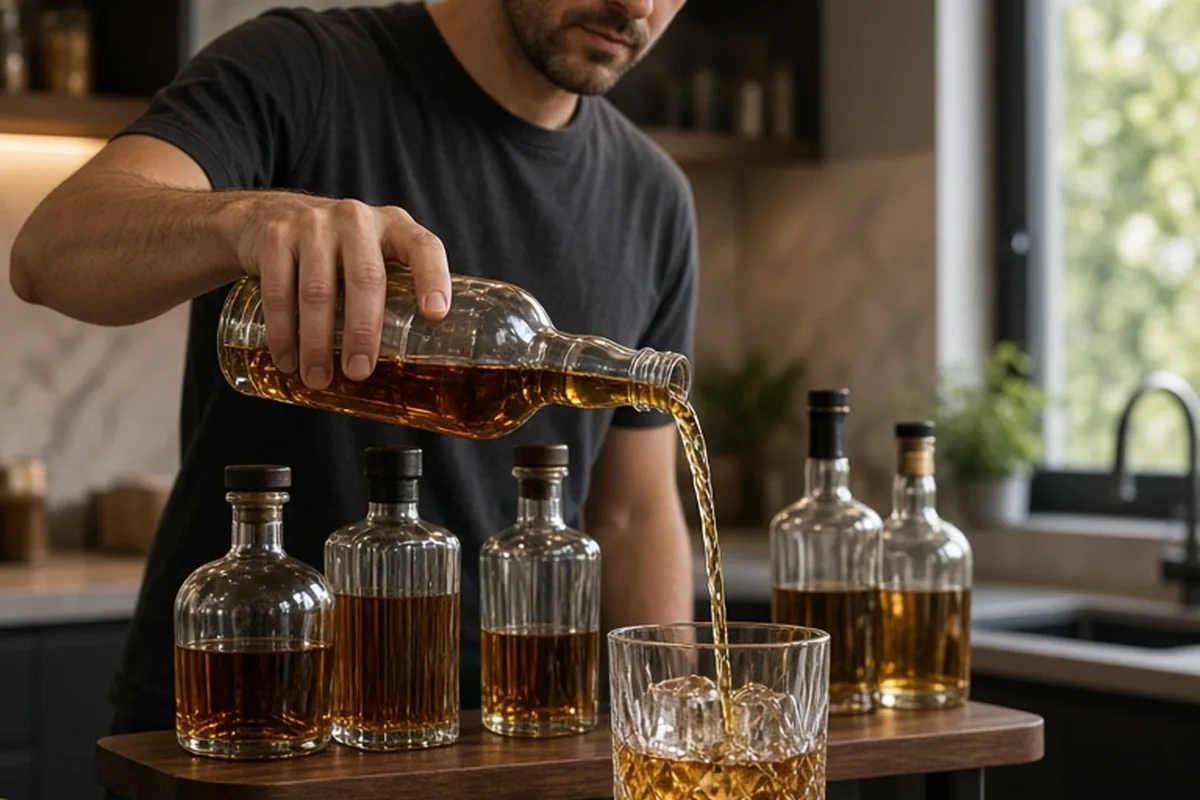
The best whiskey gift for a boyfriend matches his specific palate and how he enjoys his pour. If he loves exploring flavors, choose a bottle from a regional distillery or style he rarely buys himself. For a boyfriend who already owns prized bottles, focus on functional enhancements like lead-free crystal glassware, a clear ice mold press, a quality water dropper, or a shared distillery tour.
Buying a present for someone with an established hobby can feel intimidating, especially when spirits involve distinct flavor profiles, regional traditions, and specialized gear. You do not need to become an expert yourself to choose something memorable, useful, and genuinely appreciated.
Decoding His Current Bar to Identify What He Loves
Before spending money on a high-end bottle or a specialized tool, take inventory of what your boyfriend already drinks. Whiskey is a broad umbrella that covers American bourbon, spicy rye, peated or unpeated Scotch, Irish pot still whiskeys, and delicate Japanese single malts. Look at the bottles on his shelf that are more than half empty; those represent his daily or weekly preferences, whereas untouched bottles might be dusty novelty gifts. Notice whether his collection leans sweet and vanilla-forward like classic Kentucky bourbon, bold and peppery like rye, or smoky and medicinal like an Islay Scotch.
If you want to keep the gift a complete surprise, snap a quick photo of his shelf when he is out of the room. You can bring this photo to a knowledgeable clerk at an independent liquor store. Staff members can instantly spot patterns in proof, mash bill, and region, allowing them to recommend an adjacent bottle he likely has not tried. The primary limitation of this method is that very rare bottles may carry inflated secondary markups. Sticking to well-regarded, accessible craft producers often delivers a far better drinking experience than overpaying for an artificially scarce label.
Upgrading His Glassware for Aroma and Flavor
Glassware shapes how whiskey smells and tastes far more than most casual drinkers realize. Standard tumblers or heavy rocks glasses let aromatic alcohol vapors disperse quickly, which works fine for cocktails or whiskey on ice, but flattens the nuanced notes of a neat pour. Specialized tasting glasses concentrate aromas toward the rim, allowing the drinker to pick up subtle notes of fruit, oak, spice, and grain before taking a sip.
The most respected standard in the whiskey community is the Glencairn glass, featuring a wide bowl and a tapered mouth designed specifically for nosing spirits. If he already owns basic tasting glasses, consider a pair of crystal rocks glasses with substantial weight in the base for evenings when he prefers an Old Fashioned. When shopping, prioritize lead-free crystal over standard soda-lime glass for better clarity and durability. A practical trade-off to keep in mind is care: fine crystal tasting glasses are delicate and usually require hand-washing, so avoid ultra-thin stems if he prefers low-maintenance dishware.
- Glencairn glasses for focused tasting and discovering aromatic layers in neat pours
- Weighted crystal lowball tumblers for classic cocktails and casual pours over ice
- Snifter glasses for rich, cask-strength pours that benefit from hand-warmed bowls
- Insulated tumblers designed specifically for outdoor gatherings or travel
Temperature and Dilution Accessories That Actually Work
Temperature dramatically changes how whiskey presents on the tongue. Cold suppresses both burn and flavor nuance, while room-temperature spirit allows the full aromatic profile to emerge. If your boyfriend enjoys his drink chilled, the quality of the ice matters significantly. Standard freezer ice trays produce cloudy cubes filled with trapped air and mineral impurities, which melt rapidly and water down the spirit before it can be savored.
A directional-freezing clear ice maker makes a noticeable difference by freezing water from the top down, pushing impurities to the bottom and creating crystal-clear spheres or large blocks. Because dense, clear ice has minimal surface area relative to its volume, it chills the drink while melting at a fraction of the speed of cloudy ice. Alternatively, if he drinks high-proof or cask-strength whiskey neat, a precision glass water dropper allows him to add two or three drops of room-temperature water. A tiny touch of water breaks the spirit's surface tension and opens up hidden aromatic compounds without chilling the liquid. Avoid novelty whiskey stones, as soapstone blocks hold very little thermal mass and can clink uncomfortably against fine glassware.
Selecting a Memorable Bottle Without Guesswork
When buying a bottle as a gift, aiming for sheer price or familiar brand prestige can lead to generic choices. Many well-marketed luxury bottles rely on packaging rather than distinctive distilling practices. Instead, look for store-pick single barrels, independent bottler releases, or finished casks. Independent bottlers purchase individual casks from established distilleries and bottle them without chill filtration or artificial coloring, offering rare expressions that even serious enthusiasts rarely encounter.
Finished whiskeys provide another reliable avenue for thoughtful gifting. These are spirits aged primarily in traditional oak barrels before spending several additional months in secondary casks that previously held sherry, port, Madeira, or Caribbean rum. The process layers fruit, dried fig, or molasses undertones onto the base spirit. A useful boundary to observe is alcohol by volume: if his bar cart consists mainly of standard eighty-proof whiskeys, jump-starting him with a fiery, uncut barrel-proof bottle exceeding sixty percent alcohol may feel overwhelming. Aim for expressions between ninety and one hundred proof for a balance of intensity and approachable drinking.
Enhancing the Home Bar and Bottle Preservation
Once a whiskey enthusiast accumulates more than a few open bottles, bar organization and preservation become genuine priorities. Unlike wine, whiskey does not age or improve once sealed in glass, but an open bottle with significant headspace can slowly oxidize over months, losing its vibrant aromas and flattening its finish. Thoughtful functional accessories help preserve his investment while keeping the home space tidy and visually appealing.
Consider a specialized inert gas spray designed for open bottles, which lays a harmless protective blanket of argon over the liquid to halt oxidation. If his bottles are currently crowded onto a kitchen counter or cluttered shelf, a dedicated solid-wood bottle riser or a compact bar cart offers both organization and display utility. Keep in mind that decorative glass decanters, while visually striking, are often impractical for long-term storage because their stoppers rarely create an airtight seal. If you choose a decanter, treat it as a serving piece for dinner parties rather than permanent storage for his rarest spirits.
Experiential Gifts and Educational Tastings
Physical items are not the only way to celebrate his passion. Experiential gifts create shared memories and give both of you an activity to enjoy together. A guided tour and tasting at a regional craft distillery provides insight into grain selection, fermentation, distillation cuts, and cooperage aging. Seeing barrel warehouses in person often deepens appreciation for the craftsmanship behind every pour.
If traveling to a distillery is impractical, you can curate a comparative tasting flight at home. Pick three contrasting two-hundred-milliliter sample bottles representing different regions or barrel finishes, paired with simple palate cleansers like neutral crackers, mild cheeses, and spring water. The trade-off with experiential gifts is coordinating calendars: ensure tour bookings offer flexible rescheduling so the gift feels like an enjoyable, stress-free outing rather than an obligation locked into a rigid weekend.
Thoughtful Pairings and Small Accompaniments
If you prefer a smaller token or want to assemble a curated gift basket, culinary pairings offer an accessible, sensory route. Whiskey pairs naturally with high-cacao dark chocolate, spiced pecans, smoked charcuterie, and aged hard cheeses like gouda or clothbound cheddar. The rich fats and salts in these foods buffer the alcohol warmth on the palate, drawing out deeper notes of caramel, dried cherry, and toasted grain from the spirit.
Another practical small item is a leather-bound whiskey tasting journal. Enthusiasts who enjoy tracking batch variations, proof levels, and tasting notes often appreciate a structured notebook to record their impressions over time. Avoid pre-assembled corporate gift baskets that bundle generic, low-grade snacks with promotional shot glasses. Hand-picking three or four complementary items that align with his personal routine shows genuine attention to detail.
Illustrative Scenarios
Choosing Between an Expensive Name and a Thoughtful Profile
Taylor wanted to celebrate her partner Noah's promotion with a bottle of Scotch. Unfamiliar with single malts, she initially planned to buy a heavily advertised luxury blue-label blend simply because the price tag signaled quality. After checking Noah's bar cart, she realized his favorite half-empty bottle was an earthy, peated ten-year single malt from an island distillery. Instead of purchasing an expensive, mild blend that Noah might find bland, Taylor spoke to a specialty retailer and selected a cask-strength, sherry-finished peated malt from an independent bottler. Noah was thrilled because the selection reflected his exact taste preferences rather than generic marketing.
Key point: Matching a partner's established flavor profile creates far more genuine delight than spending money on recognizable luxury branding.
Fixing the Common Dilemma of Bar Cart Clutter
Marcus noticed that his boyfriend Sam had acquired over fifteen bottles of bourbon, which were haphazardly crowding their kitchen counter. Marcus considered buying Sam another bottle for his birthday, but realized the collection was already outpacing Sam's consumption. Marcus instead invested in a two-tier walnut bar display and a directional-freezing clear ice mold. When Sam opened the gift, he spent the evening rearranging his favorite bottles and testing the crystal-clear ice cubes in an evening pour. The present solved an everyday functional frustration while validating Sam's hobby.
Key point: When an enthusiast already has plenty of spirits, practical tools and display upgrades often provide more lasting utility than an additional bottle.
Frequently asked questions
Are whiskey stones actually a good gift?
Whiskey stones are generally not recommended for serious whiskey drinkers. Soapstone and stainless steel cubes lack the thermal capacity to chill liquid effectively and can damage delicate glassware. A clear ice mold or a pair of quality crystal glasses provides a much better drinking experience.
How much should I expect to spend on a quality bottle?
A reliable, characterful bottle of bourbon or rye typically costs between forty and seventy dollars. Single malt Scotch, Irish pot still, and Japanese whiskeys usually run between sixty and one hundred twenty dollars for premium everyday expressions. Spending beyond that range generally buys rarity or age rather than an automatic leap in drinking enjoyment.
What if I accidentally buy a whiskey he already owns?
Whiskey enthusiasts rarely mind receiving a duplicate of a bottle they already love, as it acts as an immediate back-up for their regular pours. If you want to ensure novelty, however, keep the store receipt in an envelope or ask the retailer about an exchange policy before purchasing.
Is a personalized or engraved decanter worth buying?
Personalized decanters make meaningful decorative keepsakes, but they require careful use. Ensure the glass is certified lead-free and note that most decorative stoppers do not provide an airtight seal, meaning spirits stored inside them should be consumed within several weeks.
Your next step
Take a quiet look at his bar collection tonight, take note of the regional styles and fill levels of his favorite bottles, and use those specific clues to choose a glass, tool, or pour that complements his routine.