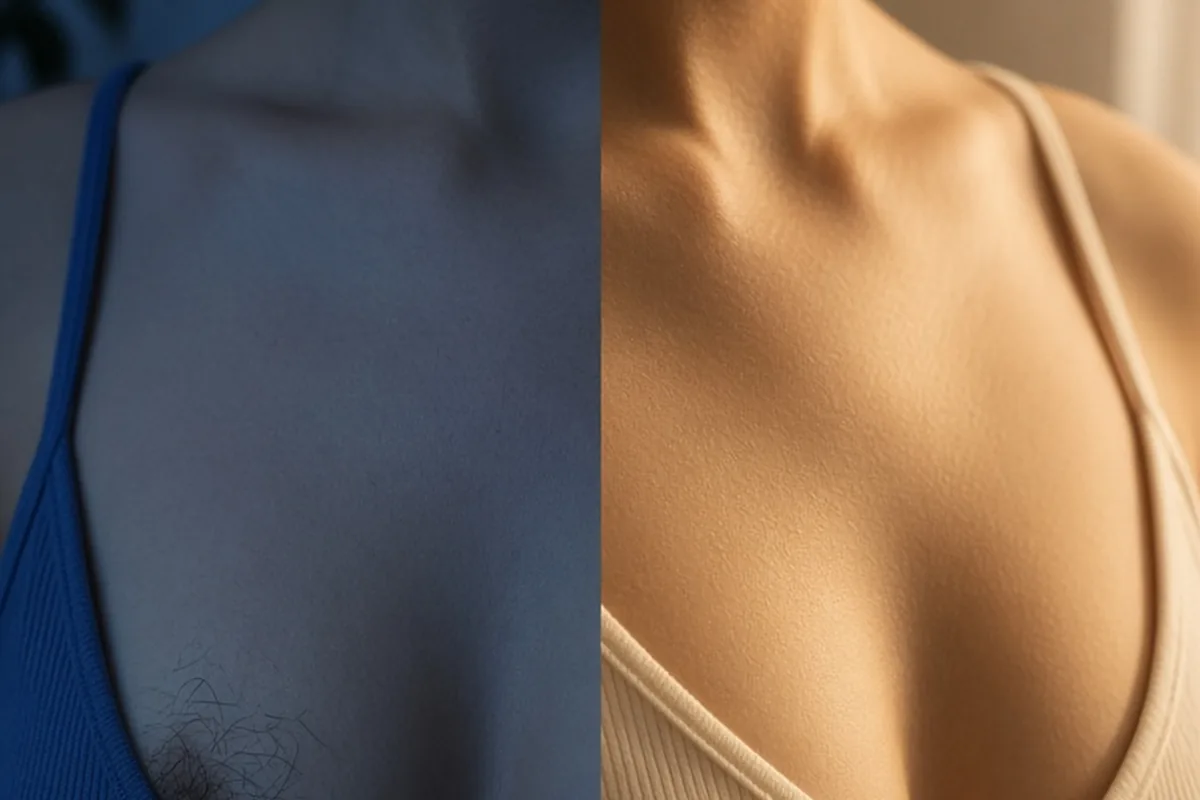
Hair around the nipples is common and usually harmless. Many people have a few stray hairs on or near the areola because hair follicles exist there and hormones can activate them. If the hair bothers you, safe options include trimming, tweezing, waxing, or professional laser removal. If growth is sudden, sudden thick, or paired with other changes, mention it to a clinician.
Few body topics feel as awkward to search as this one, so let us skip the embarrassment. Nipple hair is a normal variation that plenty of people deal with quietly, and you have real choices about whether to remove it, manage it, or simply leave it alone.
Why hair grows around the nipples in the first place
The skin around your nipples contains hair follicles, just like most of the skin on your body. For many people those follicles stay quiet or produce only fine, barely visible hair. For others, a handful of darker, coarser hairs show up, sometimes just a few, sometimes a small ring around the areola. Genetics plays a big role here, which is why some people notice it in their teens and others never do.
Hormones are the other major factor. Androgens, which everyone produces in different amounts, can stimulate follicles to grow thicker, darker hair. Shifts during puberty, pregnancy, or other hormonal changes can make nipple hair appear or become more noticeable. None of this means something is wrong with you. It usually just means your follicles are doing what follicles do.
When nipple hair is normal and when to ask a doctor
In most cases, a few hairs around the nipple are simply a cosmetic quirk, not a health signal. If you have had them for years, they have stayed roughly the same, and nothing else has changed, there is generally no reason to worry. Plenty of people remove them or ignore them entirely and never think about it again.
It is worth mentioning to a clinician if the growth is new and rapid, if the hair is much thicker or darker than before, or if it arrives alongside other changes like irregular periods, new acne, or hair growth on the chin or chest. Those patterns can sometimes point to a hormonal shift that a doctor can evaluate. This is not a reason to panic, just a reason to get a clear answer instead of guessing. A quick conversation at a routine appointment is usually all it takes.
Safe ways to remove nipple hair at home
If you want the hair gone, you have several practical options, and the right one depends on how much hair you have and how sensitive your skin is. For a few stray hairs, tweezing is the simplest route: pull in the direction of growth after a warm shower when the skin is soft. Small scissors or a bikini trimmer work well if you would rather not pull hairs at all, and trimming carries almost no risk of irritation.
Waxing removes hair for longer but can be rough on the thin, sensitive skin of the areola, so many people reserve it for the surrounding chest area rather than the nipple itself. Whatever method you choose, clean the skin first, use clean tools, and watch for redness or bumps afterward. If a hair follicle looks inflamed or painful rather than just irritated, give it a break and let it heal before removing hair there again.
- Tweezing: cheap and precise, best for a few hairs, can cause ingrowns
- Trimming: fastest and gentlest, but hair grows back quickly
- Waxing: longer-lasting results, higher irritation risk on delicate skin
- Depilatory creams: generally not recommended near the nipple
Professional options for longer-lasting results
If you are tired of maintenance, professional treatments offer more durable results. Laser hair removal targets the pigment in the hair and can significantly reduce growth over a series of sessions. It tends to work best on darker hair against lighter skin, though technology has improved for a wider range of skin tones. A consultation with a licensed provider will tell you whether you are a good candidate.
Electrolysis is the other main option and works on all hair colors and skin types because it treats each follicle individually. For a small area like the areola, sessions are usually short, though you will likely need several. The trade-off is cost and time compared to a pair of tweezers, so it makes the most sense if the hair genuinely bothers you and you want a lasting solution rather than a weekly chore.
Methods to be careful with or skip entirely
Shaving is tempting because it is fast, but it comes with real downsides on this part of the body. The skin around the nipple is thin and easy to nick, and shaved hair grows back with a blunt edge that can feel stubbly and look more noticeable. If you do shave, use a clean razor, go slowly, and expect to repeat it often.
Hair removal creams are a bigger gamble. The chemicals that dissolve hair can also irritate or burn sensitive skin, and the areola is one of the most delicate spots on your body. Most product labels warn against use near the nipples for exactly this reason. If you are ever tempted to try a new method on this area, test it on a less sensitive patch of skin first, or better yet, pick a gentler option from the start.
The emotional side nobody talks about
Here is the part that rarely makes it into grooming guides: a lot of people feel genuinely embarrassed about nipple hair, sometimes enough to avoid intimacy, hide during changing, or feel like their body is somehow wrong. That shame is understandable, but it is also disproportionate to reality. Partners who care about you are far less likely to be bothered by a few hairs than you are by the anxiety of hiding them.
It can help to separate two questions. First, do you want to remove the hair for your own comfort and preference? That is a completely valid choice. Second, are you removing it out of fear that your natural body is unacceptable? That is worth examining, because no grooming routine will fix a belief that your body needs to be flawless to deserve closeness. You get to decide what you do with your body, and either choice, removal or acceptance, is legitimate when it is actually yours.
Talking about it with a partner or a clinician
If nipple hair is affecting your confidence in intimate situations, a brief, matter-of-fact conversation often defuses more tension than weeks of quiet worry. Something as simple as mentioning that you are self-conscious about it gives a partner the chance to respond with reassurance rather than leaving you guessing. Most people find the anticipation of the conversation far worse than the conversation itself.
The same goes for medical appointments. Clinicians have seen every variation of the human body, and nipple hair will not surprise or alarm them. If you are noticing changes that concern you, write down when you first noticed them and anything else that shifted around the same time. That small bit of preparation turns an awkward mention into a useful two-minute exchange.
Illustrative Scenarios
The beach trip panic
Maya, a composite example, noticed a few dark hairs around her nipples two weeks before a beach vacation and panicked. Her first instinct was to shave the area quickly, which left her with razor burn and stubble that felt worse than the hair itself. For the next trip, she tried a different approach: she trimmed carefully with small scissors, then tweezed the two most visible hairs after a warm shower. The result was smooth skin without irritation, and the whole routine took under five minutes.
Key point: Rushed removal on sensitive skin usually creates a bigger problem than the hair. A slower, gentler method beats a fast, harsh one.
The conversation she avoided for a year
In another illustrative scenario, Jess had been removing nipple hair in secret for over a year, timing showers around her partner's schedule and feeling anxious whenever intimacy seemed likely. When she finally mentioned it, half expecting judgment, her partner shrugged and said he had noticed once and assumed everyone had some hair there. The secrecy had cost her far more stress than the hair ever had. She still tweezes occasionally because she prefers it, but the hiding and the anxiety around it are gone.
Key point: The fear of a partner's reaction is often heavier than the reaction itself. Saying the quiet thing out loud usually shrinks it.
Frequently asked questions
Is it normal to have hair on your nipples?
Yes, it is very common. The areola contains hair follicles, and hormones can activate them at any point in life. A few stray hairs are a normal variation, not a sign that something is wrong.
Does plucking nipple hair make it grow back thicker?
Plucking does not change the follicle's ability to produce hair, so it will not make hair thicker or darker. It can, however, cause ingrown hairs or irritation on sensitive skin, so gentle technique matters.
When should I see a doctor about nipple hair?
Mention it at an appointment if the growth is sudden, much thicker than before, or accompanied by other changes like irregular periods or new hair growth on your face or chest. A clinician can check whether a hormonal shift is involved.
Can I use hair removal cream on my nipples?
It is best avoided. Depilatory creams can irritate or burn delicate skin, and most labels warn against use near the nipples. Trimming, tweezing, or professional removal are safer choices for that area.
Your next step
Pick one low-risk method, like trimming or careful tweezing after a warm shower, and try it this week. If the growth is new or changing quickly, jot down when you noticed it and bring it up at your next checkup.