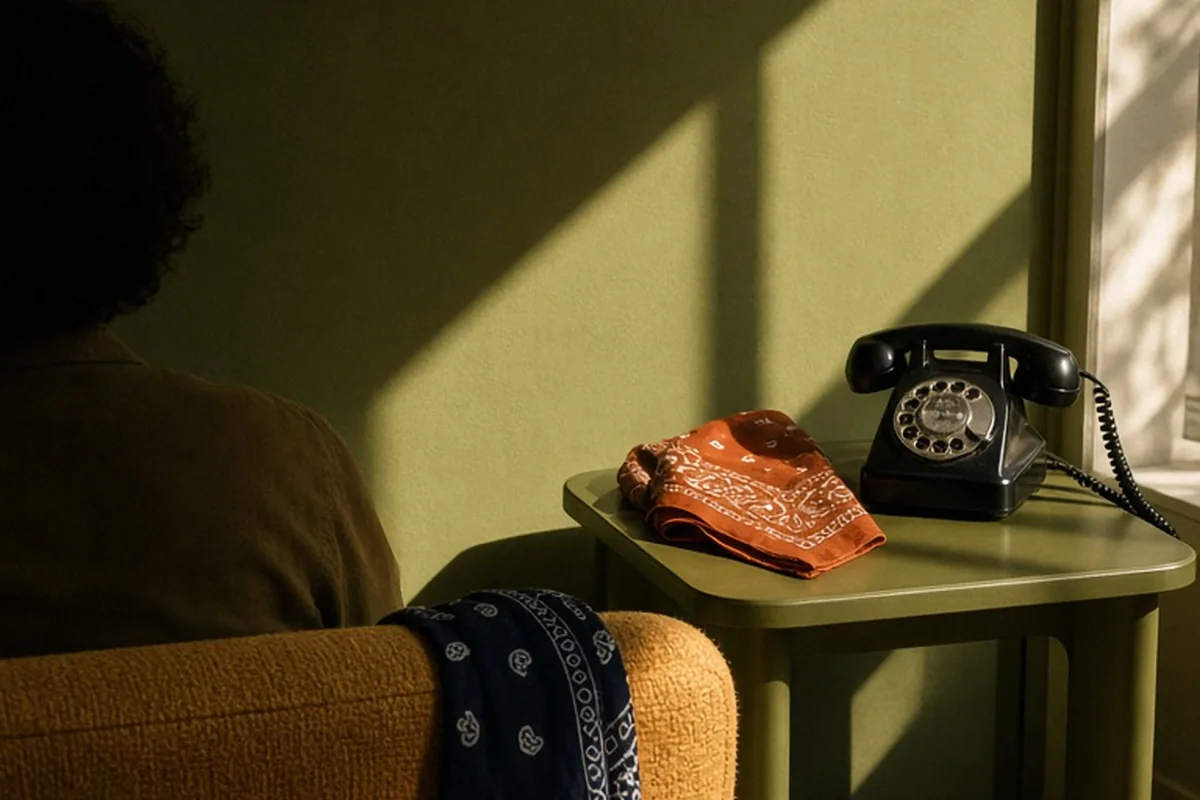
The handkerchief code, also known as the hanky code or flagging, is a traditional color-coded signaling system historically used within LGBTQ+ communities, particularly among gay men and leather subcultures. By displaying specific colored bandanas in either the left or right rear pocket, individuals subtly communicated their specific romantic interests, sexual preferences, and preferred roles before verbal conversation began.
Developed in an era when overt queer expression carried severe social and legal risks, the code allowed people to find compatible partners discreetly in crowded venues. While modern dating apps and shifting social norms have changed how people meet, understanding this nonverbal language offers valuable insight into subcultural history, intentional signaling, and clear boundary setting.
The Historical Roots of Subcultural Flagging
The origins of color-coded signaling trace back to late nineteenth-century workwear and folk traditions, but the handkerchief code as an explicit dating and intimacy tool flourished in the early 1970s. Following the Stonewall riots, gay men in urban centers like San Francisco, New York, and Los Angeles sought ways to express desires that were still heavily policed. In loud, dim spaces such as underground clubs, bathhouses, and bars, verbal negotiation was often difficult, risky, or impractical. Carrying or wearing a bandana provided an immediate visual cue that bypassed ambiguity and reduced the threat of violent backlash from un-consenting individuals.
The system expanded quickly alongside the leather and kink communities, where clarifying specific physical interests and boundaries beforehand was crucial. Specialty retailers even printed charts and distributed bandanas to standardize the meanings across different regions. Although local variations existed, the core framework created a shared language that fostered community identity and mutual understanding. Recognizing this context helps modern readers view the code not merely as a novelty, but as an inventive historical mechanism for mutual protection, agency, and targeted connection.
The Left Versus Right Rule for Desired Roles
A foundational principle of the handkerchief code is the spatial orientation of the bandana. Where a person places the cloth signals their preferred dynamic during an interaction. Traditionally, placing a handkerchief in the left back pocket, or wearing it on the left side of the body, signifies an active, assertive, dominant, or initiating role (historically described as top). Conversely, placing the handkerchief in the right back pocket indicates a receptive, passive, or submissive preference (historically described as bottom).
This structural rule allowed two people across a crowded room to evaluate basic compatibility in seconds. For instance, if two individuals both wore red bandanas on their left sides, they would immediately recognize that they shared the same activity interest but held incompatible role preferences for that encounter. While this binary helped streamline connections in fast-paced nightlife environments, it also had limitations. Many individuals enjoy fluid or switch dynamics, which were harder to express cleanly through a single pocket placement without wearing multiple cloths or using non-standard arrangements.
Common Bandana Colors and Their Traditional Meanings
While dozens of shades were documented in historical subcultural guides, a core palette of primary colors formed the backbone of the code. Each color was linked to a specific type of intimacy, preference, or social interest. Because nuances existed between different cities and scenes, these codes served as an initial conversation starter rather than an inflexible contract.
Understanding these traditional associations provides a window into how specific the system became across different communities:
- Dark Blue: Signified an interest in standard, unembellished physical intimacy or conventional sexual acts.
- Light Blue: Indicated oral intimacy, with left signaling the desire to perform and right signaling the desire to receive.
- Red: Represented an interest in intense physical exploration, heavy kink, or specific tactile play.
- Yellow: Symbolized an interest in watersports, body fluids, or related unconventional sensory play.
- Black: Indicated a preference for leather culture, sadomasochism, dominance, submission, and bondage.
- White: Represented casual socializing, non-sexual companionship, or missionary-style romantic encounters.
- Green: Often signaled an interest in financial exchange, hustling, or mutual economic arrangements depending on the region.
Why Flagging Shifted in Modern Nightlife
Over the past three decades, the daily practical use of the handkerchief code has significantly diminished in mainstream nightlife. The rise of digital platforms, dating applications, and specialized forums shifted nonverbal signaling to detailed online profiles where people can list preferences, boundaries, and relationship orientations with textual precision. As social acceptance of LGBTQ+ relationships expanded in many areas, the necessity for covert in-person codes naturally declined.
Today, flagging is primarily preserved in specific subcultural spaces, including leather bars, fetish events, street fairs, and queer historical celebrations. In these environments, it functions as both a living tribute to community history and a playful, visually striking way to express identity. However, relying solely on historical codes in general settings carries the risk of miscommunication, as contemporary patrons may wear bandanas purely for aesthetic reasons without any awareness of their subcultural meanings.
Navigating Accidental Signals and Everyday Fashion
Bandanas regularly cycle through mainstream streetwear, music festival fashion, and outdoor workwear. A person carrying a red bandana to wipe away sweat during a hike or tucking a patterned kerchief into a back pocket for a vintage Americana aesthetic is almost certainly not attempting to flag a kink preference. Context and environment are the primary filters through which any visual signal must be interpreted.
If you spot a bandana in a general social setting, jumping to conclusions about someone's private life or sexual availability is unhelpful. Even within relevant subcultural venues, experienced participants treat a visible handkerchief as a gentle invitation to talk, not as an automatic green light for physical interaction. Taking a measured approach prevents uncomfortable misunderstandings and respects personal space.
The Irreplaceable Role of Verbal Confirmation and Consent
Regardless of whether someone is deliberately wearing a handkerchief or displaying another form of nonverbal signaling, clear communication is always mandatory before any romantic or physical escalation. Visual cues can express interest, but they cannot establish informed consent. Preferences fluctuate, people change their minds, and a symbol chosen at the beginning of an evening does not obligate someone to follow through with an interaction.
A healthy approach involves using visual cues merely as an opening observation to start a respectful conversation. Simple, direct inquiries such as asking what someone is looking for tonight or clarifying their comfort level ensure that both parties are aligned. Prioritizing open dialogue protects emotional safety, builds mutual trust, and ensures that any connection is genuinely wanted by everyone involved.
Illustrative Scenarios
Navigating a Subcultural Social Night
Marcus attended an annual community festival where several attendees wore colored bandanas in their pockets. Seeing someone with a dark blue bandana on their right pocket, Marcus assumed the visual cue was an open invitation to approach with immediate physical familiarity. Sensing his target pull back with discomfort, Marcus paused and stepped back. He adjusted his approach by offering a polite greeting and asking about the venue instead. The other person appreciated the reset and explained they were wearing the bandana as a nod to tradition while catching up with friends. By shifting to direct conversation, Marcus avoided overstepping and enjoyed an engaging discussion.
Key point: Nonverbal symbols indicate general interests, but respectful verbal conversation must always precede physical familiarity.
Deciphering Fashion Versus Intent
Julian noticed a new acquaintance at a casual outdoor gathering wearing a black bandana tucked into his back left pocket. Having recently read about the hanky code, Julian wondered if his acquaintance was signaling a desire to lead a dominant kink dynamic within their social circle. Rather than making assumptions or acting on the symbol, Julian simply asked about the vintage accessory during a chat about clothes. The acquaintance laughed and explained it was purely a practical habit from working on vintage motorcycles. Julian was relieved he checked his interpretation before projecting subcultural expectations onto an everyday setting.
Key point: Always consider the social context before assuming everyday fashion choices carry specific subcultural messages.
Frequently asked questions
Is the handkerchief code still used today?
Yes, but primarily within specific subcultures such as leather, BDSM, and historical queer events. In everyday modern dating, digital profiles and verbal discussions have largely replaced physical flagging.
Does wearing a bandana always mean someone is signaling an interest?
No. Bandanas are widely worn for fashion, utility, and workwear without any subcultural intention. Context is essential, and you should never assume a stranger is flagging based on clothing alone.
Can a visual signal replace explicit consent?
Never. A visible handkerchief or style choice only suggests an interest; explicit verbal agreement and ongoing mutual enthusiasm are always required before any intimate contact.
Your next step
If you participate in events where historical signaling is present, treat visual cues as subtle conversation starters while always relying on direct, respectful verbal communication to establish mutual interest and clear boundaries.