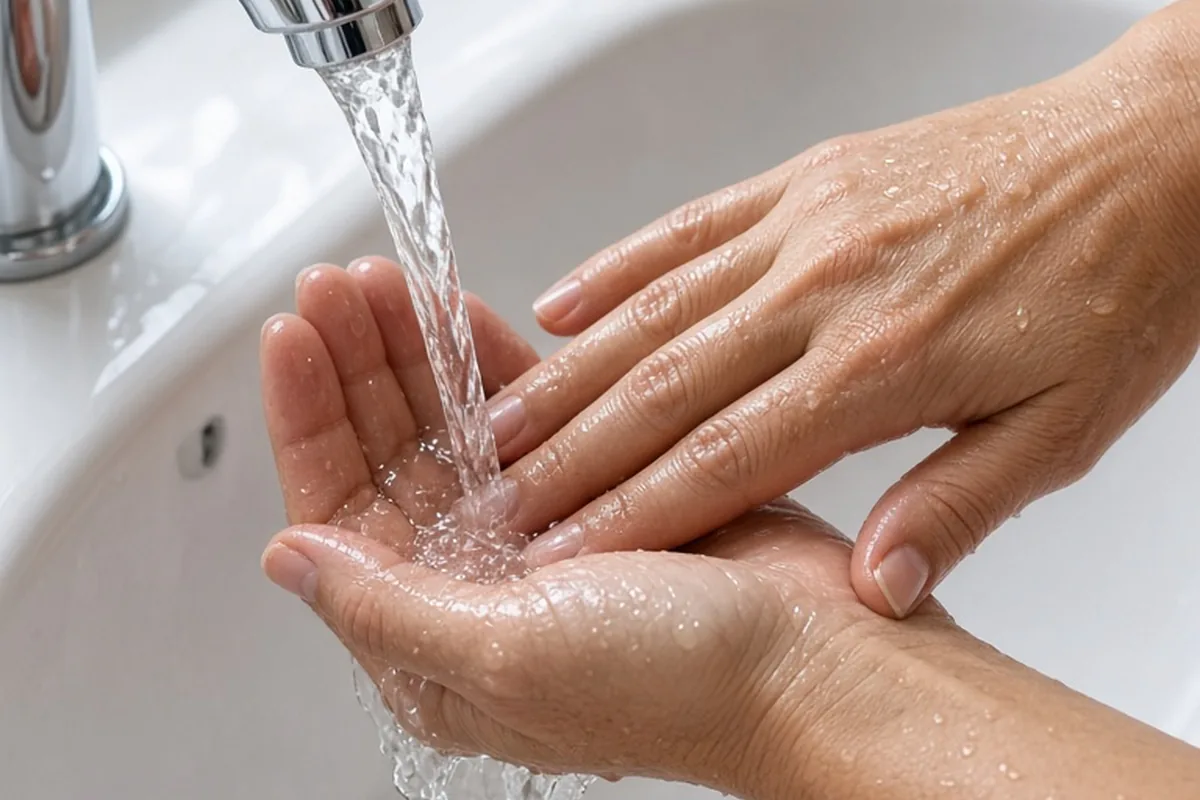
Lukewarm water is the best choice for washing your face. While hot water feels soothing, it strips essential lipids and dries out the skin. Cold water can temporarily reduce puffiness but fails to dissolve sebum and cosmetic buildup effectively. Using lukewarm water allows cleansers to work properly while preserving the protective skin barrier.
Water temperature is often an overlooked factor in daily skincare, yet it directly influences how cleansers perform and how comfortable your skin feels throughout the day.
The Impact of Hot Water on the Skin Barrier
Washing your face with hot water can feel comforting, especially during colder months or in the shower, but high temperatures can disrupt the delicate balance of your skin. The outer layer of skin relies on natural oils and structural lipids, such as ceramides and fatty acids, to retain moisture and keep environmental irritants out. Hot water acts as an aggressive degreaser, melting away these protective lipids far more quickly than intended. Once this lipid matrix is stripped, transepidermal water loss increases, leaving the skin susceptible to tightness, flaking, and rough texture.
Beyond surface dryness, hot water triggers vasodilation, which causes the tiny blood vessels beneath the facial tissue to widen. This response often leads to persistent redness and can aggravate underlying conditions such as rosacea or sensitive, reactive skin. For individuals prone to breakouts, the extreme dryness caused by hot water can prompt sebaceous glands to produce excess oil as a compensatory mechanism, potentially leading to clogged pores. While a hot rinse might feel deep-cleansing, the trade-off is often chronic irritation and a weakened surface defense.
The Real Effects and Limitations of Cold Water
A common skincare myth suggests that cold water physically closes or shrinks pores. In reality, pores do not possess muscular tissue, meaning they cannot open and close in response to temperature. Cold water does, however, cause temporary vasoconstriction, narrowing the small blood vessels near the surface. This physiological response can briefly reduce morning puffiness, calm the sensation of heat, and impart a tighter, firmer feel to the skin. It can also provide an invigorating sensory wake-up call without the drying consequences associated with hot water.
Despite these benefits, cold water presents practical limitations when used as a primary cleansing agent. Fats, oils, stubborn sunscreens, and makeup do not dissolve readily in cold temperatures. When you apply a gentle cleanser with chilled water, the surfactant molecules struggle to emulsify trapped sebum and daily debris, which may leave a thin residue behind. Relying exclusively on cold water for heavy cleansing can lead to congested pores over time, making it better suited as a soothing post-cleanse rinse rather than the main washing step.
Why Lukewarm Water Is the Optimal Standard
Lukewarm water represents the ideal middle ground for facial hygiene. Tepid water is warm enough to soften daily oils, loosen dirt, and activate cleansing agents without reaching temperatures that destabilize your skin barrier. When water matches close to a neutral body surface temperature, cleansers can easily lather, lift debris away from the skin surface, and rinse clean without leaving behind a film or stripping away vital hydration.
Using lukewarm water consistently maintains the equilibrium of the acid mantle, the thin film on the skin surface that supports a healthy microbiome and wards off harmful bacteria. Unlike extreme temperatures, lukewarm water does not provoke reactive flushing or cause sudden moisture loss. Whether you are removing waterproof sunscreen after a long day or performing a quick morning cleanse, lukewarm water delivers thorough cleanliness while minimizing mechanical and thermal stress on facial tissues.
Adjusting Water Temperature for Different Skin Types
While lukewarm water remains the universal recommendation, subtle adjustments can help address specific skin concerns and environmental conditions. Understanding your skin type allows you to tailor your routine to prevent seasonal flares or localized sensitivity.
Consider how minor temperature shifts can support different skin needs across daily routines:
- Dry and sensitive skin benefits strictly from lukewarm water that leans slightly cooler, avoiding any heat that could trigger stinging, flaking, or redness.
- Oily and acne-prone skin requires consistent lukewarm water to effectively break down excess sebum without resorting to scalding temperatures that trigger rebound oiliness.
- Combination skin maintains balance best with tepid water, preventing the cheeks from drying out while ensuring the T-zone is thoroughly cleared of congestion.
- Reactive or rosacea-prone skin thrives when temperature changes are minimized entirely, preventing rapid flushing and capillary stress.
Morning Versus Evening Cleansing Strategies
Your cleansing goals naturally shift between the start and end of the day, and your water approach can adjust accordingly. In the morning, the primary goal is typically removing overnight sweat, excess sebum, and any lingering nighttime products. If your skin is dry or normal, a gentle splash of cool or lukewarm water, with or without a mild hydrating cleanser, is often sufficient to refresh the skin without disturbing its barrier.
In contrast, the evening routine demands more thorough cleansing to remove environmental pollution, sweat, sunscreen filters, and cosmetic pigments. Here, lukewarm water is essential to allow oil-based balms and water-based cleansers to dissolve impurities fully. Attempting to wash away heavy sunscreen with cold water can result in incomplete cleansing, while hot water can compound the irritation caused by friction and cleansing surfactants. Keeping the evening rinse consistently lukewarm ensures that active night treatments can penetrate clean, calm skin.
Best Practices for Washing, Rinsing, and Drying
Water temperature is only one part of a gentle cleansing technique; the way you apply, rinse, and dry your face also influences skin health. Direct high-pressure water from a showerhead can create micro-trauma on delicate facial tissue and often tempts individuals to use water that is far too hot for facial skin. Instead, wash your face at the sink or adjust the shower stream to a tepid temperature, using cupped hands to gently splash water onto the skin.
When drying, avoid dragging or rubbing a rough towel across your face, which creates unnecessary friction and can exacerbate sensitivity. Instead, gently press a clean, soft towel against the skin to absorb excess moisture, leaving the face slightly damp. Applying your serums, hydrators, or moisturizers within sixty seconds of patting dry helps lock in hydration, creating a seal that reinforces the protective barrier before ambient air can draw moisture away.
Recognizing and Repairing Temperature-Related Barrier Damage
If you have routinely washed your face with hot water, you may notice subtle signs of a compromised skin barrier. Common indicators include a persistent feeling of tightness after cleansing, unexpected stinging when applying basic moisturizers, localized dry patches, and heightened sensitivity to everyday environments. These symptoms suggest that the protective lipid matrix has worn thin and needs supportive care to recover.
To restore balance, immediately switch to lukewarm rinsing and simplify your routine for several weeks. Set aside harsh physical scrubs, foaming cleansers with strong sulfates, and potent leave-on acids until the skin calms. Focus on gentle, non-foaming cleansers paired with barrier-repairing creams containing ceramides, glycerin, or squalane. Once your skin feels comfortable, resilient, and free of tightness throughout the day, you can gradually reintroduce active treatments while maintaining consistent, gentle water temperatures.
Frequently asked questions
Can I use cold water to close my pores after cleansing?
Cold water does not physically close pores because pores do not have muscles that open and close. A brief cool splash can temporarily constrict blood vessels and reduce puffiness, but it will not permanently change pore size.
Is it bad to wash my face in the shower?
Washing your face in the shower is safe as long as the water temperature is kept lukewarm rather than steaming hot. To protect delicate facial skin, avoid letting high-pressure shower streams hit your face directly.
Will washing with hot water help clear acne faster?
Hot water does not clear acne and can actually make breakouts worse by irritating the skin barrier. The resulting dryness often signals sebaceous glands to produce more oil, increasing the risk of clogged pores.
How can I tell if my water is lukewarm?
Lukewarm water should feel neutral against your skin, neither distinctly warm nor chilled. Testing the stream on the sensitive skin of your inner wrist is a reliable way to ensure it is comfortable for your face.
Your next step
Test your tap water on your inner wrist before cleansing to ensure it feels neutral and lukewarm, protecting your skin barrier with every wash.