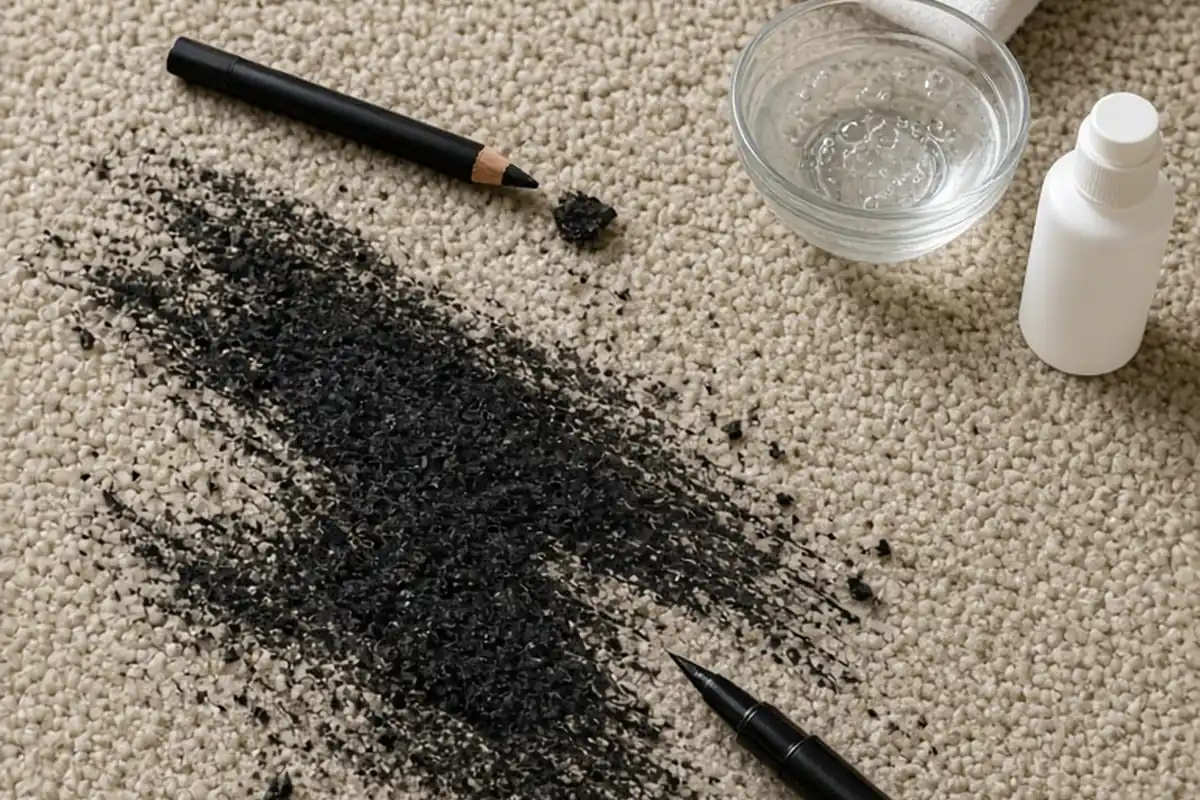
To get eyeliner out of carpet, first gently scrape away any solid chunks with a dull butter knife without pressing into the fibers. Then, apply a small amount of liquid dish soap diluted in warm water or dab isopropyl alcohol onto a clean white cloth. Blot the stain repeatedly from the outside edges inward until the pigment transfers. Finally, rinse with clean damp water and pat dry.
Dropping an open eyeliner pen or snapping a soft kohl pencil against a carpet can leave an intimidating dark streak, but the dense pigments and waxy binders are fully manageable when treated with the correct technique.
Lifting Excess Makeup and Preparing the Stain Area
The initial instinct when makeup hits flooring is often to scrub vigorously with whatever rag or paper towel is closest at hand. Doing so pushes dark carbon pigments and polymer binders deeper into the carpet pile, wedging the color between individual synthetic or natural strands where it becomes far harder to dissolve. Before introducing any cleaning fluids, the physical volume of the makeup must be reduced mechanically.
Take a dull tool, such as the edge of a spoon, a plastic credit card, or a butter knife, and gently scrape across the surface in a single inward direction to collect loose crumbles, dried flakes, or thick gel deposits. Work deliberately from the perimeter of the mark toward the center so the smudge does not expand. Once you have scooped away all loose material, use a dry, clean white microfiber cloth to lightly press down on the area, picking up any loose surface dust before wetting the fibers.
Removing Pencil and Kohl Eyeliner with Degreasing Dish Soap
Pencil and traditional kohl eyeliners rely on dense waxes, oils, and emollients to achieve a smooth glide across delicate eyelid skin. Because these formulas are oil-heavy rather than water-soluble, simple tap water will bead up or cause the oils to spread wider across the carpet backing. A mild, degreasing liquid dish detergent serves as an ideal emulsifier because its surfactant molecules attach to oil particles on one end and water molecules on the other, lifting the greasy binder away from the carpet yarn.
To apply this method, mix one teaspoon of clear, dye-free dish soap into one cup of lukewarm water. Avoid hot water, which can melt cosmetic waxes into the carpet fibers and permanently set the stain. Dip a clean white washcloth into the solution, wring it out until it is only slightly damp, and press it firmly onto the eyeliner mark. Hold it in place for ten seconds to let the soap soften the wax, then gently press and twist the cloth in small increments. Rotate to a fresh, clean section of your cloth with every press so you do not transfer lifted pigment back onto the rug.
Treating Liquid and Waterproof Gel Formulas with Isopropyl Alcohol
Liquid eyeliners and modern gel pots are engineered to resist sweat, water, and humidity, meaning they contain synthetic film-forming polymers and silicone resins that laugh off soapy water alone. Dissolving these waterproof bonds requires a dedicated solvent that can break the polymer matrix without stripping the color dye from standard carpet fibers. Plain 70 percent isopropyl rubbing alcohol is particularly effective for this task because it evaporates rapidly and cuts through cosmetic resins.
Pour a small splash of rubbing alcohol directly onto a white cotton ball or cleaning rag rather than pouring it straight onto the floor. Pouring liquid solvents directly into the carpet can soak through the primary backing and dissolve the latex adhesive holding the fibers together, leading to carpet delamination. Dab the alcohol-soaked cloth against the liquid eyeliner mark using firm, vertical downward pressure. As the alcohol dissolves the film formers, the dark ink will begin transferring onto the rag. Continue working with fresh spots on the rag until no more color pulls up.
Using Micellar Water and Shaving Cream as Gentle Alternatives
If you do not have rubbing alcohol or want a gentler option for delicate synthetic blends, standard oil-free micellar cleansing water works remarkably well. Micellar water contains microscopic oil-cleansing spheres suspended in soft water, designed specifically to lift stubborn makeup without harsh scrubbing. Pour a modest amount onto a lint-free cotton pad and blot the area firmly, allowing the micelles to draw up the surface pigment.
Another effective household alternative is standard white foaming shaving cream. Plain shaving cream contains a mild blend of surfactants and foaming agents that generate an airy lather capable of penetrating carpet pile without oversaturating the floor. Squirt a small dollop over the remaining eyeliner mark, gently work the foam between the carpet strands using your fingertips or a soft-bristled toothbrush, and let it rest for five to ten minutes. Blot the foam away with a damp towel to carry away lifted makeup particles.
Rinsing and Extracting Soap Residue to Prevent Permanent Resoiling
A common mistake in DIY carpet spot cleaning is stopping the process the moment the visible color disappears. Liquid soap, shaving cream, and cosmetic cleansing agents leave a sticky chemical residue behind on the carpet strands as they dry. This invisible residue acts like a magnet for household dust, pet dander, and foot traffic grime, causing a dark, dirty spot to reappear in the exact same location several weeks later.
To properly rinse the area, dampen a clean rag with plain cool water and press it repeatedly into the treated spot to absorb all remaining detergent. Once the area has been thoroughly flushed, place a thick stack of dry white paper towels or a clean terrycloth towel directly over the damp patch. Step on the towel stack or place a heavy, non-bleeding object, such as a glass baking dish, on top for several hours. This capillary action pulls moisture and residual pigment up out of the deep pile and into the paper towels.
Adjusting Methods for Wool, Silk, and Natural Fiber Rugs
Synthetic carpets made from nylon, polyester, or triexta are resilient and can tolerate alcohol and mild detergent treatments without losing their structural integrity. Natural fibers such as wool, silk, jute, and sisal require significantly more caution. Wool fibers are protein-based and possess natural scales that can become dry, brittle, or matted if exposed to high-pH cleaners, heavy saturation, or harsh solvents. Silk and plant-based fibers like sisal can water-stain permanently if soaked unevenly.
When cleaning an eyeliner spill on a wool or natural blend rug, choose a pH-neutral wool-safe detergent diluted in cool water, or use a tiny amount of dry-cleaning spot remover applied to a rag. Never saturate natural fibers, and always perform a patch test on a hidden section of the rug, such as behind furniture or along an edge, to ensure the dye does not bleed. If the makeup is an intensely pigmented, waterproof liquid eyeliner on an expensive antique wool or pure silk rug, attempting home chemical removal can cause permanent dye migration, making professional cleaning the safest choice.
Reviving Old or Dried Eyeliner Stains
Discovering an eyeliner mark that has already dried and hardened days or weeks after the initial drop requires a two-step rehydration and lifting strategy. Because the binders have fully cured and cross-linked around the carpet fibers, applying a dry solvent alone may take excessive time to penetrate. You must first soften the dried crust before the pigment can be coaxed out of the yarn.
Begin by dampening the dried spot with warm water applied via a spray bottle, letting it sit for three minutes to relax the fibers. Next, apply a specialized enzymatic carpet spot cleaner or a concentrated dish soap solution to break down the hardened binders. Allow the cleaning solution to sit for ten to fifteen minutes without drying out. Once the crust softens, use the same outward-to-inward blotting technique with a microfiber towel, alternating with small amounts of rubbing alcohol if dealing with stubborn waterproof pigments.
Frequently asked questions
Can I use standard makeup remover wipes to clean carpet?
Yes, oil-free makeup wipes can lift small, fresh eyeliner smudges effectively in a pinch. However, wipes often contain moisturizing conditioners or oils that can leave a residue on carpet yarn, so you should always rinse the area afterward with a damp water cloth.
Will hydrogen peroxide get eyeliner out of carpet?
A three percent hydrogen peroxide solution can lift stubborn dark pigments on light-colored or white carpets. However, it carries a mild bleaching effect and can permanently discolor darker or dyed carpets, so always perform a hidden spot test before applying it.
Is nail polish remover safe for eyeliner stains on carpet?
Non-acetone nail polish remover can dissolve some cosmetic polymers, but standard acetone should be avoided. Acetone can melt certain synthetic fibers like acetate and triacetate and dissolve carpet adhesives beneath the backing.
How do I prevent the stain from spreading while cleaning?
Always blot using a light pressing motion from the outer edges of the eyeliner mark toward the center rather than wiping outward. Switch to a clean section of your cloth after every couple of blots so you do not transfer dark pigment across clean fibers.
Your next step
Test your chosen cleaning agent on a hidden corner of the carpet, then gently lift surface solids and blot the eyeliner from the outer edges inward.