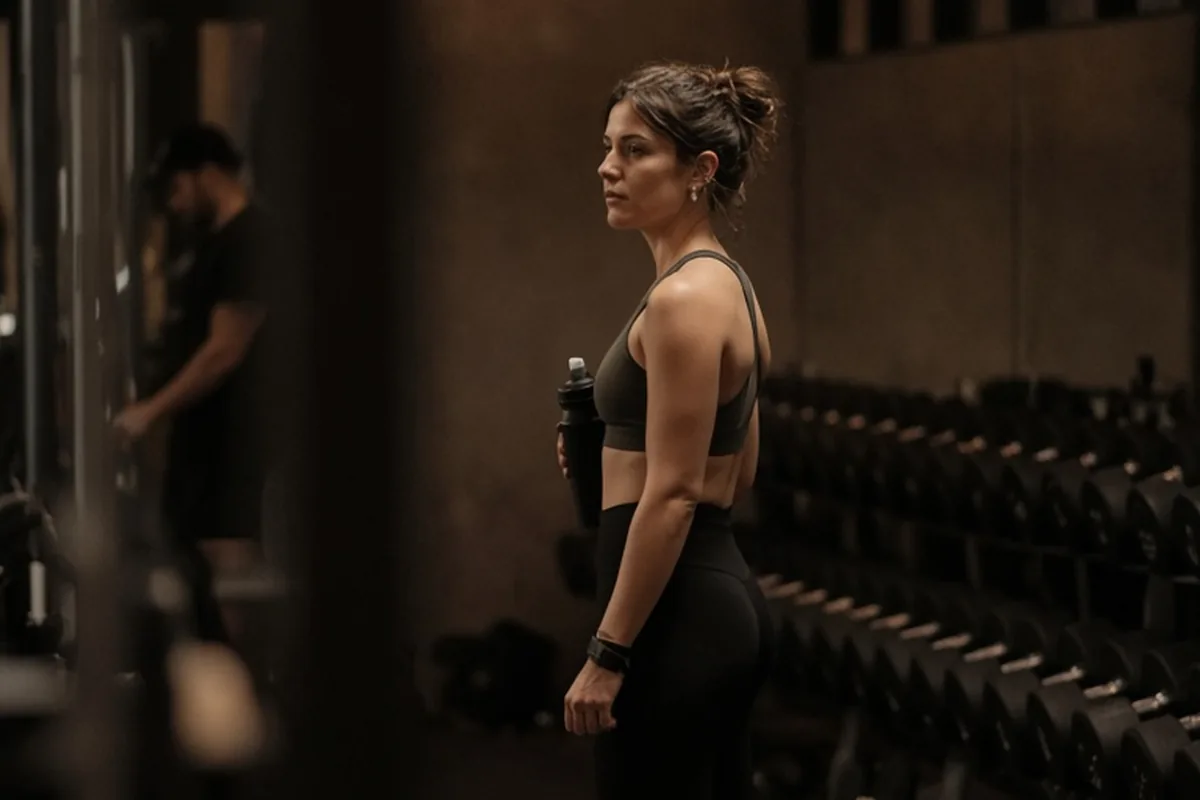
To approach a guy at the gym, wait for a natural transition in his workout, such as resting between sets, refilling a water bottle, or re-racking weights. Start with a brief, contextual question or observational comment, maintain open posture, and watch whether he removes his headphones or keeps talking. If he responds with short, polite answers, smile and step away; if he actively engages, keep the chat under two minutes and offer your contact details.
Approaching someone in an athletic setting can feel intimidating because gyms are primarily spaces for individual concentration, physical exertion, and strict personal routines. Approaching a man there does not require rehearsed lines, feigned incompetence, or high-stakes boldness. It simply requires good spatial awareness, respect for his training time, and a clear understanding of low-pressure conversational boundaries.
Reading the Room and Selecting the Right Moment
Timing is the single most important factor when initiating a conversation in a fitness center. Attempting to speak to someone while they are actively lifting, mid-sprint, counting repetitions, or catching their breath after a grueling interval creates an immediate barrier. During intense exertion, physiological focus is high, and an interruption can cause safety hazards or break their mental momentum. The most receptive moments occur during clear transition periods: when he is wiping down equipment, walking between stations, filling a water container, or re-racking plates after finishing an exercise.
Equally important is assessing environmental receptivity. A person who is wearing oversized, noise-canceling headphones, keeping their eyes trained strictly on their phone or the floor, and rapidly moving between supersets is clearly signaling a desire to stay in the zone. Conversely, someone who takes periodic pauses, leaves one ear uncovered, looks around the room comfortably, or makes brief, friendly eye contact is far more accessible. Respecting these signals upfront protects your own confidence and prevents unnecessary friction in a shared community space.
Starting with Contextual, Low-Stakes Openers
Rehearsed compliments and flattering pick-up lines rarely land well in a gym environment because they immediately raise the social pressure and spotlight physical appearance in a vulnerable setting. A far more reliable entry point is a simple, situational comment rooted in your shared environment. Questions about equipment availability, how many sets someone has remaining, or how to operate a specific attachment feel normal and appropriate for the venue. They allow you to test his warmth without exposing yourself to intense vulnerability.
The trade-off with purely functional openers is that they can end just as quickly as they begin unless a natural opening presents itself. The goal is not to stay on the topic of barbells indefinitely, but rather to assess whether his demeanor invite further dialogue. If he responds with energy and stays facing you, you can transition into an observational follow-up. If he provides a strictly informative answer and turns back to his station, the interaction concludes smoothly with a simple thank-you, leaving no lingering awkwardness for either person.
- Are you using this bench, or are you about finished with your sets?
- Do you know if this cable attachment belongs to this station?
- How do you like those lifting straps? I have been thinking about getting a pair.
- It feels twice as warm in this room today as usual, doesn't it?
Differentiating Mutual Interest from Basic Courtesy
One common challenge in gym settings is deciphering whether a man is genuinely interested or simply displaying common fitness courtesies. Most regulars will offer polite smiles, nod in passing, or gladly share equipment when asked. True social or romantic interest typically reveals itself through sustained engagement that goes beyond minimal politeness. If a guy is intrigued, he will usually pull his headphones entirely down around his neck, turn his shoulders toward you, ask a reciprocal question, or linger slightly instead of immediately diving back into his exercise routine.
If his response consists of a quick smile, a one-word answer, or an immediate return to his playlist, take it as an indicator of focus rather than personal rejection. Many people use the gym as a solitary mental decompression space and prefer not to socialize, regardless of who is approaching them. By looking for active conversational reciprocity—such as him asking your name, remarking on your own routine, or continuing the dialogue—you can accurately gauge whether to deepen the conversation or return gracefully to your workout.
Exchanging Contact Information Without Putting Him on the Spot
When an initial chat flows easily, the next dilemma is deciding how to exchange details without creating an uncomfortable dynamic. Directly asking for a man's phone number can occasionally put him on the spot, particularly if he is caught off guard during a workout. A balanced and confident alternative is to offer your own contact details or suggest a low-commitment connection, such as a social media profile or meeting for a post-workout coffee nearby.
A practical approach is to keep the conversation brief—ideally under two minutes—and offer your number before walking away. You might say that you need to finish your workout, but you would enjoy grabbing a smoothie or coffee sometime if he is interested, handing him a slip of paper or having him put your number in his phone. Handing over your information removes immediate pressure from him, gives him total autonomy to reach out, and allows both of you to return to your training sessions without any prolonged hesitation.
Navigating Rejection and Maintaining Comfort in Shared Spaces
Because fitness routines are cyclical, there is a very high likelihood you will see the same individual multiple times each week following an approach. Managing the emotional outcome of an interaction requires framing the interaction with perspective: expressing interest is an everyday, healthy social action, not an embarrassing mistake. If he mentions that he is in a relationship or simply does not follow up after receiving your number, the best response is composed, effortless neutrality.
Avoid altering your training schedule, relocating to a different corner of the facility, or avoiding eye contact entirely. Doing so only amplifies tension. Instead, treat him like any other familiar face in the room with a polite, casual nod when your paths cross, followed by immediate immersion in your own training. Demonstrating that your self-worth and routine remain entirely intact after a mild brush-off keeps the environment comfortable, professional, and respectful for everyone involved.
Avoiding Common Pitfalls on the Fitness Floor
Approaching someone at the gym requires dodging a few frequent tactical mistakes. The most common error is hovering. Lingering around someone's machine, repeatedly matching their circuit, or staring across the weight room creates discomfort and feels intrusive rather than flattering. If an organic opening is not present during a specific visit, it is far wiser to focus fully on your own training and wait for a natural convergence on another day.
Another pitfall to avoid is feigning helplessness or asking for instruction on exercises you already know how to perform. While asking for form tips is a classic romantic-comedy trope, it can easily come across as disingenuous or place an unsolicited teaching burden on someone trying to finish their workout. Authenticity creates the strongest foundation; approaching someone with grounded self-assurance and genuine, brief interest is far more appealing than manufacturing artificial scenarios.
Illustrative Scenarios
Timing an Interaction During a Natural Transition
Maya regularly noticed a man training in the free-weight area during her early morning workouts. Initially, she considered walking up to his bench while he was preparing for a heavy lift, hoping to ask a question. Recognizing that interrupting his preparation could cause a safety issue and feel invasive, she decided to wait for an organic transition. When he finished his final set and walked over to the cleaning station to sanitize his barbell, Maya walked over to grab a disinfectant wipe. She smiled and made a light observation about how unusually crowded the weight room was that morning. He immediately removed his earbuds, laughed, and agreed. They introduced themselves, chatted for ninety seconds about their routines, and Maya smoothly wrapped up the interaction by returning to her stretches, leaving the connection warm and natural.
Key point: Waiting for a functional transition like cleaning equipment prevents training disruptions and gives the other person space to engage willingly.
Handling Politeness with Ease and Self-Respect
Elena decided to speak with a fellow gym member near the stretching mats after noticing him several times over a few weeks. As they were both packing up their mats, she offered a friendly comment asking if he had tried the new recovery studio down the hall. The man offered a polite, closed smile, answered with a simple 'Not yet,' and continued packing his gym bag without asking a follow-up question or turning toward her. Elena recognized that while he was polite, he was not showing conversational interest. Instead of pressing further or feeling self-conscious, she smiled, said 'Have a good workout,' and headed to the locker room. During subsequent gym sessions, she maintained a simple nod in passing, preserving mutual comfort and her own peace of mind.
Key point: Recognizing a polite but closed response allows you to exit gracefully, preserving your dignity and keeping future encounters relaxed.
Frequently asked questions
Is it inappropriate to approach a man who is wearing headphones?
It depends on how deeply he is immersed. If he has both noise-canceling headphones firmly on and avoids eye contact, it is best not to interrupt; however, if he has one ear free or looks up comfortably between sets, a brief wave or quick question is generally acceptable.
Is it better to give him my phone number or ask for his?
Giving him your number is usually preferable because it minimizes social pressure in a public environment. It gives him full control over whether and when to initiate contact, while showing clear, confident interest on your part.
How long should a first gym conversation last?
Keep the first exchange under two to three minutes. This respects his physical pacing and training schedule while preventing the conversation from dragging into awkward pauses while both of you are cooling down.
What should I do if he says he is seeing someone?
Accept the information with a warm, relaxed attitude by saying something simple like, 'No problem at all, just wanted to say hello, have a great workout.' Continuing your routine normally shows confidence and eliminates any potential tension.
Your next step
On your next visit to the gym, focus on noticing natural transition points—such as trips to the water cooler or sanitizing stations—and practice offering a simple, friendly smile to test approachable energy before starting a conversation.