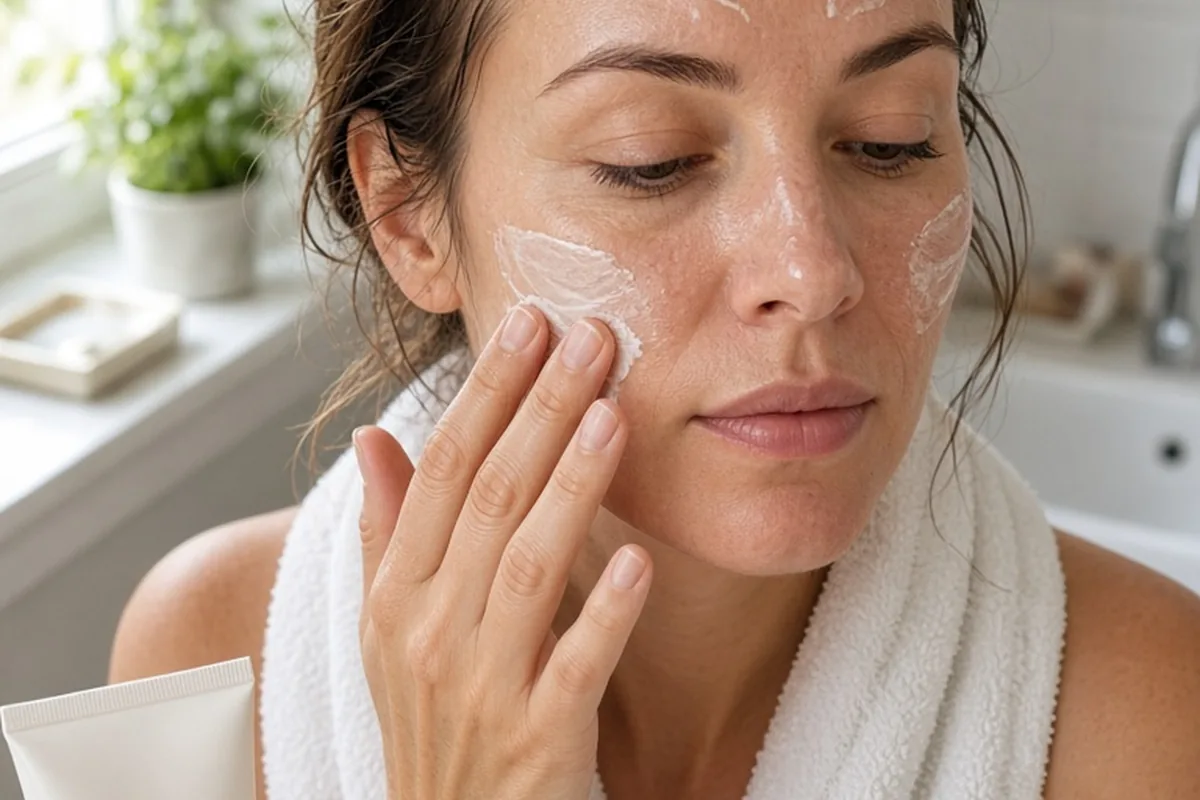
To build an effective skincare routine on a budget, focus on three core essentials: a gentle cleanser, a dependable moisturizer, and a broad-spectrum daily sunscreen. Skip trendy multi-step routines, choose fragrance-free drugstore formulations with proven ingredients like glycerin and niacinamide, and introduce specialized treatments only when addressing a specific skin concern.
Caring for your skin does not require multi-step regimens, elaborate packaging, or luxury price tags to produce noticeable, lasting improvements.
The Three Non-Negotiable Core Products
A healthy skincare routine rests entirely on three foundational steps: cleansing, moisturizing, and sun protection. Many commercial marketing campaigns promote multi-product systems that promise fast transformations, but the biological function of skin care is straightforward. Your skin requires gentle washing to remove excess oil, environmental pollutants, and dead skin cells without stripping away its natural lipid barrier. Following cleansing, the skin needs moisture and humectants to support barrier repair and lock in hydration. During daylight hours, broad-spectrum sunscreen protects against ultraviolet radiation, which is responsible for premature aging, hyperpigmentation, and cellular damage.
When shopping on a modest budget, allocating the majority of your funds toward these three pillars prevents unnecessary spending on redundant toners, mists, and luxury essences. A standard drugstore cream or foaming cleanser, a basic ceramide-rich lotion, and a lightweight SPF 30 or higher sunscreen provide all the daily support most individuals need. High-end cleansers, for instance, spend less than sixty seconds on the face before being rinsed down the drain, making expensive specialty extracts in wash-off formulas an impractical use of limited funds. A simple, fragrance-free formula that cleanses without leaving the skin feeling tight or dry is equally effective at a fraction of the cost.
The primary trade-off of focusing strictly on the core trio is patience. While luxury brands often use optical light-diffusing silicones or heavy fragrances to give an immediate sensory impression of luxury, budget-friendly baseline products work through gradual barrier support. Committing to a minimal three-step system allows your skin barrier to stabilize naturally, making it easier to evaluate what your skin genuinely requires before you spend money on active treatments.
Identifying Your True Skin Type to Prevent Wasted Purchases
One of the fastest ways to waste money on skincare is buying products designed for a skin type or condition you do not actually have. Skin generally falls into four practical categories: dry, oily, combination, or balanced, alongside possible sensitivities or conditions like acne and dehydration. Using a rich, occlusive cream on oil-prone skin can lead to clogged pores, while using harsh, oil-stripping foaming washes on dry skin can damage the moisture barrier and trigger compensatory redness or flaking. Purchasing products that clash with your skin type leads to product abandonment, unused bottles, and additional spending to repair irritation.
To accurately determine your skin type without paying for clinical consultations, perform a simple bare-faced test at home. Wash your face with a mild, non-drying cleanser, gently pat it dry with a clean towel, and leave your skin completely bare without applying toners, serums, or lotions. Observe how your skin behaves over the next two hours. If your entire face feels tight, looks dull, or shows faint flaking, your skin leans dry. If your forehead, nose, and chin produce noticeable shine while your cheeks remain comfortable, you likely have combination skin. Overall slickness points to oily skin, whereas comfortable, supple skin without excessive shine or tautness indicates a balanced profile.
Be careful not to confuse dry skin with dehydrated skin. Dry skin is a genetic skin type that produces less natural sebum, requiring nourishing lipids and emollients. Dehydration is a temporary condition characterized by a lack of water within the superficial skin layers, which can affect oily and dry skin alike. Purchasing heavy, expensive face oils for dehydrated skin often fails to resolve the underlying issue, whereas adding inexpensive humectants like glycerin or simply applying lotion to damp skin corrects water loss at minimal cost.
Selecting Affordable Active Ingredients for Specific Goals
Once your basic routine is consistent, you can target specific skin concerns by introducing standalone, affordable active ingredients rather than high-priced all-in-one blends. Luxury serums frequently charge a premium for proprietary blends, decorative glass droppers, and heavy marketing budgets. However, proven active ingredients such as salicylic acid, benzoyl peroxide, niacinamide, and retinoids are widely manufactured and available in budget-friendly, single-ingredient or minimalist formulations across pharmacy aisles.
If you are managing blackheads, uneven texture, or mild breakouts, a budget-friendly 2% salicylic acid liquid or a basic benzoyl peroxide wash provides direct pore-clearing benefits. For concerns regarding uneven tone, enlarged pores, or barrier strength, a simple 2% to 5% niacinamide serum or moisturizer offers steady support without costing a premium. If your focus is long-term smoothing, collagen preservation, or fine lines, an over-the-counter retinol or adapalene gel delivers well-documented topical benefits. Adapalene, originally a prescription acne medication, is now accessible over the counter in generic or value-brand tubes that last several months.
A useful limitation to keep in mind is that budget-friendly single-ingredient formulas often have functional, utilitarian textures rather than elegant, velvety finishes. Some inexpensive serums may feel slightly tacky upon initial application or take an extra minute to absorb. Understanding that formulation finish does not diminish clinical effectiveness helps you resist the temptation to spend three to four times as much on luxury equivalents.
Smart Shopping Strategies and Cost-Per-Ounce Calculations
Building a sustainable routine requires adopting intentional consumer habits to maximize the value of every dollar spent. The cosmetic industry frequently packages facial products in very small volumes, such as 1-ounce (30 ml) containers, which inflates the price per unit of volume. Many reputable drugstore brands offer larger pump bottles designed for both face and body that contain identical or nearly identical base formulas as their facial lines. A 16-ounce pump bottle of a gentle moisturizing lotion or ceramide cream provides months of daily facial use at a fraction of the cost per ounce compared to a standard facial moisturizer.
Another effective strategy is eliminating unnecessary single-use items like disposable makeup wipes, single-use sheet masks, and cotton rounds. Sheet masks are essentially serum-soaked fabric that provide temporary surface hydration at a high cost per application. A bottle of plain vegetable glycerin or a multi-ounce hydrating toner paired with reusable microfiber cloths delivers far more applications for less money. Similarly, swapping makeup wipes for a gentle cleansing oil or a basic micellar water used with washable cloths prevents skin friction and ongoing replacement costs.
Avoid impulse purchases driven by seasonal beauty sales, multi-item mystery boxes, or trending social media hauls. Retailers frequently discount bundles containing products you may never incorporate into your routine. Instead, keep a written inventory of what you use daily, replace items only when empty, and take advantage of regular store rewards programs or pharmacy coupons specifically for your core repurchases.
Creating Streamlined Morning and Evening Routines
A practical routine should be simple enough to sustain consistently every day, as irregular use of expensive products produces fewer results than steady application of basic essentials. In the morning, the routine should prioritize hydration and environmental defense. In the evening, the routine shifts toward thorough cleansing, targeted repair, and barrier reinforcement. Complicated ten-step systems often lead to ingredient conflict, product pilling, and increased risk of contact dermatitis.
A balanced morning routine can often be completed in two or three steps. If your skin is dry or sensitive, washing with plain lukewarm water instead of a foaming cleanser preserves natural lipids. Follow with a lightweight moisturizer if your skin feels dry, or apply a broad-spectrum sunscreen with built-in moisturizing properties directly to bare skin. Using a hydrating sunscreen eliminates the need for a separate daytime moisturizer, cutting product costs in half while providing adequate UV protection.
In the evening, thorough removal of sunscreen, makeup, and daily grime is essential. Wash the face with your gentle cleanser; if wearing heavy waterproof sunscreen or cosmetics, a quick initial pass with budget-friendly micellar water ensures complete removal. After cleansing, apply your chosen targeted active on alternate nights, such as a mild retinoid or an exfoliating acid, allowing it to absorb for a minute before sealing the skin with your nighttime moisturizer.
Common Budget Mistakes and How to Avoid Overspending
The most expensive mistake in skincare is over-exfoliation and barrier disruption. When people introduce multiple exfoliating washes, scrub brushes, and strong acid toners simultaneously, they often strip the skin's protective lipid layer. A compromised skin barrier manifests as stinging, persistent redness, dry patches, and sudden breakouts. Fixing this damage usually forces consumers to buy specialized soothing balms, barrier-repair creams, and calming treatments, escalating overall routine costs.
Another common pitfall is the pursuit of exact luxury 'dupes' without inspecting the active ingredient concentration or formulation stability. While many affordable brands produce excellent stand-alone alternatives, purchasing three or four different cheap alternatives in search of an exact sensory copy of a luxury cream often ends up costing more than sticking to one reliable drugstore standard. Focus on functional ingredient lists rather than searching for identical aesthetic duplicates of luxury textures.
Lastly, changing products too quickly leads to unnecessary spending and false conclusions about a product's efficacy. Surface skin cells turn over roughly every 28 days in healthy adults, and physiological improvements in texture, hyperpigmentation, or fine lines typically require eight to twelve weeks of consistent use. Discarding a product after ten days because it has not yielded dramatic changes results in wasted product and repeated reset costs.
Maintaining Your Skin Barrier on a Shoestring Budget
Supporting your skin barrier does not require costly proprietary lipid complexes. Some of the most effective barrier protectants are straightforward, ubiquitous drugstore ingredients like pure petroleum jelly, mineral oil, and colloidal oatmeal. Petroleum jelly is widely recognized as one of the most effective occlusive agents available, preventing transepidermal water loss when applied over damp skin or a basic lotion.
For individuals dealing with severe dry patches or windburn, applying a thin layer of plain petroleum jelly over your nighttime moisturizer—often called slugging—locks in ambient moisture and speeds barrier recovery overnight. A single three-dollar tub can last an entire year and outperforms many luxury overnight recovery masks. However, individuals prone to deep cystic acne should exercise caution with heavy occlusives on the entire face, opting instead for spot-application on dry areas.
Beyond topicals, daily physical habits influence barrier health without adding financial cost. Washing your face with lukewarm rather than hot water prevents the rapid stripping of natural sebum. Using clean pillowcases, handling your skin gently without aggressive scrubbing, and applying moisturizers while the skin is still slightly damp after cleansing significantly improves product performance and hydration retention.
Frequently asked questions
How much does a basic budget skincare routine typically cost to start?
A complete starter routine consisting of a gentle cleanser, a simple moisturizer, and a daily sunscreen typically costs between fifteen and thirty dollars at most standard pharmacies. Because these products last between two and four months with regular use, the ongoing monthly cost often averages less than ten dollars.
Can affordable drugstore skincare products work as well as luxury brands?
Yes, affordable products can be just as effective because skin responds to active chemical compounds, hydration, and sun protection rather than brand prestige or packaging. Luxury products often cost more due to customized fragrances, elegant textures, and extensive marketing rather than superior biological efficacy.
How long should I use an affordable product before deciding if it works?
Give any new product at least four to six weeks of consistent use to evaluate its impact on your skin. Deeper concerns such as post-inflammatory hyperpigmentation or fine lines often require eight to twelve weeks of steady application to show measurable change.
What is the single best product to invest a little extra money in if budget allows?
If you have a modest amount of extra budget, allocate it toward a daily sunscreen that you genuinely enjoy wearing. Sunscreen must be applied generously every single morning, so finding a formula with a texture that feels comfortable on your skin ensures daily compliance.
Your next step
Audit your bathroom shelf today to remove unnecessary products, and focus entirely on a gentle cleanser, a basic moisturizer, and a daily sunscreen for the next thirty days.