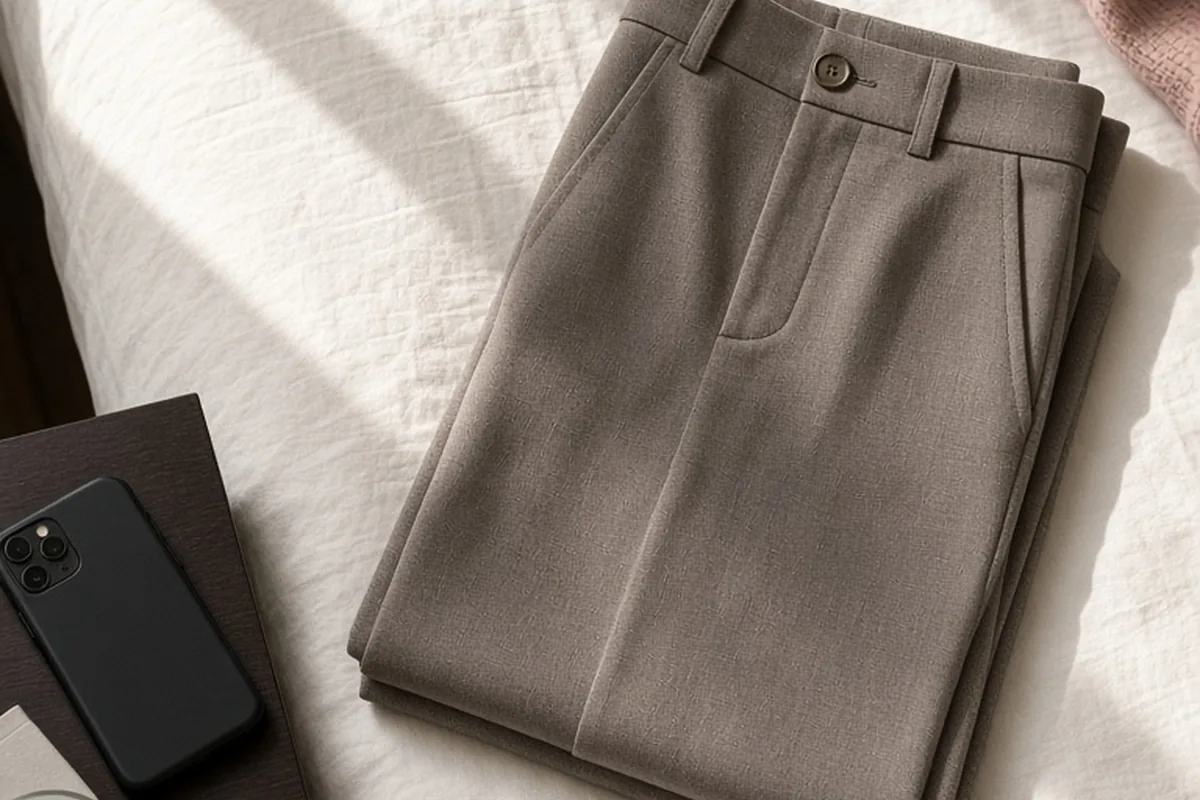
To choose women's trousers, determine your torso proportions to pick the right rise (high, mid, or low), select a leg silhouette that balances your frame, and check that the waistband lies flat without gapping or pinching. Prioritize natural or structured fabrics with minimal stretch for durability, and verify the inseam pairs well with your intended footwear before purchasing.
Finding a dependable pair of trousers often feels complicated because sizing, cuts, and materials vary significantly across different clothing brands. Approaching trouser shopping with an understanding of rise, fabric structure, and tailoring potential removes guesswork and helps you select pieces that offer both physical comfort and lasting utility.
Determining the Ideal Rise for Your Torso and Movement
The rise of a trouser measures the distance from the middle of the crotch seam up to the top of the waistband. Choosing the correct rise depends largely on your vertical torso proportions and where you prefer garments to anchor on your midsection. High-rise trousers sit at or above the natural waist, which can provide a secure feel and elongate the appearance of the lower body. Mid-rise trousers sit just below the navel, offering a versatile balance that accommodates both short and long torsos without bunching. Low-rise trousers sit across the hip bones, which can reduce pressure on the stomach for individuals who experience discomfort from high waistbands while seated.
To identify what suits your daily habits, test the rise while moving through typical activities rather than standing still in front of a mirror. When you sit down, a rise that is too short will pull uncomfortably tight in the seat and crotch, creating tension lines known as whiskering. Conversely, a rise that is too long will bunch and fold excess fabric across the lower abdomen when seated. A practical guideline is to measure the front and back rise of your most comfortable existing trousers and use those numbers as a benchmark when comparing new styles.
Selecting a Leg Silhouette Based on Function and Proportions
Trouser silhouettes dictate how fabric falls around the thighs, knees, and ankles, influencing both visual balance and ease of movement. Straight-leg trousers maintain a consistent width from the hip to the hem, making them an adaptable baseline style that works with nearly any footwear, from flat sneakers to pointed-toe boots. Wide-leg trousers fall straight or flare subtly from the widest point of the hip, offering generous room through the thigh and creating a fluid line that drapes cleanly over structured shoes.
Tapered or cigarette trousers narrow gradually toward the ankle, which keeps the hem clear of the ground and works well in active professional settings where long hems might drag. Bootcut and flared trousers fit closer through the thigh before widening slightly below the knee, balancing broader shoulders or chunkier footwear. When deciding on a cut, consider how you intend to style the top half of your outfit. Voluminous trousers often pair best with fitted or tucked shirts to prevent the outfit from overwhelming your frame, whereas narrower trousers easily accommodate oversized knitwear and relaxed blazers.
Evaluating Fabric Composition, Weight, and Drape
The fiber content and weave of a trouser dictate its breathability, wrinkle resistance, and overall shape retention throughout the day. Wool and wool-blend fabrics offer natural temperature regulation, hold crisp pressed creases, and drape smoothly over the body without clinging. Medium-weight cotton twill provides structure and durable utility for casual or creative work environments, though it will naturally soften and show subtle creasing over hours of wear. Linen is exceptionally lightweight and breathable for warm weather, but its looser weave yields a more relaxed look that wrinkles almost immediately.
Synthetic blends containing polyester, rayon, and viscose often resist wrinkles and deliver a fluid, heavy drape that works well for wide-leg tailored trousers. Pay close attention to elastane or spandex content: trousers with one to two percent elastane provide slight mechanical give for sitting and walking while retaining their shape, whereas blends with five percent or more stretch can bag out at the knees and seat by midday. If you need a pair for long workdays or travel, prioritize tightly woven fabrics that recover quickly when crushed in your hand for several seconds.
Checking Critical Fit Zones: Waist, Hips, and Seat
When trying on trousers, the hip measurement is the most critical checkpoint because it represents the widest area of the garment. If trousers fit in the waist but pull tightly across the hips, side pockets will flare open and horizontal stress wrinkles will form across the front. To avoid this, always choose the size that accommodates your hip and thigh measurements comfortably, and plan to take in the waistband if there is a gap at the back.
The waistband should sit firmly against your body without digging into your skin or requiring a tightly pulled belt to stay in place. Check the rear view to ensure the back rise covers your lower back fully when bending over or sitting on a chair. A well-fitted seat will skim smoothly over your underwear line without sagging underneath the glutes or cutting inward. If you notice diagonal pulling from the crotch toward the outer hip seams, the cut lacks sufficient curve for your pelvic structure, meaning a different cut or brand will likely serve you better.
Coordinating Inseam Lengths with Your Footwear
The break of a trouser refers to the fold or bend that occurs in the fabric where the hem meets your shoe. Selecting an inseam length requires deciding in advance what type of footwear you will wear most frequently with the trousers. A full break occurs when the hem rests generously on the top of the shoe, creating a deep fold; this is common in wide-leg trousers designed to be worn with heels or platform shoes. A slight or medium break creates a gentle rest on the shoe vamp, providing a classic tailored look suitable for loafers, oxfords, and low heels.
Cropped and no-break trousers finish just above the ankle bone or graze the top of the shoe without folding. This style eliminates the risk of hems dragging in wet weather and transitions easily between flat shoes, ankle boots, and athletic footwear. A common pitfall is purchasing trousers with the expectation that one hem length will work seamlessly across both high heels and flat sandals. Unless the trouser features an adjustable cuff, you will generally achieve the cleanest look by dedicating specific trousers to specific heel heights.
Understanding Alteration Potential and Structural Limits
Knowing which elements of a trouser can be tailored enables you to buy with confidence, even when an off-the-rack garment is not completely perfect. Shortening or lengthening a hem is the simplest and least expensive alteration, provided there is enough folded fabric in the internal hem allowance. Taking in the waist by one to two inches is also straightforward for a tailor, as long as the waistband does not feature complex elastication, heavy topstitching, or rear pocket placements that would distort.
Conversely, certain structural alterations are difficult, costly, or practically impossible to execute cleanly. Adjusting the crotch depth or changing the front rise requires deconstructing the entire central seam and waistband, which often ruins the proportions of the garment. Similarly, letting out the hips or thighs is only possible if the manufacturer left generous internal seam allowances, which is rare in mass-produced clothing. When assessing a pair on the rack, make sure the crotch, rise, and hip areas fit well immediately, leaving only the hem and waist circumference for tailoring.
Assessing Pocket Construction, Hardware, and Care Demands
Functional details significantly impact how practical a pair of trousers will be in daily life. Look closely at the pockets: slanted slash pockets allow easy access but are prone to gaping if the hip fit is snug, whereas vertical side-seam pockets offer a cleaner line but can be less accessible. Deep welt pockets on the rear add structure, while sewn-shut or faux pockets reduce bulk around the hips at the expense of storage. Check the closure hardware to ensure zippers run smoothly without catching and that internal anchor buttons or hook-and-bar closures stay secure under light tension.
Finally, review the garment care label before making a purchase to match the trousers with your lifestyle and maintenance routine. Trousers made from delicate wools or structured suiting fabrics often require dry cleaning or gentle steaming to preserve their shape and lining. If you prefer low-maintenance daily wear, choose machine-washable cotton blends, linen-viscose mixes, or technical ponte knits that can be hung to dry with minimal ironing. Factoring in care demands prevents high-maintenance pieces from sitting unworn in your wardrobe.
Frequently asked questions
How do I stop trousers from gaping at the back of the waist?
A back-waist gap occurs when trousers fit your hips but are too large for your waist circumference. You can resolve this cleanly by having a tailor take in the center back seam, or by looking for styles with internal waist adjusters or contoured waistbands designed for curved proportions.
What is the most versatile trouser style for both casual and work settings?
A mid-rise, straight-leg trouser in a neutral mid-weight fabric such as cotton twill or a wool-viscose blend offers the highest versatility. It pairs naturally with casual sneakers and t-shirts as well as structured blazers and professional footwear.
How should trouser pockets look when standing naturally?
Pockets should lie completely flat against the fabric of the trouser without pulling, flaring, or exposing the pocket lining. If the pockets pull open while you stand relaxed, the trousers are too tight across the hips or thighs and you should try the next size up.
Can I wear the same pair of trousers with flats and high heels?
Wide-leg and straight-leg trousers tailored for heels will generally drag on the ground when worn with flats, while trousers hemmed for flats may look awkwardly short with high heels. Cropped, ankle-length trousers are the main exception, as their hem sits safely above the shoe line regardless of heel height.
Your next step
Measure the rise, waist, and inseam of your best-fitting pair of pants at home, and use those precise dimensions as your guide when evaluating new trousers online or in fitting rooms.