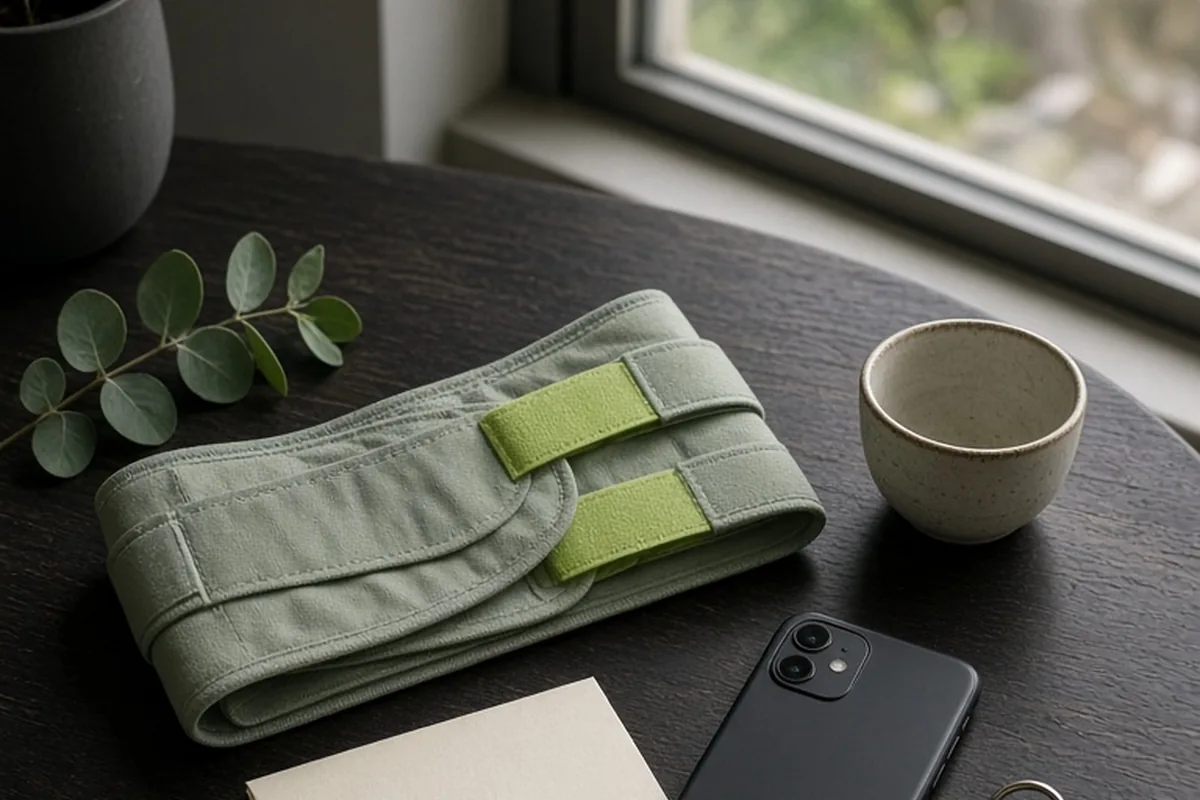
To wear a maternity belt, center the widest support pad low across your lower back, then wrap the main elastic band underneath your belly rather than across it. Fasten the base closure so it gently cradles and lifts your abdomen. Finally, pull any secondary side tension straps forward to secure a snug, supportive fit that allows you to breathe and move freely.
As your center of gravity shifts during pregnancy, carrying extra weight in the front puts new demands on your abdominal wall, lower back, and pelvic joints. A maternity support belt acts as a temporary external cradle, redistributing weight and reducing muscular fatigue during active hours of your day.
Finding the Correct Position Under the Belly
The most critical aspect of putting on a maternity belt is placing it low enough on your torso. The front band must sit directly beneath the curve of your baby bump, resting gently against your pubic bone and lower pelvis. When positioned correctly, the belt creates an upward and inward shelf that lifts the weight off your pelvic floor. If the strap sits across the middle of your stomach, it compresses your bump rather than supporting it, which can cause abdominal discomfort, restricted breathing, and unwanted downward pressure.
At the back, the wide panel should sit low across your sacrum and the upper portion of your buttocks rather than resting high on your natural waist. This lower placement stabilizes the sacroiliac joints, which often become mobile and tender due to pregnancy hormones like relaxin. For example, if you stand sideways in front of a mirror, the belt should form a gentle diagonal line: lower in the front under your bump and slightly higher across your lower lumbar and sacral region. Taking a moment to verify this angle ensures the band transfers weight through your skeletal frame instead of soft abdominal tissues.
Step-by-Step Instructions for Standard Maternity Belts
Putting on a standard two-piece or three-piece maternity belt is easiest while standing or semi-reclining. Begin by unfastening all auxiliary side straps so the main band is completely relaxed. Position the back support pad against your lower spine, holding each end of the primary band in your hands. Pull the ends forward, wrap them under your lower abdomen, and press the hook-and-loop fasteners together at your preferred snugness. You want a foundation that stays in place without pinching your hips or restricting blood flow.
Once the base strap is secure, reach back for the secondary tension straps located on each side of the back panel. Grasp both straps simultaneously and pull them forward with equal force, attaching them to the front of the main band. Using equal tension on both sides keeps the back panel centered and prevents uneven pulling on your spine. If your support system includes an optional upper stabilization strap, drape it lightly over the top curve of your bump to keep the unit from sliding downward as you walk, taking care never to cinch this top strap tightly.
Dialing in the Right Tension and Tightness
A maternity belt should provide gentle, reassuring compression similar to a supportive sports bra, not rigid constriction like a corset. A practical way to test your tension is the two-finger check: after fastening the belt, slide two fingers flat between the band and your lower abdomen. If you cannot slide your fingers in without forcing them, the belt is too tight and needs to be loosened. Conversely, if the belt shifts or sags when you take a few steps, it is too loose to offer functional support.
Pay close attention to how the belt feels during different physical tasks. What feels comfortable while standing upright may feel overly restrictive when you sit down, because the angle of your hips changes and pushes the belt deeper into your abdomen. When transitioning from a brisk walk to working at a desk, peel back the side tension straps to lessen the compression, or unfasten the belt entirely during long seated periods. The goal is supportive comfort that adapts to your movement, never pain or numbness in your legs, hips, or lower stomach.
Managing Wear Time Throughout the Day
While a maternity belt provides relief during strenuous activities, it is designed for intermittent use rather than all-day wear. Wearing an external support device continuously can cause your deep core and postural muscles to become reliant on the brace, potentially weakening the natural muscular stability you need during late pregnancy and postpartum recovery. A practical guideline is to wear the belt for periods of two to four hours at a time, specifically when you expect to be active.
Reserve your belt for activities that trigger fatigue or pelvic ache, such as grocery shopping, cooking, going for walks, or working on your feet. When you sit down to rest, read, or relax on the couch, take the belt off so your muscles can work naturally and your circulation remains completely unimpeded. Never wear a maternity belt while sleeping; when lying down, gravity naturally relieves the downward pressure on your pelvis, making external mechanical support unnecessary and potentially uncomfortable.
Layering Over Clothing and Protecting Sensitive Skin
Direct contact between a maternity belt and bare skin can lead to irritation, friction, and excess sweating, especially since skin tends to be more sensitive during pregnancy. For the best comfort, wear the support belt over a soft, breathable base layer, such as a fitted cotton tank top, a seamless maternity camisole, or high-waisted maternity leggings. This fabric layer absorbs moisture, cushions the edges of the elastic, and prevents the rough hook-and-loop fasteners from scratching your skin.
Layering also simplifies daily routines like using the bathroom. If you place the belt over a base camisole but beneath your outer blouse, you can lower your maternity pants or skirt without having to take off and readjust the entire support band every time you visit the restroom. When laundering your belt, always fasten the hook-and-loop closures to prevent them from snagging on other garments, and air-dry the band to preserve the elasticity of the synthetic fibers.
Troubleshooting Common Fit and Comfort Issues
Even with careful placement, you might encounter minor fit challenges as your body shape changes from week to week. If your belt frequently rides up toward your waistline, it is usually because the main strap is fastened too high on your stomach or the back panel is positioned too high on your spine. To fix this, loosen the entire belt, lower the back panel so it covers the top of your glutes, and re-fasten the front band across your pelvic bone so your bump holds it downward in place.
If you experience pinching near the front of your hip bones, the belt may be slightly too narrow for your frame or the side tension straps are pulled too tightly. Loosening the side pulls allows the front cradle to distribute pressure across a broader surface area. Additionally, if you notice an urgent sensation of bladder pressure shortly after putting on the belt, the strap is likely pulling inward instead of lifting upward. Angle the front closure slightly more upward to encourage a lifting motion rather than direct horizontal compression.
Recognizing When to Consult a Healthcare Professional
Maternity belts are helpful tools for managing everyday postural fatigue, mild lower back ache, and general heaviness, but they are not a cure-all for complex clinical conditions. If you experience sharp, shooting pain in your pubic bone, groin, or hips that makes walking or climbing stairs difficult, mention this to your OB-GYN, midwife, or a pelvic floor physical therapist. Conditions such as severe symphysis pubis dysfunction or sacroiliac joint dysfunction may require a specialized pelvic compression brace rather than a standard maternity belly band.
Furthermore, if wearing a support band triggers uterine cramping, sharp abdominal pain, shortness of breath, dizziness, or swelling in your legs, take the belt off immediately and contact your healthcare provider. A physical therapist can also observe you putting on the belt to ensure the fit matches your specific anatomy, and they can provide targeted exercises to strengthen your glutes, back, and transverse abdominis alongside belt usage.
Frequently asked questions
Can I wear a maternity belt while sitting down at work?
You can wear a maternity belt while seated, but you should loosen the side tension straps to prevent the band from pressing too firmly into your lower abdomen. If you experience any pinching, numbness, or breathing restriction while sitting, unfasten the belt and put it back on when you stand up.
How tight should a maternity support band feel?
A maternity band should feel snug and supportive, similar to a gentle upward lift, without creating rigid pressure. You should always be able to slide two fingers comfortably between the band and your body while breathing normally.
When in pregnancy can I start using a maternity belt?
Most people start using a maternity belt during the late second or early third trimester, typically between weeks twenty and twenty-eight, when the belly begins to noticeably shift posture. However, you can begin using one whenever you notice mild lower back strain or pelvic heaviness during daily movement.
Is it safe to wear a maternity belt all day long?
It is best to limit wear time to two to four hours per session during active tasks like walking, standing, or doing chores. Continuous all-day wear can cause your core and back muscles to rely on the external brace rather than supporting your body on their own.
Your next step
Put on a light cotton base layer, stand in front of a mirror, and practice fastening your maternity belt low under your bump with gentle, balanced tension before heading out for your next walk or active chore.