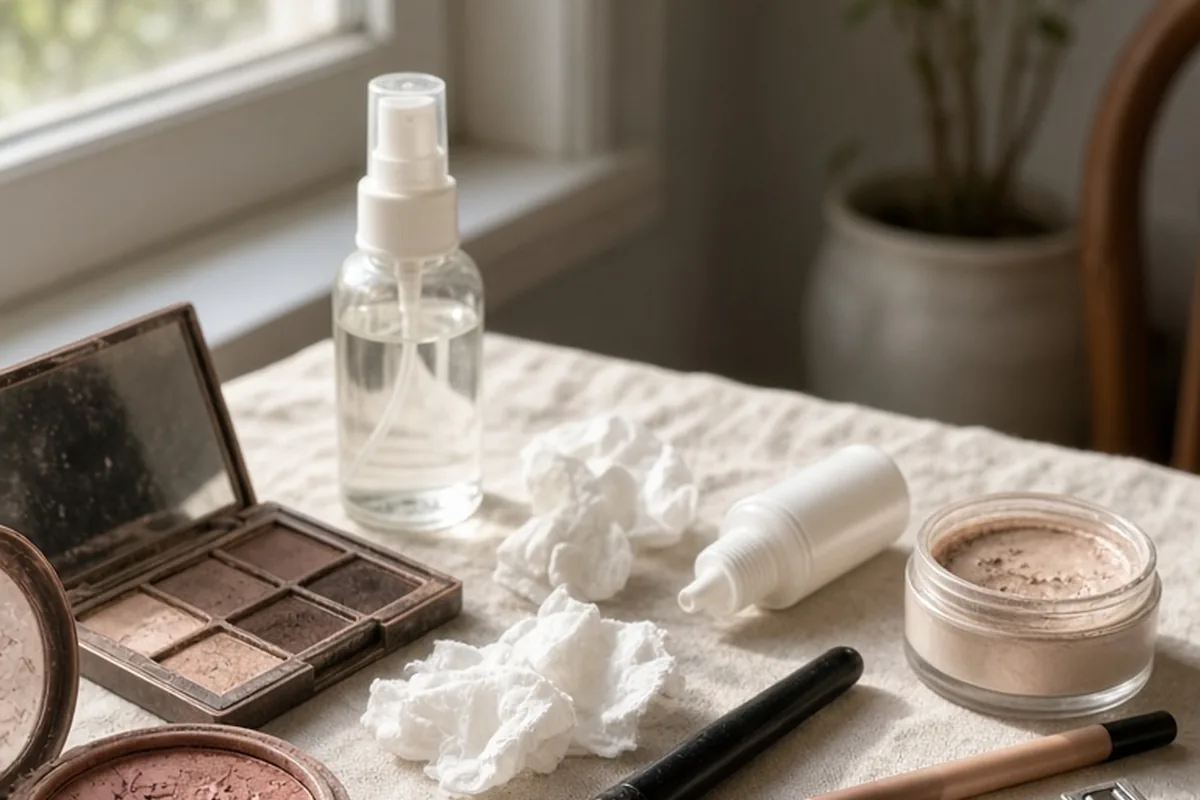
To clean makeup products safely, mist pressed powders and bullet lipsticks with 70 percent isopropyl alcohol and allow them to air-dry completely. Wipe down bottle nozzles, compact rims, and pencil sharpeners with alcohol-dampened cloths. Sharpen wooden pencils before use to expose a fresh layer, and use clean spatulas for cream jars instead of your fingers. Never add water, alcohol, or other liquids directly inside liquid formulas or mascara tubes.
Cosmetic products accumulate oils, dead skin cells, and airborne debris over time, especially when applied with fingers or stored in humid bathrooms. Establishing a practical routine to sanitize your cosmetic pans, sticks, and containers preserves product performance, prevents hard pan buildup, and reduces the transfer of unwanted microbes back onto your complexion.
Sanitizing Pressed Powders and Eyeshadow Palettes
Pressed powders, blushes, bronzers, and eyeshadow palettes frequently collect natural facial sebum transferred from brushes and sponges. When these oils mix with powder pigments, they form a hardened, glassy glaze known as hard pan, which prevents brushes from picking up color evenly. To clean these surfaces, first take a clean, dry spoolie or a clean butter knife and gently scrape away the hardened top layer of pigment over a wastebasket. Once the hardened crust is removed, hold a spray bottle filled with 70 percent isopropyl alcohol approximately six to eight inches away from the palette and mist the surface lightly. Ensure the powder is evenly dampened without becoming completely soaked or flooded.
Allow the alcohol to evaporate naturally in a well-ventilated space with the palette lid open for at least ten to fifteen minutes before closing or using it. The alcohol sanitizes the surface and evaporates cleanly without altering the color payoff or binder balance of the cosmetic formula. Never use water, bleach, or cleaning sprays on pressed powders, as water does not sanitize, dissolves powder binders, and introduces moisture that can encourage mold growth within the compact. Cleaning your powder pans once every two to four weeks maintains pigment purity and keeps the top layer workable.
Disinfecting Bullet Lipsticks, Cream Sticks, and Potted Formulas
Solid cream products like bullet lipsticks, stick foundations, and contour sticks come into direct contact with the lips and skin, making them prone to trapping moisture and bacteria. To clean a bullet lipstick or cream stick, twist the product up slightly and use a clean tissue or lint-free cotton round to gently wipe away the outermost exposed layer of product. Next, pour a small amount of 70 percent isopropyl alcohol into a small cup and submerge the exposed tip for fifteen to thirty seconds, or spray the entire exposed bullet thoroughly with your alcohol mist. Wipe the plastic twist-up barrel with an alcohol wipe to remove sticky residue, and let the product air-dry thoroughly before winding it back down and replacing the cap.
Potted cream products, such as cream blushes, gel eyeliners, and potted concealers, require a slightly different approach because saturating them can compromise their creamy consistency. Wipe the top surface gently with a clean tissue to remove settled dust and facial oils, then lightly spritz an alcohol-dampened cotton pad and tap it across the surface rather than spraying liquid directly into the pot. Moving forward, avoid dipping bare fingers or used makeup brushes directly into open jars. Using a sanitized stainless steel makeup spatula to scoop out a small portion onto a palette keeps the remaining product hygienic and free from repetitive contamination.
Maintaining Liquid Foundations, Pumps, and Dropper Bottles
Liquid foundation bottles, pump concealers, and liquid highlighter dispensers frequently develop a buildup of dried, oxidized makeup around the nozzle, cap threading, and dispenser tip. This crusted buildup attracts bathroom dust and can harbor microbes that contaminate freshly pumped product. To clean these containers, dampen a cotton pad or microfiber cloth with 70 percent isopropyl alcohol and thoroughly wipe down the exterior pump nozzle, the neck of the bottle, and the interior grooves of the protective cap. If a pump mechanism becomes clogged with dried formula, remove the pump mechanism from the bottle, pump warm soapy water through it until it runs clear, rinse it with alcohol, and allow it to dry completely before reattaching it.
While cleaning the exterior and dispensing mechanism is vital, you should never pour alcohol, water, micellar water, or any other fluid directly inside a liquid foundation or concealer bottle. Adding outside liquids dilutes the preservative system formulated by the manufacturer, disrupts the chemical emulsion, and can cause the foundation to separate permanently or spoil prematurely. For liquid foundations that utilize glass dropper dispensers, practice proper application hygiene by never touching the glass dropper directly to your skin or fingertips. Dispense the liquid directly onto the back of a clean hand, a metal mixing palette, or a clean brush without allowing the dropper tip to make physical contact with any surface.
Sanitizing Eye Pencils, Lip Liners, and Makeup Sharpeners
Traditional wooden pencil liners for eyes and lips are among the easiest cosmetic items to keep sanitary because regular sharpening physically removes the exposed surface. Before applying an eye pencil or lip liner, sharpen it using a clean cosmetic sharpener to shave away the previous layer and reveal a sterile core of pigment. For plastic twist-up mechanical pencils that cannot be sharpened, gently wipe the exposed tip with a cotton pad moistened with 70 percent isopropyl alcohol, and wipe down the exterior plastic casing to eliminate accumulated oils.
Cosmetic sharpeners themselves often become heavily coated with waxy pigment shavings and skin oils, turning them into a potential source of cross-contamination if left uncleaned. To sanitize your sharpener, empty all pencil shavings into the trash and use an old, clean toothbrush or a cotton swab dipped in isopropyl alcohol to scrub away wax buildup from the metal blade and interior plastic casing. If your sharpener has a removable casing, wash it with warm water and antibacterial dish soap, making sure to dry the metal blade completely with a paper towel immediately afterward to prevent rust from forming on the cutting edge.
Selecting the Right Alcohol Strength and Cleaning Supplies
Choosing the correct grade of rubbing alcohol is essential for effectively sanitizing makeup without ruining delicate formulas. Standard 70 percent isopropyl alcohol is the industry standard for cosmetic sanitization because it contains thirty percent purified water, which slows down the rate of evaporation and allows the alcohol to penetrate microbial cell walls effectively. Higher concentrations, such as 91 percent or 99 percent isopropyl alcohol, flash-evaporate too rapidly to achieve adequate contact time and can cause powder binders to dry out or crack, while lower concentrations do not have sufficient potency to disinfect properly.
Assemble a dedicated cosmetic cleaning kit to make regular sanitation quick and convenient. Essential items include a fine-mist spray bottle for controlled alcohol distribution, lint-free microfiber cloths to wipe down compacts without leaving fibers behind, cotton swabs for tight crevices, and stainless steel cosmetic spatulas for scooping cream products. Avoid using coarse paper towels on delicate cosmetic surfaces, as paper fibers can shed into cream formulas and scratch delicate compact mirrors or glossy acrylic packaging.
Wiping Down Compacts, Palettes, and Outer Packaging
The exterior surfaces of cosmetic palettes, mirrored compacts, and storage drawers collect makeup dust, fingerprint oils, and environmental grime that easily transfer back to your clean hands during application. For plastic, acrylic, and metal compacts, wipe down the exterior shells, mirrored lids, and clasps using a microfiber cloth dampened with micellar water or rubbing alcohol. For stubborn, rubberized packaging materials that tend to become sticky over time, gently buff the surface with a small amount of isopropyl alcohol on a cotton pad to dissolve adhesive residue and restore a smooth finish.
When cleaning cardboard or paper-based palettes, exercise extra caution to prevent structural damage. Cardboard packaging absorbs moisture quickly, which can warp the casing and loosen the magnetic or glued pans inside. To clean cardboard palettes, use a barely damp microfiber cloth or a dry microfiber cloth combined with a soft, clean dusting brush to sweep away loose powder fallout around the pan wells without saturating the surrounding paper borders.
Distinguishing Dirty Makeup from Spoiled or Expired Products
Cleaning and sanitizing can extend the usability of cosmetics, but it cannot restore products that have reached the end of their functional lifespan or suffered bacterial spoilage. Inspect your collection regularly for telltale signs of expiration, such as a sharp, rancid, or crayon-like odor in lipsticks and foundations, unusual color shifts, or permanent liquid separation that does not blend back together after shaking. Cream products that develop a gritty, gummy, or unusually dry texture, as well as powders that develop unusual spotting, should be discarded rather than cleaned.
Certain cosmetic categories, particularly liquid mascaras and liquid eyeliners with built-in brush wands, cannot be cleaned or sanitized safely. Pumping the wand in and out of the tube introduces air and bacteria directly into the formula, and attempting to wash or spray the wand with alcohol introduces chemical irritants that risk damaging your eyes. Replace mascara and liquid eye liners every three to six months, and discard them immediately if you have experienced an active eye infection like conjunctivitis, as sanitization cannot guarantee the eradication of ocular pathogens from moist liquid formulas.
Frequently asked questions
Can I use 91 percent or 99 percent alcohol to clean my makeup?
It is better to stick with 70 percent isopropyl alcohol because higher concentrations evaporate too quickly to sanitize effectively. The water content in a 70 percent solution allows it to break down microbial walls before drying, and it is gentler on cosmetic binders.
How often should I clean and sanitize my makeup collection?
Wipe down frequently used packaging and pencil sharpeners weekly, and mist pressed powders and bullet lipsticks every two to four weeks. If you have recently recovered from a cold sore or skin breakout, sanitize all relevant contact products immediately.
Can I clean the inside of my mascara tube with alcohol?
No, you should never attempt to sanitize the inside of a mascara tube or wash the wand with alcohol. Introducing chemicals into mascara creates a severe risk of eye irritation, and the closed, moist environment cannot be sanitized once contaminated.
How do I fix hard pan on pressed powders without ruining the palette?
Gently press a strip of clear packing tape or a clean spoolie across the shiny, hardened area to lift away the surface oil buildup. Once the loose layer is cleared, lightly mist the pan with 70 percent isopropyl alcohol and allow it to dry completely.
Your next step
Take ten minutes today to assemble a dedicated sanitizing kit with 70 percent isopropyl alcohol, a fine-mist spray bottle, and clean cotton rounds, then mist your most frequently used powder palettes and bullet lipsticks to keep your routine hygienic and fresh.