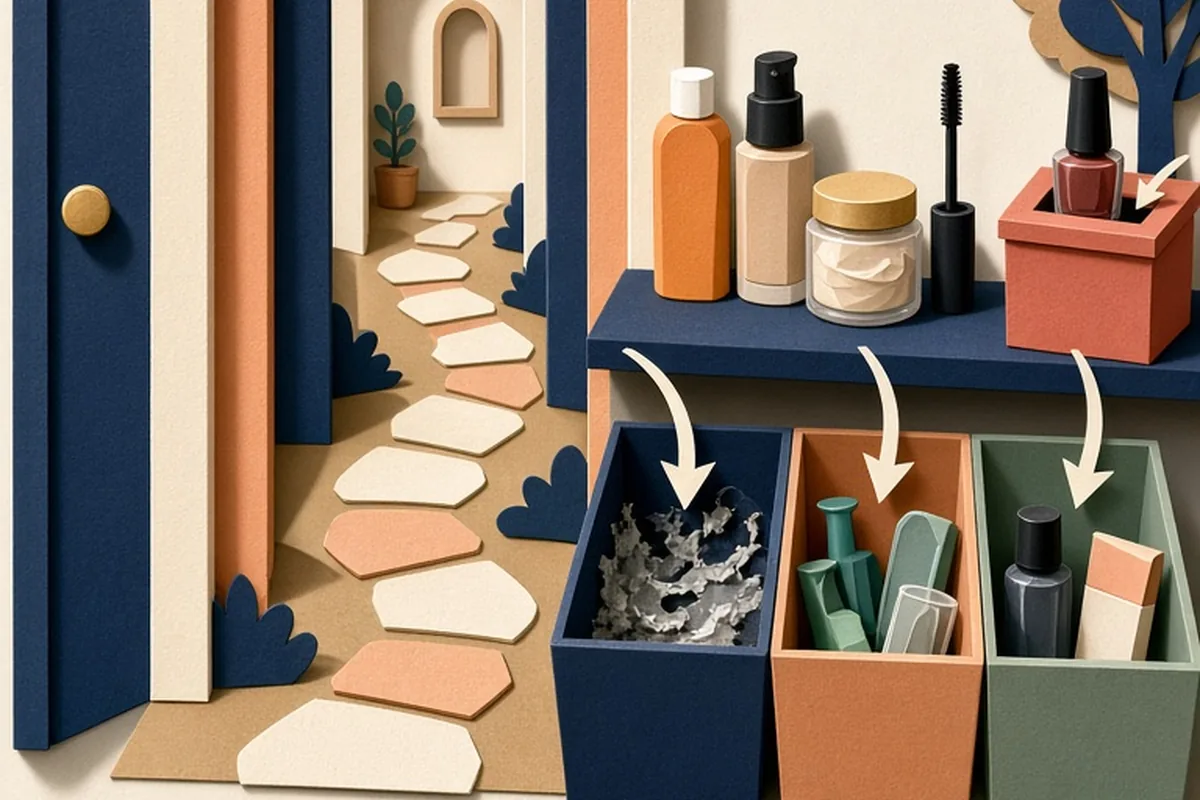
To dispose of old cosmetics and lotions properly, scrape leftover formulas into the household trash instead of washing them down the drain, where oils and chemicals can disrupt waterways. Once empty, clean the containers and sort them by material. Place eligible glass and rigid plastics in curbside bins, bring hazardous items like nail polish to a municipal facility, and take complex multi-material packaging to specialized beauty recycling drop-offs.
Most personal care collections eventually accumulate expired sunscreens, separated foundations, half-used moisturizers, and dried mascaras. Clearing out these cluttered vanity drawers requires more thought than tossing full bottles into the nearest bin or rinsing goop down the sink. Understanding the distinct disposal paths for chemical formulas and their packaging protects both plumbing systems and natural ecosystems while keeping recyclable materials out of municipal landfills.
Why Rinsing Beauty Products Down the Drain Causes Harm
Emptying expired lotions, thick face creams, liquid foundations, and cleansing oils down the sink or toilet might seem like the quickest way to clean out bottles, but municipal wastewater systems are not designed to process these dense chemical mixtures. Skincare and makeup formulas frequently contain concentrated silicone polymers, mineral waxes, heavy plant butters, and synthetic thickeners. When these substances hit cooler water inside household plumbing, they tend to congeal and coat the interior walls of pipes. Over time, these residues trap hair, lint, and food particles, creating stubborn, water-resistant blockages that can lead to expensive plumbing backups and structural pipe damage.
Beyond residential plumbing, washing cosmetic chemicals into municipal drains creates serious challenges for regional water treatment plants. Many everyday personal care items include persistent synthetic preservatives, synthetic fragrances, chemical ultraviolet filters, and microplastic glitters that water filtration systems cannot completely capture. As treated wastewater returns to local rivers, lakes, and coastal estuaries, these residual compounds enter natural aquatic environments. The trade-off is straightforward: while placing leftover bulk product into the standard household trash directs organic and synthetic residues to a modern landfill, lined landfills are specifically engineered to contain and isolate viscous chemical waste far better than open aquatic systems.
Step-by-Step Separation for Lotions, Creams, and Makeup
The first step in responsible disposal is mechanically separating the cosmetic formula from its outer packaging. For flexible plastic squeeze tubes that held hand cream, toothpaste, or face wash, take a pair of household utility scissors and cut the tube horizontally across the middle. This cut exposes the trapped product inside the top and bottom halves. Use a reusable silicone scraper, an old butter knife, or a dry paper towel to scoop the remaining cream out of the vessel and deposit it directly into your general household trash bag.
Once you have removed the bulk of the formula, clean the remaining film from the container before attempting to recycle it. Soak the opened halves or jars in a bowl of warm, soapy water for several minutes to lift lingering oil bases, then wipe them dry with a cloth. Avoid running hot water continuously over greasy bottles, as this wastes fresh water and sends loosened oils straight into your pipes. Municipal recycling processors require packaging to be clean and dry; a jar coated in sticky body butter or stubborn pigmented concealer will be flagged as a contaminant and sent directly to the incinerator or landfill.
Handling Hazardous Formulas: Nail Polish, Removers, and Aerosols
Not all cosmetic formulations can go into the standard trash bin. Solvent-based beauty products, such as traditional nail enamels, liquid gel lacquers, acetone removers, and certain concentrated alcohol-based perfumes, are classified under municipal regulations as household hazardous waste. These items contain volatile organic compounds and highly flammable solvents that can ignite under pressure inside waste collection trucks or emit noxious fumes if crushed. Pouring nail polish or solvent removers down the drain is strictly prohibited in most municipalities because it corrodes pipes and introduces dangerous solvents into the public water supply.
To dispose of solvent-heavy cosmetics safely, contact your local municipal sanitation department to locate the nearest household hazardous waste depot or check for scheduled neighborhood collection events. Keep the bottles tightly sealed and transport them in an upright position. An exception exists for glass nail polish bottles that contain only a tiny, hardened residue: if the lacquer has cured into a completely solid, dry puck at the base with zero liquid remaining, the solvents have evaporated, and the solid glass bottle is generally accepted in regular household trash depending on local rules. Pressurized aerosol cans, such as dry shampoos and hairsprays, must be completely emptied through normal use before being placed in metal recycling bins, or taken to a hazardous waste facility if pressurized propellant remains trapped inside.
Navigating Packaging Materials: Plastics, Glass, and Mixed Components
Cosmetic packaging is notorious for using complex, layered materials that confuse municipal sorting facilities. Standard glass jars, amber dropper bottles, and clear beverage-style plastic bottles made from polyethylene terephthalate (PET number one) or high-density polyethylene (HDPE number two) are widely accepted in curbside recycling programs once emptied and rinsed. However, smaller plastic containers, dark black plastics, and tubes made from polypropylene (number five) or low-density polyethylene (number four) face limited regional acceptance, as automated optical sorting machines often struggle to detect small or heavily pigmented plastic pieces.
The greatest obstacle to curbside recycling is mixed-material packaging, such as lotion pump dispensers, compact cases, and mascara tubes. A typical lotion pump contains a plastic exterior housing, an internal metal spring, a rubber sealing gasket, and a rigid dip tube. Because these distinct materials are fused together, automated sorting plants cannot separate them, and the entire assembly will jam mechanical sorting gears. Always unscrew and discard mechanical pump heads, glass dropper tops fitted with rubber bulbs, and compact mirrors into the general waste bin unless you are utilizing a specialized beauty recycling service. Sorting components into pure, single-material streams protects the integrity of your curbside recycling bin.
Utilizing Retailer Take-Back and Specialized Mail-In Programs
To divert difficult-to-recycle cosmetic packaging away from municipal landfills, many beauty retailers and personal care brands partner with specialized waste management services to offer public take-back programs. These services operate dedicated collection bins placed inside retail storefronts, accepting challenging items that curbside programs reject, including twist-up lipstick mechanisms, mascara wands, flexible sheet mask pouches, small cosmetic sample tubes, and eyeshadow palettes with magnetic bases. These specialized recyclers manually sort the items, shred the rigid plastics, wash away chemical residues, and melt the polymers down into industrial pellets for manufacturing outdoor decking, park benches, and storage bins.
Participating effectively in a drop-off program requires following specific preparation protocols to maintain sanitary working conditions for collection staff. Never drop full, half-filled, or leaking containers into store drop boxes, as rotten lotions and leaking liquid eyeliners can spoil entire batches of collected materials. Ensure every item is emptied of product, quickly wiped clean, and completely dry before drop-off. For people living in rural areas without access to beauty retail stores, several cosmetic brands now provide prepaid mail-in recycling envelopes that allow customers to ship their clean, empty containers directly to central processing hubs.
Recognizing When a Product Has Truly Expired
Knowing when to discard a product prevents unnecessary waste while protecting your skin from bacterial contamination and irritation. Most cosmetic packaging features a standardized Period After Opening symbol, illustrated as a tiny open jar with a number and the letter M printed inside or beside it, such as six months, twelve months, or twenty-four months. This symbol represents the manufacturer-tested timeframe during which the preservative system remains stable and effective after the container's protective seal is initially broken. Products formulated with active medicinal ingredients, including broad-spectrum sunscreens and medicated acne treatments, will also display a legally mandated expiration date stamped into the crimp of the tube or bottom of the bottle.
Physical and sensory changes are clear indicators that a formula has degraded and should be discarded regardless of the printed date. If an oil-in-water emulsion separates into a watery puddle and thick curd that cannot be remixed with gentle shaking, the emulsifiers have failed. Similarly, rancid or sour odors, sudden texture changes from silky to grainy, and color shifts in foundations or serums indicate oxidation or microbial proliferation. Using degraded cosmetic products, especially around sensitive areas like the eyes, carries risks of contact dermatitis, clogged pores, and bacterial infections, making timely disposal the healthiest choice for your skin.
Conducting a Thoughtful Beauty Audit to Reduce Future Waste
The most sustainable way to manage cosmetic waste is to prevent product buildup before it starts by conducting regular, realistic audits of your personal care routine. A seasonal or biannual inventory allows you to assess which products you consistently reach for, which formulas triggered sensitivity, and which items were impulse purchases that duplicate shades you already own. When you open a new bottle of moisturizer, body lotion, or serum, use a fine permanent marker to write the opening month and year directly onto the base of the bottle to eliminate guesswork about its freshness down the road.
Before sending unexpired, surplus items to the landfill, explore responsible alternatives for products you simply do not use. Completely unopened, factory-sealed toiletries, body washes, shampoos, and facial care items that are well within their expiration dates are frequently welcomed by local mutual aid networks, community hygiene pantries, and women's shelters. If you have opened a pump-dispenser lotion that did not suit your preferences, the sanitary pump mechanism means you can safely pass the remainder to a friend or family member. For personal items that cannot be shared hygienically, such as potted lip balms or mascara, commit to using what you have completely before purchasing replacement formulas.
Frequently asked questions
Can I recycle cosmetic bottles with the caps and pumps still attached?
Simple screw-on plastic caps made from the exact same plastic resin as the bottle can often remain attached if local recycling guidelines permit. However, complex pump dispensers containing internal metal springs and rubber seals should always be removed and discarded in the trash to avoid jamming sorting machinery.
What should I do with expired sunscreen lotions?
Squeeze expired sunscreen into the general household trash rather than washing it down the drain, as chemical UV filters can disrupt aquatic ecosystems. Once the plastic tube or bottle is completely emptied and wiped clean, recycle the plastic container according to your local municipal guidelines or take it to a specialized beauty drop-off.
Is it safe to pour expired liquid perfume or body mist down the sink?
No, perfumes and body sprays contain concentrated alcohol carriers, aromatic oils, and synthetic fragrance compounds that should not enter household drains. You can bring them to a municipal household hazardous waste facility or allow small amounts to evaporate in a well-ventilated outdoor area onto an absorbent paper towel before placing the towel in the trash.
Are empty makeup compacts with glass mirrors curbside recyclable?
Standard compacts containing glued glass mirrors, metal hinge pins, and glued metal powder pans are not curbside recyclable because they combine multiple incompatible materials. You must either pry out the individual metal pans and mirror to recycle pure components separately, or take the whole compact to a dedicated cosmetic recycling drop-off box.
Your next step
Start your disposal process today by gathering your expired products, cutting open soft tubes to wipe formulas into the trash, and sorting clean glass and plastic bottles into your local recycling or beauty drop-off bins.