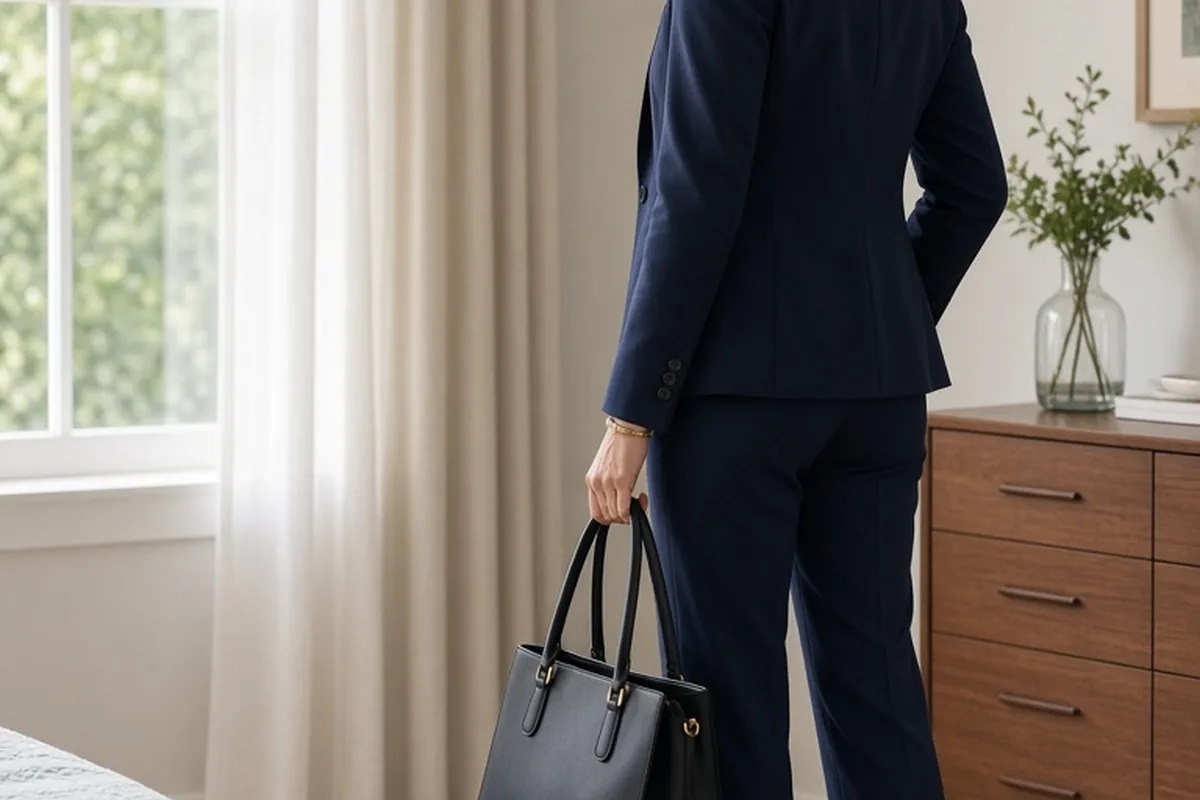
To dress appropriately for court as a woman, wear conservative, professional business attire that conveys respect for the legal proceedings. Good options include a tailored pantsuit, a modest knee-length dress with sleeves, or pressed slacks paired with a collared blouse or fine-gauge sweater. Stick to muted neutral colors such as navy, gray, black, or beige. Avoid denim, athletic wear, low necklines, short hemlines, loud patterns, and open-toed shoes.
A courtroom appearance carries high personal and legal stakes, making intentional self-presentation an essential part of preparing for your day in front of a judge. While legal facts determine the outcome of a case, clothing acts as immediate nonverbal communication, demonstrating your seriousness, maturity, and regard for the institution.
Core Wardrobe Formulas for Courtroom Attire
When selecting an outfit for court, building around proven business-formal or conservative business-casual templates eliminates guesswork. The strongest option is a classic pantsuit or skirt suit in a solid, understated shade. If a full suit feels too rigid or is unavailable in your closet, coordinated separates provide an equally respectful impression. A pair of tailored, straight-leg or wide-leg trousers paired with a button-up dress shirt and a structured blazer creates clean lines that look deliberate and composed.
Dresses are also suitable, provided they adhere to conservative proportions. Look for sheath, A-line, or wrap dresses made from structured fabrics that maintain their shape throughout hours of sitting. Hemlines should fall at or below the knee when standing. Remember that skirts naturally pull upward several inches when you sit at a counsel table or on gallery benches, so test your seated profile in front of a mirror before leaving home. Necklines should remain high and modest, such as boatnecks, crew necks, or collared styles, avoiding deep scoops or plunging V-necks.
Selecting Intentional Colors and Structural Fabrics
The courtroom environment is designed around impartiality, focus, and decorum, which means your clothing colors should recede rather than demand attention. Dark neutrals—such as charcoal gray, deep navy, black, and slate—are traditional staples because they project reliability and emotional restraint. Soft neutrals like camel, cream, taupe, and light gray also work well, especially for shirts, blouses, and knit layers. If you prefer color, restrict choices to muted tones like deep burgundy, forest green, or subtle French blue, while avoiding neon shades, metallics, and bright pastels.
Fabric selection is equally critical for both comfort and visual polish. Heavyweight, opaque materials like wool-blend gabardine, ponte knits, cotton twill, and structured linens drape cleanly and do not cling to the body. Thin, translucent, or stretchy synthetic fabrics can look casual and tend to wrinkle dramatically after forty minutes on a hard wooden bench. Check your chosen clothing under bright lighting to ensure sheer fabrics or unlined skirts do not reveal undergarments.
Footwear Selection and Navigating Courthouse Logistics
A typical day at court involves substantial walking across slick marble corridors, climbing wide staircases, waiting in line, and standing before a bench. Footwear must balance professional elegance with stability and absolute quiet. The gold standard is a closed-toe, closed-heel dress shoe in smooth leather, matte synthetic leather, or clean suede. Pointed or almond-toe flats, tailored horsebit loafers, and low block heels between one and two inches provide poise without risking a stumble or foot pain.
Avoid sky-high stilettos, casual sandals, espadrilles, combat boots, and athletic running shoes. Tall, narrow heels frequently produce sharp clicking noises on stone courthouse floors, which can be disruptive during proceedings. Additionally, ensure that your shoes are broken in to prevent limping or visible physical distress while moving through the building. Pair skirts and dresses with sheer or opaque hosiery in conservative tones, or wear thin dress socks that match your trousers.
Grooming, Hairstyles, and Restrained Accessories
Courtroom accessories and personal grooming should prioritize understated neatness. The objective is to keep the focus entirely on your testimony, demeanor, and legal matters rather than decorative distractions. Keep jewelry minimal: a delicate necklace, stud earrings, a simple wristwatch, and wedding bands or a modest ring are standard. Avoid stacked bangles, dangling charm bracelets, or large earrings that catch light or produce metallic jingles when you move your hands.
Hair should be styled neatly away from your face to prevent habitual fidgeting or hair-tucking when speaking under emotional pressure. Low chignons, smooth ponytails, French twists, or combed-back blowouts project calm preparation. Makeup is best kept natural and fresh, relying on neutral eye palettes, subtle mascara, and soft lip tints. Skip dramatic false eyelashes, heavy contouring, and glitter. Finally, omit strong perfumes or scented body lotions entirely; courtrooms are tightly enclosed spaces where concentrated fragrances can trigger discomfort or allergic reactions for court personnel and jurors.
Security Checkpoints and Courthouse Climate Control
Entering any municipal, county, or federal courthouse requires passing through security screening similar to airport protocols. Outfits with excessive metal components can delay your entry and add unnecessary tension to an already stressful morning. Heavy metal belt buckles, steel-shank boots, complex statement necklaces, and metal hairpins can set off metal detectors, requiring manual wanding or partial disrobing in front of waiting crowds. Choose belts with modest hardware and slip-on or easily unbuckled shoes.
Internal courthouse temperatures are famously unpredictable; older government buildings can shift rapidly from sweltering security foyers to freezing courtrooms with aggressive air conditioning. Layering is your best defense. A tailored blazer, a structured cardigan, or a fine-gauge merino sweater worn over a short-sleeved blouse allows you to adjust your body temperature while maintaining formal business coverage. Bring an organized, medium-sized handbag or tote rather than an overstuffed shoulder bag, keeping identification and legal documents easily accessible.
Adapting Your Look by Courtroom Role
While baseline standards of decency apply to every person entering a courthouse, your specific role in the proceeding influences subtle styling priorities. If you are a party to a civil suit, a family court petitioner, or a criminal defendant, your clothing should emphasize humility, respect, and emotional stability. Avoid displaying prominent luxury designer logos, flashy hardware, or extravagant fabrics that might inadvertently suggest indifference, vanity, or competing financial realities during hearings involving support, damages, or restitution.
If you are testifying as a professional or expert witness, your appearance should mirror executive business standards to reinforce your credibility, domain authority, and objectivity. Jurors and general gallery observers have slightly broader latitude, permitting clean, conservative business-casual clothing like neat dark slacks and a knit sweater. Even as a supporter or spectator, however, dressing casually in beachwear or athletic clothing risks drawing a reprimand from the bailiff or judge.
Common Wardrobe Pitfalls and Explicitly Prohibited Items
Most courthouses maintain written dress codes posted outside the building doors, and bailiffs possess broad discretion to bar entry or remove individuals whose clothing violates standards of decorum. Being denied entry because of inappropriate clothing can lead to missed calendar calls, default judgments, forfeited bonds, or contempt citations. Understanding what belongs strictly outside the courtroom protects your legal interests.
Leave casual weekend items at home regardless of weather conditions. The most common prohibited or heavily discouraged garments include:
Reviewing your outfit against local court guidelines forty-eight hours prior to your hearing ensures you have adequate time to replace questionable pieces with reliable conservative alternatives.
- Ripped, distressed, or acid-washed denim jeans.
- Athletic leggings, sweatpants, bike shorts, and yoga attire.
- Crop tops, halter tops, spaghetti-strap camisoles, and sheer chiffon tops without opaque camisoles.
- Hats, baseball caps, beanies, or sunglasses resting on the head, unless worn for recognized religious observance or documented medical requirements.
- Flip-flops, pool slides, plastic clogs, or worn athletic sneakers.
- Apparel displaying provocative slogans, profanity, political messages, or gang-affiliated symbols.
Illustrative Scenarios
Navigating a High-Stakes Family Court Hearing
Elena was preparing for an emotionally demanding custody modification hearing. Initially, she planned to wear a bright floral sundress and open-toed espadrilles, reasoning that the soft, colorful outfit would make her appear gentle, warm, and approachable to the family court evaluator. However, as she rehearsed her legal points, she realized the sundress felt better suited to a weekend garden party than a solemn legal room. She reconsidered and chose a tailored navy blazer, an ivory silk-blend shell, charcoal ankle trousers, and black leather pointed flats with minimal gold stud earrings. When she arrived, her composed, orderly attire reflected her calm focus and organizational readiness, helping her feel grounded rather than self-conscious while addressing the bench.
Key point: Opting for understated business structure over informal, mood-based clothing conveys preparedness and maturity in sensitive legal settings.
Selecting Practical Layers for an All-Day Civil Deposition
During a contentious property boundary dispute, Maya faced an all-day deposition in a municipal annex followed by a status hearing before a magistrate. She originally considered wearing an expensive, sharply cut designer dress with prominent metallic accessories to project wealth and power. Recognizing that ostentatious luxury could alienate opposing counsel and convey arrogance to the court, she pivoted to a classic dark-gray wool-blend pencil skirt, an opaque cream button-down, a structured black knit cardigan, and low leather block heels. The modest layers protected her against the annex's freezing climate control, and her understated presentation kept the focus squarely on her factual records and testimony rather than her wardrobe.
Key point: Conservative, comfortable garments keep attention on the facts of your case while shielding you from physical distractions like drafty rooms.
Frequently asked questions
Can I wear dark-wash jeans to court if I pair them with a blazer?
While dark, unripped jeans paired with a tailored jacket might be tolerated for traffic violations or informal clerk visits, they are risky for formal hearings, trials, or depositions. Many jurisdictions explicitly forbid denim inside the courtroom regardless of styling. It is always safer to substitute pressed slacks or chinos to avoid being turned away by the bailiff.
Are flat shoes acceptable for women in court, or are heels expected?
Polished, closed-toe flat shoes are completely acceptable and often preferred over high heels. Clean leather loafers, pointed-toe dress flats, and ballet flats with structured soles project professional respect without causing physical discomfort or loud clicking sounds on stone floors.
What should I wear if I do not own a suit and have a limited budget?
You do not need to purchase an expensive suit to meet courtroom standards. A clean, ironed pair of dark dress pants or a modest knee-length skirt paired with a neutral cardigan and a solid, collared blouse from a thrift store or discount retailer will serve you well. Cleanliness, proper fit, and modest coverage matter far more than brand names.
Is it permissible to wear a sleeveless dress or top in court during the summer?
Bare shoulders are generally considered inappropriate in most courtrooms and may violate formal judicial dress codes. If you wear a sleeveless dress or shell due to hot outdoor weather, bring a blazer, suit jacket, or structured cardigan to wear over it the entire time you are inside the courtroom.
Your next step
Inspect and assemble your complete outfit—including footwear, undergarments, and a warm layer—the evening before your appearance so you can arrive at security calm, composed, and ready.