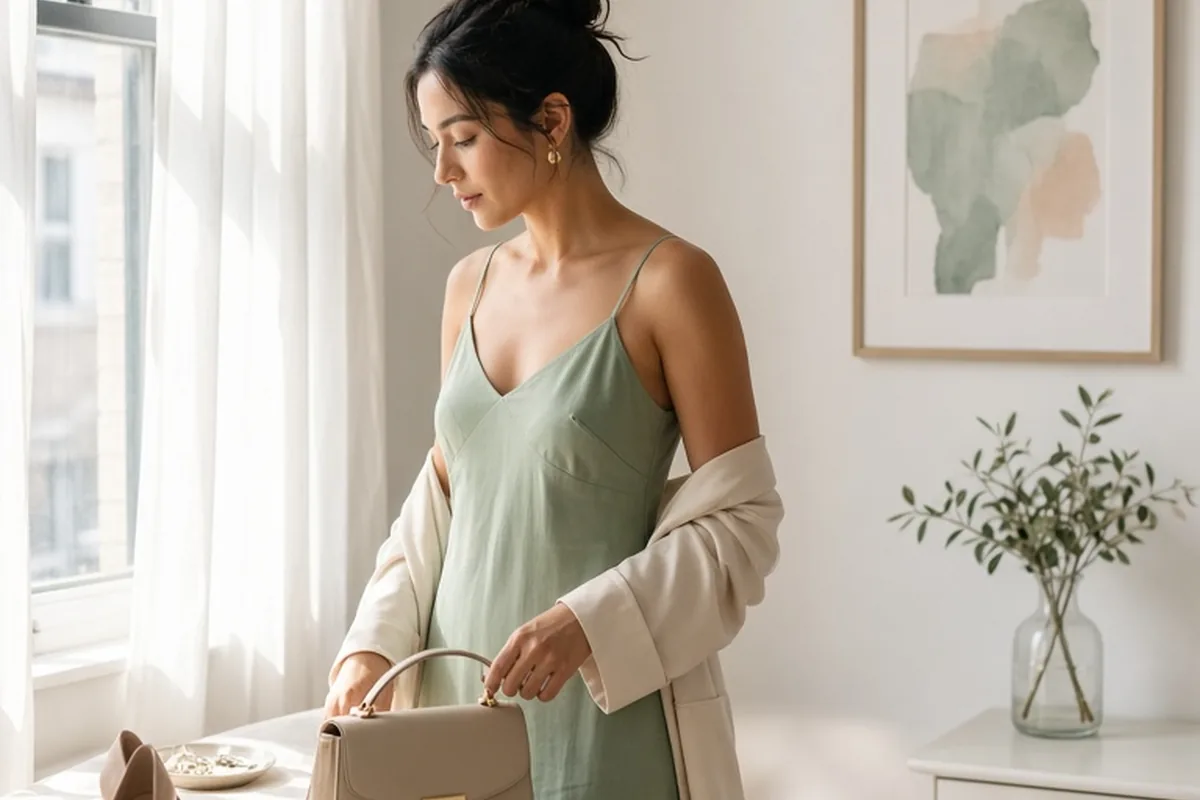
Dressing sexy is a skill you can build: choose clothes that fit well, use fabric and shape to create one clear focal point, and keep everything comfortable enough that you forget you are wearing it. Decide what sexy means to you, dress for the room you are actually in, and treat attraction as subjective rather than something an outfit can guarantee.
Most advice about dressing sexy skips the part that actually matters: you have to want to wear it. The guidance below is about building outfits you can move, sit, and breathe in, because that ease is what people tend to notice first, whatever your style happens to be.
Decide What Sexy Means to You Before You Buy Anything
Sexy is not one look, and treating it as one is why so many closets are full of clothes that never get worn. For one person it is a slip dress and heels; for another it is a tailored blazer over a plain tank, a leather jacket, a fitted knit, or a high-necked top that follows the body without clinging. Before you shop, write down three adjectives you want an outfit to communicate about you, such as sharp, soft, bold, warm, or understated. That list becomes a filter. Anything that misses all three is a costume, and costumes are hard to relax in.
Without your own definition, you default to whatever is being marketed that season, and marketing optimizes for selling, not for how you feel at 9 p.m. in a crowded restaurant. A useful exercise: picture three moments when you felt most like yourself, whether that was a party, a good date, or a photo you still like, and ask what those outfits had in common. Often it is not the amount of skin. It is proportion, a color you love, or a piece that felt like yours. Your definition can shift with mood and season, and that is not a flaw.
Fit Is Most of the Answer
If you fix only one thing, fix fit. A garment that sits correctly at the shoulders, waist, and hips reads as intentional, while the same garment in the wrong size reads as accidental, no matter what it cost. Checkpoints worth using: the shoulder seam should land near the edge of your shoulder; a waistband should not gap at the back or dig when you sit; a hem should look right both standing and seated. Bring the shoes you plan to wear, since heel height changes where a hem falls.
Tailoring is the most underused tool here. Taking in a waist, shortening a strap, or hemming a trouser by an inch can turn a piece from almost right into the one you reach for weekly. It costs money and time, so test the basics before you commit: sit, reach overhead, walk a few steps. The trade-off is real, because alterations usually make returns impossible. Confirm you like the fabric and the cut before you pay for changes, and walk away from anything that needs a tailor to fix a problem you noticed in the fitting room.
Let Fabric and Drape Carry the Effect
Fabric decides how a garment moves and where the eye lands. Silk, satin, and fine knits tend to skim and catch light, structured cotton and heavy denim hold a shape, and jersey follows the body closely, which is either exactly what you want or not at all. If you want a look that reads as sexy without showing much, a fluid fabric over a simple, well-fitted shape often does more than a tight garment in a stiff material.
Before you buy, hold the fabric up to a light source if sheerness would bother you, then repeat that check in daylight. Do a sit test to see how it creases or rides up, and walk a few steps to see whether it twists. The trade-offs are part of the price: delicate fabrics often need gentler washing or dry cleaning, and a fabric that drapes beautifully in winter can be miserable in July. An outfit you are physically uncomfortable in rarely reads the way you hoped it would.
Choose One Focal Point and Balance the Rest
Outfits tend to work when they have one clear focal point. If your legs are the focus, keep the top simpler. If it is your neckline, back, or shoulders, ground the bottom with a straighter line or a quieter shoe. The goal is direction, not modesty. When everything competes at once, the eye has nowhere to rest, and the look reads as busy rather than deliberate, which is a very different impression from the one most people are going for.
To choose, ask what you want someone to notice first and what you want to feel. Wanting to feel powerful might mean a strong shoulder and a clean line; wanting to feel soft might mean a wrap shape and a warm tone. Maximalism is not against the rules, since plenty of people wear layered, high-contrast looks beautifully, but it usually works best when it is chosen on purpose. Treat balance as a default, not a law.
Get the Foundations Right and Then Forget Them
Underneath is where outfits quietly succeed or fail. A bra that stays put without constant adjusting, underwear that does not ride, and a smooth line where you want one make everything above them look better. Small tools are worth owning: dress tape for a neckline that shifts, slip shorts for chafing, heel inserts, and a safety pin in your bag. None of it is glamorous, and it is often the difference between looking effortless and fidgeting all night.
The principle underneath is simple: discomfort distracts, and distraction is the opposite of the ease you are going for. When a strap digs in, your attention is on the strap, not on the conversation or the person across from you. That said, some discomfort is a trade you are allowed to make, like new shoes on a first wear or a fitted dress that asks for better posture. Ask whether the trade is worth it to you, not whether it is worth it in general, and if it is not, change the outfit.
Read the Room Without Losing Yourself
Context shapes what reads well. A fitted dress that feels perfect for a bar can feel off at a work dinner, and the same outfit can feel underdressed at a wedding. Dressing for the setting is not selling out; it is social fluency, and it usually means spending less energy managing other people's reactions. Variables worth weighing include the venue, the weather, how far you will walk, whether you will be standing for hours, and how you are getting home at the end of the night.
Your boundaries belong in that calculation too. You decide how much skin you show and to whom, and what you wear is never permission for anyone to touch you or follow you. If someone treats your clothing as an invitation, that is about them, not your outfit, and you are allowed to leave or ask for help. It is also worth noticing if a piece only feels good when one specific person is watching. Wear what you would still choose if no one commented on it at all.
Build Ease, Then Repeat What Works
Attraction is subjective, and no outfit can guarantee a reaction from anyone, which is actually freeing: the only reliable judge in the room is you. What you can control is ease, meaning how often you are adjusting, whether you can sit comfortably, and whether you would wear it somewhere boring and still like it. Two habits help. Do a test run at home, then on a low-stakes errand, and take a photo in natural light so you can see what other people see.
When something works, write down the combination, including the specific top, the shoe height, and the color, then use it again instead of reinventing it. Over a few months you end up with a small set of looks that reliably make you feel like yourself, and getting dressed stops being a gamble. The limit is that this takes trial and error, and some purchases will not work out. Keep receipts, respect return windows, and treat the misses as information rather than a verdict on you.
Illustrative Scenarios
The Dress She Kept Pulling Down
A composite example: Maya bought a fitted dress for a first date because it looked striking on the hanger. Twenty minutes into dinner she had pulled the hem down several times and was holding her arms in a way that kept the neckline in place. Her first interpretation was that she needed to stand differently or lose weight. What actually helped was noticing that she was managing the dress instead of talking to the person across from her. For the second date she wore a wrap dress in a similar color that stayed where she put it, and she was noticeably more relaxed. The lesson is not that fitted dresses are bad. It is that an outfit you have to supervise all night costs you the very ease that made you want to wear it.
Key point: Comfort is not the opposite of sexy. It is what lets you be present enough for the look to land.
The Office Party Question
A composite example: Dana, a project manager, was invited to her company's holiday party after a long stretch of dressing for nobody but her desk. She bought a dress that would have been perfect for a club and, standing in front of the mirror, felt a flicker of doubt she talked herself out of. Two hours in, she was the most dressed-up person in the room and spent the night fielding comments about it. Her first read was that her coworkers were boring. A more useful read was that she had dressed for a different event. The next year she chose a fitted jumpsuit with an open back, still clearly a choice and still hers, and she enjoyed the evening instead of explaining it.
Key point: Calibrating to the occasion is not shrinking yourself. It is aiming, and it leaves you free to enjoy the room you are actually in.
Frequently asked questions
Does dressing sexy mean showing more skin?
Not necessarily. Fit, fabric, and a clear focal point often create more effect than exposure, and plenty of people feel most attractive fully covered in a well-tailored outfit. The useful question is what makes you feel like yourself, not how much skin the look includes.
How do I dress sexy without feeling uncomfortable?
Start with pieces you already own that you can move and sit in without adjusting, then build the outfit around one of them. If a garment needs constant management, that is usually the garment's problem rather than yours, so consider tailoring it or leaving it at home.
What if someone criticizes what I am wearing?
You can take the note or ignore it, and both are legitimate responses. If the comment is persistent or mean-spirited, you do not owe anyone a debate about your clothes, and a short reply like I like it followed by a change of subject is often enough.
Is it okay to dress sexy for someone else?
It is fine to enjoy a partner's reaction, as long as the choice is still yours and you would be comfortable with it if they were not there. If an outfit only feels good because of one person's approval, the outfit is doing work that a conversation might do better.
Your next step
Pick one outfit you already own that you can move, sit, and breathe in, wear it somewhere low-stakes this week, and note what you did and did not have to adjust. That single experiment will tell you more about what reads as sexy on you than any list of rules.