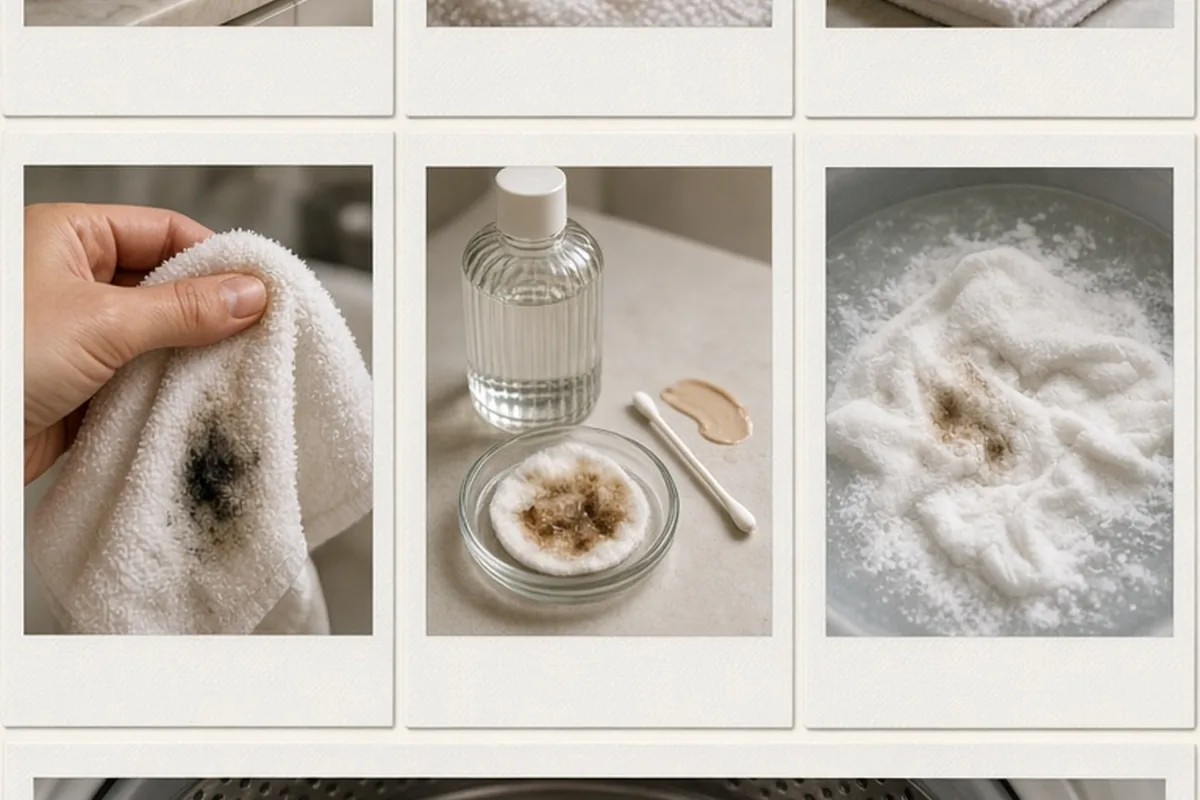
To get makeup out of white towels, scrape off excess residue and pretreat the spot immediately with grease-cutting liquid dish soap or oil-free micellar water. Gently work the cleanser into the cotton loops from the back of the stain using warm water, soak the towel in an oxygen bleach bath for one hour, and launder on a warm cycle.
White plush towels offer a clean, hotel-quality aesthetic in a bathroom, but their dense cotton loops readily trap pigmented cosmetic formulas like waterproof mascara, silicone primers, and tinted foundations.
Identifying the Makeup Base Before Choosing a Cleaner
Cosmetic formulations vary widely in their chemical structures, meaning a single cleaning method cannot dissolve every type of stain. Liquid foundations, BB creams, and concealers often rely on silicone binders and natural or synthetic oils to create a smooth finish on the skin. When these formulas transfer to terry cloth, they form a water-resistant film around individual cotton fibers. Applying plain water or a standard laundry detergent without a degreaser tends to spread the oily carrier while leaving behind concentrated color pigments.
Powder cosmetics, such as bronzers, setting powders, and mineral foundations, lack heavy oils but consist of finely milled mica, talc, and iron oxides that lodge deep inside the weave. Mascara and liquid eyeliners introduce film-forming polymers and carbon black, which resist moisture by design. Understanding whether the culprit is an oil-based emulsion, a wax-heavy stick, or a dry pigment allows you to select the right solvent, preventing you from accidentally locking the binder into the fabric weave.
Before applying any liquid to a makeup mark, inspect the consistency and age of the transfer. If a solid clump of lipstick or a dollop of foundation is resting on the surface, scrape it away with the dull edge of a butter knife or an old plastic card. Pressing directly into the towel with a cloth or tissue forces the product deeper into the base of the pile, turning a superficial surface mark into an embedded ring.
Treating Liquid Foundation and Concealer with Dish Soap
Liquid dish soap formulated to cut through kitchen grease serves as one of the most reliable spot treatments for foundation and tinted moisturizers. Because these beauty products contain oils and silicone emollients, standard laundry surfactants often slide over the stain without breaking surface tension. Dish soap targets the lipid base, separating the mineral pigments from the cotton fibers so they can rinse away cleanly under running water.
To apply this method, wet the stained section of the towel with lukewarm water. Place a dime-sized drop of concentrated clear dish soap directly onto the mark. Using your fingertips or a soft-bristled toothbrush, gently massage the soap into the fibers using small circular motions. Allow the soap to sit on the fabric for ten to fifteen minutes so the surfactants can encapsulate the oils. For heavy or waterproof formulations, dabbing a few drops of isopropyl rubbing alcohol onto the area immediately before the dish soap helps break stubborn silicone bonds.
Rinse the treated zone thoroughly from the reverse side of the towel under high-pressure warm running water. Flushing from the back pushes the loosened pigments outward rather than driving them deeper into the thick terry loops. If a faint beige outline remains after the initial rinse, reapply a small drop of dish soap and repeat the manual agitation before placing the item into the washing machine.
Lifting Mascara, Eyeliner, and Dark Pigments Without Smearing
Dark eye cosmetics present a dual challenge because carbon black and iron oxide pigments create intense contrast against bright white cotton. Water-resistant mascaras contain specialized polymers that harden on contact with air, creating a resilient shell around cotton fibers. Using rubbing alcohol or an oil-free micellar water designed for waterproof eye makeup helps break these polymers down without leaving behind greasy residues that require secondary laundering.
Saturate a clean cotton round or a scrap of white cloth with oil-free micellar water or rubbing alcohol. Press the damp pad firmly against the mascara smear for twenty seconds to soften the dried film. Instead of rubbing back and forth, which creates wide gray streaks across the white towel, gently roll the cotton pad upward across the spot to lift the pigment off the looped pile. Continue rotating to clean sections of the pad until the transfer ceases completely.
Once the dark pigment is mostly lifted, apply a drop of liquid laundry detergent containing active enzymes directly to the remaining residue. Work the detergent into the fibers and let it rest for ten minutes before rinsing. Avoid using oil-based cleansing balms or biphasic eye makeup removers on white towels, as the botanical or mineral oils in those skin cleansers can leave secondary yellow rings that are difficult to extract from thick cotton.
Dissolving Lipstick and Cream Blush Using Solvent Spot Treatments
Lipsticks, lip stains, and cream blushes combine dense synthetic waxes, castor or mineral oils, and concentrated red or berry dye molecules. The combination of heavy wax and potent dye makes lipstick one of the most stubborn cosmetics to lift from white fabrics. Hot water should not be used as an initial rinse on fresh lipstick, as excessive immediate heat can soften the wax just enough to let the red dye penetrate the fiber core.
Start by placing the stained area face down on a clean paper towel. Apply a small amount of isopropyl rubbing alcohol or clear hand sanitizer to the back of the towel using a cotton ball. As you press gently, the solvent dissolves the wax matrix and transfers the pigment downward onto the paper towel underneath. Shift the paper towel frequently to prevent the dissolved red pigment from seeping back into adjacent white threads.
After the bulk of the color transfers to the paper towel, treat the remaining red shadow with an enzyme-rich liquid laundry stain remover or a paste made from baking soda and liquid dish soap. Massage the mixture gently into the terry loops and allow it to work for twenty minutes. This secondary step breaks down the remaining dye components and prepares the fabric for an all-over immersion wash.
Laundering White Cotton with Oxygen Bleach and Temperature Controls
After spot-treating specific makeup marks, the entire towel requires a thorough wash cycle to eliminate residual binders and brighten the cotton. While chlorine bleach is frequently used on white laundry, it can react poorly with certain cosmetic ingredients. Specifically, avobenzone found in sunscreens and tinted daily moisturizers reacts chemically with chlorine bleach to create permanent, rusty orange stains. Oxygen-based bleach, also known as sodium percarbonate, provides a safer and highly effective alternative for brightening white towels without degrading fibers.
For optimal results, fill a wash basin or laundry tub with warm water and dissolve two tablespoons of powdered oxygen bleach. Submerge the pretreated white towels completely and allow them to soak for one to two hours before machine washing. This immersion step lifts residual shadowy tints across the entire surface of the towel while loosening body oils and dead skin cells caught in the heavy weave.
Transfer the towels to the washing machine and select a heavy-duty cycle with warm or hot water, depending on the care label recommendations. Add a standard dose of high-efficiency detergent alongside an additional scoop of oxygen booster. Avoid adding liquid fabric softeners to the rinse cycle, as softeners coat cotton loops with a waxy silicone layer that reduces towel absorbency and traps future cosmetic residues deep within the fabric.
Managing Stubborn or Heat-Set Cosmetic Marks
If a white towel has accidentally gone through a heated dryer cycle with makeup stains intact, the high heat can bake synthetic oils and pigments into the cotton cellulose. Removing set-in stains requires extended chemical action and patience rather than aggressive scrubbing, which can fray the looped pile and make the towel feel rough.
Prepare an intensive soaking solution by combining one gallon of very hot water, half a cup of powdered laundry detergent, and half a cup of washing soda or sodium carbonate. Washing soda raises the water pH, which relaxes the cotton fibers and enhances the degreasing action of the detergent. Submerge the stained towel and allow it to soak overnight, or for at least six to eight hours, ensuring the water stays well-mixed.
After the prolonged soak, inspect the fabric under good natural lighting. If the stain has faded significantly but remains slightly visible, apply a direct paste of hydrogen peroxide and baking soda to the mark before running a standard hot wash cycle. Always inspect the towel again before transferring it to the dryer; if any shadow remains, line-dry the towel in direct sunlight, where ultraviolet light acts as a natural bleaching agent for white cotton.
Bathroom Habits to Prevent Stains and Preserve White Linens
Preventing makeup from contacting white bath linens is the most reliable way to maintain their crisp, bright appearance over years of use. Designating specific, dark-colored cleansing cloths for facial washing eliminates the risk of foundation and mascara transferring onto full-sized bath sheets and hand towels. Storing these dedicated cloths in an easily accessible basket by the sink encourages guests and household members to use them during evening skincare routines.
Adopting a double-cleansing skincare method also protects bathroom linens. Using an oil-based cleansing balm or micellar water followed by a gentle water-based wash thoroughly dissolves cosmetics on the skin so that all pigment rinses down the drain before you reach for a towel. Patting the face dry with a clean cloth should only absorb clear moisture rather than residual foundation.
When makeup does land on a white towel, address it as quickly as possible. Fresh stains that have not dried or oxidized are significantly easier to lift with simple dish soap and warm water than spots left in a laundry hamper for several days. Keeping a small bottle of clear dish soap or stain spray directly in the bathroom vanity allows you to pretreat transfers the moment they occur.
Frequently asked questions
Can I use chlorine bleach to remove foundation from white towels?
Chlorine bleach is generally not recommended for foundation stains because many liquid formulas contain chemical sunscreen filters like avobenzone. When chlorine interacts with avobenzone, it produces a chemical reaction that turns the spot bright orange or yellow, permanently discoloring the cotton. Use oxygen bleach instead for reliable brightening without the risk of yellowing.
Will rubbing alcohol damage white cotton towels?
Rubbing alcohol is safe to use on 100 percent white cotton towels and serves as an effective solvent for dissolving lipstick waxes and silicone primers. However, test a small hidden area first if the towel contains synthetic decorative borders or colored stitching. Always rinse the alcohol thoroughly before placing the item in the washing machine.
Why did my white towel turn yellow after washing out makeup?
Yellowing often occurs when cosmetic oils are only partially removed, leaving behind a lipid residue that oxidizes when exposed to the heat of the clothes dryer. It can also stem from using fabric softeners, which coat fibers and trap minerals from hard water alongside residual makeup. A warm soak in oxygen bleach and washing soda helps strip away these yellowed layers.
Your next step
Pretreat fresh makeup transfers with clear liquid dish soap or rubbing alcohol immediately, and soak the towel in warm water with oxygen bleach before washing to preserve bright, clean cotton.