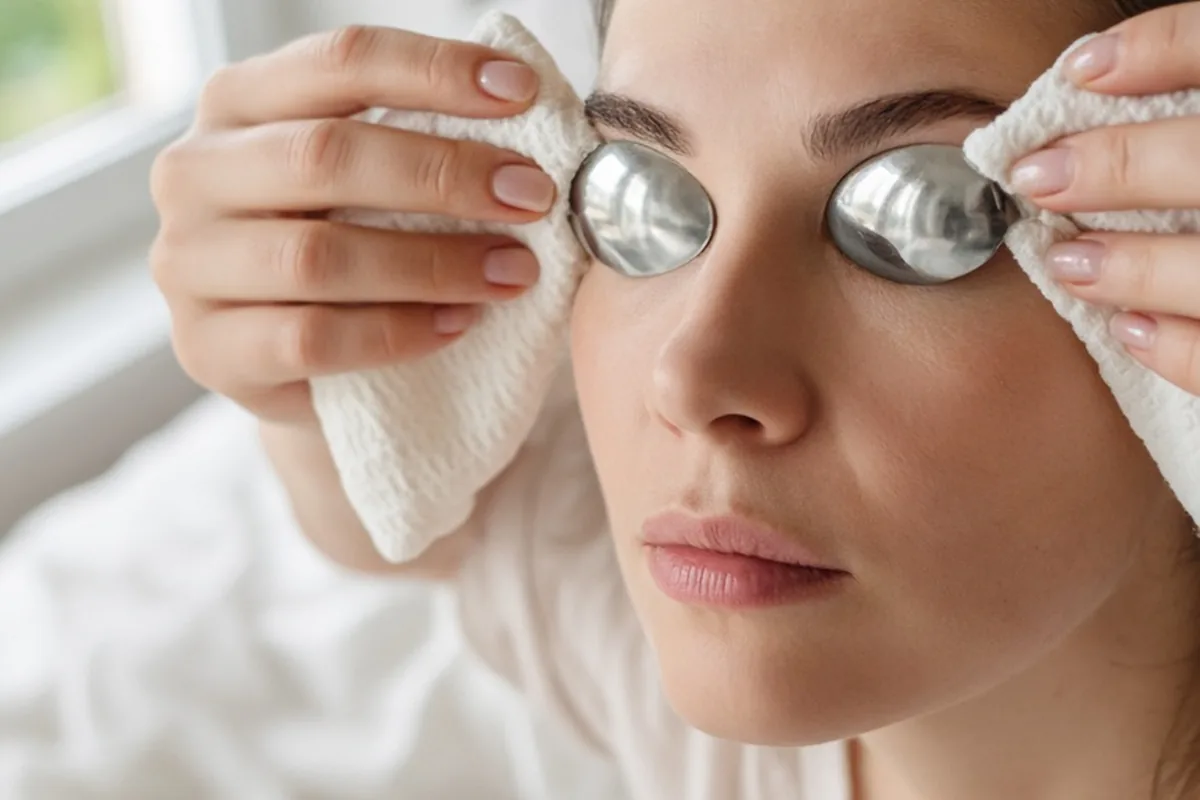
To get rid of puffy eyes fast, apply a clean cold compress or chilled spoons to the under-eye area for five to ten minutes to constrict blood vessels and reduce swelling. Follow with gentle outward fingertip tapping to encourage lymphatic fluid drainage, and apply a lightweight eye gel containing caffeine to temporarily tighten the skin surface.
Waking up with sudden fullness or fluid pooling beneath your lower eyelids can feel frustrating when you need to start your day quickly. While structural changes around the orbital socket require longer-term care, fluid-based morning puffiness usually responds well to physical cooling, light manual stimulation, and targeted topical hydration.
Using Cold Compresses and Chilled Tools for Rapid Relief
Applying a low-temperature surface to swollen under-eye skin is one of the most reliable ways to see a visible change within minutes. When skin tissue warms up during sleep, local capillaries expand and fluid can settle into the loose connective tissue under the eyes. Cold temperatures prompt local vasoconstriction, which narrows those small blood vessels and discourages further fluid leakage into the surrounding extracellular space. This physical reaction works quickly because it does not depend on metabolic absorption; the thermal shift immediately helps tighten the superficial tissue and reduce the appearance of volume.
To perform this safely at home, wrap a clean ice cube or frozen gel pack in a soft, dry washcloth rather than placing bare ice directly against delicate eyelid skin. Alternatively, keep two stainless steel teaspoons in the refrigerator for twenty minutes, then gently rest the curved backs against your orbital bone, moving smoothly from the inner corner near the tear duct outward toward the temple. Limit the application to five or eight minutes at a time to prevent tissue irritation or skin numbness. A common limitation of cold therapy is that its benefits are temporary, usually lasting a few hours, making it ideal for morning preparation rather than an all-day structural fix.
Encouraging Fluid Drainage with Gentle Manual Massage
Stagnant lymphatic fluid often accounts for the soft, spongy swelling that appears after lying flat for several hours. Because the lymphatic system relies on muscle movement and external pressure rather than a central pump like the heart, subtle manual encouragement can help clear accumulated fluid through nearby lymph nodes located near the ears and jawline. Using excessive force, however, can stretch the thin skin or cause micro-bruising, so light pressure and fluid glide are critical for safe and visible results.
Begin by applying a drop of facial oil or slippery hydrating serum so your fingers glide without dragging the skin. Using the pad of your ring finger, which naturally exerts the lightest pressure, tap very softly along the lower orbital bone from the inner eye toward the outer corner. After five to six passes of light tapping, use continuous, featherlight sweeping motions outward toward the hairline, then down the sides of the neck toward the collarbone to direct the fluid along natural drainage pathways. This method takes roughly three minutes and offers an immediate improvement in skin tautness, though it will not alter genuine fat pad herniation.
Selecting Fast-Acting Topical Ingredients like Caffeine
Certain topical skincare ingredients offer rapid cosmetic improvements by temporarily altering local skin dynamics. Caffeine remains the most common ingredient for quick de-puffing because of its ability to penetrate the upper layers of the epidermis and promote mild local vasoconstriction while offering antioxidant protection. When paired with humectants like hyaluronic acid or glycerin, an eye serum can smooth dry fine lines while simultaneously toning the appearance of puffy, waterlogged skin.
When applying a de-puffing product in the morning, look for cooling gel-based formulations or products dispensed through chilled metal rollerball applicators. Rollerballs combine mechanical drainage with active ingredients, cooling the skin as they distribute a measured amount of product. Dab a pea-sized amount across both under-eye areas, avoiding the lash line where product might enter and irritate the eye itself. Keep in mind that while caffeine provides a noticeable tightening effect within fifteen to thirty minutes, overusing potent actives or layering incompatible formulas can cause localized dryness, flaking, or irritation that worsens the appearance of under-eye texture.
Applying Chilled Tea Bags for Tannin-Based Tightening
Caffeinated black and green tea bags serve as a practical, accessible option for quick relief when commercial eye treatments are unavailable. In addition to caffeine, tea leaves contain natural polyphenols called tannins, which possess mild astringent properties. When applied topically at a cool temperature, tannins help draw moisture away from the surface layers and temporarily firm the delicate skin around the lower lid, while the moist compress provides soothing relief to tired, strained eyes.
To prepare this remedy, steep two plain green or black tea bags in hot water for two minutes to activate the botanical compounds, squeeze out the excess moisture, and place them in the refrigerator until thoroughly chilled. Rest comfortably with your head elevated and place one moist tea bag over each closed eye for ten minutes. Avoid using herbal teas containing strong artificial flavorings, citrus extracts, or essential oils, as these additives can trigger contact dermatitis or stinging. A realistic trade-off is the minor mess and preparation time required compared to keeping ready-to-use gel eye patches stored in your refrigerator.
Addressing Environmental and Allergy-Triggered Swelling
Puffiness accompanied by itching, redness, or watery eyes typically points toward an allergic reaction or environmental irritant rather than simple sleep-related fluid retention. Exposure to airborne pollen, pet dander, dust mites, or newly introduced cosmetic products triggers the release of histamines in the ocular tissues, causing blood vessels to dilate and fluid to leak rapidly into surrounding eyelid tissue. Treating allergy-driven swelling solely with physical cold or massage may provide minor comfort, but addressing the underlying inflammatory cascade is necessary for lasting clarity.
If you suspect allergies are the primary cause, avoid rubbing your eyes, as mechanical friction prompts mast cells to release additional histamines, intensifying both the swelling and itching. Rinsing the face with cool water or using sterile saline eye drops can wash away lingering allergens from the ocular surface. Over-the-counter antihistamine eye drops or oral allergy medications can help calm the systemic response, though they may take an hour or more to fully reduce swelling. Always check with a healthcare professional or pharmacist when choosing allergy medications, particularly if you have underlying eye conditions or persistent symptoms.
Adjusting Sleep Posture and Dietary Triggers
While quick morning fixes handle active swelling, subtle adjustments to your evening routine significantly reduce the severity of puffiness before it starts. Lying completely flat on your back or sleeping face down on your stomach allows gravity to distribute fluids evenly across your facial tissues, leading to noticeable pooling in the thin, loose spaces below the eyes. Elevating your head slightly with an extra pillow or a wedge pillow encourages natural drainage throughout the night, minimizing fluid buildup by morning.
Dietary habits in the evening hours also play a direct role in morning facial fullness. High-sodium dinners, such as takeout meals or cured meats, prompt the body to retain water to maintain electrolyte balance, which often presents as pronounced facial edema the following morning. Alcohol consumption compounds this issue by dehydrating the body initially, leading to rebound fluid retention and disrupted sleep quality. Drinking a glass of water before bed and choosing lower-sodium evening meals can prevent significant morning swelling, although genetic predisposition will still influence your baseline under-eye contours.
Distinguishing Temporary Puffiness from Structural Eye Bags
Understanding what type of under-eye fullness you are experiencing is crucial for setting realistic expectations. Temporary puffiness fluctuates throughout the day, typically peaking immediately after waking or after crying and improving as you remain upright and active. In contrast, chronic under-eye bags are often caused by the natural aging process, where the orbital septum weakens and deeper orbital fat pads herniate or shift forward, creating a permanent protrusion that does not respond significantly to cold compresses, caffeine creams, or lymphatic drainage.
To test which factor is dominant, look into a mirror while tilting your head slightly downward and upward under overhead lighting. If the fullness changes dramatically based on head elevation, time of day, or sleep duration, fluid retention is likely the primary contributor. If the contour remains unchanged regardless of cold treatments, hydration, or daily lifestyle habits, structural anatomy is the main cause. In such cases, cosmetic procedures or in-office dermatological treatments may be required for noticeable change, and spending excessive money on topical de-puffing products is unlikely to deliver the desired results.
Frequently asked questions
How long does it usually take for cold compresses to reduce eye puffiness?
A chilled compress or cool spoons typically show noticeable reduction in surface swelling within five to ten minutes of consistent application. The cooling effect constricts local blood vessels and tightens skin rapidly, though the improvement is temporary and lasts a few hours.
Can drinking more water help get rid of puffy eyes?
Yes, maintaining adequate daily hydration helps your body flush excess sodium and prevents compensatory water retention in facial tissues. While drinking a glass of water will not instantly eliminate swelling in ten minutes, consistent hydration reduces morning puffiness over time.
Is it safe to use preparation hemorrhoid creams under the eyes for fast de-puffing?
Dermatologists generally advise against using hemorrhoid creams near the eyes because they can contain potent ingredients or steroids that thin delicate eyelid skin and risk severe irritation if introduced into the eye. Opt instead for formulated eye creams containing caffeine or gentle soothing botanicals.
Why do my eyes look puffier after crying, and how can I fix it quickly?
Emotional tears are more watery and have a lower salt concentration than normal basal tears, causing water to diffuse into the saltier surrounding eyelid tissues through osmosis while blood vessels dilate from crying. Applying a cold washcloth combined with light lymphatic tapping offers the fastest way to calm this specific swelling.
Your next step
For immediate relief this morning, place wrapped cold spoons against your under-eye area for five minutes, follow with outward fingertip tapping, and evaluate whether adjusting your sleep elevation helps prevent swelling tomorrow.