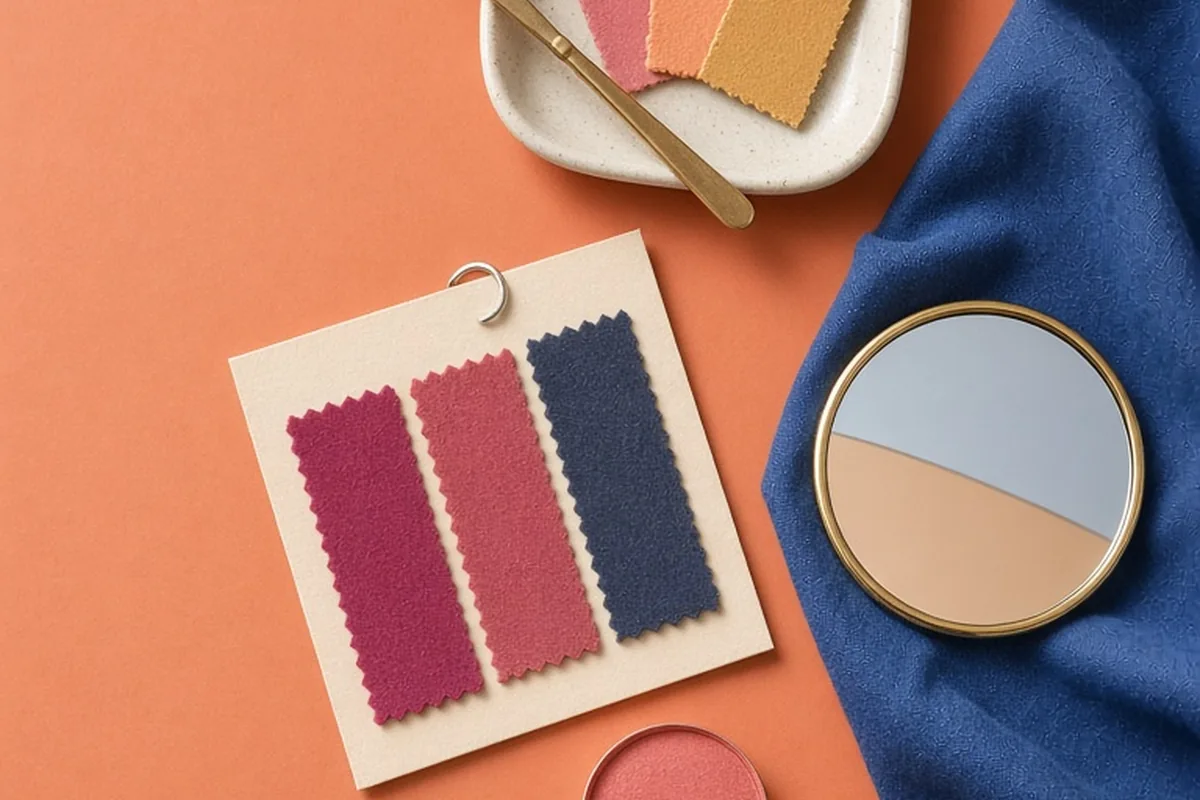
To find makeup colors that flatter you, identify your skin undertone (cool, warm, or neutral) and surface depth. Cool undertones look harmonious in berry, rose, and blue-based red tones with silver accents. Warm undertones suit peach, terracotta, and golden bronze shades. Neutral undertones balance soft mauves and classic reds. You can then refine your choices by matching product intensity to your natural facial contrast level.
Selecting makeup shades often feels like trial and error under harsh store lighting, but a few consistent visual markers eliminate most of the guesswork. By examining how your natural coloring reacts to light and pigment, you can build a personal color palette that enhances your features rather than clashing with them.
Determining Your Skin Undertone Through Visual Tests
Your skin tone consists of two distinct components: overtone and undertone. Your overtone is the surface depth you see immediately, such as fair, medium, tan, or deep, which can change with sun exposure or skin conditions. Your undertone is the subtle, permanent hue beneath the surface that remains constant throughout your life. Understanding your undertone is essential because applying warm makeup to cool skin, or cool makeup to warm skin, creates visual friction that can make your complexion look tired, ashy, or artificially orange.
To identify your undertone accurately, examine your bare skin under natural, indirect daylight. Avoid assessing yourself under warm bathroom lights or cool fluorescent bulbs, which distort color perception. A primary test involves looking at the veins on the inside of your wrist: blue or purple veins indicate a cool undertone, greenish veins indicate a warm undertone, and veins that blend into a blue-green mix suggest a neutral undertone. You can also hold a piece of pure bright white fabric and a piece of off-white cream fabric beneath your chin; if pure white brightens your face, you lean cool, whereas if cream looks more harmonious, you lean warm.
A common obstacle in undertone testing is surface discoloration. Conditions like rosacea, acne redness, or broken capillaries often cause people to believe they have a cool undertone when their underlying base is actually warm or olive. To avoid this misdirection, always verify your findings against your jawline, neck, or the inner side of your upper arm where surface redness is less pronounced.
Assessing Contrast Level and Color Saturation
Once you know your temperature, your overall contrast level determines how bold, soft, deep, or vibrant your makeup should be. Facial contrast represents the value difference between your hair, eyes, and skin tone. High-contrast individuals might possess dark hair paired with fair skin, or very deep skin paired with bright white teeth and striking light eyes. Low-contrast individuals have hair, skin, and eyes that fall in a similar tonal range, such as light blonde hair with fair skin and pale blue eyes, or medium-brown hair with warm olive skin and soft hazel eyes.
Contrast dictates whether saturated pigments enhance your face or overwhelm it. If a low-contrast individual wears an intense, opaque, neon-bright lipstick, the color frequently arrives in the room before the person does, drawing attention away from their natural facial structure. Conversely, high-contrast individuals often find that soft, muted, dusty tones make them look washed out because their natural coloring demands richer, more defined pigments to maintain visual balance.
To test your contrast level easily, take a selfie in natural daylight and convert the image to black and white on your phone. Observe the range of gray scale across your features: a wide span between pure black and stark white points toward high contrast, while a narrow spread of gentle middle grays indicates low or medium contrast. Use this information to choose between soft washes of color and high-impact pigments.
Selecting Flattering Lip Colors Across Shade Families
Lipstick interacts directly with your natural lip pigmentation, which means a swatch on your arm will rarely look identical once applied to your mouth. When choosing reds, pinks, berries, and nudes, matching the undertone of the product to your skin undertone ensures the color brightens your smile and clarifies your complexion. For example, cool-toned reds contain blue or pink bases (such as cherry, ruby, and crimson), which create a brightening effect on cool complexions and make teeth appear visibly whiter.
Warm complexions thrive in orange-based reds, including brick, terracotta, tomato red, and burnt orange. If you have neutral undertones, you can wear classic true reds that balance equal parts blue and yellow pigment. When selecting a flattering everyday nude, avoid formulas that are lighter than your natural lip bed, as these produce a chalky, dated look. The most reliable everyday nude is typically one shade deeper than your bare lips with an identical undertone: cool complexions suit dusty rose or mauve nudes, while warm complexions suit warm peach, caramel, or cinnamon tones.
A useful workaround for shades outside your natural palette involves altering formula opacity. If you fall in love with a cool berry lipstick but have warm-toned skin, a sheer tint, gloss, or blotted lip stain will look far more forgiving and wearable than a heavy, opaque matte lipstick in that same shade.
Choosing Blush Shades That Enhance Your Natural Flush
Blush is designed to simulate the natural rush of circulation to the cheeks, making it the most effective product for restoring vitality to the face after applying base makeup. Because blush mimics blood flow, aligning it with your undertone creates a youthful, healthy glow rather than an artificial stripe of color. Cool complexions look best in baby pink, soft rose, magenta, and cool plum shades, which reflect natural cool-toned capillary flush.
Warm complexions come alive with peach, apricot, warm coral, and rich terracotta blushes. For deeper skin tones within the warm spectrum, vibrant tangerine, burnt orange, and rich copper tones provide radiant dimension without turning gray. For deeper cool skin tones, rich raisin, boysenberry, and deep blackberry pigments deliver clarity and definition. The primary rule across all skin tones is matching the pigment density of the blush to your skin depth: fair skin requires translucent, micro-milled washes of soft color, while deep skin requires concentrated, saturated pigment payoff.
Be cautious when pairing bronzer and blush on the cheeks. Layering a cool, blue-based pink blush directly over a warm, golden-brown bronzer can cause the two pigments to muddy together where they blend. If you wear bronzer to add warmth, choose a neutral-to-warm blush or leave a small separation between your contour and blush placement to preserve color clarity.
Curating Eyeshadow Tones for Eye Color and Skin Depth
Eye makeup offers an opportunity to apply color theory using either complementary or analogous shades. Complementary shades sit opposite your eye color on the color wheel, creating maximum contrast that makes the iris color stand out. For example, blue eyes pop against warm copper, bronze, and rich peach shadows, while green and hazel eyes intensify when framed by plum, mauve, burgundy, and violet tones. Brown eyes contain a mix of primary colors, making them uniquely versatile with gold, royal blue, emerald, and warm espresso.
While eye color determines your accent shades, your skin undertone should govern your transition and crease shades. Transition shades are the neutral mid-tones that blend colorful shadows into your natural skin. A cool-toned person using a transition shade should reach for taupe, mushroom brown, or cool stone grays; applying a warm mustard or orange-brown transition shade on cool skin often looks unblended and out of place.
Highlighting shades on the brow bone and inner corner must also harmonize with your overall depth. A stark, frosty white highlighter can look chalky or draw unflattering attention to skin texture on medium, tan, and deep complexions. Instead, opt for champagne on light-to-medium skin, rose gold on neutral skin, and rich gold or bronze on deep skin tones for a seamless, luminous finish.
Finding Foundation and Concealer Shade Harmony
Foundation is the canvas that unifies your entire makeup look, making an accurate shade match the foundation of all other color choices. The goal of foundation is not to change your skin tone, but to match the exposed skin of your neck, chest, and shoulders so your face connects naturally to your body. When people choose foundation based strictly on the center of their face, they often match to localized surface redness or hyperpigmentation, resulting in a shade that appears noticeably disconnected from their neck.
To test foundation accurately, apply three parallel swatches along your lower jawline extending down onto your upper neck: one shade you believe matches, one slightly warmer or deeper shade, and one slightly cooler or lighter shade. Step into natural daylight and wait five to ten minutes for the formula to dry down completely. Many liquid formulas oxidize when exposed to air and skin oils, darkening slightly as they set. The correct match is the swatch that disappears seamlessly into both your jaw and your neck.
Olive undertones require special attention because they contain a greenish or grayish cast over a warm or cool base. Standard warm foundations can appear overly yellow or orange on olive skin, while cool foundations can look chalky and pink. If you have olive skin and struggle to find a match, look for dedicated olive shade ranges or use a blue or green shade adjuster drop to neutralize excess warmth in standard foundations.
Building a Cohesive Everyday Makeup Capsule
Once you understand your optimal color palette, building a cohesive everyday makeup routine becomes straightforward. Makeup looks visually balanced when the temperature of your eyes, cheeks, and lips work in harmony rather than competing for dominance. A monochromatic approach—such as pairing a warm peach blush with a warm terracotta lip and soft bronze eyelids—creates an effortless, put-together appearance with minimal effort.
You do not need an overwhelming collection of products to create varied looks. A functional, flattering makeup capsule contains a few deliberate essentials: one matching foundation or skin tint, one everyday neutral lipstick, one bolder statement lipstick for evenings, a complementary blush, and a four-pan eyeshadow palette with transition, contour, and highlight shades that suit your temperature. With these core pieces dialed into your undertone, every product in your routine works together reliably.
Remember that seasonal shifts will occasionally require minor adjustments. During summer months, increased melanin production may warm your surface tone or deepen your complexion by a shade or two, even though your core undertone remains the same. Keeping a slightly deeper skin tint or using a sheer gloss rather than changing your entire palette lets you adapt seamlessly throughout the year without abandoning your most flattering colors.
Frequently asked questions
Can you have both warm and cool undertones in makeup?
Yes, individuals with neutral undertones possess an even balance of warm and cool pigments, allowing them to wear shades from both families successfully. People with olive complexions also exhibit a unique mix of greenish tones over warm or cool bases, which benefits from muted, neutral-leaning products.
Why does lipstick often look orange or pinker on my lips than in the tube?
Your natural lip bed has underlying blue, purple, or deep brown pigmentation that mixes with the lipstick formula. Sheer or semi-opaque lip products allow your natural lip color to show through, altering how the shade reflects light compared to the solid product in the packaging.
How do I know if a specific makeup color is washing me out?
A color washes you out if it drains warmth and vitality from your face, making your complexion appear grayish, tired, or sickly. This typically happens when a product is either too pale, overly muted for your contrast level, or opposing your skin's natural temperature.
Does dyeing my hair change what makeup colors look best on me?
Dyeing your hair changes your overall facial contrast level and color frame, which affects how bold or muted your makeup should be. However, hair color does not alter your underlying skin undertone, meaning your core temperature preferences will remain consistent.
Your next step
Examine your jawline and inner wrist in natural daylight tomorrow morning, identify whether warm, cool, or neutral tones dominate your skin, and test one new lipstick or blush swatch that directly matches that specific temperature.