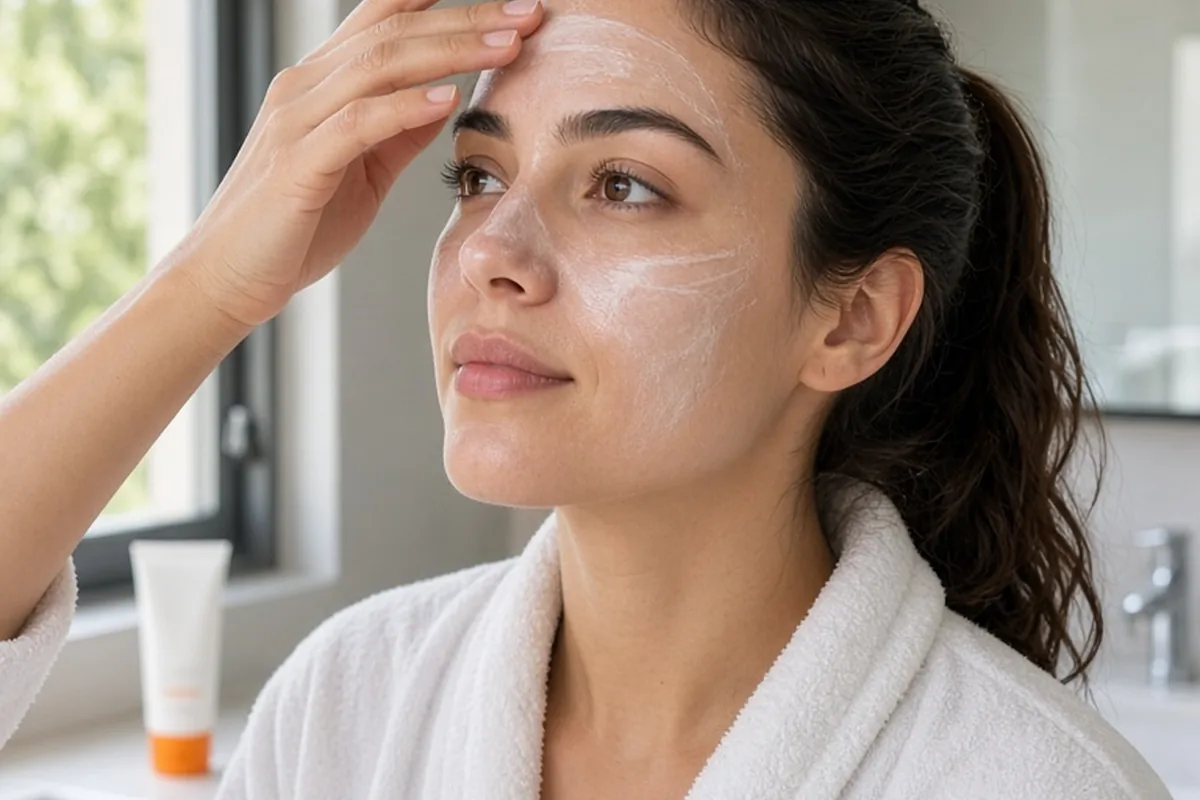
To layer skincare effectively, apply products from thinnest to thickest consistency so each formula absorbs properly. Start with a gentle cleanser on bare skin, follow with watery treatments like toners or essences, apply targeted serums, and seal everything with a moisturizer. During the day, finish with a broad-spectrum sunscreen. At night, replace sunscreen with a richer barrier cream or facial oil if your skin needs extra moisture.
Arranging multiple skincare bottles, jars, and droppers can feel intimidating when you are unsure which formula goes first. Understanding the basic mechanics of skin absorption allows your products to work together seamlessly without causing flaking, irritation, or product waste.
The Core Rule of Viscosity: Thin to Thick Application
The universal guiding principle for skincare layering is viscosity, which simply refers to the thickness or fluidity of a product. Formulations with low viscosity, such as watery toners, liquid exfoliants, and lightweight essences, have smaller molecular structures designed to penetrate the upper layers of the skin quickly. Denser formulas, like rich creams, balms, and facial oils, contain larger emollient and occlusive molecules intended to coat the surface and trap moisture within the skin barrier.
Applying a heavy moisturizer or facial oil first creates an occlusive lipid shield that repels water-based treatments applied on top. For instance, if you apply a concentrated hyaluronic acid serum over a thick cold cream, the water-soluble serum cannot easily bypass that oily film, leaving it sitting uselessly on the surface. When you arrange your routine from the most liquid texture to the densest cream, every layer can fulfill its intended purpose without barrier interference.
A practical exception involves deliberate buffering to reduce irritation. When you introduce a strong active ingredient such as a topical retinoid, applying a thin layer of light lotion beforehand can slow down the penetration rate. While this slightly reduces product intensity, it significantly lowers the likelihood of redness, peeling, and sensitivity for individuals with reactive skin.
Building a Streamlined Daytime Layering Routine
A morning skincare routine should focus on defense, hydration, and UV preservation. Throughout the day, your complexion faces exposure to ultraviolet radiation, environmental dust, and shifting indoor humidity levels. Your morning layers should therefore support your protective moisture barrier and shield skin cells rather than perform aggressive exfoliation or heavy resurfacing.
Begin your morning by washing with lukewarm water or a gentle, non-stripping cleanser to remove sweat and residual nighttime products. Next, apply a balancing toner or hydrating essence to restore surface hydration. Follow this with an antioxidant serum, such as one featuring vitamin C or green tea extract, which supports free radical defense. Lock in that hydration with a lightweight gel or lotion moisturizer suited to your specific oil balance.
The non-negotiable final step of any daytime sequence is broad-spectrum sunscreen. Sunscreen works by establishing a continuous, uniform film across the skin to reflect or absorb UV rays. Putting any cream, oil, or serum over your sunscreen disrupts this critical protective shield and compromises your defense. Allow your moisturizer to absorb for a minute or two, smooth your sunscreen evenly across your face and neck, and let it settle completely before applying any cosmetic makeup.
Structuring an Evening Routine for Repair and Recovery
Your evening routine offers the opportunity to remove the daily buildup of debris, support natural overnight moisture retention, and apply targeted corrective ingredients. Because you do not need to worry about sun exposure or layering under makeup, evening routines can comfortably accommodate richer textures, restorative lipids, and light-sensitive actives.
Start your evening with a thorough cleanse. If you wear water-resistant sunscreen, long-wear foundation, or heavy eye makeup, consider a two-step cleansing process using an oil-based balm or micellar water followed by a water-based gel or cream cleanser. Once your skin is thoroughly clean, apply your water-based hydrators, followed by your primary active treatment, such as a retinoid, azelaic acid, or peptide solution.
Conclude your evening steps with a restorative night moisturizer that reinforces your lipid barrier. If you have particularly dry skin or live in an arid climate, you can press a few drops of pure facial oil over your cream as the ultimate sealing layer. Because oils are purely occlusive or emollient, they should virtually always be applied last, preventing trans-epidermal water loss throughout the night.
Timing and Wait Periods: What Needs to Dry First
A widespread misconception in skincare is that you must wait five to ten minutes between every single product application. In reality, keeping your skin slightly damp between most hydrating steps actually improves product performance. Humectants like glycerin, hyaluronic acid, and panthenol draw in surrounding moisture, making them far more effective when applied over damp, freshly cleansed skin rather than completely dry tissue.
However, specific ingredients require dry skin to prevent unwanted irritation. Exfoliating acids like glycolic, lactic, and salicylic acid, as well as prescription and over-the-counter retinoids, penetrate significantly faster and deeper through damp tissue. This rapid absorption can overwhelm sensitive nerve endings, triggering stinging, burning, or sudden dermatitis. Allow your skin to dry thoroughly to the touch before applying these concentrated active formulas.
Sunscreen also demands dedicated drying time. Unlike skin-nourishing moisturizers that sink into the epidermis, sunscreen needs to dry down into an undisturbed, durable barrier. Giving your sun protection three to five minutes to set before applying foundation, tinted powder, or concealer prevents you from wiping away sections of your UV shield.
Navigating Active Ingredients and Preventing Skin Barrier Overload
One of the most common pitfalls in product layering is stacking multiple potent actives in the same session. While layering hydrating ingredients like niacinamide, ceramides, and hyaluronic acid is safe and beneficial, combining multiple chemical exfoliants and cell-turnover agents can quickly compromise your protective skin barrier.
To protect your skin barrier, avoid applying direct exfoliating acids and retinoids at the exact same time. Layering a strong beta hydroxy acid serum directly beneath a retinoid cream increases irritation potential without improving performance. Instead, designate different evenings for different goals, commonly known as skin cycling, or reserve your exfoliating treatments for two nights per week while prioritizing hydration on the others.
If you want to use both an antioxidant like L-ascorbic acid and an exfoliating active, split them between daylight and darkness. Apply your antioxidant serum in the morning to complement your UV protection, and reserve exfoliating acids or retinoids for the evening when your skin is away from direct sunlight and focused on natural renewal.
Diagnosing and Preventing Product Pilling
Product pilling occurs when skincare formulas fail to absorb and instead ball up into tiny, rubbery flakes as you smooth them across your face. Pilling is rarely a sign that a product is bad; rather, it indicates a physical incompatibility between the formulation bases you are stacking together or an excess of product volume on the skin surface.
The most frequent cause of pilling is layering silicone-heavy or film-forming products over water-based formulas that have not had time to settle. Ingredients like dimethicone, carbomer, and xanthan gum create smooth surface textures, but when rubbed vigorously against incompatible watery serums, they break apart and roll up. Thick, water-resistant sunscreens and pore-blurring primers are notorious for pilling if applied prematurely over tacky serums.
To eliminate pilling, reduce the overall quantity of product you apply and switch your application technique from rubbing to gentle pressing and patting. Ensure each layer feels settled before introducing the next. If pilling persists, inspect your product list: simplifying your sequence to fewer, higher-compatibility steps typically resolves the issue immediately.
Customizing Your Layers for Skin Type and Seasonal Changes
Skincare layering should never follow a rigid, one-size-fits-all formula. The number of layers your skin requires varies based on your inherent skin biology, your local climate, and the season. Listening to how your skin responds on any given day is far more productive than forcing yourself through an arbitrary multi-step ritual.
Oily and acne-prone skin types often thrive on minimal layering. For someone with naturally high sebum production, a hydrating toner followed directly by a lightweight gel moisturizer or a fluid sunscreen may provide all the moisture required. Layering essences, multiple serums, and dense lotions can overwhelm oily pores, leading to congestion and unnecessary shine.
Conversely, dry and dehydrated skin types benefit from multiple thin, humectant-rich layers topped by a robust lipid barrier cream. Furthermore, environmental humidity dictates routine adjustments: during hot, humid summer months, you might eliminate daytime moisturizers in favor of a hydrating sunscreen alone, while winter indoor heating might demand reintroducing rich barrier creams and occlusive oils.
Frequently asked questions
Do facial oils go before or after my moisturizer?
Facial oils should almost always be applied after your moisturizer or mixed directly into it. Because oils contain rich occlusive lipids, applying them first blocks water-based moisturizers and serums from penetrating the skin.
Can I layer two different serums in the same routine?
Yes, you can layer multiple serums as long as their ingredients do not conflict or cause sensitivity. Apply the lighter, more watery serum first, allow it a moment to settle, and then follow with the thicker serum.
Should I wash my face between applying daytime and nighttime layers?
You only need to cleanse your face twice per day: once in the morning and once at night. Cleansing between individual product steps strips the skin of its essential natural lipids and causes unnecessary barrier stress.
How do I know if I am layering too many skincare products?
Signs of over-layering include persistent product pilling, a greasy film that never absorbs, sudden breakouts, and increased skin redness or sensitivity. If you notice these issues, pare your routine back to a gentle cleanser, basic moisturizer, and sunscreen.
Your next step
Assess your current skincare lineup today by arranging your products on a counter from the most liquid texture to the heaviest cream, and eliminate any redundant active treatments that might be competing for the same spot in your daily sequence.