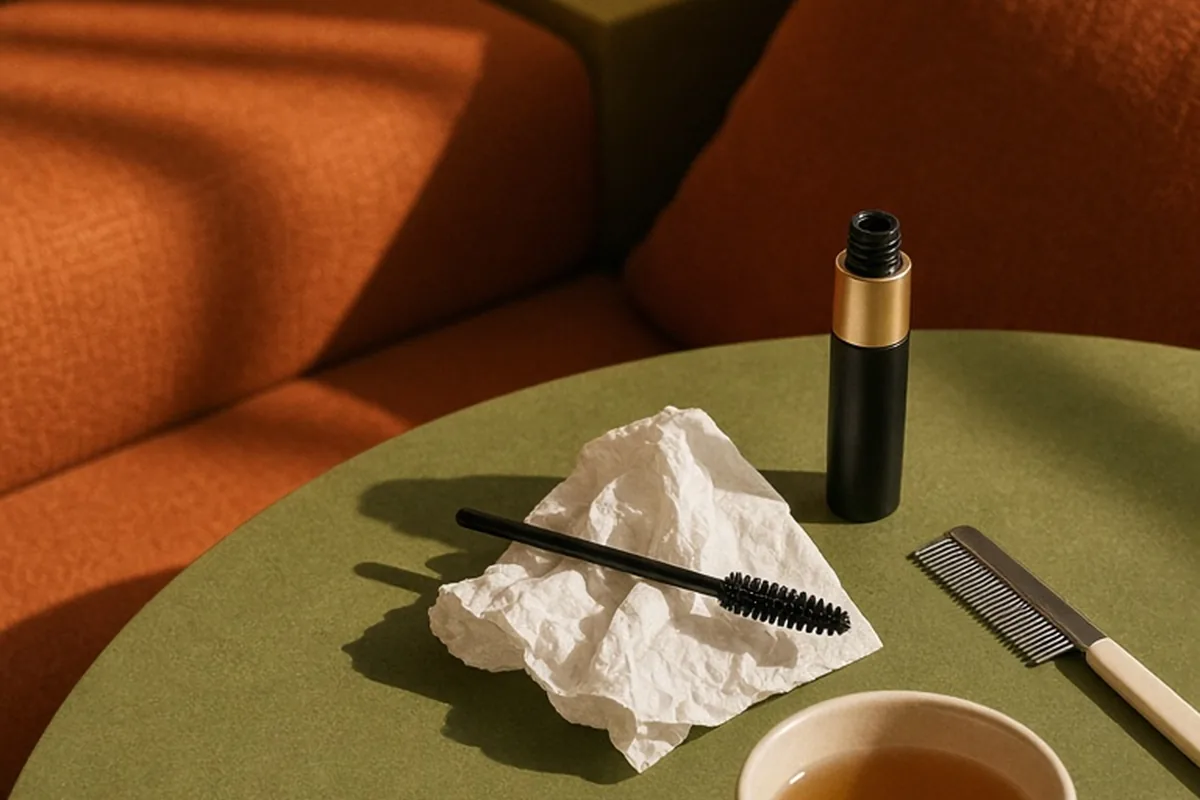
To make mascara less clumpy, gently wipe excess formula off the wand onto a clean tissue before application, comb through clean lashes prior to coating, and apply the product using a light zig-zag motion from root to tip. Avoid pumping the wand into the tube, warm cold or stiff formulas in a cup of warm water, and use a clean lash comb between coats before the product fully dries.
Mascara is designed to define, lengthen, and darken eyelashes, but excess pigment, stiff waxes, and rushed application often result in unwanted clumps and uneven clusters. When lashes stick together, it detracts from an open-eyed look and creates a heavy, uncomfortable sensation on the eyelids. Achieving clean, fanned-out definition does not require replacing your makeup bag or mastering complex beauty routines. By making a few practical adjustments to how you handle the wand, prep the natural lash, and build layers, you can enjoy defined, fluttery lashes using standard over-the-counter formulas.
Prepping the Lash Base for Clean Application
A clump-free mascara application begins long before the brush touches the eyelashes. Throughout the day and night, natural oils, leftover skincare products, eye creams, and micellar residues accumulate along the lash line. When wet mascara encounters these oily or emollient barriers, the formula struggles to adhere evenly across individual hairs. Instead of coating each lash smoothly from root to tip, the waxes slide together and pool into thick, unsightly clumps. Taking thirty seconds to ensure the eye area is clean and dry establishes an ideal surface for even pigment distribution.
To prep effectively, gently sweep a dry cotton swab across the base of the upper and lower lash lines to absorb any residual moisturizer or facial oils. If your lashes naturally point downward or cross over each other, use a clean eyelash curler before applying any product. Position the curler at the base of the lashes, squeeze gently for five seconds, and release completely without pulling. Curling clean, bare lashes lifts the hair shaft and physically separates individual hairs, making it much easier for the mascara wand to pass through without catching multiple lashes at once. Applying mascara to uncurled or tangled lashes frequently forces adjacent hairs into shared clusters.
Controlling and Removing Excess Formula from the Wand
The primary mechanical cause of clumpy mascara is simply applying too much product at once. Most mascara tubes feature an internal plastic wiper intended to scrape excess cream from the bristles as the wand is withdrawn. However, these built-in wipers often leave thick deposits at the tip of the brush and deep between the bristles. If you bring a freshly pulled wand straight to your eyes, that surplus product immediately transfers onto the first few lashes it touches, instantly welding them together.
Instead of wiping the excess product onto the rim of the tube, where it dries into crusty flakes that contaminate future applications, gently roll the brush over a clean facial tissue or lint-free paper towel. You do not need to strip the wand bare; the goal is to remove the visible glob at the tip and ensure the silhouette of individual bristles is visible. For example, if you are using a volumizing formula with dense, bushy fibers, a light blot allows the bristles to comb through lashes rather than depositing a thick paste. While this technique consumes a small amount of product over time, it consistently produces clean, defined lashes.
Refining Your Wand Angle and Application Stroke
How you move the mascara brush across your lashes determines whether the product separates hairs or glues them together. A common mistake is sweeping the wand exclusively upward in a straight, rapid motion. This method deposits most of the weight onto the fragile tips of the lashes, pulling them inward toward each other and creating a heavy, spidery appearance. A balanced application concentrates product at the base for structural lift while keeping the tips light and separated.
Place the mascara wand horizontally at the very base of your upper lash line, nestling the bristles close to the roots. Give the brush a micro-wiggle side to side for two seconds to deposit pigment where the lashes are thickest, then draw the wand upward and slightly outward toward the temple with a steady, rotating sweep. The initial horizontal vibration separates the roots, while the vertical stroke evenly distributes a whisper-thin layer along the lengths. For hard-to-reach inner corners, turn the wand vertically and use the very tip with an extremely light touch to catch fine hairs individually without overloading them.
Warming Stiff and Thickened Formulas
Mascara formulas rely on a delicate balance of waxes, polymers, and volatile solvents to coat lashes and dry quickly. In cooler room temperatures, or as a tube naturally loses moisture through regular opening, these waxes can thicken and turn pasty. A cold, stiff formula cannot glide smoothly across the lash cuticle; instead, it catches and forms gritty nodules along the hair shaft. Restoring the formula to a fluid, workable consistency significantly reduces clumping without altering its cosmetic integrity.
Before opening the tube, submerge the sealed bottom half in a mug of warm tap water for three to five minutes while completing the rest of your makeup routine. The gentle heat softens the carnauba, beeswax, or synthetic polymers inside, restoring a silky texture that disperses evenly across the bristles. Never use boiling water, as extreme temperatures can warp the plastic packaging or degrade protective preservatives. Similarly, avoid adding water, oils, or makeup removers into the tube, as introducing foreign liquids dilutes the preservative system and creates an environment where bacteria can thrive.
Employing Lash Combs and Separation Tools
Even with careful wand handling, certain lash types naturally overlap, creating minor clumps during application. Keeping a dedicated lash separator on hand allows you to correct clumping immediately before the formula sets into a rigid cast. Plastic combs molded into brush caps are often too blunt to penetrate between fine hairs, but fine-toothed metal lash combs provide the precision required to divide paired lashes cleanly.
Timing is critical when using a lash comb. You must comb through the lashes immediately after applying a coat while the mascara is still slightly wet. If you wait until the formula dries completely, dragging a comb through the brittle lashes can cause flaking, break delicate hair shafts, or pull lashes out at the root. Hold the metal comb parallel to the lash line, insert the fine teeth at the roots, and slowly glide upward to remove excess clumps and fan out the perimeter. Wipe the metal comb with an alcohol pad after each use to maintain hygiene and prevent hardened buildup.
Pacing Layers and Managing Dry Times
Building dramatic length or volume usually requires more than one coat of mascara, but applying subsequent layers incorrectly is a frequent cause of severe clumping. When a fresh, wet coat of mascara is brushed over a completely dry, hard layer, the bristles snag on the rigid surface, dragging and scraping the existing coat into jagged clumps. Conversely, applying a second coat immediately without letting the first layer establish structure simply blends the coats into a heavy, wet mess.
The ideal window for layering is the semi-dry or tacky stage, which generally occurs thirty to forty-five seconds after the first application. Apply one light, separating coat to the first eye, move directly to the second eye, and then return to the first eye for a second coat. Focus the second pass primarily from mid-length to the tips, or strictly at the outer corners for a flared effect, rather than overloading the entire lash bed again. Limiting your application to two well-placed coats will consistently deliver rich color and length while maintaining distinct hair separation.
Recognizing Tube Age and Proper Storage Habits
Every cosmetic product has a functional lifespan, and mascara possesses one of the shortest in the beauty industry. Every time the wand is unscrewed, the interior is exposed to air, causing volatile carrier liquids to evaporate. Furthermore, vigorously pumping the wand in and out of the tube forces air pockets deep into the cylinder, drying out the formula at an accelerated rate and introducing airborne contaminants. Once a formula has lost its essential moisture balance, no application technique can completely prevent it from flaking and clumping.
To maximize the lifespan of your mascara, insert and remove the wand with a single, gentle twisting motion rather than rapid pumping. If you need more product on the brush, swirl the wand along the inner perimeter of the tube before pulling it out. Mascara should generally be replaced every three to four months of regular use, or immediately if it develops a dry, clay-like consistency, crumbles onto the cheeks upon application, or produces a sour or chemical odor. Using fresh formula ensures smooth glide and protects sensitive eye tissues from irritation.
Frequently asked questions
Can I add eye drops or contact solution to fix dry, clumpy mascara?
While adding one or two drops of sterile saline or artificial tears can temporarily soften dry formula in an emergency, it is not recommended as a regular practice. Diluting mascara alters the balance of preservatives, which increases the risk of bacterial contamination, and can cause the product to smudge easily throughout the day.
Why does my mascara clump even when the tube is brand new?
Brand new mascara tubes often release a surplus of wet product because the internal stopper has not yet broken in. To prevent clumps from a new tube, wipe the wand lightly on a clean tissue before applying and focus on rapid, light strokes to build coverage gradually.
Are rubber or traditional fiber wands better for preventing clumps?
Molded rubber or silicone wands with fine, comb-like bristles are generally more effective at separating individual lashes and preventing clumps. Traditional nylon fiber brushes provide substantial volume but hold more product, requiring extra care and wiping to avoid clumping.
How do I remove clumps if the mascara has already dried?
If your mascara has already dried into clumps, do not force a rigid comb through the lashes, as this can snap the hair shafts. Instead, lightly moisten a clean spoolie brush with a drop of warm water or micellar fluid, roll it gently over the clumped tips to dissolve the excess, and let the lashes air-dry.
Your next step
For your next application, roll your mascara wand across a clean tissue to remove surface excess and use a gentle zig-zag motion from the base to achieve clean, clump-free lash separation.