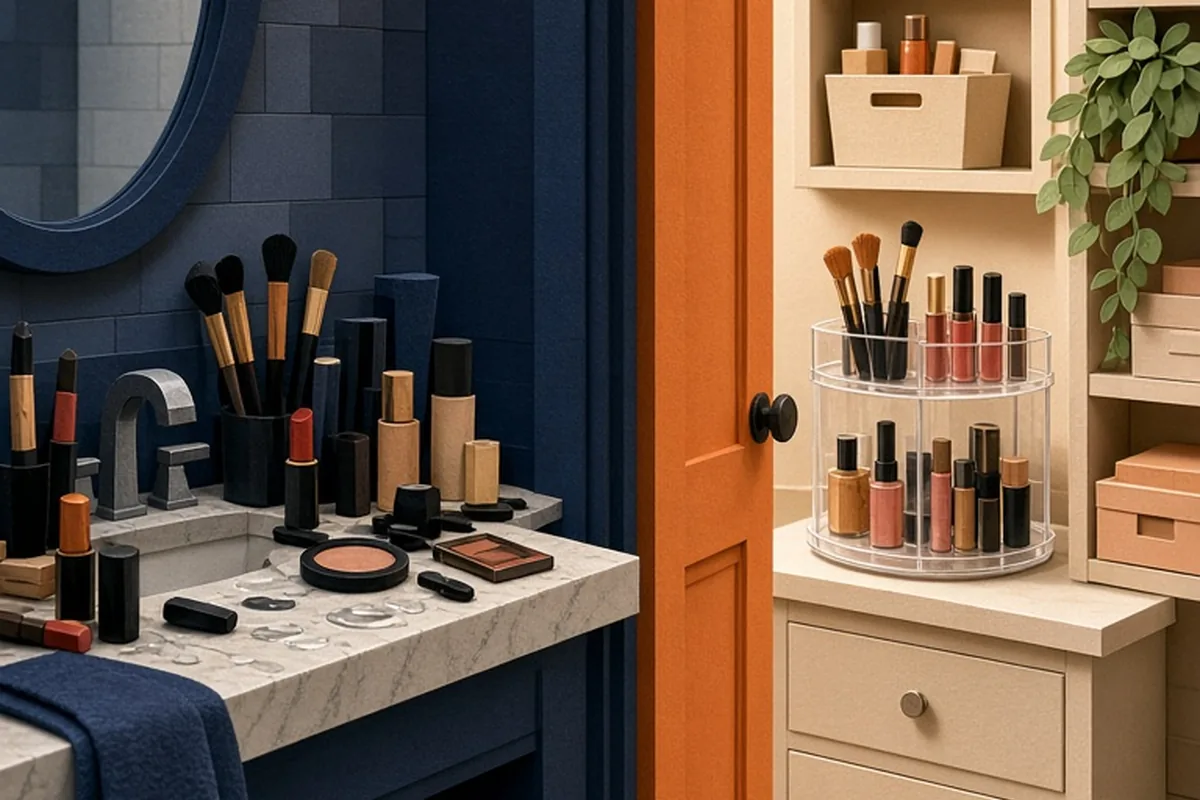
To organize makeup in a bathroom, group products by usage frequency and protect them from moisture. Keep daily essentials in a clear countertop caddy or top vanity drawer using modular dividers. Store surplus backups and specialty items in labeled bins under the sink or in a medicine cabinet, ensuring liquid and powder formulas remain sealed against bathroom humidity.
A cluttered bathroom counter creates friction during busy mornings and exposes delicate beauty formulas to water splashes and steam. Designing an intentional storage layout keeps your cosmetics clean, visible, and easy to reach while preserving precious surface space.
Assess Moisture Levels and Categorize Products by Frequency
Before buying storage bins or drawer inserts, evaluate how your bathroom layout handles daily steam and where water droplets typically land. Bathrooms experience sharp shifts in temperature and humidity that can degrade sensitive cream foundations, organic formulations, and pressed powders over time. Identifying low-moisture zones—such as enclosed medicine cabinets or drawers situated away from the shower—helps you decide where specific product categories should live.
Begin the sorting process by pulling all makeup items out of existing cabinets and placing them onto a clean, dry surface. Group items strictly by how often you use them rather than by brand or color. Separating everyday essentials from weekend or special-event makeup immediately cuts down the volume of clutter that needs to stay within arm reach during rushed mornings.
Sort your collection into three practical operational tiers to establish a clear hierarchy before assigning permanent storage zones:
- Daily core items consisting of everyday foundation, concealer, brow pencil, mascara, and a versatile lip color.
- Secondary products used once or twice a week, such as bold eyeshadow palettes, contour kits, and false eyelashes.
- Unopened backstock, extra applicators, and seasonal shades that can remain in deeper storage until needed.
Configure Vanity Drawers with Modular and Adjustable Dividers
Vanity drawers provide prime real estate for cosmetics because they keep items hidden from sight while shielding them from direct bathroom humidity. However, deep or wide drawers easily become disorganized catch-alls without internal structure. Using modular, clear acrylic or washable plastic dividers lets you customize compartments to match the exact lengths of your brushes, pencils, and compacts.
Arrange your daily drawer from front to back following the sequence of your makeup application. Place base products like primer, foundation, and concealer in the front compartments, followed by eye products in the middle, and setting powders or sprays in the back. For example, storing narrow lip pencils and eyeliners in long, slim trays prevents them from rolling underneath larger powder compacts every time the drawer opens.
When purchasing drawer trays, measure the height, width, and depth of your drawers carefully to ensure seamless fit. Leave a slight gap or use non-skid silicone dots on the base of each tray so the organizers do not slide backward when you pull the drawer open firmly.
Maximize Countertop Space with Rotating and Tiered Organizers
When vanity drawers are limited or absent, vertical countertop organizers provide ample storage without consuming valuable sink-side territory. A compact, two-tier turntable or a stepped acrylic carousel allows you to access skincare bottles, setting sprays, and daily foundations with a quick spin, making every item visible without knocking over neighboring products.
Position countertop organizers as far from the shower enclosure and sink basin as possible to minimize contact with moisture and soap residue. Choose materials that wipe clean effortlessly, such as heavy-gauge clear acrylic, glazed ceramic, or sealed resin. Porous materials like raw wood or untreated wicker can absorb ambient humidity and harbor mildew in damp bathroom environments.
While countertop displays offer rapid access, keeping too many products on the counter can quickly recreate visual chaos. Restrict countertop storage exclusively to items you use at least five days a week, moving all secondary palettes, extra brushes, and reserve products into enclosed cabinets.
Utilize Medicine Cabinets and Vertical Wall Space
Medicine cabinets offer an elevated, enclosed storage zone that keeps cosmetics away from standing sink water. Most medicine cabinets feature adjustable shelving, allowing you to create narrow shelf heights tailored specifically to upright lipsticks, single eyeshadow pots, and liquid concealer tubes. Storing small items upright increases visibility and prevents bottles from tipping over.
You can expand the functional space inside a medicine cabinet by attaching slim magnetic strips or lightweight adhesive caddies to the interior side of the door. A narrow magnetic strip securely holds metal grooming tools like tweezers, eyebrow scissors, and eyelash curlers, keeping them clean and off wet countertops.
If your bathroom lacks a built-in medicine cabinet, consider installing a narrow floating ledge or picture-rail shelf above the towel bar or next to the vanity mirror. A shelf with a shallow front lip prevents bottles from sliding off while keeping daily cosmetics off the primary countertop.
Organize Under-Sink Storage for Backstock and Palettes
Under-sink cabinets offer substantial volume, but navigating plumbing pipes, drain traps, and deep shadows requires deliberate planning. Clear, stackable pull-out drawers are ideal for this space because they transform cavernous cabinet floors into accessible sliding storage. You can smoothly inspect surplus items without kneeling down or digging behind large bottles.
Reserve under-sink compartments for bulk backups, oversized eyeshadow palettes, brush cleaning supplies, and travel bags. Group similar items into distinct labeled bins, such as a dedicated container for unused sponges and cotton rounds and another for seasonal makeup shades. Transparent bins allow you to audit your stock in seconds so you do not accidentally purchase duplicate products.
Because under-sink areas carry a minor risk of plumbing leaks, always choose waterproof plastic bins with raised solid bases rather than open wire baskets or cardboard boxes. Avoid storing unsealed powder cosmetics directly on the cabinet floor where condensation or moisture might collect.
Protect Brushes and Delicate Formulas from Humidity and Bacteria
Makeup brushes, beauty blenders, and powder compacts are particularly vulnerable to bathroom humidity. Storing damp makeup sponges or open brush cups near a steamy shower can encourage mold growth and bacterial accumulation. Keeping brushes in an enclosed acrylic case with a hinged lid or inside a ventilated drawer protects delicate bristles from airborne moisture and dust particles.
Allow beauty blenders and damp application sponges to dry thoroughly in an open, well-ventilated area before placing them into closed storage. Storing a damp sponge in an airtight plastic bin traps residual water and promotes microbial growth, which can lead to skin irritation or breakouts upon application.
Check expiration dates and formula consistency every few months. Liquid foundations, gel eyeliners, and natural cosmetics with fewer preservatives degrade faster in warm, damp bathrooms. If an item changes in smell, texture, or color separation, discard it immediately rather than letting it occupy organizational space.
Establish a Sixty-Second Reset and Maintenance Habit
Even the most thoughtfully designed organization system requires consistent maintenance to stay functional. Establishing a brief sixty-second reset routine at the end of your morning makeup application prevents clutter from slowly migrating back onto open counter surfaces. Returning each compact and pencil to its designated tray immediately preserves your layout indefinitely.
Schedule a brief monthly wipe-down of your storage containers. Acrylic trays and drawer inserts naturally collect loose powder fallout, stray pencil shavings, and pigment smudges over time. Removing the trays and wiping them with a damp microfiber cloth and mild soap keeps your vanity sanitary and visually pristine.
Perform a seasonal audit four times a year to rotate shades according to skin tone shifts and discard expired formulas. Regular decluttering ensures that your storage bins only house active, usable makeup, preventing crowded drawers and keeping morning routines smooth.
Frequently asked questions
Where is the best place to keep makeup brushes in a bathroom?
Keep makeup brushes inside a lidded acrylic container or inside a clean vanity drawer to protect the bristles from moisture, airborne particles, and dust. Avoid leaving open brush cups directly next to the toilet or shower where humidity and contaminants are highest.
Can high bathroom humidity ruin powder and cream cosmetics?
Yes, frequent exposure to shower steam can introduce moisture into open powder compacts, leading to hard pan and bacterial growth, while heat can cause cream formulas to separate. Keep vulnerable cosmetics sealed tightly in closed drawers, medicine cabinets, or airtight containers.
How can I store makeup if my bathroom lacks drawers or counter space?
Utilize vertical wall storage by mounting a shallow picture ledge, hanging an over-the-door pocket organizer, or installing stackable sliding bins beneath the sink. A compact rolling utility cart placed between the vanity and wall also provides tiered storage without requiring built-in cabinetry.
Your next step
Start by sorting your makeup into daily essentials and surplus backstock, then install modular drawer dividers or a tiered countertop caddy to keep your everyday routine fast, dry, and organized.