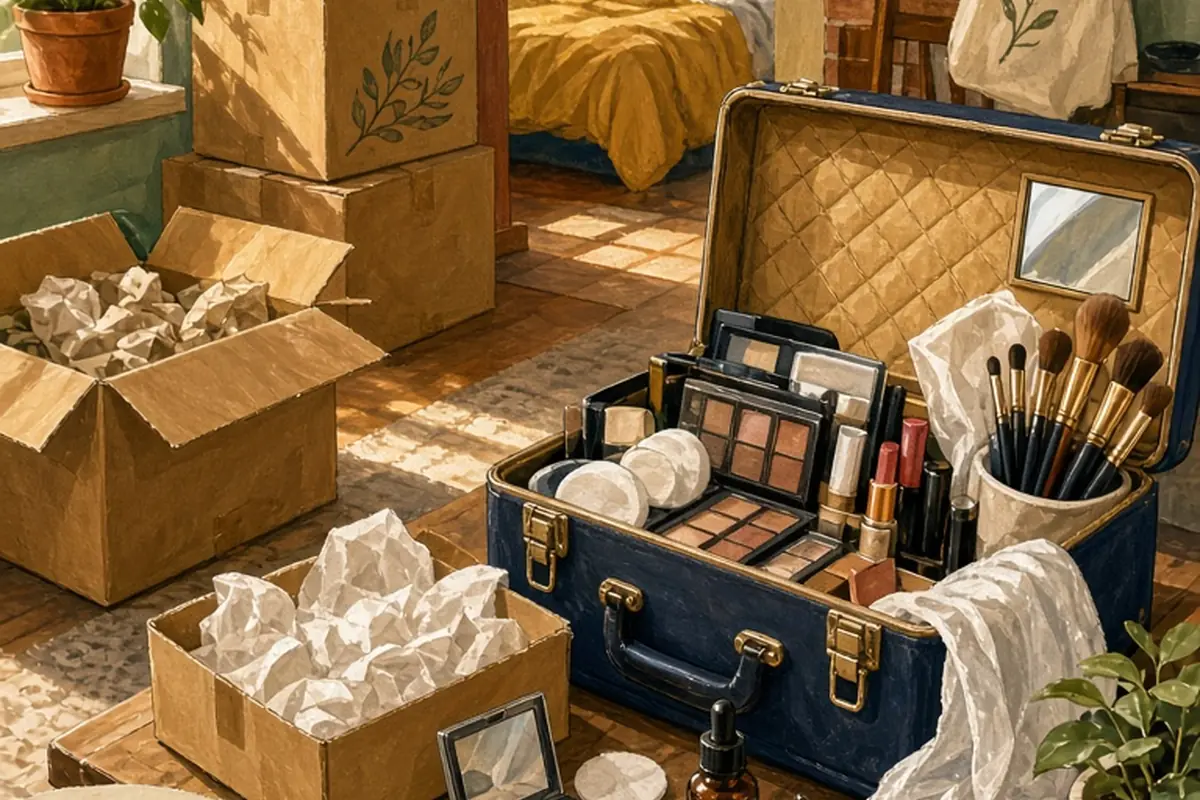
To pack makeup for moving safely, declutter expired formulas first, then sort items by texture and fragility. Cushion pressed powders with cotton rounds inside compacts, seal liquid caps with plastic wrap, and protect brush bristles in dedicated wraps. Pack your cosmetics into hard-sided train cases or padded organizers, and transport valuable, temperature-sensitive formulas in your personal vehicle.
Moving your cosmetic collection requires thoughtful preparation to prevent cracked compacts, messy liquid spills, and heat damage during transit.
Decluttering and Sorting Cosmetics Before Packing
Packing presents an ideal opportunity to audit your beauty vanity before placing fragile items into boxes. Sifting through expired foundations, dried mascara tubes, separated liquid lipsticks, and forgotten sample packets reduces the total volume you need to protect and transport. Holding onto old formulas not only consumes valuable packing space but also risks leakage if compromised packaging fails under transit pressure. Check batch codes, expiration symbols, changes in scent, and separation in oil-based formulas to determine what should be discarded versus what is worth wrapping.
Once you have purged unusable items, group the remaining cosmetics into clear categories based on texture, size, and fragility. Separate pressed powders, glass bottles, squeeze tubes, makeup brushes, and electronic beauty tools into distinct piles. For instance, keeping heavy glass foundations away from delicate eye palettes prevents accidental crushing within the same organizer. This initial sorting step allows you to tailor your protective materials to specific risks, ensuring that liquids cannot spill onto dry powders and that delicate compacts receive adequate cushioning.
Protecting Pressed Powders and Eyeshadow Palettes
Pressed powders, highlighters, blushes, and eyeshadow palettes are among the most vulnerable cosmetics during a move. The vibrations from moving trucks and sudden bumps can easily shatter compacted pigments into loose dust, ruining intricate palettes and staining surrounding items. To safeguard these fragile formulations, open each compact and place a clean, flat cotton round or a piece of bubble wrap directly over the powder before closing the lid securely. This simple padding fills the internal void, immobilizing the powder cake and absorbing physical shocks during movement.
After securing the interior of each palette, wrap the outside of the casing in small-bubble wrap or thick packing paper and secure it with gentle painter tape. If you own large, multi-pan eyeshadow collections, stack them vertically on their sides like books inside a padded caddy rather than laying them flat beneath heavy items. While cotton rounds offer excellent shock absorption, avoid overstuffing the compact, as excessive inward pressure against the mirror or clasp can crack the outer hinge when snapped shut.
Sealing Liquids, Creams, and Setting Sprays Against Leaks
Liquid cosmetics such as foundation, setting sprays, micellar water, and facial oils pose a significant mess hazard if their caps loosen or change pressure during a move. To create a reliable barrier against leaks, unscrew the cap or pump dispenser, place a small square of plastic cling wrap over the bottle opening, and tightly screw the cap back down over the plastic. This creates a secure, secondary gasket that prevents fluid from seeping through the threading. For pump bottles without locking mechanisms, secure the pump collar with a small piece of masking tape or a binder clip to prevent accidental compression.
After sealing each bottle neck, group liquids into clear, sealable plastic bags or waterproof travel pouches rather than packing them directly alongside dry products. For example, placing two liquid foundations and a tinted moisturizer inside a quart-sized zipper bag ensures that even if an unexpected leak occurs, the spill remains contained without ruining other personal belongings. A practical trade-off to keep in mind is that while plastic bags prevent widespread stains, they do not provide impact protection on their own, meaning glass bottles still require an outer layer of bubble wrap.
Safeguarding Makeup Brushes, Sponges, and Applicators
Cosmetic brushes and beauty sponges require specific packing techniques to maintain their shape, cleanliness, and structural integrity. Tossing loose brushes into a general moving box can bend natural or synthetic bristles, crush delicate ferrules, and transfer leftover pigments onto other surfaces. To preserve brush shapes, slide individual brush guards or netting over the bristle heads, working from the handle upward so the hairs remain smooth and aligned. Group protected brushes into a hard-sided brush cup, a roll-up brush pouch, or a structured pencil case that shields handles from snapping under pressure.
Beauty sponges and blending puffs should be completely clean and dry before packing to prevent mold or bacterial growth inside enclosed spaces during transit. Place dry sponges in breathable mesh pouches or perforated travel cases rather than airtight plastic bags, especially if the move spans several days. While tightly rolling brushes in towels might save time, it can exert uneven pressure on angled or fan brushes, so structured storage cases remain the safer choice for maintaining precise bristle geometry.
Selecting the Right Packing Containers and Cushioning
The type of container you choose to house your makeup plays a significant role in how well your products survive the moving process. Heavy cardboard moving boxes can crush under weight and expose your vanity items to dust, humidity, and accidental rough handling. Hard-sided makeup train cases, structured acrylic organizers with secure latches, or rigid plastic storage bins offer far superior structural protection. Line the bottom of your chosen container with a layer of bubble wrap, foam sheeting, or a folded microfiber towel to establish a soft shock-absorbing base.
When arranging packed products inside the container, place heavier glass containers and solid bottles at the base, followed by cushioned palettes, and finish with lighter items like pencil liners and lipsticks near the top. Fill any remaining voids or empty corners with packing paper, clean washcloths, or foam peanuts so items cannot slide or knock into one another when the box is shifted. While reusable makeup train cases require a small initial investment, they provide reusable organization for future travel and eliminate the need for excessive disposable tape and cardboard.
Assembling a First-Night Essentials Cosmetic Kit
During a busy move, unpacking your entire beauty collection is rarely an immediate priority on moving day. Sifting through multiple taped boxes just to find a cleanser, moisturizer, or basic concealer creates unnecessary frustration after a long day of physical labor. Packing a dedicated first-night cosmetic bag ensures you have immediate access to your daily hygiene and beauty routine without disrupting your carefully packed master cases.
Select a compact, portable toiletry pouch to hold versatile, multi-use products for the first two to three days in your new home. Include travel-sized cleansers, a daily moisturizer, SPF, lip balm, a neutral cream blush or lip color, mascara, and a single versatile brush or sponge. Keep this pouch in your personal overnight bag or purse alongside your medications and change of clothes. The primary limitation of an essentials kit is limited capacity, so focus strictly on functional daily maintenance rather than carrying redundant shades or specialty evening products.
Managing Temperature Control and Personal Vehicle Transport
Cosmetics are highly sensitive to extreme environmental fluctuations, making climate management a critical part of your packing plan. Moving truck cargo bays can reach extreme high temperatures in summer and freezing conditions in winter, both of which can ruin beauty products. Heat can melt lipsticks, curdle emulsified liquid foundations, and alter the active ingredients in skincare serums, while freezing temperatures can cause glass packaging to shatter and cream textures to separate permanently.
Whenever possible, transport your primary cosmetics boxes and skincare cases inside the climate-controlled passenger cabin of your personal car rather than loading them onto a commercial moving truck. If you must use a moving service for long-distance transport, pack temperature-sensitive formulas with insulated thermal grocery bags or small cooler totes to buffer against rapid temperature shifts. Remember that while thermal bags offer temporary insulation, they cannot protect against prolonged exposure to extreme heat over several days without active climate control.
Frequently asked questions
How do you pack loose powder without it spilling everywhere?
To prevent loose powder from leaking through its sifter, place a piece of plastic wrap or a flat cotton pad over the sifter holes before screwing the lid on tightly. You can also seal the outer seam of the lid with a strip of painter tape for extra security during transit.
Can makeup be packed in standard cardboard moving boxes?
While standard moving boxes can be used if lined with ample bubble wrap and padding, hard-sided plastic bins or padded train cases offer significantly better crush resistance. If using cardboard, choose small, sturdy boxes and clearly label them as fragile.
What is the best way to transport expensive perfumes and glass bottles?
Wrap each perfume and glass bottle individually in thick bubble wrap, secure the caps with tape, and pack them vertically inside a rigid, compartmentalized box. Avoid laying glass bottles flat where side impacts are more likely to crack the casing.
How do you fix a pressed powder if it breaks during a move?
If a powder compact shatters, crush the remaining pieces into a fine powder inside the pan, mix in a few drops of high-percentage rubbing alcohol to form a paste, and smooth it flat with a clean coin or spoon. Once the alcohol completely evaporates, the powder will dry back into a solid cake.
Your next step
Begin by decluttering your beauty vanity today, discarding expired formulas and gathering soft cushioning materials so you can pack your remaining cosmetics securely ahead of moving day.