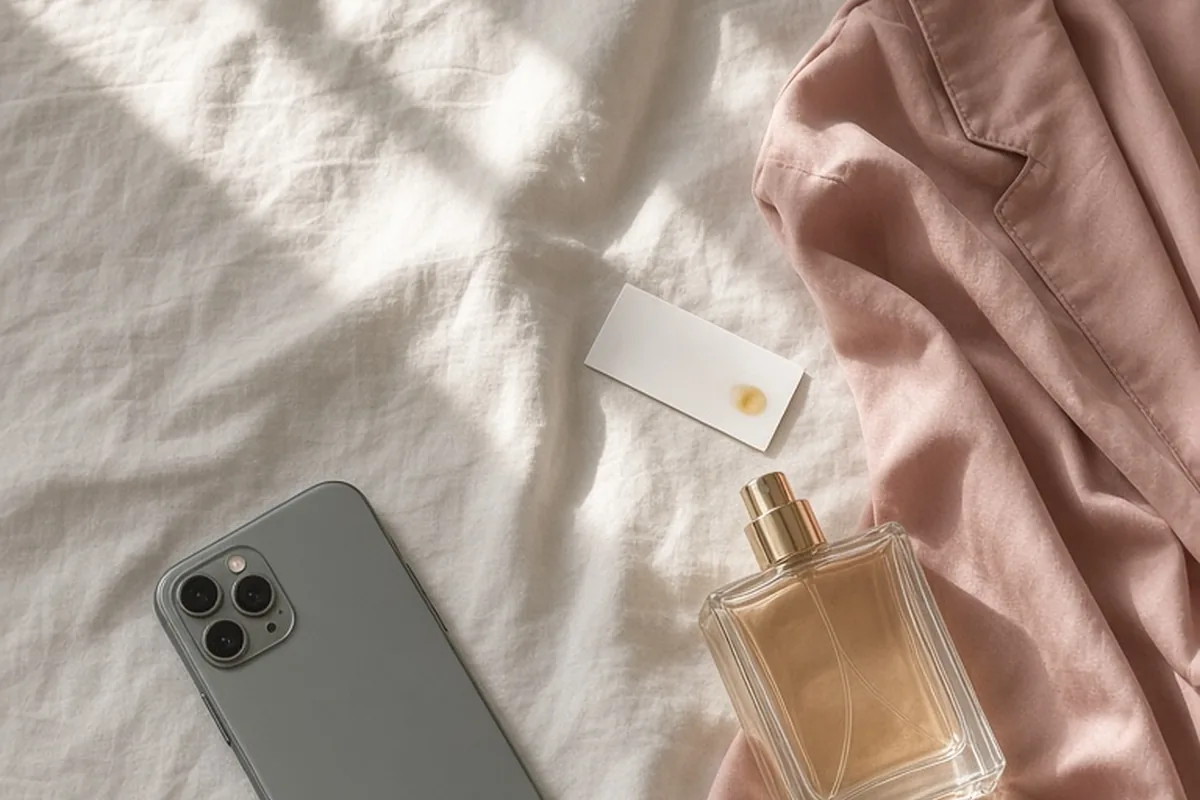
To pick the perfect perfume and smell great, identify fragrance families you naturally enjoy, test scents directly on your skin over several hours rather than on paper strips alone, and apply your chosen fragrance lightly to well-moisturized pulse points. Choosing a perfume that complements your natural chemistry and personal routine creates an effortless, memorable presence without overwhelming those around you.
Fragrance is deeply personal, functioning as an invisible signature that can elevate your daily mood and leave a subtle, lasting impression. Finding a scent that genuinely feels like your own requires looking past ornate bottles and marketing hype to understand how notes evolve throughout the day.
Understanding Fragrance Families and Note Structures
Every perfume belongs to an olfactory family that defines its overarching character. The most common categories include fresh (citrus, aquatic, and green notes), floral (rose, jasmine, or white florals), woody (sandalwood, cedar, and vetiver), and amber or warm gourmand (vanilla, spices, and resinous notes). When you begin your search, pay attention to the scents you already love in daily life, such as freshly peeled oranges, cedarwood candle smoke, or brewed black tea. Identifying which category feels comforting and energizing narrows down hundreds of potential options into a manageable collection.
Perfumes also develop in stages known as top, heart, and base notes. Top notes are the bright, volatile molecules you smell in the first five to fifteen minutes, designed to create an immediate initial impression. As those dissipate, heart notes emerge to form the main personality of the blend for the next two to four hours. Finally, base notes of heavier woods, musks, and resins anchor the fragrance onto your skin for the remainder of the wear. A common mistake is buying a bottle immediately after spraying it at a department store counter; you are only smelling the top notes, which disappear long before the true character of the fragrance takes over.
Testing Scents on Skin Instead of Paper Strips
Paper blotter cards are helpful for a fast initial elimination, but they cannot tell you how a fragrance will perform on your body. Paper lacks natural warmth, oils, and the unique micro-environment of your skin. A perfume that smells crisp and refreshing on a blotter might dry down sour, powdery, or excessively sweet once it interacts with your natural body chemistry and sweat glands. To evaluate a scent accurately, you must always test it directly on clean skin and live with it for an entire day.
Limit yourself to testing a maximum of two to three fragrances in a single session, applying one to each wrist and perhaps one to the inner elbow. If you try to smell ten different bottles in twenty minutes, your olfactory receptors become fatigued, leading to sensory confusion where everything begins smelling identical or overwhelmingly chemical. Take a sample vial home, apply it on a regular morning, and observe how the scent shifts as you move between indoor heating, fresh air, and daily activity. If you still appreciate the scent at dinner time, it is a genuine candidate for your signature collection.
Matching Perfumes to Your Environment and Lifestyle
A fragrance should harmonize with your daily environment rather than fight against it. Lightweight, clean scents containing citrus, tea, neroli, or soft musks excel in professional settings, shared office spaces, and warm weather because they stay close to the body and remain unobtrusive. In contrast, heavier fragrances loaded with oud, leather, patchouli, or rich vanilla project further and thrive in cooler temperatures or outdoor evening gatherings where crisp air naturally mutes scent diffusion.
Consider your personal routine and the practical trade-offs of different concentrations. Eau de Cologne (EDC) contains around two to four percent perfume oil and lasts roughly two hours, offering a refreshing post-shower splash. Eau de Toilette (EDT) contains five to fifteen percent oil and typically lasts three to five hours, making it ideal for casual daytime wear. Eau de Parfum (EDP) and pure Parfum contain between fifteen and thirty percent oil, providing rich longevity that lasts through a full workday. Matching the concentration to your schedule ensures you do not overpower a morning meeting or find yourself scentless before an evening dinner.
Applying Fragrance for Maximum Longevity and Subtle Projection
The way you apply perfume determines whether it lasts throughout the day or vanishes within an hour. Fragrance molecules evaporate much faster on dry skin, so the single most effective longevity trick is applying an unscented body lotion or moisturizer directly before spraying your perfume. The lipids in the moisturizer create a smooth protective barrier that traps the perfume oils and slows down their rate of evaporation.
Target warm pulse points where blood flows close to the skin surface, such as the sides of the neck, collarbones, and inner wrists. However, avoid the common impulse to rub your wrists together after spraying. Rubbing creates friction and excessive localized heat, which shears delicate top notes and crushes the natural architecture of the scent. Instead, spray lightly from a distance of four to six inches and let the mist dry naturally onto your skin and clothing fabrics for a balanced, long-lasting sillage.
Avoiding Scent Blindness and Over-Application
Olfactory fatigue, commonly known as nose-blindness, is an evolutionary mechanism where your brain tunes out constant background smells so it can detect new environmental threats. After wearing the same perfume for several consecutive days, you will naturally perceive it as much weaker than it actually is. Many people mistakenly respond by adding three or four extra sprays, which can quickly make their presence overwhelming or nauseating to colleagues, dates, and family members.
To prevent accidental over-spraying, establish a consistent rule of two to three sprays for everyday wear, regardless of whether you can still smell yourself in the afternoon. If you want to check your actual projection, ask a trusted friend whether they notice your scent from an arm's length away. Rotating between two or three different fragrance profiles throughout the week also resets your senses, allowing you to enjoy your signature scents without constantly escalating the dose.
Curating a Practical Fragrance Wardrobe Over Time
Instead of searching for a single mythical bottle that performs flawlessly at the gym, the boardroom, and a formal gala, consider curating a lean three-scent wardrobe. A well-rounded collection includes a clean, uplifting everyday scent for work or casual errands, a cozy and grounding scent for relaxed downtime or crisp weekends, and a deeper, more sensual blend for special dates and evenings out. This simple framework offers versatile options without requiring dozens of expensive bottles on your vanity.
Invest in sample sets and travel-sized decants before committing to a full one-hundred-milliliter bottle. Many luxury and niche perfume houses sell affordable discovery kits containing five or ten miniature sprayers. Living with small vials over several weeks allows you to test how different notes perform across changing seasons, moods, and social settings. This disciplined approach saves significant money, eliminates buyer remorse, and guarantees that every full bottle you purchase is one you genuinely adore wearing.
Illustrative Scenarios
Maya’s Shift from Social Media Hype to Skin Testing
Maya purchased an expensive, viral floral perfume after reading glowing reviews online, expecting an effortless and elegant daily scent. However, within an hour of spraying it on her skin at work, the sharp white floral notes became intensely powdery and triggered a mild headache, leaving her frustrated by the wasted investment. Maya decided to pause blind buying and ordered a discovery set containing four distinct fragrance families: woody, amber, fresh aquatic, and green citrus. She wore each sample for three consecutive days during her regular office routine, noting how the dry-down evolved from morning to evening. She discovered that warm, subtle sandalwood and fig notes blended smoothly with her skin chemistry, whereas heavy tuberose always turned sharp.
Key point: Never purchase a full bottle based solely on popular trends or paper blotters; test a sample on your skin across full daily routines to observe the authentic dry-down.
Jordan’s Adjustment for Date-Night Scent Projection
Jordan wanted to make a memorable impression on a first dinner date and sprayed a rich, smoky amber fragrance five times immediately before getting into the car. Throughout the drive and dinner in a cozy restaurant booth, the scent cloud was overpowering, causing both of them to feel slightly overwhelmed in the enclosed space. Recognizing that the intense projection created unnecessary discomfort, Jordan sought a more balanced approach. For the next social outing, Jordan applied an unscented moisturizer and sprayed just two measured mists of a fresh woody fragrance onto the collarbones thirty minutes before leaving the house. The fragrance stayed close and inviting, noticeable only during a hug or close conversation.
Key point: Fragrance should act as an intimate discovery rather than an announcement; measured application on moisturized skin creates inviting, subtle projection.
Frequently asked questions
What is the primary difference between Eau de Toilette and Eau de Parfum?
Eau de Toilette contains a lower concentration of aromatic perfume oils (around five to fifteen percent) and lasts three to five hours, making it lighter and ideal for casual daytime wear. Eau de Parfum features a higher concentration (fifteen to twenty percent) that provides deeper projection and longevity of six to eight hours.
Why does the same perfume smell completely different on two different people?
Individual body chemistry, skin lipid levels, baseline hydration, body temperature, and diet all influence how perfume molecules vaporize on your skin. A fragrance that smells sweet and creamy on one person may lean sharp or woody on another due to these natural physiological variations.
How should I store perfume to ensure it does not spoil or lose its scent?
Keep your perfume bottles away from direct sunlight, extreme heat, and bathroom humidity, all of which degrade delicate essential oils and alcohol bonds over time. Storing your fragrances in a cool, dark drawer, cabinet, or their original boxes preserves their original scent profile for years.
Where should I spray perfume if I have sensitive skin that gets easily irritated?
If alcohol-based fragrances cause redness on your neck or wrists, apply the perfume directly to your clothing fabrics, jacket lapels, or the outer ends of your hair instead. Natural fabrics like cotton, wool, and linen hold scent exceptionally well without causing direct dermal contact or irritation.
Your next step
Order a discovery sample kit featuring three distinct fragrance families, apply one scent to clean, moisturized skin tomorrow morning, and check its character at lunch and evening before committing to a full bottle.