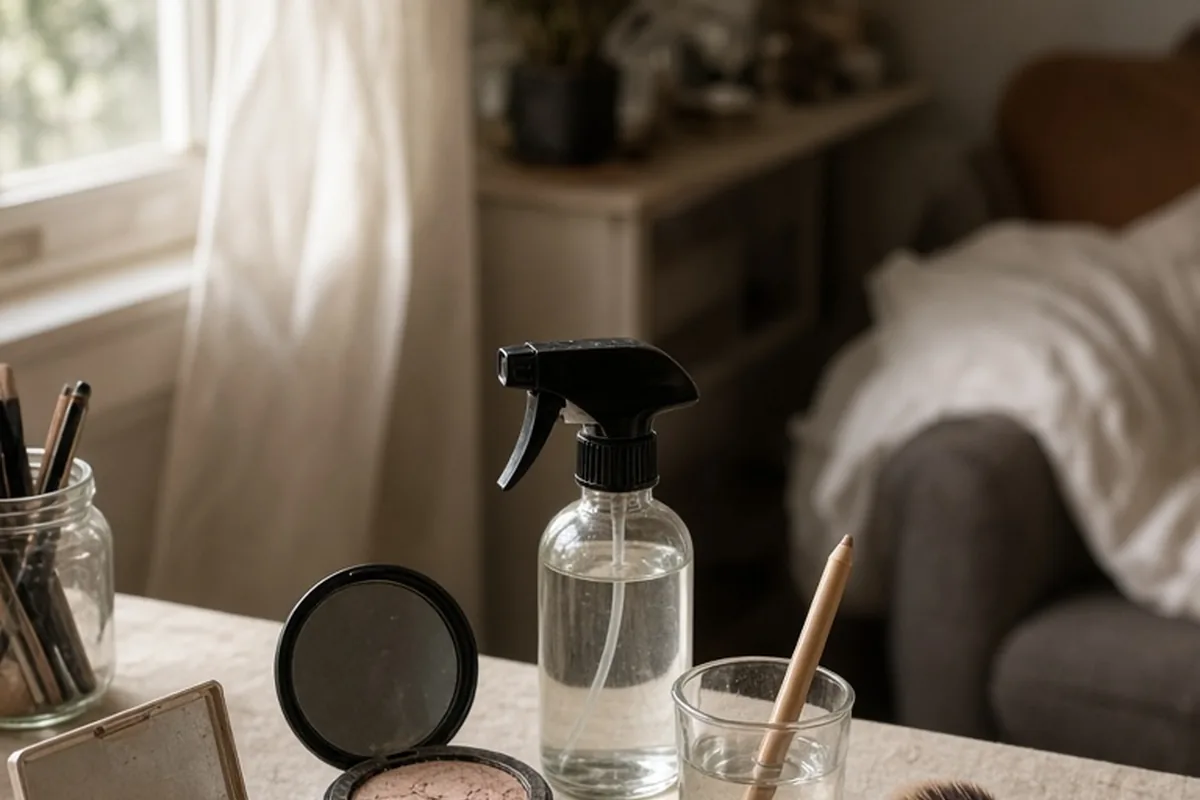
To sanitize makeup, spray powder formulas with 70% isopropyl alcohol and let them air-dry completely. For bullet lipsticks, wipe off the top layer and submerge the tip in alcohol for fifteen seconds. Wash brushes and sponges weekly with warm water and gentle cleanser. Products with built-in wands, such as mascaras and liquid lipsticks, cannot be safely sanitized and must be discarded if contaminated.
Cosmetics accumulate oils, dead skin cells, and airborne debris every time they come into contact with your fingers, face, or vanity surface. Establishing a consistent sanitation routine protects your complexion from preventable breakouts, keeps pigments performing at their best, and preserves your beauty collection over time.
Selecting the Right Alcohol and Disinfecting Supplies
The primary tool for sanitizing cosmetic products is isopropyl alcohol, but the concentration you select makes a critical difference. Many people mistakenly reach for 91% or 99% rubbing alcohol assuming higher concentrations yield better results. However, higher alcohol concentrations evaporate too quickly to thoroughly penetrate microbial cell walls. A 70% isopropyl alcohol solution contains the optimal balance of water and alcohol, allowing the liquid to remain on the cosmetic surface long enough to break down bacteria effectively before drying away.
Alongside your 70% isopropyl alcohol, you will need a clean, fine-mist spray bottle, lint-free cotton rounds or tissue paper, a stainless steel cosmetic spatula, and pointed cotton swabs. Avoid pouring alcohol directly from the bottle onto your products, as excess liquid can alter the binders in pressed powders or dissolve delicate formulas. Decanting your alcohol into a fine-mist spray bottle ensures an even, controlled application across powders and compacts without over-saturating the pan.
Keep these supplies stored in a dedicated container near your makeup vanity so sanitizing becomes a natural extension of your beauty routine rather than a neglected chore. Having clean microfiber towels and sanitizing wipes ready for external packaging will also keep your compact exteriors and drawer organizers spotless.
Sanitizing Pressed Powders, Eyeshadows, and Blushes
Pressed powders, including bronzers, highlighters, blushes, and eyeshadow palettes, are among the easiest products to disinfect because their dry environment naturally inhibits deep bacterial growth. Over time, however, facial oils transfer from your brushes onto the surface of the powder, creating a hardened glaze known as hard pan. This layer not only harbors debris but also prevents your brush from picking up color evenly.
To sanitize a pressed powder, begin by taking a clean, dry tissue or a sanitized spoolie and gently wiping across the top surface to remove any hard pan or loose dust. Next, hold your spray bottle roughly six to eight inches away from the open compact and mist the powder evenly with 70% isopropyl alcohol. You want the surface to look uniformly damp rather than soaking wet. Allow the compact to sit open in a well-ventilated area until the alcohol evaporates completely, which typically takes between fifteen and thirty minutes.
One important limitation to keep in mind involves delicate formulas such as baked powders, loosely pressed mineral pigments, or glitter toppers. Saturating these textures with too much liquid can compromise their structural integrity or cause the binder to separate. For these sensitive formulas, keep the mist exceptionally light and avoid touching the pan until it is entirely dry.
Disinfecting Bullet Lipsticks, Lip Liners, and Eye Pencils
Solid lipsticks and pencil cosmetics directly contact mucous membranes, making them prone to collecting bacteria and natural oral flora. Fortunately, solid wax and oil formulations can be cleaned quickly without damaging the underlying product. For a traditional bullet lipstick, twist the product up slightly and use a clean tissue to scrape away the outermost layer of pigment that has made direct contact with your lips.
Once the surface layer is removed, submerge the exposed tip of the lipstick into a small glass of 70% isopropyl alcohol for approximately ten to fifteen seconds. Remove the lipstick, gently blot off any excess moisture with a fresh tissue, and allow it to air-dry completely before twisting it back into the casing. Never twist a wet lipstick back into its tube, as trapped moisture inside the barrel creates an environment where mold can develop.
For wooden or plastic sharpenable pencils used for eyes or lips, sanitation is even simpler. Running the pencil through a sharpener removes the contaminated outer layer entirely and exposes fresh, clean product. To maintain hygiene, sanitize the sharpener blade with an alcohol-soaked cotton swab before and after each sharpening session, and finish by giving the freshly sharpened pencil tip a brief spritz of alcohol.
Cleaning Cream Compacts, Foundations, and Dispenser Packaging
Cream products such as cream blush, pot concealers, and solid foundation sticks require a slightly more delicate touch because moisture can alter their emollient base. If a cream product sits in an open pan, take a sanitized cosmetic spatula to scrape off the topmost film of product. Then, mist the remaining surface lightly with alcohol and let it dry thoroughly before securing the lid.
Liquid foundations and serums housed in pump bottles or squeeze tubes are largely protected from air and direct contamination, but their exterior mechanisms still require routine maintenance. Dried foundation accumulating around a pump nozzle can harbor bacteria and dry into crusted plugs that ruin smooth dispensing. Wipe down all nozzles, neck threads, and bottle caps using a cotton pad soaked in 70% alcohol once every two weeks.
Dropper bottles demand specific precautions. Never allow the glass pipette to touch your fingers, face, or palms directly when applying product. If the dropper tip accidentally touches your skin, wipe it thoroughly with an alcohol swab and let it air-dry completely before reinserting it into the bottle to avoid contaminating the remaining formula.
Washing and Sanitizing Makeup Brushes and Beauty Sponges
Application tools harbor substantially more bacteria, dead skin, and residual product than the makeup items themselves. Sanitizing your cosmetics while neglecting your brushes creates an endless cycle of cross-contamination. Deep cleaning your tools weekly with warm water and a clarifying soap or dedicated brush cleanser is essential for maintaining both tool performance and skin health.
When washing makeup brushes, point the bristles downward under lukewarm running water to prevent water from seeping into the ferrule, where it can dissolve the glue holding the bristles in place. Work your cleanser into the damp bristles until the lather runs clear, rinse thoroughly, and gently squeeze out excess water. Reshape the brush heads and lay them flat on a clean towel with the bristles hanging slightly over the edge of a counter to ensure complete air circulation.
Beauty sponges require special attention due to their dense, porous structure. A sponge that remains damp inside can quickly develop hidden mold. Wash sponges after every few uses by lathering them thoroughly with soap, rinsing until the water is completely clear, and drying them in an open, well-ventilated space rather than inside an enclosed makeup bag or drawer.
Recognizing Products That Cannot Be Sanitized
While many cosmetic formulas tolerate alcohol misting, certain products cannot be effectively sanitized once contaminated and must simply be replaced. Items with built-in wands that dip back into a liquid reservoir, such as mascara, liquid eyeliner, lip glosses, and liquid concealers with doe-foot applicators, cannot be cleaned. Introducing alcohol directly into these bottles degrades the preservative system and ruins the chemical balance of the formula.
If you have experienced an active eye infection such as conjunctivitis, or a contagious skin or lip flare-up, any mascara, liquid eyeliner, or wand-based lip product used immediately prior to or during the outbreak must be discarded immediately. Attempting to salvage these products places you at significant risk for reinfection.
Additionally, keep a close eye on general expiration timelines and formula shifts. If a product separates noticeably, develops a rancid or sour smell, changes drastically in texture, or fails to apply smoothly, its internal preservative system has likely failed. No amount of surface alcohol spray can restore a deteriorated formula.
Establishing Preventative Hygiene and Safe Storage Habits
Practicing preventative hygiene significantly reduces the frequency and intensity of sanitization your collection requires. Always wash your hands thoroughly with soap and water before applying makeup or touching your face. Whenever possible, dispense liquid and cream products onto a clean stainless steel palette or the back of a sanitized hand rather than dipping fingers directly into open jars.
The environment where you store your cosmetics plays a major role in microbial growth. Bathrooms are notoriously humid and subject to frequent temperature fluctuations from hot showers, creating ideal conditions for bacteria and mold to multiply inside compacts and tool bristles. Storing your makeup in a dry, cool bedroom vanity or dedicated closet drawer protects the preservative systems in your products and prolongs their shelf life.
Regularly clean the containers, pouches, and drawer dividers that house your collection. Wiping down storage caddies and acrylic organizers with disinfectant wipes once a month ensures that freshly sanitized compacts are not immediately placed back onto a dusty or residue-covered surface.
Frequently asked questions
Will spraying rubbing alcohol ruin the texture of my eyeshadows?
Using a fine mist of 70% isopropyl alcohol will not ruin pressed eyeshadows, provided you do not oversaturate the pan. The alcohol disinfects the surface and evaporates cleanly without leaving residue. Be sure to let the palette dry completely with the lid open before using it.
How often should I sanitize my makeup collection?
Pressed powders and solid lipsticks should be sanitized once every two to four weeks for personal use. Makeup brushes and blending sponges should be deep-cleaned weekly to prevent bacteria transfer and product buildup.
Can I sanitize mascara by adding alcohol into the tube?
No, you should never add alcohol or any other liquid into a mascara tube. Alcohol breaks down the mascara formula and preservative matrix, and applying the altered mixture near your eyes can cause severe irritation or chemical injury.
What is the best way to sanitize makeup after being sick?
Disinfect pressed powders with a 70% alcohol mist and scrape the outer layer off bullet lipsticks before submerging them in alcohol. Any liquid products with wand applicators used while sick, especially mascaras and glosses, should be discarded and replaced.
Your next step
Inspect your current makeup vanity, discard any expired wand products, and fill a clean spray bottle with 70% isopropyl alcohol to sanitize your powder compacts and lipsticks today.