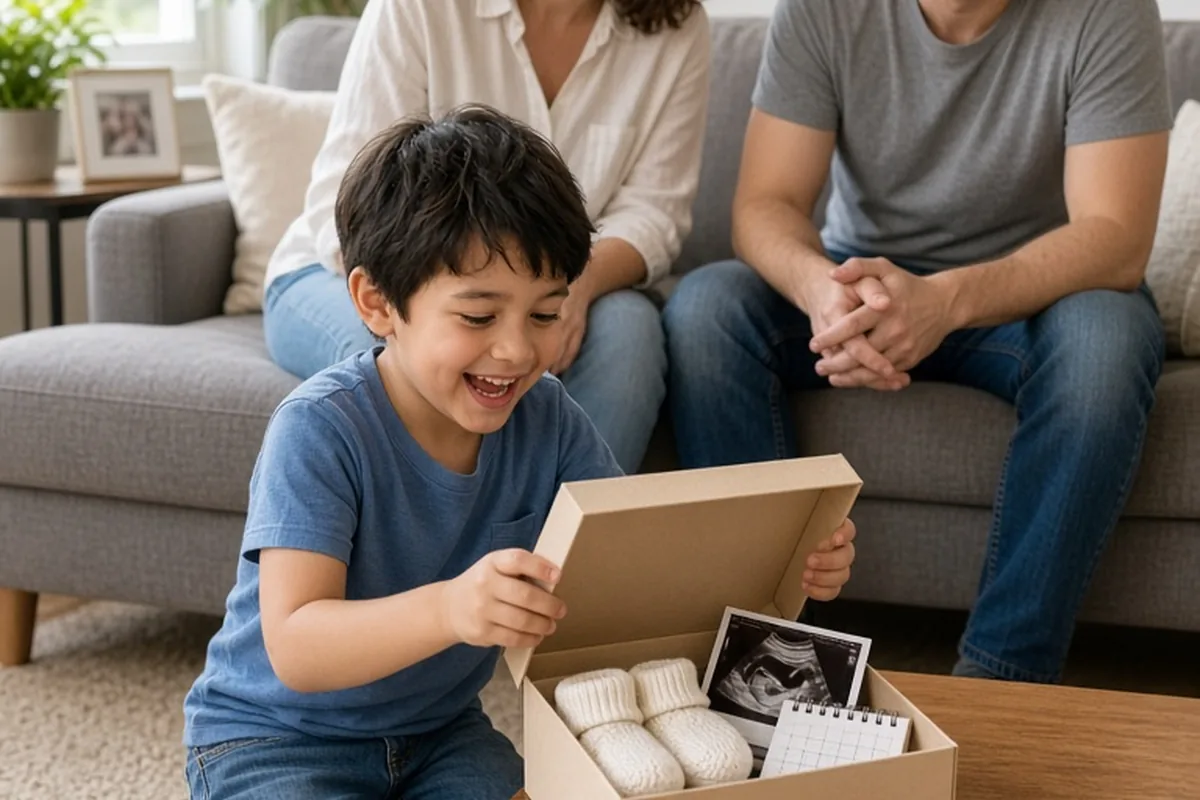
Telling your kids you are pregnant works best when you match the reveal to their developmental stage and emotional maturity. Fun, original approaches include clue-based scavenger hunts, customized bedtime storybooks featuring your child as the older sibling, scratch-off puzzle cards, or a family baking project with a playful surprise. Pair any creative reveal with straightforward, reassuring conversation so your children understand what is happening and feel secure in their role.
Sharing pregnancy news with your existing children is a major family milestone, yet it frequently brings a mix of eager anticipation and mild nervousness for parents. While adult relatives typically understand what a new baby entails, children interpret the news entirely through the lens of their own routines, emotional bonds, and stage of development. Turning the announcement into an engaging, lighthearted activity helps frame the upcoming change as an exciting family chapter rather than an intimidating disruption.
Choosing the Right Timing Based on Age and Ultrasound Milestones
Before selecting a creative announcement method, decide exactly when to break the news. Time operates differently across childhood. For toddlers and preschoolers, nine months represents a vast, incomprehensible expanse of time. Announcing an impending arrival at six or eight weeks can lead to daily questions about why the baby is not here yet, creating months of toddler frustration and confusion. For these younger children, waiting until the second trimester, or even until a visible bump appears, grounds the news in physical reality.
School-age children and teenagers, on the other hand, often pick up on subtle household shifts long before parents formally announce anything. They notice morning sickness, frequent medical visits, whispered conversations, and sudden fatigue. If you experience intense early pregnancy symptoms, holding out until a later milestone might cause older kids to worry that a parent is secretly ill. In these cases, sharing the news shortly after an initial dating ultrasound or the end of the first trimester provides peace of mind while protecting family trust.
Consider also how your family handles confidentiality. Young children generally lack a social filter; once told, they will likely inform their preschool teachers, grocery store clerks, and neighborhood playmates within twenty-four hours. If you wish to keep your pregnancy private from your wider community until certain medical screenings or viability milestones are reached, factor your child's discretion—or lack thereof—directly into your timeline.
Playful Reveals Designed for Toddlers and Preschoolers
Young children understand the world through tactile play, visual stories, and physical objects. Abstract concepts like 'in seven months' or 'a growing embryo' do not mean much to a three-year-old. A highly effective and memorable approach is creating a personalized bedtime storybook. You can take an inexpensive photo album or blank board book and fill it with photos of your child as an infant, progressing through their milestones, and ending with a picture of an ultrasound or a pair of newborn socks, labeled with text naming them as the family's new big brother or big sister.
Another engaging option involves a tangible 'promotion' package. Toddlers love responsibilities that feel playful. You can present them with a customized cape, a lanyard with a pretend badge, or a special hat designating them as the household's official baby helper. Inside the gift box, include an everyday baby object—like a miniature pacifier or a tiny swaddle blanket—and ask them to guess who might use something that small. This invites curiosity before you deliver the punchline.
Keep your spoken explanation simple and concrete after the initial surprise. Avoid confusing metaphors such as saying mommy 'ate a seed' or that a baby is 'in mommy's tummy,' which can lead toddlers to believe food is involved or cause anxiety around digestion. Clear phrases such as 'Mommy has a special place called a uterus where a real baby is growing' prevent misunderstandings while answering their basic curiosity honestly.
Interactive Clue Games and Mystery Reveals for Elementary Kids
Children between the ages of six and eleven thrive on solving riddles, cracking codes, and participating in family challenges. A scavenger hunt through your home turns the announcement into an adventure that keeps them actively engaged. You can write four or five rhyming clue cards, each leading to a familiar domestic location: the refrigerator, the book nook, the coat closet, and finally the room intended for the nursery or a laundry basket holding baby supplies.
At the final destination, place a clear, fun clue that requires deductive reasoning. A small gift box containing a pair of baby booties, a sonogram photo, and a calendar with your due date circled gives them the satisfaction of solving the puzzle themselves. Watching the realization dawn on their faces as they connect the clues creates an organic, joyful memory that feels earned rather than staged.
Alternatively, you can make or order a blank jigsaw puzzle where you have written the announcement message. Hand them the pieces as a weekend activity without mentioning what the completed picture shows. As they assemble the outer border and work toward the middle, letters begin spelling out phrases like 'Our team is adding another player' or 'Congratulations, you are getting promoted to big brother.' This keeps their hands busy while giving them time to process the information piece by piece.
Thoughtful Ways to Involve Tweens and Teenagers Without Gimmicks
Older children and adolescents often resist childish games or over-the-top theatrical reveals, which can feel performative or patronizing to someone craving adult autonomy. For tweens and teens, originality lies in granting them respect, emotional maturity, and an authentic place in the family's changing landscape. Presenting the news during a dedicated one-on-one parent date—such as dinner at their favorite restaurant or a weekend hike—signals that you view them as an important partner in the household.
If you want to include a lighthearted gift, choose something that acknowledges their growing independence alongside their sibling status. A stylish graphic sweatshirt that subtly says 'Oldest Sibling' or matching sneakers sized for them and an infant delivers the news with humor without treating them like a toddler. You might also give them a lighthearted 'survival kit' with earplugs, their favorite snacks, and a handwritten letter detailing how much you appreciate their presence in the family.
Equally important is inviting their participation immediately after the announcement. Ask for their input on potential baby names, bedroom reconfigurations, or announcement ideas for your extended family. Letting older kids be the first to know—and giving them a say in how other relatives find out—reinforces that their standing in the household remains prioritized and respected.
Navigating Tears, Jealousy, or Complete Indifference
Social media videos frequently showcase children bursting into tears of pure joy at pregnancy announcements, but everyday family life does not always match those idealized clips. When presented with the news, children may frown, burst into anxious tears, ask if they have to give up their bedroom, or simply shrug and ask what is for dinner. Every one of these reactions is normal and reflects how an individual child processes unexpected change.
If your child reacts with dismay or silence, resist the urge to correct their feelings or insist that they should feel happy. Forcing immediate enthusiasm can make a child feel that their private anxieties are unacceptable. Instead, offer calm validation. You might say, 'It is completely normal to feel surprised or even a little nervous about this. It is a big change, but my love for you is not changing at all, and we have plenty of time to get used to it together.'
Give them permission to revisit the conversation on their own schedule. Some kids need several days to mull over what a new sibling means for their toys, their daily schedule, and their time with you. Checking in casually a few days later during low-pressure activities, such as driving in the car or washing dishes, gives them a safe opening to voice concerns without feeling put on display.
Answering Practical Sibling Questions About What Changes at Home
Once the initial reveal sinks in, children invariably pivot to practical questions about daily logistics. Their world revolves around routine, personal territory, and connection to their parents. Common inquiries include where the baby will sleep, whether their toys will be taken away, who will pick them up from school when the baby arrives, and why babies cry so much. Addressing these pragmatic details clearly helps alleviate the subconscious fear that their own lives are being dismantled.
Be candid about the limitations of a newborn while framing the timeline honestly. Children often assume that a new brother or sister arrives ready to play tag, ride bikes, or share video games. Gently explaining that newborns primarily sleep, feed, and cry—and that real play takes time to develop—prevents disappointment once the infant comes home. Emphasize the unique privileges that come with being older, such as staying up later, choosing their own snacks, and having independent hobbies.
When explaining when the baby will arrive, link the due date to memorable seasonal landmarks rather than calendar months. Telling a five-year-old that the baby is coming in November means very little; explaining that the baby will arrive around Thanksgiving when the leaves fall off the trees gives them a concrete mental milestone. This clarity turns a vague, endless waiting period into an observable, structured countdown.
Frequently asked questions
What if my child asks how the baby got into my belly?
Keep your answer direct, anatomically accurate, and matched to their developmental age. For younger children, saying that a baby grows from an egg and a seed that joined together inside a special space called the uterus is usually sufficient. Older children can be given slightly more biological detail without unnecessary complexity.
Should I tell my kids before telling extended family?
Telling your children first makes them feel valued and central to the family. However, keep in mind that young kids almost never keep secrets, so plan to share the news with close relatives shortly after telling your children to prevent grandparents from finding out secondhand through a toddler.
How can I keep my child excited throughout a long pregnancy?
Involve them in small, predictable milestones rather than talking about the baby constantly. Letting them listen to the heartbeat at a doctor visit, choose an outfit for the baby to wear home, or track the baby's size using weekly fruit comparisons keeps them engaged without overwhelming their everyday routine.
What should I do if my child regresses after finding out about the baby?
Temporary behavioral regression, such as clinginess or sleep disruptions, is a standard reaction to major upcoming transitions. Respond with extra one-on-one attention and reassurance rather than punishment, reinforcing that your affection and care remain consistent.
Your next step
Choose one announcement idea that fits your child's personality today, gather any simple props you need, and plan a quiet, unhurried time after the reveal to sit together and answer their initial questions.